
Ong Dung Beach (Bai Ong Dung) is a secluded coastal destination within Con Dao National Park, known for its pristine forest, rocky shoreline, clear waters, and remarkable marine biodiversity. Located approximately 4 kilometers from the center of Con Dao, the beach offers visitors a unique opportunity to explore both tropical forest and coastal ecosystems in one journey.
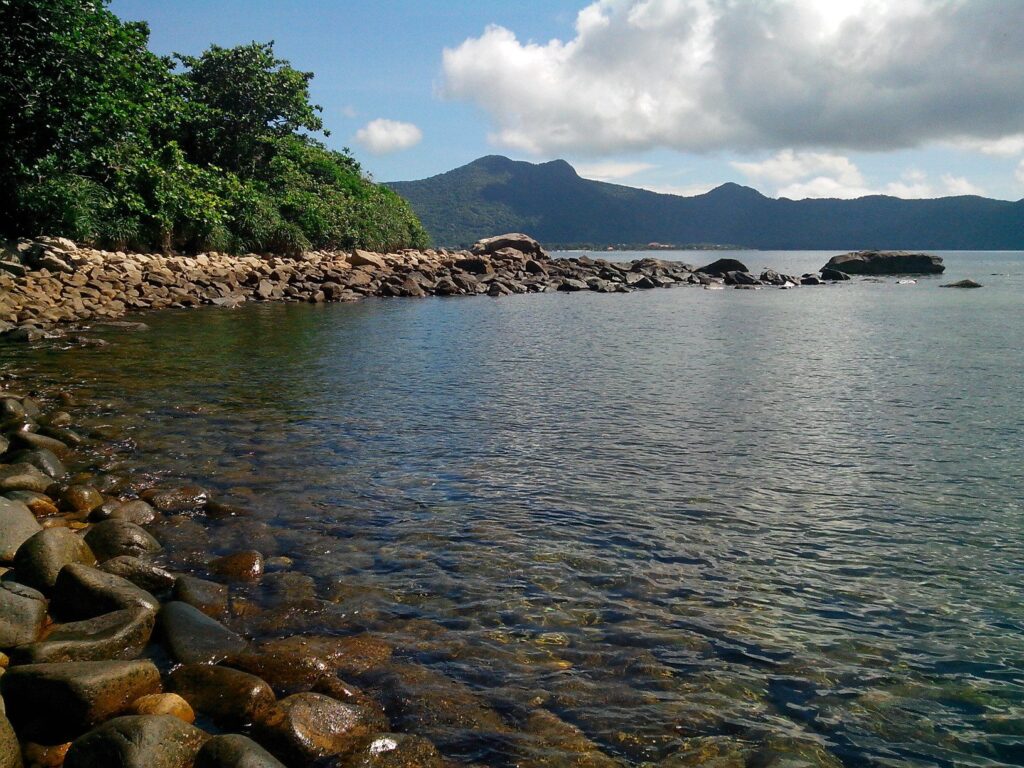
Unlike the sandy beaches commonly associated with Con Dao, Ong Dung Beach is characterized by its rocky coastline, tidal pools, and surrounding forest. It is an appealing destination for nature lovers, hikers, and travelers seeking a quieter side of the island.
Location and How to Reach Ong Dung Beach
Ong Dung Beach is located on Con Son Island, within Con Dao National Park, Con Dao Special Zone, Ho Chi Minh City, Vietnam.
Con Dao National Park is internationally recognized for its ecological importance. Its marine and coastal wetlands form part of the Con Dao Ramsar Site, designated as a Wetland of International Importance under the Ramsar Convention.
The beach lies approximately 4 kilometers from the island’s central area. To reach the shoreline, visitors follow a forest trail of around 700 meters through the national park.
Although the walking distance is relatively short, the trail includes sections of compacted earth, paved pathways, and steep steps. Comfortable walking shoes are recommended, particularly after rainfall when some sections may become slippery.
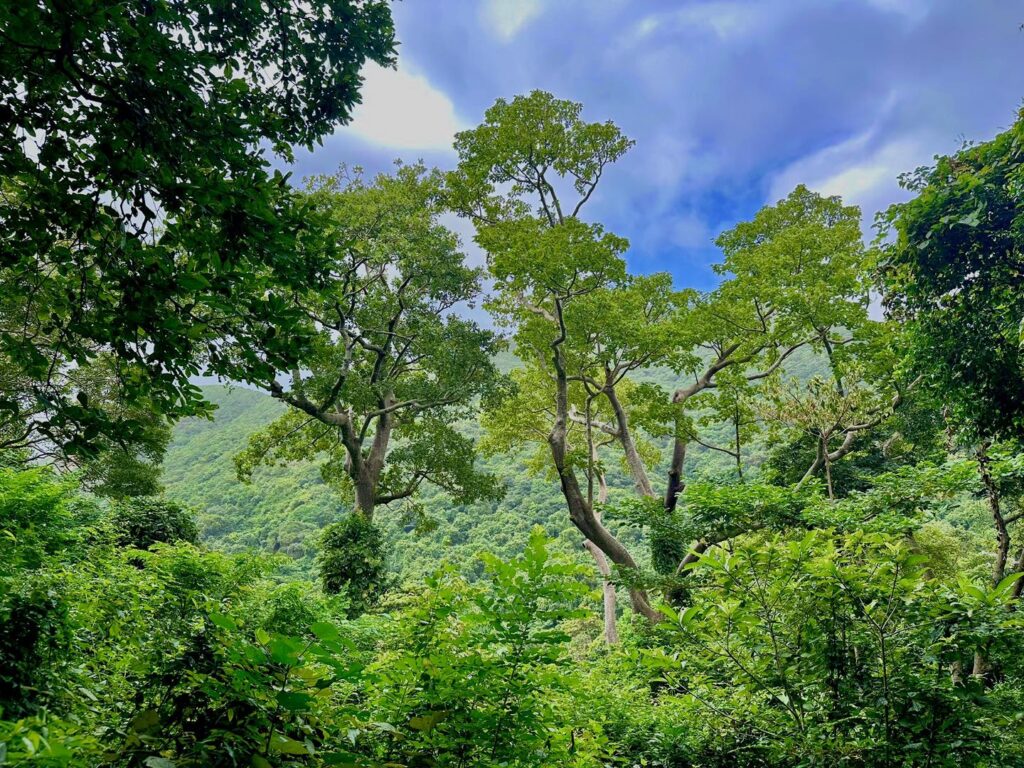
One of the most enjoyable aspects of the journey is the surrounding tropical forest. Tall trees provide shade along much of the route, while birdsong and the sounds of the forest create a peaceful atmosphere.
As visitors approach the coast, the sound of waves gradually becomes more noticeable, signaling the arrival at Ong Dung Beach.
A Unique Landscape Where Forest Meets the Sea
Ong Dung Beach has a distinctive natural character. Forested hills surround the coastline, creating a secluded setting where lush vegetation meets the open sea.
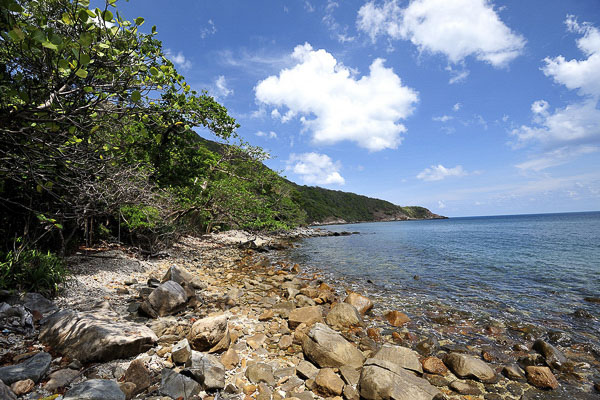
Rather than a broad stretch of white sand, the beach features numerous pebbles, rocks, and exposed coastal formations. Its appearance changes considerably with the tides.
At high tide, seawater covers much of the rocky shoreline, creating a beautiful coastal scene. When conditions are safe, visitors may enjoy swimming or observing marine life in the surrounding waters.
At low tide, extensive rocky and shallow areas become exposed, revealing a different side of the beach. Small tidal pools and crevices may contain marine organisms adapted to the changing coastal environment.
For nature enthusiasts, this changing landscape is one of Ong Dung Beach’s greatest attractions. Each tide reveals different details of the shoreline and offers opportunities to observe the relationship between the forest, rocks, and marine ecosystem.
However, exposed reef areas can be slippery and fragile. Visitors should remain on permitted routes and avoid stepping on coral or disturbing marine organisms.
Marine Life and Biodiversity at Ong Dung Beach
Ong Dung Beach is particularly interesting for its coastal biodiversity. The surrounding waters and intertidal areas provide habitats for various marine organisms, including corals, sea urchins, sea cucumbers, mollusks, small fish, and crabs.

Corals and Colorful Marine Organisms
Coral formations are among the most fascinating features of the marine environment around Ong Dung Beach.
Depending on water conditions and the location of the reef, visitors may observe different coral shapes and colors. Some colonies form branching structures, while others develop rounded or flattened surfaces.
Corals are living animals that form complex reef ecosystems over time. Even small colonies play an important role in supporting marine biodiversity.
Visitors should never touch, break, collect, or stand on coral, as these actions can damage delicate living structures.
Giant Clams and Sea Urchins
Giant clams and other marine mollusks may be found in suitable reef habitats around Con Dao. Their colorful mantles and distinctive shells make them particularly interesting to observe.
These animals should be admired without touching or attempting to open their shells. Disturbing them can harm the animals and may also cause injury.
Sea urchins, locally known as nhum or cầu gai, are another characteristic group of marine animals found in rocky coastal environments.
Their bodies are covered with sharp spines that provide protection from predators. Visitors should watch their footing carefully, as stepping on a sea urchin can cause painful puncture wounds.
Sea Cucumbers and Small Reef Creatures
Sea cucumbers, known in Vietnamese as hải sâm, are slow-moving marine animals that often inhabit sandy or rocky seabeds.
Although their appearance may seem unusual, sea cucumbers play an important ecological role by processing organic material and helping maintain the health of marine sediments.
Small fish, juvenile crabs, and other organisms may also shelter among rocks and tidal pools.
These creatures are best observed in their natural habitats. Visitors should avoid picking them up, moving them, or removing them from the water for photographs.
Ong Dung Beach in Local Folklore
Ong Dung Beach also appears in a traditional Vietnamese folk verse associated with the coastal landmarks and seafood of Con Dao:
Ai qua Đất Thắm, Bãi Bàng
Hỏi thăm Ông Đụng, vú nàng lớn chưa?
The verse can be loosely translated as:
Whoever passes Dat Tham and Bai Bang,
Ask at Ong Dung whether the vu nang limpets have grown.
The phrase ốc vú nàng refers to a type of marine limpet traditionally associated with Con Dao’s coastal cuisine. These shellfish attach themselves firmly to rocks and have long been recognized as a local seafood specialty.
The verse reflects the relationship between the island’s natural environment, traditional food culture, and everyday life.
However, harvesting pressure can threaten marine populations, particularly when shellfish are collected before reaching maturity.
Visitors are encouraged to respect conservation regulations and avoid collecting shellfish or other marine organisms within protected areas.
Preserving these species is essential to maintaining the ecological balance and natural heritage of Con Dao.
Things to Do at Ong Dung Beach
Ong Dung Beach offers a different experience from the island’s more accessible sandy beaches.
The forest walk is one of the main attractions, allowing visitors to enjoy the vegetation, sounds, and atmosphere of Con Dao National Park.
Photography is another rewarding activity, especially where the forested hills meet the rocky coastline. Early morning and late afternoon can offer attractive natural lighting, although visitors should plan their return carefully and avoid walking forest trails after dark without authorization.
Marine observation and snorkeling may be possible in suitable conditions and designated areas. Activities such as kayaking, fishing, or guided marine excursions should only be undertaken where permitted by the national park and with appropriate safety arrangements.
The beach is also an excellent place to appreciate the changing tides and observe coastal wildlife from a respectful distance.
Unlike developed beach resorts, Ong Dung Beach is best approached as a nature-based destination where conservation takes priority over recreational facilities.
Travel Tips for Visiting Ong Dung Beach
Visitors should check current access conditions, entrance requirements, and applicable regulations with Con Dao National Park before planning their trip.
Comfortable footwear, drinking water, sunscreen, insect repellent, and suitable outdoor clothing are recommended for the forest walk.
Because the shoreline contains rocks, coral, and potentially sharp marine organisms, visitors should avoid walking barefoot across exposed reef areas.
Swimming and snorkeling should only be attempted when sea conditions are safe. Tides, waves, and currents can change quickly, and the absence of visible waves does not necessarily mean the water is safe.
Food services, accommodation, and other tourist facilities may be limited or unavailable at the beach. Visitors should prepare accordingly and avoid assuming that overnight stays or camping are permitted.
Anyone interested in camping or spending the night in the national park must obtain information and authorization from the relevant management authorities in advance.
Most importantly, visitors should follow the principles of responsible nature tourism: stay on designated trails, take all rubbish away, avoid disturbing wildlife, and leave marine organisms undisturbed.
Why Ong Dung Beach Is Worth Visiting
Ong Dung Beach offers a rare combination of tropical forest, rocky coastline, tidal habitats, and marine biodiversity.
Its beauty lies not in busy beachfront activities or luxury facilities, but in the opportunity to experience the natural environment of Con Dao at a slower pace.
From the shaded forest trail to the sound of waves along the rocky shore, every part of the journey reveals another aspect of the island’s protected landscapes.
For travelers interested in nature, conservation, and exploring beyond the familiar beaches, Ong Dung Beach is one of the most rewarding places to discover in Con Dao National Park.