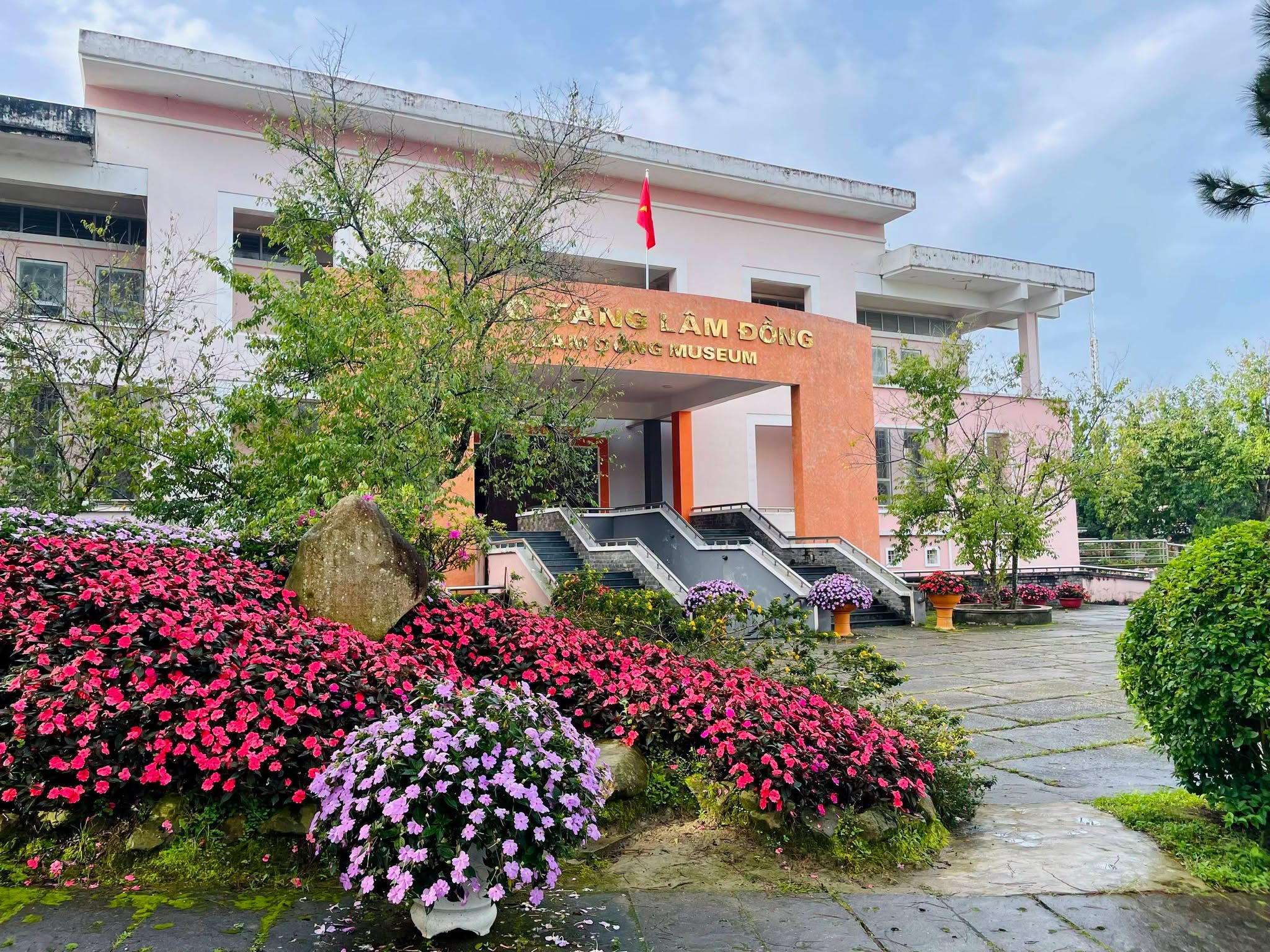
Located at No. 4 Hung Vuong Street, Xuan Huong – Da Lat Ward, Lam Dong Province, Lam Dong Museum occupies a spacious and peaceful site surrounded by green pine-covered hills. It is one of the city’s notable cultural destinations for travelers who want to look beyond Da Lat’s famous flowers and scenery and learn more about the history, people and cultural heritage of the Central Highlands.
More than a conventional museum, Lam Dong Museum brings together indoor exhibitions, historical architecture and outdoor cultural spaces. Its collections cover archaeology, nature, local history, traditional cultures and the wartime history of Lam Dong, offering visitors a broader understanding of how the region has developed over time.
A Journey Through Lam Dong’s History and Culture
Lam Dong Museum is a general museum currently preserving more than 15,000 artifacts, documents and specimens associated with the province’s history, culture, archaeology and natural environment.
Its exhibitions cover several major themes, including the natural environment of Lam Dong, old and modern Da Lat, archaeological discoveries, the traditional cultures of indigenous communities, the history of Lam Dong during the resistance wars, and the province’s development and protection of the country.
The collections reflect not only major historical events but also everyday life. Traditional clothing, agricultural tools, hunting and gathering equipment, household objects, musical instruments and religious items provide an insight into the material and spiritual culture of local communities.
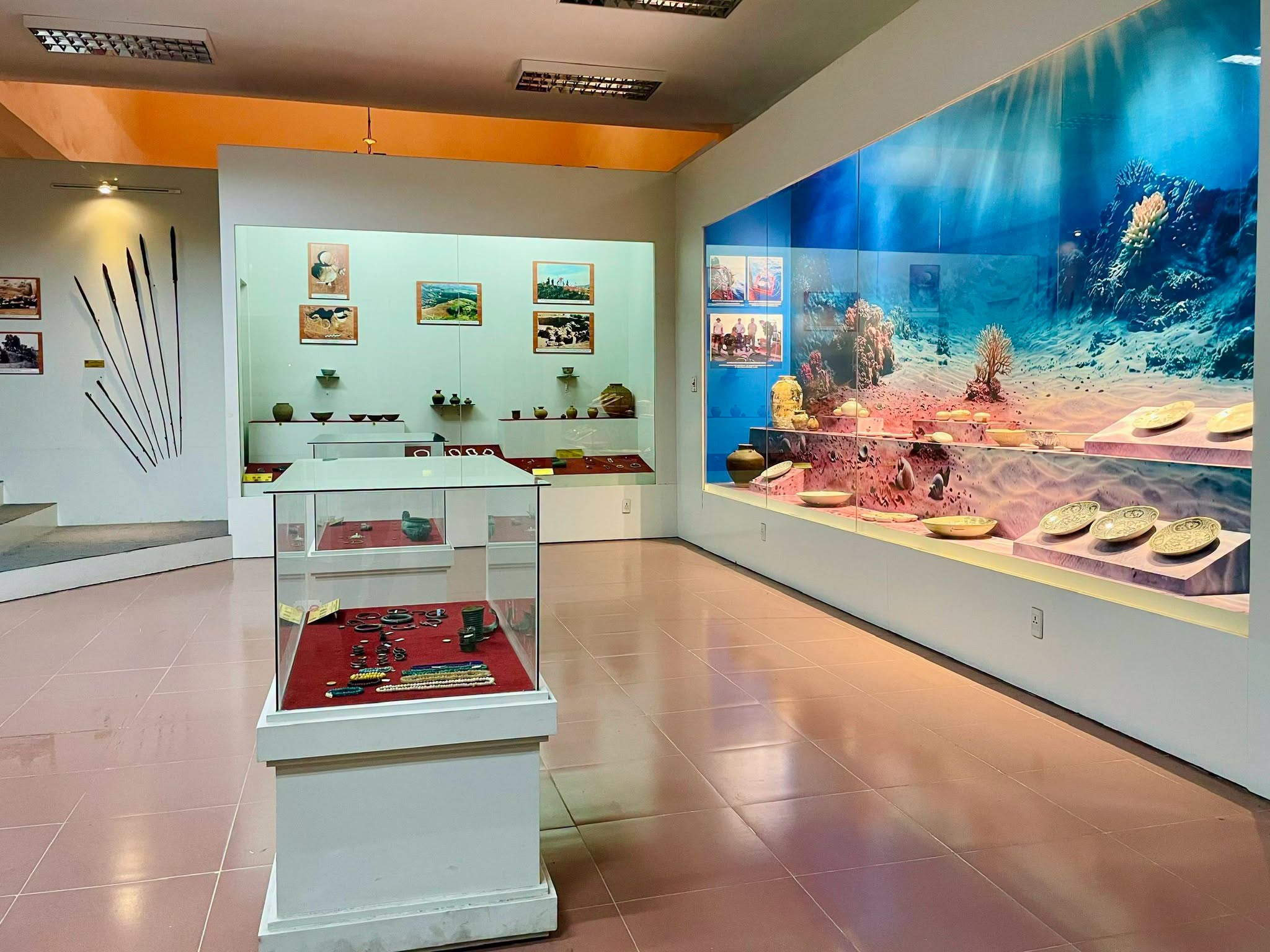
The archaeological collections are particularly noteworthy. They include artifacts associated with archaeological sites such as Dai Lang, Dai Lao, Da Don and Cat Tien, as well as other locations across Lam Dong. Ancient stone instruments and other prehistoric artifacts help reveal the long history of human settlement in the Central Highlands.
Rather than relying solely on lengthy written descriptions, the museum combines original artifacts with photographs, models and visual displays. This makes the exhibitions easier to understand for both international visitors and younger travelers.
Nam Phuong Queen’s Palace Among the Pine Trees
One of the most distinctive features of the museum complex is Nguyen Huu Hao Mansion, commonly known as Nam Phuong Queen’s Palace.
Set on a higher part of the pine-covered grounds, the historic mansion reflects a refined combination of French and Vietnamese architectural influences. The building was constructed in the early 20th century and is closely associated with the family of Nguyen Huu Hao and his daughter, Nam Phuong, the last queen of the Nguyen dynasty.
The mansion preserves a number of photographs, historical materials and objects associated with the family and the imperial household of Bao Dai and Nam Phuong.
Its elegant architecture and quiet setting among the pine trees offer a glimpse into the atmosphere of old Da Lat. From the elevated grounds, visitors can also enjoy views across parts of the city and surrounding hills.
Exploring the Traditional Culture of the Mạ and K’Ho People
Another distinctive part of Lam Dong Museum is its outdoor cultural space featuring reconstructed traditional houses associated with indigenous communities, particularly the Mạ and K’Ho people.
The houses are arranged with traditional household objects and tools, allowing visitors to gain a clearer impression of how local communities lived, worked and organized their daily lives.
Agricultural implements, household utensils, traditional clothing, musical instruments and objects associated with spiritual life are presented alongside information about customs and community traditions.
For visitors unfamiliar with the cultures of Vietnam’s Central Highlands, this area provides a more tangible experience than simply viewing objects behind glass. Walking through a reconstructed traditional house helps connect individual artifacts with the wider social and cultural environment in which they were used.
Depending on the program and season, the museum may also host cultural activities and experiences related to traditional crafts, weaving, basketry, folk games and other aspects of indigenous culture.
A Museum for Students, Families and Culture Lovers
Lam Dong Museum is not only intended for historians, researchers or archaeology enthusiasts. Its accessible displays make it suitable for school groups, families and travelers interested in local culture.
For students, the museum functions as an open-air classroom as well as an exhibition space. Instead of learning entirely from textbooks, visitors can observe archaeological objects, historical photographs, traditional clothing, models and reconstructed living spaces firsthand.
For families with children, the museum offers an opportunity to combine sightseeing with learning. Unusual artifacts, traditional houses and historical architecture can encourage children to ask questions and discover more about the people and places they encounter during their trip.
For travelers interested in culture and history, the museum provides a different perspective on Da Lat. The city’s pine forests, gardens and colonial-era architecture tell only part of its story. The museum helps reveal the deeper cultural landscape behind the modern tourist destination.
More Than a Museum
Lam Dong Museum has also developed activities beyond permanent exhibitions. Depending on the period, visitors may encounter thematic exhibitions featuring cultural heritage, paintings, photography, traditional clothing and other subjects.
Outdoor spaces can also be used for cultural experiences, folk games and activities introducing traditional crafts and community practices.
These activities help bring heritage closer to the public, particularly younger generations. History becomes easier to connect with when visitors can see, hear and experience elements of traditional culture rather than encountering them only through written descriptions.
A Different Way to Experience Da Lat
Da Lat is often associated with cool weather, pine forests, flower gardens, romantic landscapes and historic villas. Yet understanding the city also means looking deeper into the people and cultures that shaped the highlands long before Da Lat became a famous tourist destination.
Lam Dong Museum offers that opportunity.
Here, visitors can explore archaeological discoveries, learn about indigenous cultures, discover the history of Da Lat and Lam Dong, admire historic architecture and step into reconstructed traditional living spaces.
Each part of the museum reveals a different layer of the region’s story. Some artifacts date back thousands of years, while others reflect the formation of modern Da Lat and the experiences of local communities during more recent periods.
For travelers who want more than photographs and sightseeing, Lam Dong Museum is a worthwhile stop on a Da Lat itinerary. It offers a quieter experience, but one that can add considerable depth to a journey through the city.
Visitor Information
Address: No. 4 Hung Vuong Street, Xuan Huong – Da Lat Ward, Lam Dong Province, Vietnam.
Opening hours:
Morning: 7:30 AM – 11:30 AM
Afternoon: 1:30 PM – 5:00 PM
The museum complex includes indoor exhibition areas, outdoor cultural spaces, reconstructed traditional houses and Nguyen Huu Hao Mansion, also known as Nam Phuong Queen’s Palace.
Opening hours, admission fees and special exhibition schedules may change from time to time. Visitors are advised to check the latest information before visiting.