Location: Dam Rong 1 Commune, Lam Dong Province
Distance: Approximately 70 km west-southwest of Da Lat
Height: Approximately 70 m
Other name: Seven-Tier Waterfall
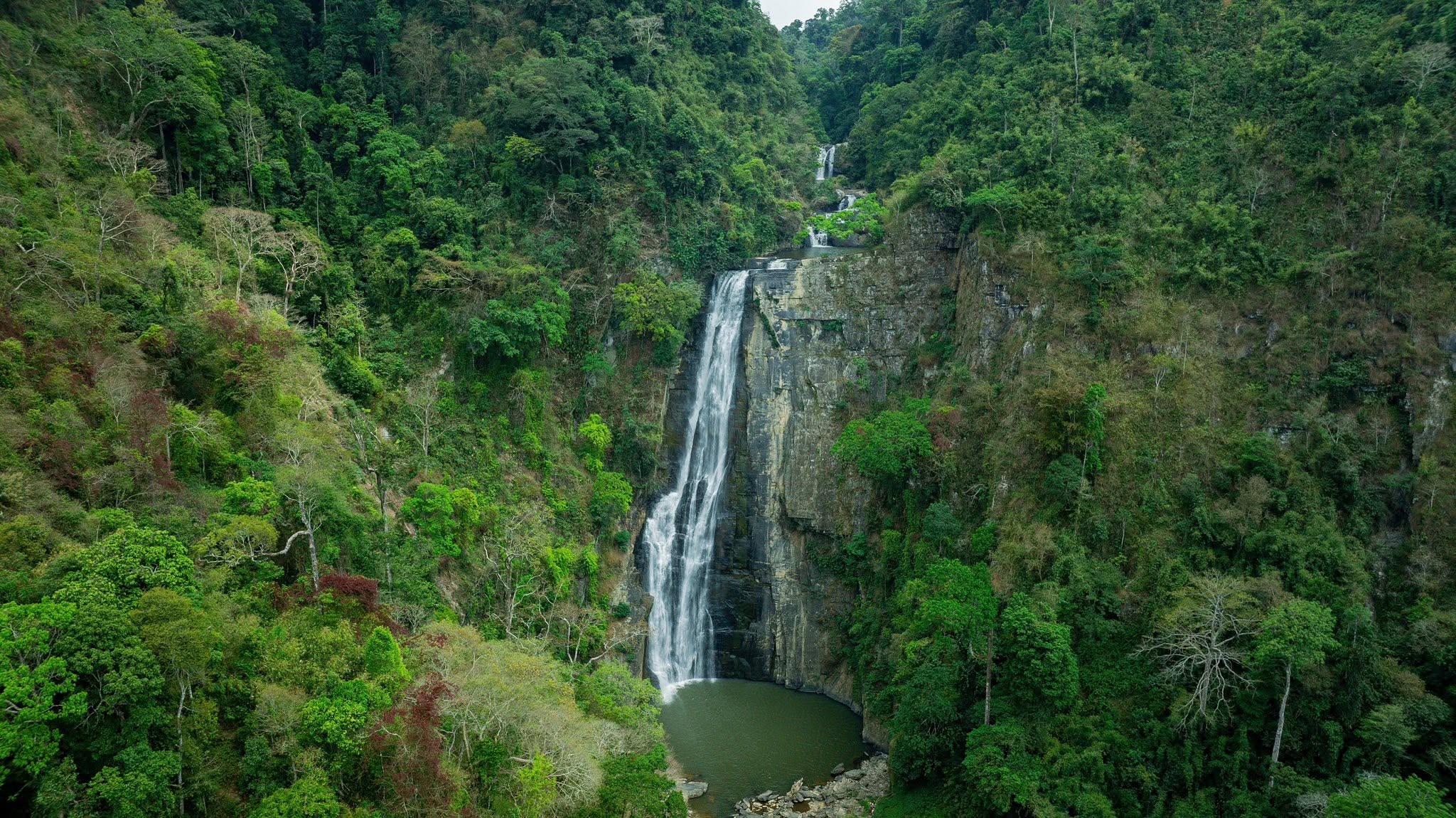
Hidden deep within the primeval forests of Dam Rong, Phi Lieng Waterfall is one of Lam Dong’s destinations that retains the raw and powerful character of the Central Highlands. From a towering basalt cliff, the waterfall plunges almost vertically into the pool below, sending white spray into the air and creating a powerful roar that echoes through the forest.
Unlike waterfalls that have been developed into conventional tourist attractions, Phi Lieng remains largely untouched by mass tourism. Its remote setting and challenging approach make the waterfall particularly appealing to travelers who enjoy trekking, outdoor exploration and journeys into wild natural landscapes.
Phi Lieng Waterfall in the Forests of Dam Rong
Phi Lieng Waterfall is located in the area of Dam Rong 1 Commune, Lam Dong Province, approximately 70 km west-southwest of Da Lat. According to the source material, the waterfall takes its name from Phi Lieng Commune and the surrounding area, where ethnic minority communities live, including the M’Nong, K’Ho and groups who migrated from northern Vietnam to settle in the region.
The waterfall lies deep within a forested landscape surrounded by cliffs, hills and dense vegetation. The sound of falling water can be heard throughout the area, while mist from the waterfall creates a cool atmosphere within the rocky gorge.
The main waterfall is approximately 70 m high, plunging almost vertically from a steep basalt cliff. Below it lies a deep pool, while the water continues downstream through a series of rugged rock formations, creating several smaller cascades. This distinctive formation has given Phi Lieng its other name, Seven-Tier Waterfall.
The Challenging Journey to Phi Lieng
Reaching Phi Lieng is an essential part of the experience. This is not a destination with an easy sightseeing route, but a forest journey that passes through pine-covered hills, coffee plantations and rugged terrain before descending toward the stream.
During the rainy season, the red basalt soil can become muddy and extremely slippery. Tractor and agricultural vehicle tracks often leave deep ruts and muddy sections, while steep slopes make some parts of the route particularly demanding.
Near the waterfall, some sections descend at an angle of approximately 70 degrees. Hikers may need to use ropes or tree roots for support while making their way down. Once these steep sections are crossed, the sound of Phi Lieng’s powerful waterfall begins to echo through the forest.
For travelers without previous trekking experience, going with a local guide is strongly recommended. The route can be difficult to follow, conditions may change with the weather, and mobile phone coverage may not be available in the deeper forest.
The Raw Beauty of Seven-Tier Waterfall
The strongest impression of Phi Lieng comes from the combination of its height, vertical rock walls and surrounding forest.
From above, the main stream plunges almost straight down into the pool below, creating a striking white curtain against the dark basalt cliffs. The spray becomes particularly noticeable as visitors approach the waterfall.
Below the main drop, the stream continues across numerous rock formations, forming smaller cascades and pools. The combination of water, basalt rocks and dense vegetation creates a landscape that changes with every viewpoint.
The waterfall is surrounded by forest, wild grasses and successive rock walls. With few large-scale tourist structures nearby, the landscape retains the sense of remoteness that defines the mountainous areas of Dam Rong.
Trekking, Abseiling and Camping
Phi Lieng is best suited to travelers who are comfortable with outdoor activities and want to combine several experiences into a single journey.
Forest trekking is the main activity. Depending on actual conditions, parts of the route may be covered on foot while other sections can be approached by off-road or specialized vehicles. The journey passes through forests, pine hills, coffee-growing areas and rough tracks before descending toward the waterfall.
One of the more specialized experiences associated with Phi Lieng is abseiling, with a rope descent of approximately 115 m, according to the source material. This is a technical activity requiring a proper harness, helmet, load-bearing ropes and equipment, as well as qualified technical guidance.
When conditions permit, relatively flat rocky areas at a safe distance from the waterfall can be used for wild camping beside the stream. Temperatures can drop considerably at night, while mist from the waterfall can make the surroundings feel even colder. Outdoor cooking, BBQs and overnight camping provide an experience far removed from conventional sightseeing.
Some calmer sections of the stream may also be suitable for fishing. However, any activity in or around the water should be considered carefully according to the actual flow, depth and terrain.
Best Time to Visit and Essential Safety Notes
Because Phi Lieng is located deep in the forest and involves difficult terrain, the journey requires more preparation than an ordinary sightseeing trip.
According to the source material, the dry season from November to April is generally more suitable for exploring the waterfall. During periods of heavy rain, particularly from July to October according to the provided information, slippery forest roads and sudden rises in water levels may create significant risks. Trips should be reconsidered whenever weather conditions deteriorate.
Important recommendations include:
- Travel in a group, especially if you are unfamiliar with the terrain.
- Consider hiring a local guide if you do not have forest trekking experience.
- Carry offline GPS equipment and appropriate communication devices rather than relying solely on mobile phones.
- Wear trekking shoes or sports shoes with strong traction.
- Choose lightweight but protective clothing suitable for forest conditions.
- Bring insect repellent, a personal first-aid kit, drinking water and essential supplies.
- Never attempt abseiling without proper equipment and qualified technical supervision.
- Keep a safe distance from the main waterfall and never approach directly beneath the falling water.
- The pool below the waterfall is described as deep and very cold, with possible underwater currents. Anyone entering the water should wear a life jacket and stay well away from the main waterfall column.
- Avoid swimming late in the afternoon or evening when temperatures fall and visibility becomes limited.
- If camping, choose a location well away from the stream channel and areas vulnerable to sudden rises in water.
- Take all rubbish with you and leave the forest exactly as you found it.
Phi Lieng, a Journey into the Wild
Phi Lieng is not a destination for a casual sightseeing trip. Its appeal lies in the journey itself: the forest trails, rugged terrain, steep descents and the moment when the 70-meter waterfall finally emerges from the surrounding wilderness.
From red-earth tracks and dense forest to basalt cliffs and the thunderous sound of falling water, Phi Lieng offers a different side of Lam Dong, one where nature remains the defining element of the experience.
For travelers who enjoy trekking and outdoor exploration, Phi Lieng Waterfall is a journey into a powerful, wild and remarkably natural side of Vietnam’s Central Highlands.