Then is both a form of folk art and a traditional spiritual practice that holds an important place in the cultural life of the Tày, Nùng and Thái ethnic groups in Viet Nam. Passed down through generations, Then reflects people’s spiritual world, emotions and aspirations for a peaceful, prosperous and happy life. Over more than three decades, efforts to preserve and promote Then have also encouraged the adaptation of traditional Then melodies into new compositions, allowing this heritage to continue developing as a distinctive musical tradition.
Artisans play a central role in maintaining Then. They compose and perform songs, teach children and young people, and establish performance groups, clubs and associations. Researchers and cultural practitioners have also travelled to remote communities to document, collect and transmit Then traditions. For many communities, Then remains an important form of spiritual and cultural expression during the Lunar New Year, festivals and significant occasions.
Then in the Cultural Life of the Tày, Nùng and Thái
Then is performed on important occasions and during traditional celebrations, particularly when communities pray for good harvests, prosperity, happiness and peace. The practice expresses people’s hopes and their confidence in a harmonious relationship between human beings, nature and the wider universe.
Then is a multidisciplinary form of folk art that combines literature, music, singing, dance, visual elements and performance. Its lyrics use simple yet vivid language drawn from everyday life, with imagery, comparisons, figurative expressions and ideas emphasizing humanity and moral values.
According to researcher and artisan Ma Văn Đức, the word “Then” is understood in folk interpretation as referring to “Thiên,” meaning Heaven or the Sky. In Tày tradition, Then is a sacred ritual that reflects people’s understanding of human beings, nature and the universe.
The Spiritual Journey from Mường Đất to Mường Trời
At the heart of many Then ceremonies is the spiritual journey led by a Then Master, known as Thầy Then, Ông Then or Bà Then. During the ritual, the master leads a group of spirit soldiers from Mường Đất, the earthly realm, to Mường Trời, the heavenly realm, to present offerings and convey the wishes of the community or the family.
Depending on the purpose of the ceremony, these wishes may concern peace, health, recovery from illness, a successful harvest, prosperity or a peaceful New Year. The ritual begins with singing accompanied by the tính tẩu, the traditional musical instrument associated with Then.
The ceremonial altar and the deities or local spiritual figures invoked vary according to the purpose of each ritual. Other ritual objects may include an exorcism sword, a yin-yang sound bar and bells.
The Tính Tẩu and the Art of Then Performance
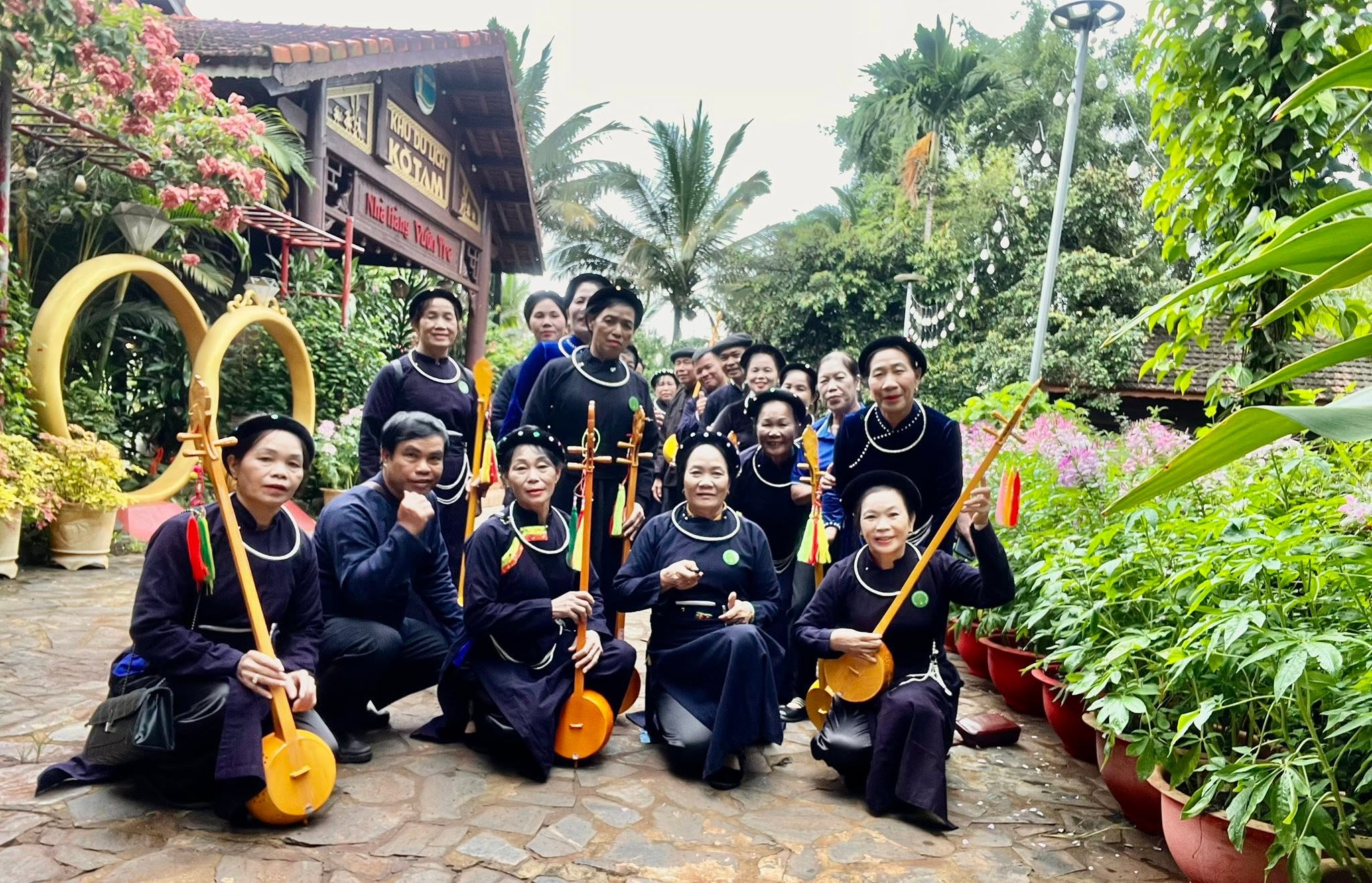
The tính tẩu plays a central role in Then performance. The Then Master sings in the ethnic language while accompanying the singing on the instrument, creating a distinctive combination of music, narrative and ritual.
During a ceremony, the master may shake a rattle, wave a fan and perform other ritual movements. In some traditions, female dancers also participate in the performance. The combination of singing, instrumental music, movement and ritual creates a distinctive artistic form in which spiritual practice and folk performance are closely connected.
Then ceremonies may take place at the host family’s home, outdoors or at a Then altar in the home of a Then Master. Knowledge and skills are primarily transmitted orally during actual ritual practice. The Then Master therefore plays a particularly important role in preserving specialized knowledge, ritual procedures and performance techniques. Some experienced masters may conduct around 200 rituals in a year.
Practitioners and Intergenerational Transmission
The preservation of Then depends heavily on artisans, families and local communities. Experienced practitioners teach younger generations how to sing, play the tính tẩu and perform the various elements of Then rituals.
Over the past several decades, communities have established Then singing groups, clubs and associations. Artisans have also created new compositions based on traditional melodies, helping Then remain relevant to contemporary cultural life while maintaining its traditional foundations.
Researchers and cultural institutions have contributed through fieldwork, documentation, collection and research in remote communities. These activities have helped identify practitioners, record repertoires and support the transmission of Then to younger generations.
The Distribution of Then in Viet Nam
Then is practiced primarily in the northern mountainous regions of Viet Nam. In the Northeast, important areas include Bắc Giang, Bắc Kạn, Cao Bằng, Hà Giang, Lạng Sơn, Quảng Ninh, Thái Nguyên and Tuyên Quang. In the Northwest, Then is practiced in Điện Biên, Lai Châu and Lào Cai, among other areas.
The practice extends beyond these provinces, reflecting the cultural distribution and historical interaction of the Tày, Nùng and Thái communities.
Safeguarding and Transmission
The vitality of Then is maintained through the participation of individuals, families and communities. Families and communities continue to invite Then Masters to conduct ceremonies for health, peace, good harvests and prosperity.
Since 2001, government cultural programmes have contributed to safeguarding activities through legal and cultural policies, research, inventorying and documentation. Other measures include supporting artisans in teaching younger generations, introducing Then singing and the tính tẩu into educational activities, publishing research and cultural materials, and encouraging young people to participate in Then clubs and activities.
Communities and artisans have also taken part in planning and implementing safeguarding measures, helping ensure that preservation remains connected to the living cultural practices of the communities themselves.
Community Participation and UNESCO Inscription
The nomination of Then for UNESCO recognition involved practitioners, communities, researchers and cultural institutions. Communities and artisans participated in meetings, workshops, conferences and training activities throughout the nomination process. Their voluntary consent was documented through written, audio and video materials, together with commitments to continue safeguarding the heritage.
Then was inscribed in 2019 on the UNESCO Representative List of the Intangible Cultural Heritage of Humanity during the 14th session of the Intergovernmental Committee for the Safeguarding of the Intangible Cultural Heritage, held in Bogotá, Colombia, on 12 December 2019.
UNESCO Criteria for Inscription
Criterion R.1: Community Identity and Spiritual Values
Then is an important part of the spiritual life of the Tày, Nùng and Thái communities. It expresses relationships between human beings, nature and the universe while contributing to ethnic identity through traditional customs, musical instruments, singing and dance.
Its social and cultural functions also include the transmission of moral values, knowledge and ideas about community life and the preservation of traditional customs.
Criterion R.2: Cultural Diversity and Intercultural Dialogue
Then highlights the cultural identities of the Tày, Nùng and Thái and contributes to solidarity within and between communities. Its ritual elements, musical traditions and spiritual practices also provide an opportunity to understand the diversity of cultural expressions associated with ritual and shamanic traditions in different parts of the world.
Criterion R.3: Safeguarding Measures
The continuity of Then is supported by practitioners, families and communities who continue to organize ceremonies and transmit knowledge. Since 2001, national cultural programmes have contributed to research, documentation, inventorying, artisan training, educational activities and publications.
Schools and community organizations have also provided opportunities for younger generations to learn Then singing and the tính tẩu. These measures help maintain the connection between traditional practitioners and younger members of the community.
Criterion R.4: Community Participation
Practitioners and communities participated actively throughout the nomination process through meetings, workshops, conferences and training activities. Their voluntary consent and commitments to safeguard Then were documented through written, audio and visual materials.
Criterion R.5: National Inventory
Then has been included in the National Intangible Cultural Heritage List in 11 provinces since 2012, with the most recent update referred to in the source dating to 2017. The Department of Cultural Heritage maintains the inventory, while local authorities update information annually in cooperation with communities and artisans.
Then in Contemporary Cultural Life
The UNESCO inscription recognizes the continuing cultural significance of Then and its role in maintaining community connections, cultural diversity and dialogue among different ethnic groups.
At the same time, Then remains a living tradition rather than simply a historical performance. Through artisans, families, clubs, researchers and younger generations, traditional songs, rituals and the tính tẩu continue to be practiced, taught and adapted.
Then therefore represents not only a spiritual tradition of the Tày, Nùng and Thái, but also a broader expression of cultural identity, community solidarity, respect for different worldviews, tolerance and human compassion.
Quick Information
| Item | Information |
|---|---|
| Name | Practices of Then by the Tày, Nùng and Thái Ethnic Groups in Viet Nam |
| Heritage type | Intangible cultural heritage |
| UNESCO status | Representative List of the Intangible Cultural Heritage of Humanity |
| Inscription year | 2019 |
| Inscription date | 12 December 2019 |
| UNESCO session | 14th session of the Intergovernmental Committee |
| Place of inscription | Bogotá, Colombia |
| Communities | Tày, Nùng and Thái |
| Main region | Northern mountainous Viet Nam |
| Main ritual practitioner | Then Master (Thầy Then, Ông Then, Bà Then) |
| Traditional instrument | Tính tẩu |
| Important ritual space | Mường Đất and Mường Trời |
| Main functions | Spiritual practice, ritual, singing, music, dance and community cultural expression |
| National inventory | Included in the National Intangible Cultural Heritage List in 11 provinces since 2012 |
Location: Northern mountainous Viet Nam, particularly the Northeast and Northwest regions