Le Van Duyet (1763–1832), commonly known as Marshal Le Van Duyet, was an influential political and military figure in Vietnamese history during the late eighteenth and early nineteenth centuries. He supported Nguyen Anh in the wars against the Tay Son forces. After the conflict ended, Le Van Duyet became one of the senior military officials of the Nguyen Dynasty and was appointed Viceroy of Gia Dinh Citadel, governing a vast southern territory comprising five administrative regions: Phien An, Bien Hoa, Vinh Thanh, Dinh Tuong, and An Giang.
Historical records credit Le Van Duyet with considerable administrative, economic, and military abilities. During his tenure as Viceroy, Gia Dinh enjoyed relative peace and stability, while economic activities, production, and trade gradually developed. He is also remembered for his contributions to the reclamation, expansion, and development of southern Vietnam, particularly the Saigon–Gia Dinh region.
According to local traditions, while serving as Viceroy of Gia Dinh, Le Van Duyet and the local population held the Ha Neu ceremony to pray for favorable weather, abundant harvests, and peaceful lives. The ritual followed ceremonial practices influenced by the court rites of the Nguyen Dynasty and gradually became an important religious and cultural tradition in the former Gia Dinh region.
Today, this tradition is preserved through the annual Khai Ha – Cau An Festival at the Tomb of Marshal Le Van Duyet, usually held on the seventh day of the first lunar month. The festival is one of the distinctive traditional celebrations of southern Vietnam and Ho Chi Minh City. It expresses wishes for favorable weather, peace, prosperity, successful work, and a smooth beginning to the new year.
Origins and Meaning of the Festival
The seventh day of the first lunar month is known as the day of “Khai Ha,” marking the end of the festive period of the Lunar New Year and the time when people return to their normal routines of work, production, and daily life.
The festival is not only intended to pray for peace, favorable weather, and prosperity, but also serves as an occasion for people to express their respect and gratitude toward Marshal Le Van Duyet. Through its ceremonial practices, the festival commemorates a historical figure who made important contributions to southern Vietnam while conveying hopes for peaceful families, social stability, and a prosperous year ahead.
The festival consists of four principal rituals: Ha Neu, Khai Ha, Khai But, and Khai An.
The Ha Neu Ceremony
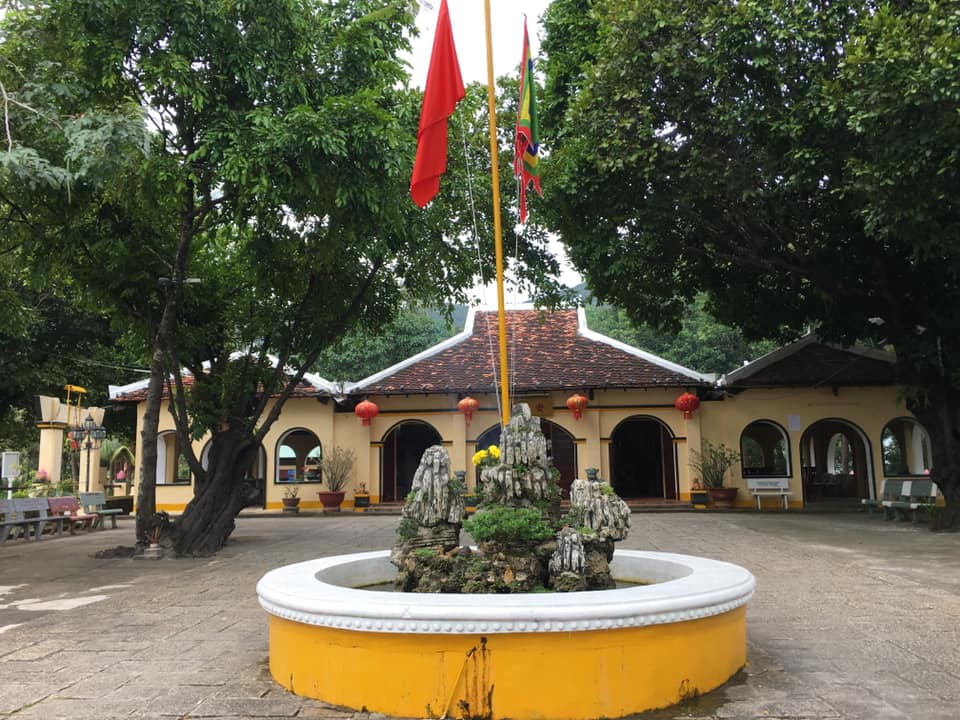
The festival begins with the Ha Neu, or lowering of the New Year pole, ceremony. According to traditional customs, the Neu pole is erected during the Lunar New Year to ward off evil spirits, prevent misfortune, and protect the peace of the household and community. Its erection marks the transition from the old year to the new spring season.
At the Tomb of Marshal Le Van Duyet, the Neu pole is traditionally erected and the ceremonial flag is raised before the Lunar New Year, following the offerings made at the tomb on the thirtieth day of the twelfth lunar month. On the seventh day of the first lunar month, the pole is lowered, symbolizing the end of the Tet holiday and the return to ordinary work and daily activities.
The traditional Neu pole is generally made of bamboo and measures approximately five to six meters in length. It is erected in front of a house or in a communal space, with a small circular object and other symbolic items hung near the top. In southern Vietnamese folk belief, the pole serves to repel evil forces and protect the safety and well-being of residents.
The Khai Ha Ceremony
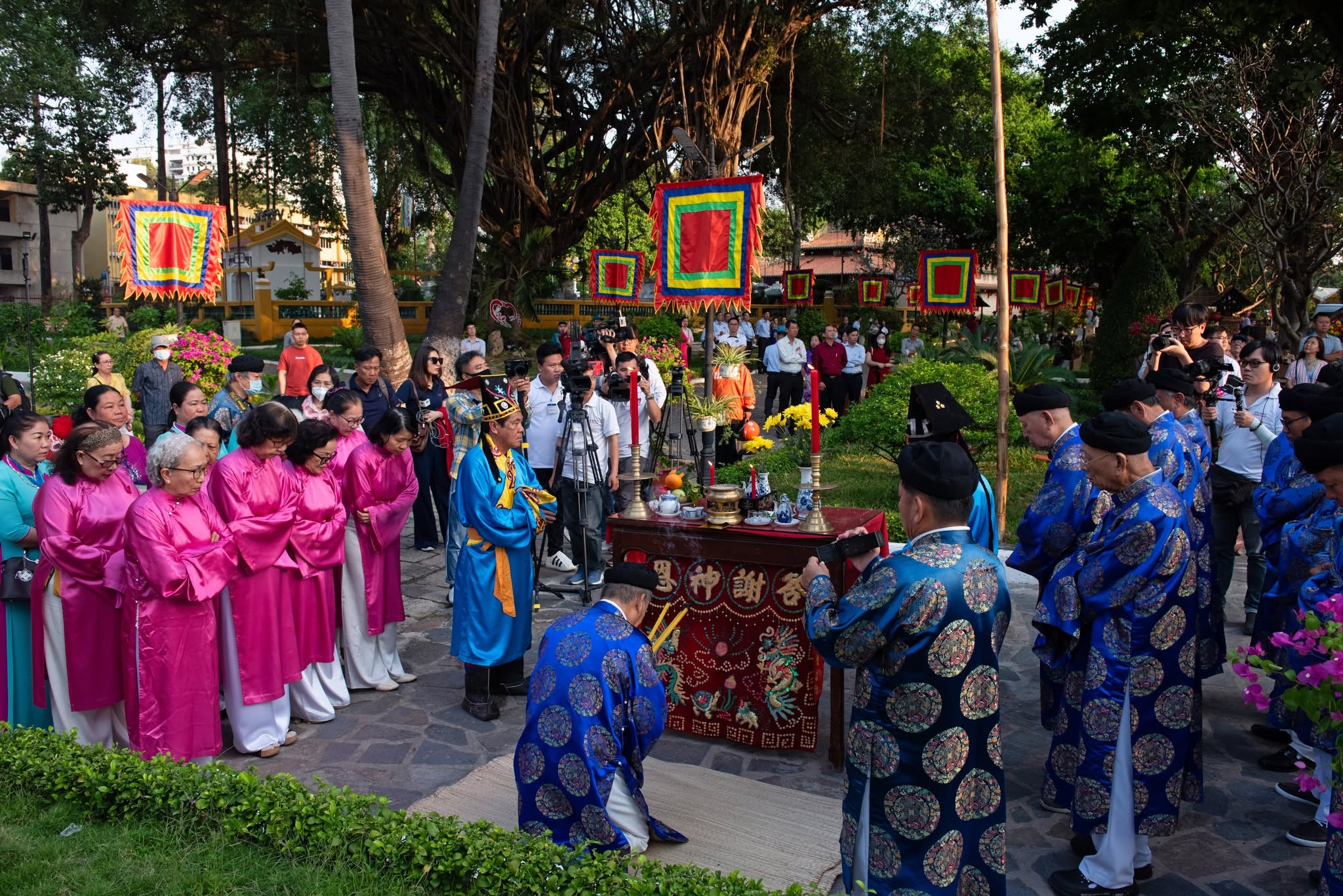
Following the lowering of the Neu pole, the Ceremonial Committee conducts the Khai Ha ritual. Offerings are carried into the main worship hall, where incense and wine are presented and ceremonial prayers are recited.
The prayers express gratitude to the ancestors, Marshal Le Van Duyet, and the deities worshipped at the site. They also convey wishes for a prosperous nation, peaceful communities, social stability, favorable weather, good harvests, and happiness for families throughout the new year.
The ceremony follows traditional ritual procedures, combining elements of southern Vietnamese folk beliefs with the solemn ceremonial style associated with the court rituals of the Nguyen Dynasty.
The Khai But Ceremony
The Khai But, or first writing ceremony, is the next major ritual of the festival. It symbolizes the beginning of a new year through the first strokes of writing. Traditionally, starting the year by writing auspicious words expresses hopes for success in study, work, creativity, and personal development.
Participants often choose words carrying positive meanings, such as “Phuc” for blessings, “Loc” for prosperity, “Tho” for longevity, “Duc” for virtue, “An” for peace, and “Khang” for well-being. They may also write couplets or wishes expressing hopes for family harmony, professional success, and social development.
The Khai But ceremony helps preserve the traditional respect for learning, knowledge, morality, and cultural refinement in Vietnamese society.
The Khai An Ceremony
The Khai An, or seal-opening ceremony, takes place after Khai But. The seal used during the ritual is associated with Marshal Le Van Duyet and bears the four seal-script characters “Ta Quan Chi An,” meaning “Seal of the Left Marshal.”
The Organizing Committee prepares calligraphic works featuring auspicious words such as “Phuc,” “Tho,” and “Duc,” as well as other New Year blessings. After the Khai An ritual, the seal is stamped onto these calligraphic works, which are presented to individuals who have made meaningful contributions to society, Ho Chi Minh City, and the preservation of the Tomb of Marshal Le Van Duyet.
The ceremony carries both spiritual and symbolic significance. It expresses appreciation for community contributors while conveying wishes for good fortune, peace, and success in the new year.
Hat Boi Performances and Traditional Cultural Activities
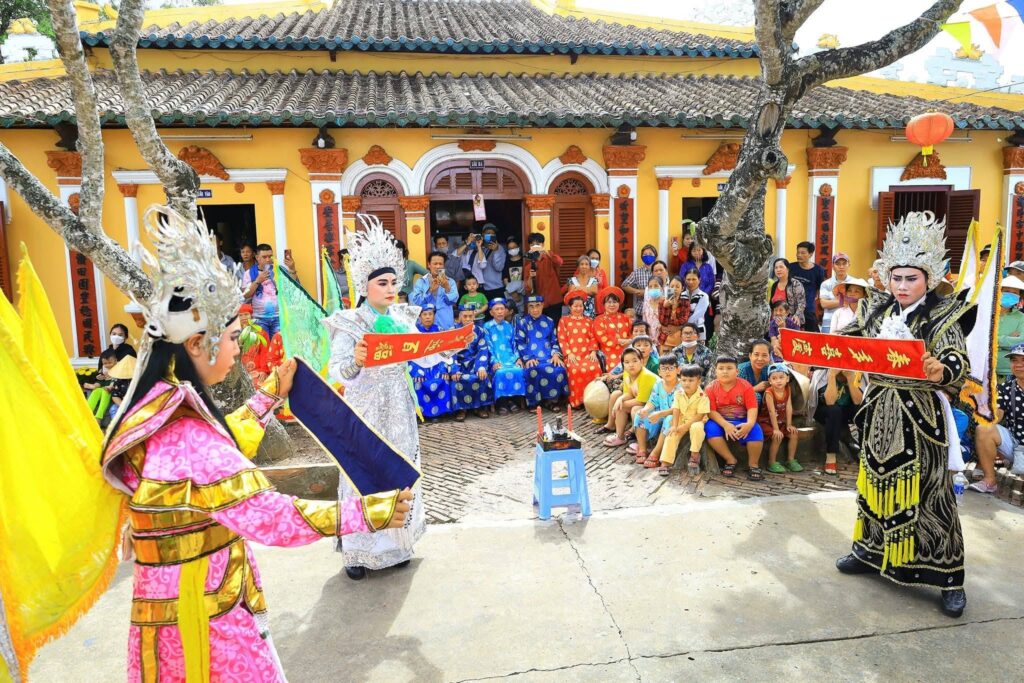
During the Khai Ha – Cau An Festival, traditional Hat Boi performances are presented at the tomb complex. Hat Boi is a classical Vietnamese theatrical form characterized by stylized movements, elaborate costumes, distinctive makeup, symbolic gestures, and highly formalized performance techniques.
These performances serve not only as entertainment but also as a way to recreate a traditional cultural environment in which religious beliefs, history, and classical performing arts are closely connected.
In addition to Hat Boi, the festival includes incense offerings, ceremonial rites, folk cultural performances, and community activities, creating an atmosphere that is both solemn and festive during the early days of the lunar year.
Cultural Values and Community Significance
Over the years, the Khai Ha – Cau An Festival at the Tomb of Marshal Le Van Duyet has attracted large numbers of visitors from Ho Chi Minh City and other provinces and cities across southern Vietnam. People attend not only to pray for peace, good fortune, favorable weather, and successful work, but also to commemorate Marshal Le Van Duyet and participate in an important traditional cultural event.
The festival reflects the spirit of community solidarity, confidence in the future, and the aspiration for a prosperous year in agriculture, production, business, and daily life. It also contributes to the preservation of traditional rituals such as the erection and lowering of the Neu pole, first writing, seal opening, classical Hat Boi theater, and folk beliefs associated with the worship of historical figures in southern Vietnam.
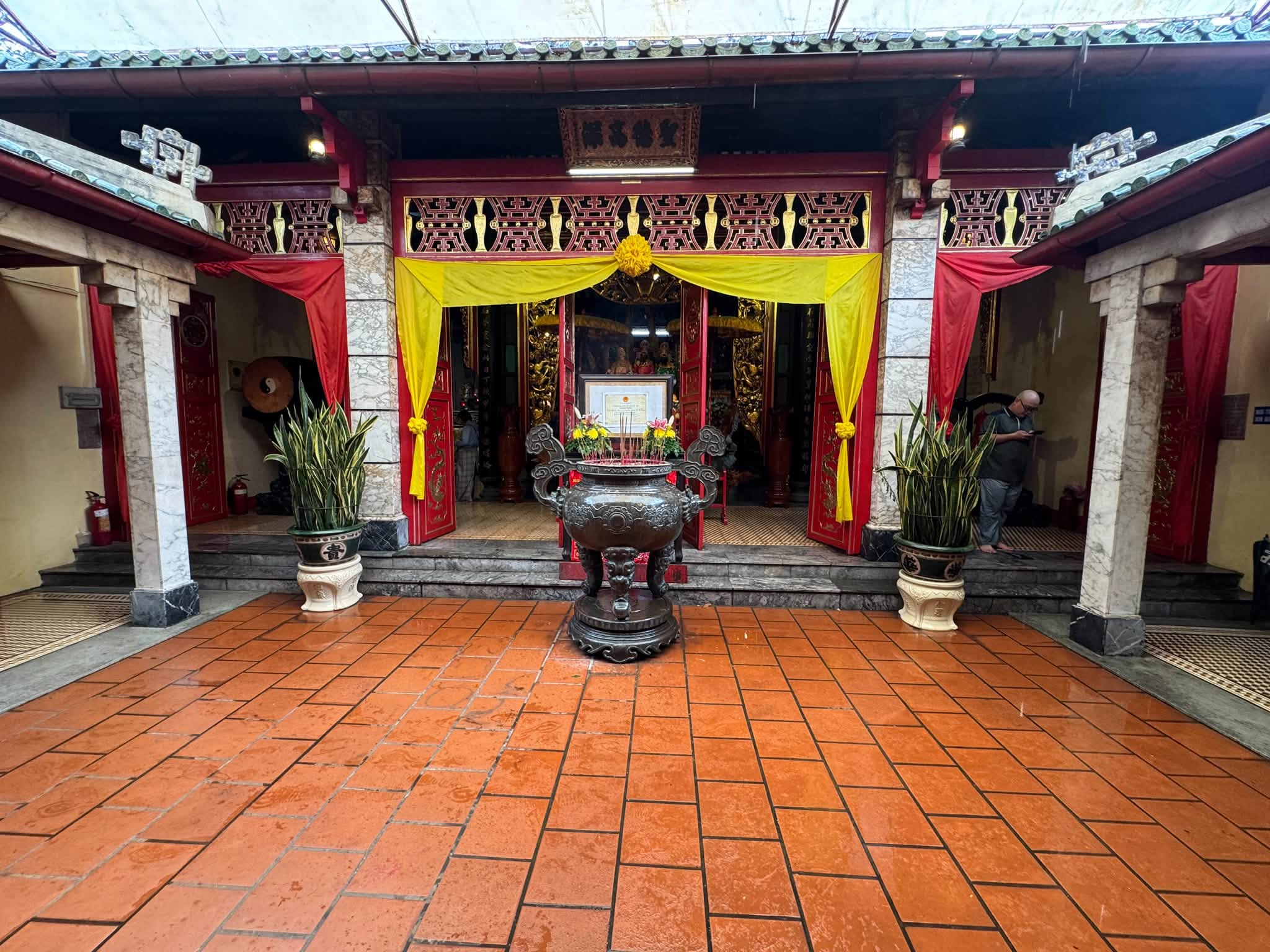
The tomb complex is therefore not merely an important historical monument in Ho Chi Minh City. It is also a living cultural space where historical memory, religious practices, traditional arts, and community life continue to be preserved and transmitted across generations.
Heritage Information
- Heritage name: Khai Ha – Cau An Festival at the Tomb of Marshal Le Van Duyet
- Heritage category: Traditional festival
- Location: Tomb of Marshal Le Van Duyet, Ho Chi Minh City, Vietnam
- Time of organization: The seventh day of the first lunar month every year
- Worshipped figure: Marshal Le Van Duyet, together with ancestors and deities honored at the monument
- Main rituals: Ha Neu, Khai Ha, Khai But, and Khai An
- Outstanding values: Commemoration of a historical figure, prayers for peace and favorable weather, preservation of traditional rituals, classical Hat Boi theater, southern Vietnamese folk beliefs, and strengthening of community solidarity
- Recognition document: Decision No. 785/QD-BVHTTDL dated April 4, 2022