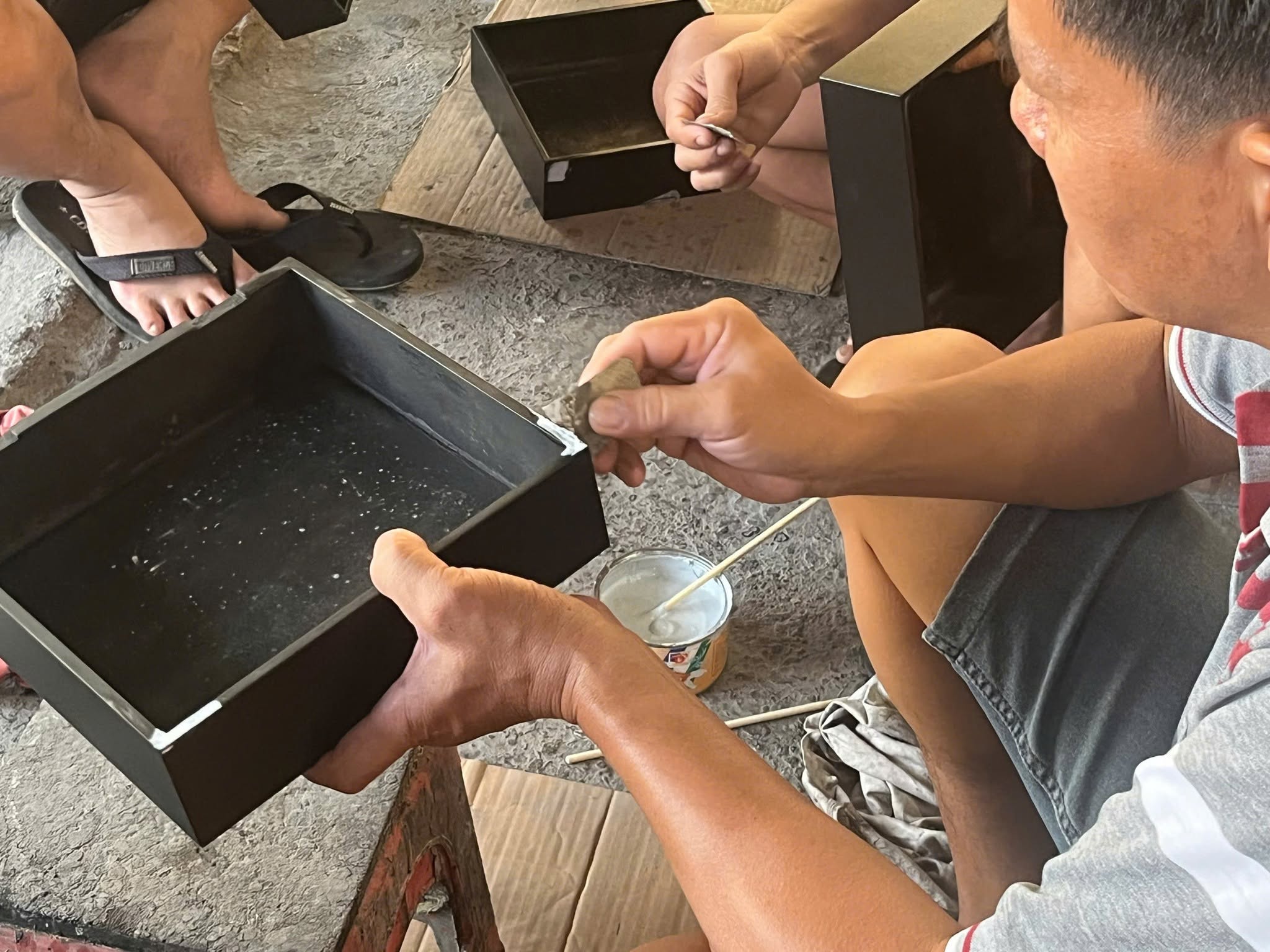
Among the traditional handicrafts associated with Binh Duong, the lacquerware craft of Tuong Binh Hiep holds a particularly important place. With a history spanning several centuries, the craft is renowned for its refined lacquer products, exceptional durability, sophisticated appearance, and distinctive characteristics of traditional Vietnamese art.
History and Development
The lacquerware craft is believed to have emerged in this area around the late seventeenth century, brought by settlers from northern and central Vietnam during the southward expansion and settlement process. These communities introduced their traditional handicraft techniques, cultural memories, and artistic knowledge to the new land. Over time, they incorporated local cultural elements into their work, gradually creating a distinctive style of lacquerware associated with Tuong Binh Hiep.
By the eighteenth century, the craft had begun to take shape and develop more systematically. In its early period, local artisans mainly practiced son son thiep vang, a traditional technique involving red lacquer and gilding, which was commonly used for religious objects, ceremonial items, and decorative purposes. The craft later evolved from traditional lacquer decoration into a more sophisticated form of lacquer art involving repeated coating, polishing, engraving, and decorative techniques.
A significant milestone came with the establishment of the Thu Dau Mot Indigenous School of Fine Arts in 1901, the predecessor of today’s Binh Duong Intermediate School of Fine Arts and Culture. The school helped systematize technical training, improve artisans’ skills, and promote the local lacquerware craft in a more professional direction. Traditional techniques were gradually combined with modern approaches to composition and design, resulting in products that possessed both practical and artistic value.
Techniques and Production Process
Tuong Binh Hiep lacquerware is distinguished above all by the use of natural lacquer, known as son ta, as its primary material. Artisans must master the preparation of lacquer, the treatment of the base, the application of multiple layers, and the final polishing process to create products with remarkable durability, depth, and gloss.
Depending on the type of product, the base, or voc, may be made from wood, plywood, ceramic, paper, or fabric. Once the base has been carefully prepared, artisans carry out a series of processes including surface preparation, priming, lacquer coating, decoration, sanding, and polishing. Each stage requires precision, patience, and extensive experience.
A traditional lacquerware piece may involve approximately 25 separate stages. The entire production process can take between three and six months, depending on the size, materials, and technical requirements of the product. Certain stages, such as surface preparation and priming, may need to be repeated several times to achieve the necessary smoothness, adhesion, and durability.
After the foundation has been completed, artisans decorate the surface with materials such as gold leaf, silver leaf, mother-of-pearl, shell, and eggshell. Representative techniques include engraved lacquer, mother-of-pearl inlay, eggshell inlay, gold and silver gilding, flat painting, raised painting, recessed painting, and openwork lacquer.
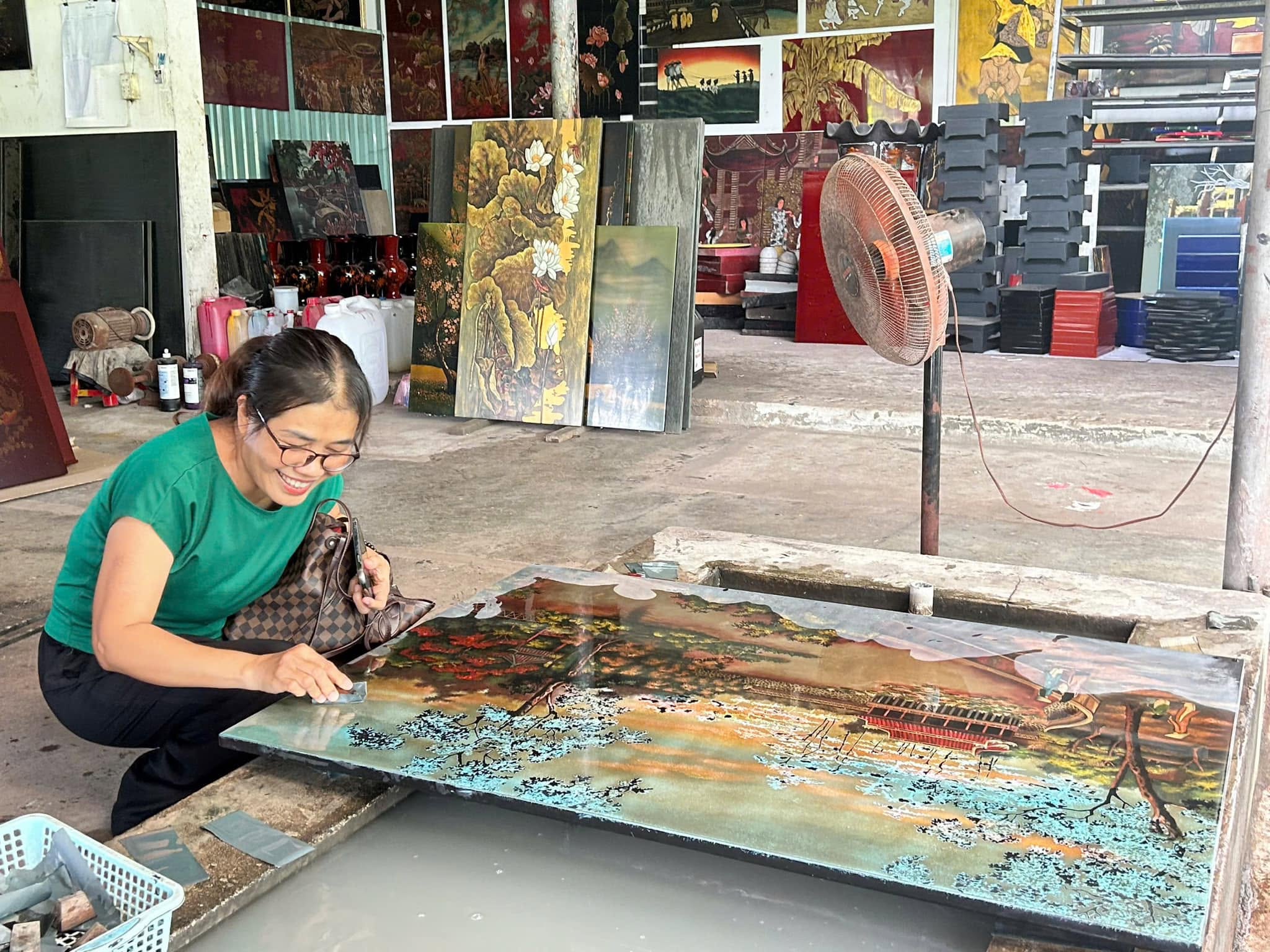
One of the most distinctive aspects of lacquerware is the sanding process. After numerous layers of lacquer have been applied, artisans carefully sand and polish the surface to gradually reveal the layers of color, patterns, and decorative materials beneath. This stage requires a highly refined aesthetic sense, as even a minor mistake can affect the appearance of the entire artwork.
Products and Artistic Characteristics
Tuong Binh Hiep lacquerware includes a wide range of products, such as artistic lacquer paintings, decorative objects including screens and ornamental panels, as well as functional products such as tables, chairs, cabinets, boxes, trays, vases, and household items.
These products are highly valued for their meticulous details, elegant patterns, harmonious compositions, and refined combination of colors and materials. Each piece reflects not only the artisan’s technical skill but also their creativity, artistic sensibility, and experience passed down through generations.
Different techniques and materials create distinctive visual effects. Mother-of-pearl inlay produces an iridescent surface, eggshell inlay creates a unique texture, while gold and silver gilding adds a sense of luxury and solemnity. Engraving, raised painting, and recessed painting contribute depth and subtle variation to the surface of the artwork.
Throughout its development, Tuong Binh Hiep lacquerware has reached domestic and international markets. Beyond their practical functions, these products have become decorative objects, artistic gifts, and cultural representations of Vietnamese craftsmanship.
Cultural Significance
The lacquerware craft of Tuong Binh Hiep represents the continuation of traditional handicraft knowledge, artistic creativity, and cultural exchange among communities involved in the historical settlement of southern Vietnam.
The value of the craft lies not only in its finished products but also in the extensive body of traditional knowledge accumulated over generations. This includes selecting and preparing materials, treating the base, mixing lacquer, creating colors, applying decorative techniques, sanding, and polishing. These skills require long-term training and are often transmitted directly from experienced artisans to younger generations.
Each Tuong Binh Hiep lacquerware product reflects a combination of manual labor and artistic thought. The overlapping layers of lacquer, intricate inlay work, delicate painting, and painstaking polishing create a distinctive artistic style that contributes to the richness of Vietnam’s traditional fine arts.
Despite historical changes and challenges, the lacquerware craft of Tuong Binh Hiep has preserved many of its defining characteristics. It is not only a source of livelihood for the local community but also a valuable cultural heritage that deserves to be protected, passed on, and promoted in contemporary life.
Heritage Information
- Name of heritage: The Traditional Lacquerware Craft of Tuong Binh Hiep
- Type: Traditional handicraft
- Location: Tuong Binh Hiep, Ho Chi Minh City, Vietnam
- Outstanding values: Historical, artistic, technical, and local cultural values
- Distinctive features: Natural lacquer, multiple lacquer layers, sanding and polishing, mother-of-pearl inlay, eggshell inlay, gold and silver gilding, engraved lacquer, raised painting, and recessed painting
- Recognition document: Decision No. 1328/QD-BVHTTDL dated April 6, 2016