The Yuanxiao Festival of the Hoa community in Ho Chi Minh City is a distinctive traditional celebration that reflects the religious beliefs, social customs, and cultural identity of the Hoa people, particularly in the Chợ Lớn area. Held on the fifteenth day of the first lunar month, the festival marks the first full moon of the lunar New Year and is an important occasion for community gatherings, worship, cultural performances, and the preservation of traditional customs.
Origins and Cultural Significance
The term “Yuanxiao” refers to the first full-moon night of the lunar year. While the Lunar New Year primarily emphasizes family reunions and household worship, the Yuanxiao Festival places greater emphasis on community life. Activities take place at clan associations, assembly halls, temples, family homes, and public streets, creating a lively cultural atmosphere throughout Chợ Lớn.
Different groups within the Hoa community attach particular meanings to the festival. Among the Hainanese, Yuanxiao is sometimes regarded as a “small New Year,” providing an opportunity for family members to reunite before men depart for maritime activities or work far from home. For the Hakka community, it is a time for gathering before leaving home to make a living elsewhere. Among Cantonese and Teochew communities, the festival is associated with social interaction, entertainment, economic exchange, and prayers for prosperity and good fortune.
The festival also demonstrates the diversity of religious beliefs among the Hoa people. Worshipped deities may include Mazu, Guan Yu, the Earth God known as Ông Bổn or the God of Wealth and Virtue, the Golden Dragon, the Three Officials, and various other deities in popular Chinese religious traditions.
Time and Places of Celebration
Yuanxiao-related activities generally begin around the tenth day of the first lunar month and continue until the end of the month. Community activities are often concentrated between the twelfth and eighteenth days, with the most important ceremonies taking place on the night of the fifteenth day.
The main venues are traditional assembly halls, temples, shrines, and community institutions in Chợ Lớn, especially in District 5. Each assembly hall follows the customs of its respective dialect group, resulting in a rich variety of rituals, performances, offerings, and forms of cultural expression.
Traditional Rituals and Offerings
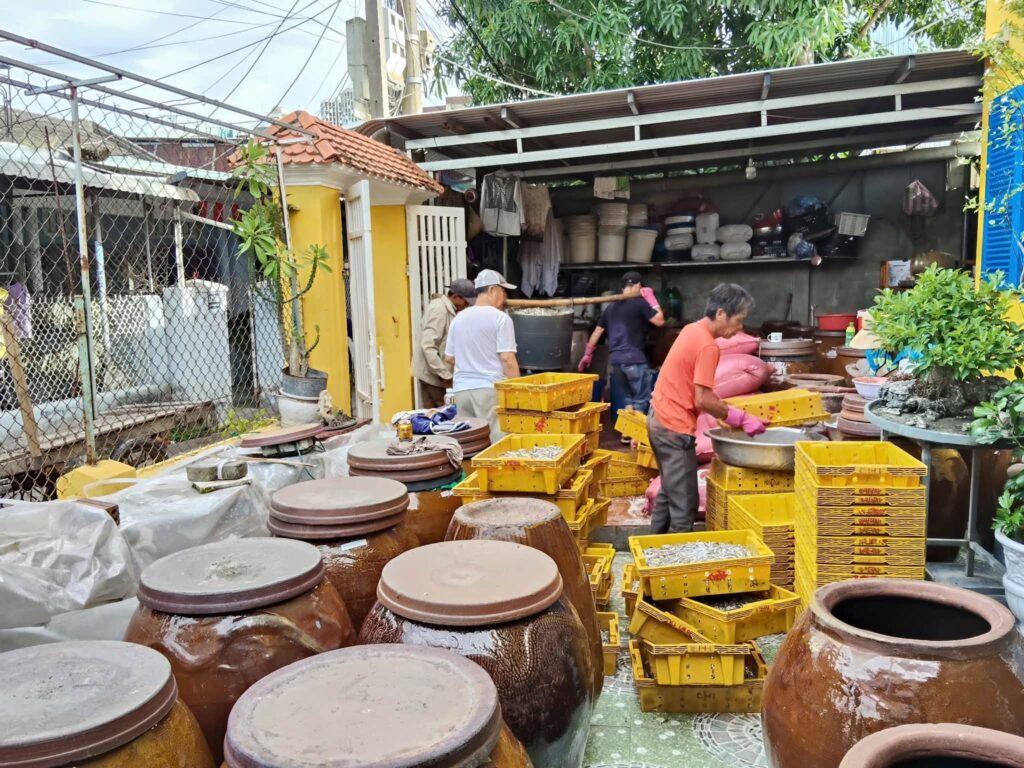
During the festival, families and community organizations prepare incense, candles, flowers, fruit, roasted pork, glutinous rice, and other offerings. A common ceremonial tray may include the traditional “three offerings,” consisting of crab, eggs, and pork. Other traditional foods include sponge cakes, steamed buns, willow-leaf-shaped cakes, turtle-shaped cakes, sweet rice dumplings, and trays of tangerines or oranges.
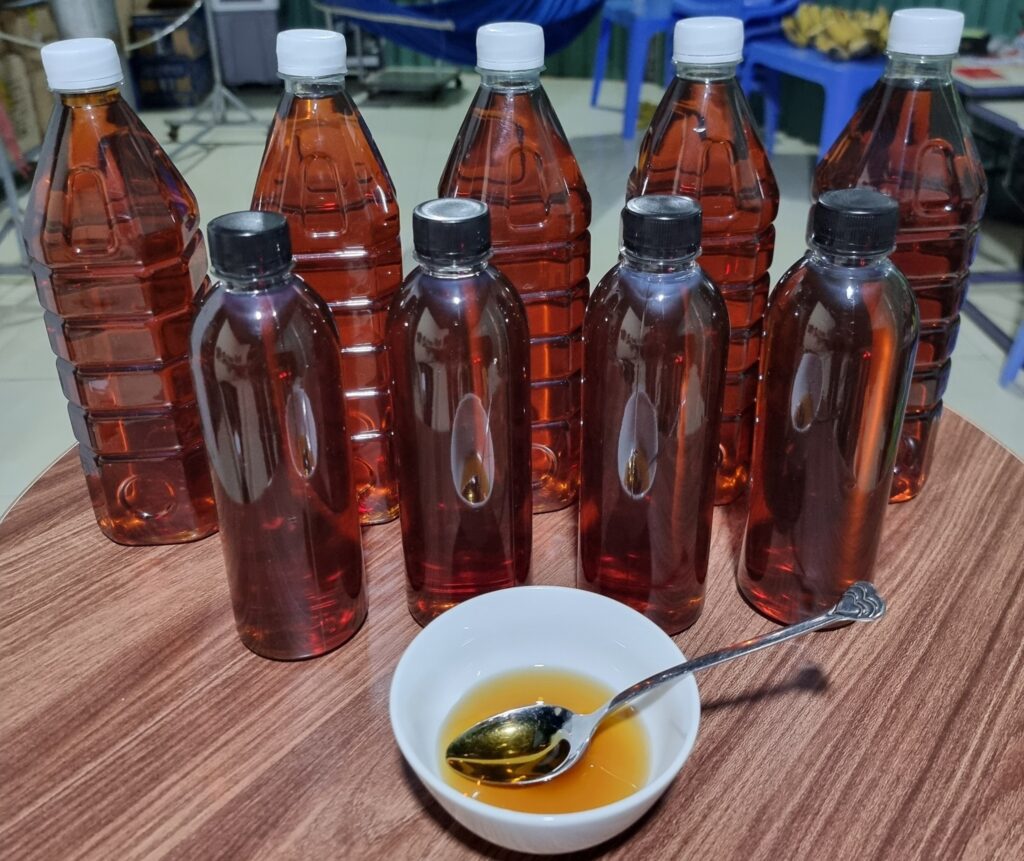
Lighting incense coils is a familiar practice in many Hoa temples and assembly halls. Worshippers may also hang or place prayer papers, offer lamp oil, receive red envelopes, and pray for peace, health, prosperity, and family well-being.
Several distinctive customs are associated with the festival. These may include passing beneath or entering the symbolic belly of a sacred horse, borrowing money symbolically for prosperity, receiving blessed lanterns, offering pairs of lamps, or passing ceremonial lanterns over the body as a ritual of purification and blessing. Although the forms vary between communities, these practices generally express wishes for good fortune, protection, success, and a peaceful new year.
Festival Activities at Traditional Assembly Halls
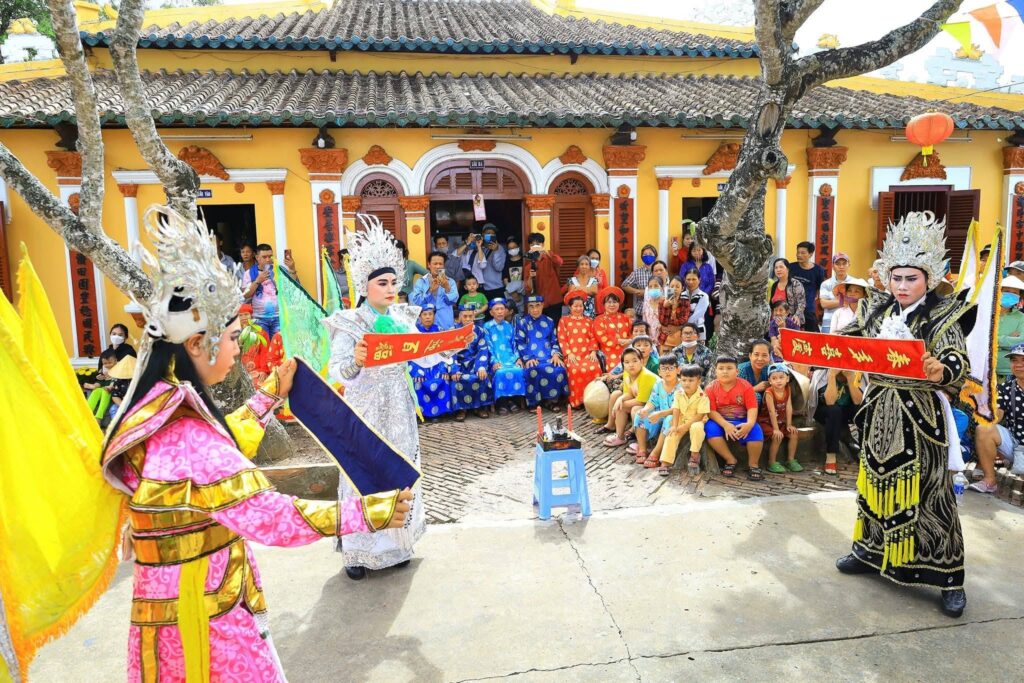
At the Nghĩa An Assembly Hall, dedicated to Guan Sheng Dijun, the festival often features a ceremonial procession in which the deity is symbolically invited to travel outside the temple and inspect the community. Worshippers participate in the procession, receive blessings, and join activities such as lantern auctions, religious ceremonies, Teochew opera performances, and lion and dragon dances.
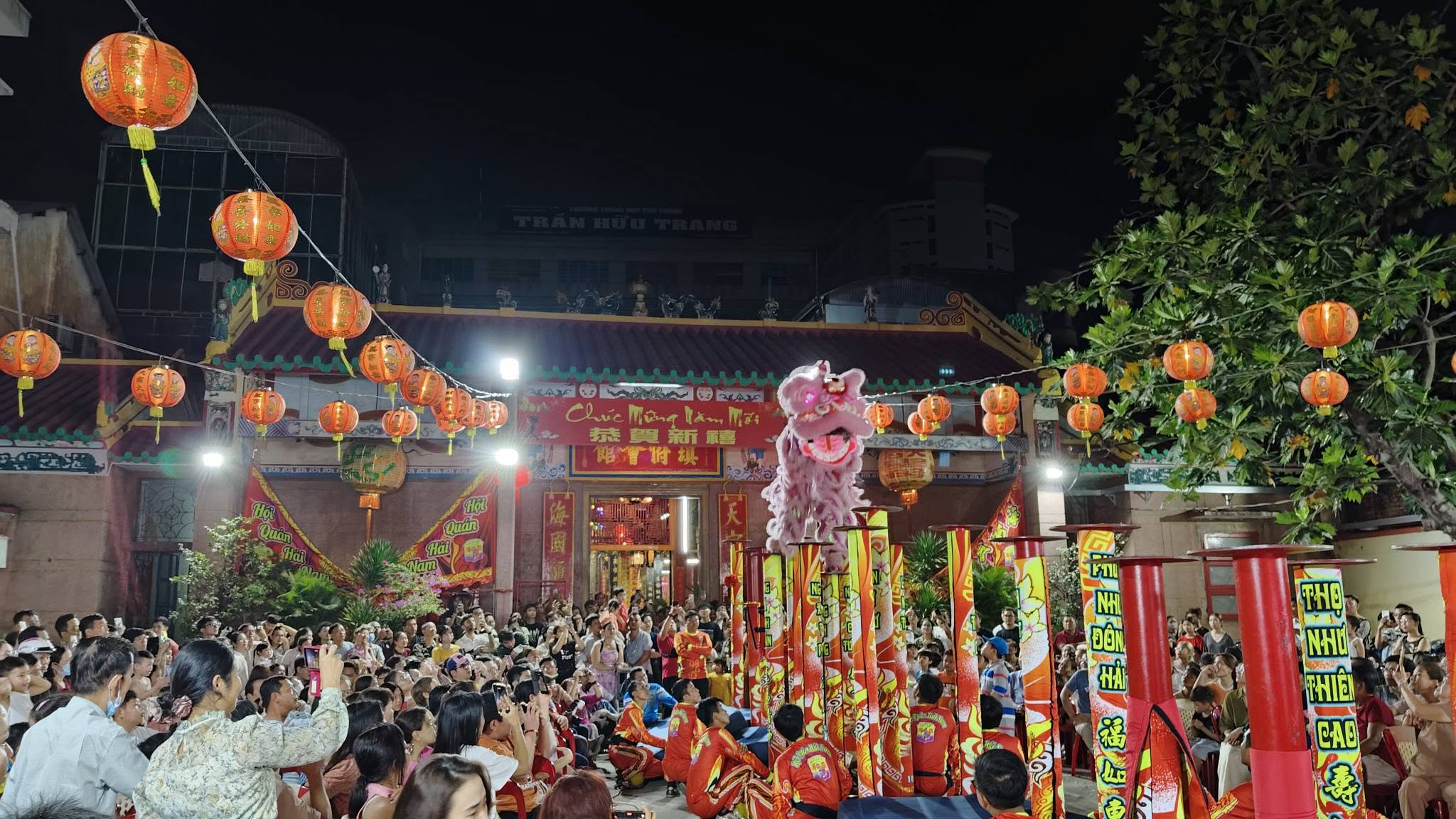
The Hainanese Assembly Hall traditionally organizes classical opera performances, musical presentations, and lion and dragon dances, creating a festive space for both worship and community entertainment.
At the Nhị Phủ Assembly Hall, worship is associated with Ông Bổn, also known as the Earth God or Phước Đức Chính Thần, as well as the Supreme Deity of Heaven. Ceremonies may include outdoor offerings, Hẩu dances, dragon dances, traditional Southern Fujian music, and performances featuring the Eight Immortals walking on stilts. These activities combine religious devotion with distinctive forms of folk performance.
Street Processions and Folk Performances
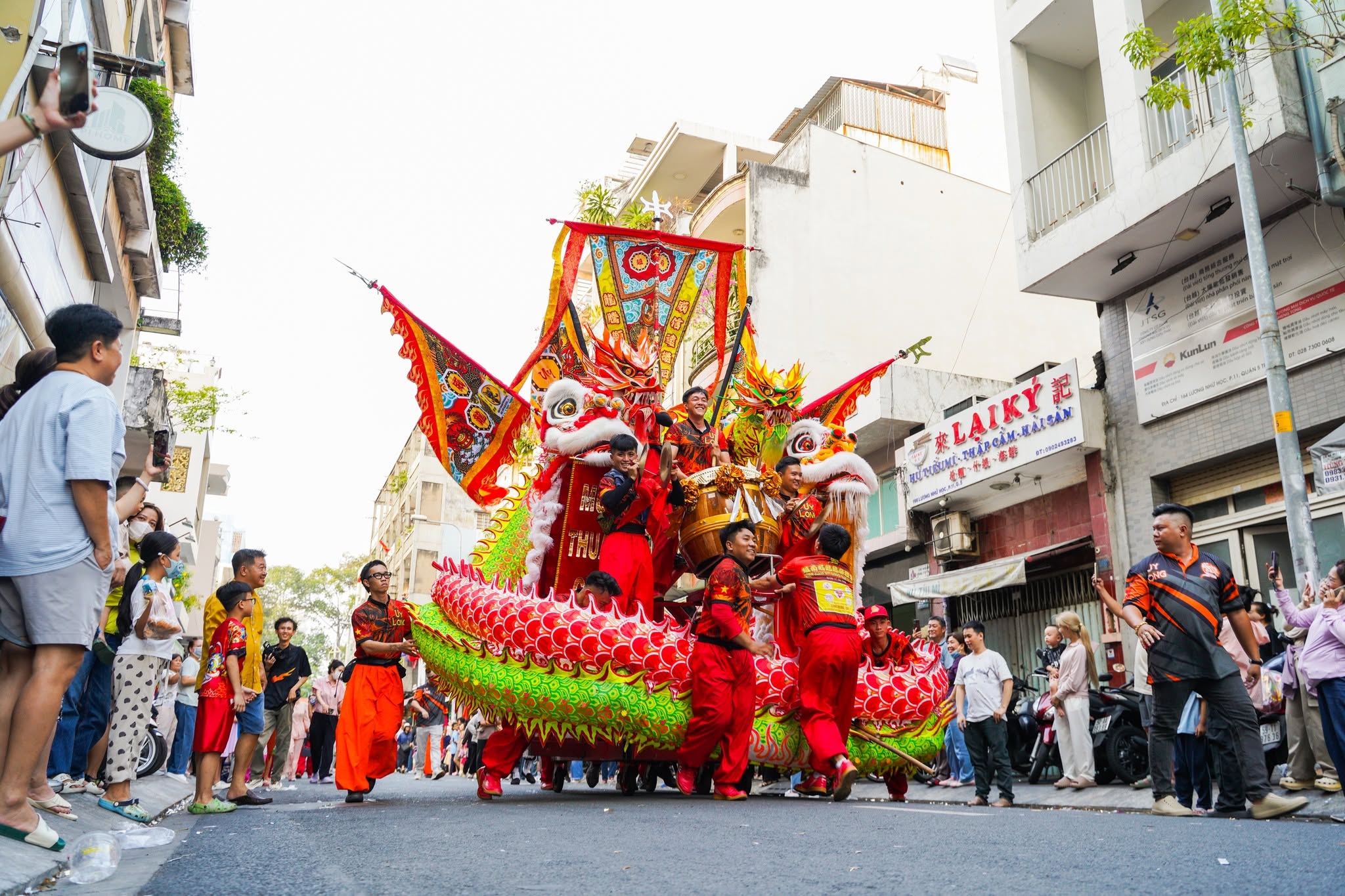
One of the most recognizable features of the Yuanxiao Festival in Chợ Lớn is the public street procession. The activities may take place along streets such as Châu Văn Liêm, Lão Tử, Lương Nhữ Học, Nguyễn Trãi, Trần Xuân Hòa, Trần Hưng Đạo, and Hải Thượng Lãn Ông.
The processions feature lion and dragon dances, cymbals, large ceremonial drums, Teochew percussion ensembles, stilt-walking performers portraying the Eight Immortals, and costumed characters representing different groups within the Hoa community. The combination of sound, movement, costumes, and religious symbolism creates a vibrant public celebration that attracts both local residents and visitors.
These performances are not merely forms of entertainment. They are also important vehicles for transmitting traditional music, dance, costumes, ritual knowledge, craftsmanship, and community history from one generation to the next.
Cultural Exchange and Intercommunity Interaction
The Yuanxiao Festival demonstrates the cultural diversity of the Hoa community in Ho Chi Minh City while also reflecting long-term interaction with Vietnamese culture and other ethnic communities.
Although each dialect group maintains its own customs, they share common elements such as ancestor worship, prayers for peace and prosperity, communal gatherings, processions, traditional food, and folk performances. Over time, these practices have developed within the multicultural environment of Ho Chi Minh City, creating a form of cultural exchange that is both distinctive and open to wider society.
The festival also provides opportunities for people from different backgrounds to participate in cultural activities, observe religious ceremonies, enjoy traditional performances, and gain a better understanding of the historical and cultural contributions of the Hoa community.
Historical, Cultural, and Economic Values
The Yuanxiao Festival plays an important role in strengthening community solidarity. It brings together families, clans, religious institutions, business groups, and neighborhood communities, reinforcing social relationships and a shared sense of identity.
The festival also contributes to the preservation of traditional beliefs, rituals, performing arts, music, costumes, cuisine, handicrafts, and forms of communal organization. It serves as a living cultural environment in which knowledge and practices are passed down through participation rather than merely through written records.
In addition, the festival has become an important cultural attraction in Chợ Lớn. Its religious ceremonies, colorful processions, lion and dragon dances, opera performances, and traditional foods create opportunities for cultural tourism and support local commercial activities, hospitality, food services, and other community-based businesses.
The celebration therefore represents not only a religious occasion but also a valuable expression of intangible cultural heritage, community continuity, intercultural exchange, and urban cultural life.
Heritage Information
- Heritage name: Yuanxiao Festival of the Hoa Community
- Official heritage record: Social Customs and Religious Practices of the Yuanxiao Festival of the Hoa Community in District 5, Ho Chi Minh City
- Heritage category: Social customs and religious practices
- Location: Chợ Lớn area, with a focus on District 5, Ho Chi Minh City
- Time of celebration: From approximately the tenth day until the end of the first lunar month, with major activities concentrated between the twelfth and eighteenth days and the main ceremony held on the fifteenth day
- Worshipped deities: Thien Hau Thanh Mau, Guan Sheng Dijun, Ông Bổn or Phước Đức Chính Thần, the Three Officials, the Three Origins, the Golden Dragon, and other deities in Chinese folk religious traditions
- Cultural values: Community solidarity, religious traditions, folk performing arts, traditional cuisine, cultural exchange, heritage preservation, and cultural tourism
- Recognition document: Decision No. 262/QĐ-BVHTTDL, issued by the Ministry of Culture, Sports and Tourism on January 22, 2020