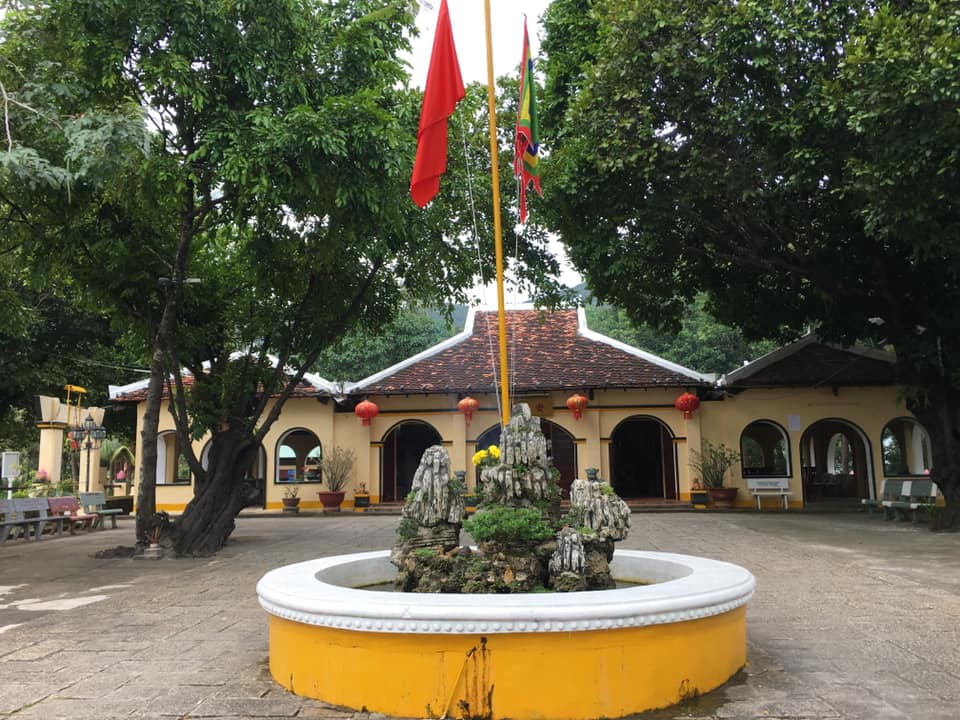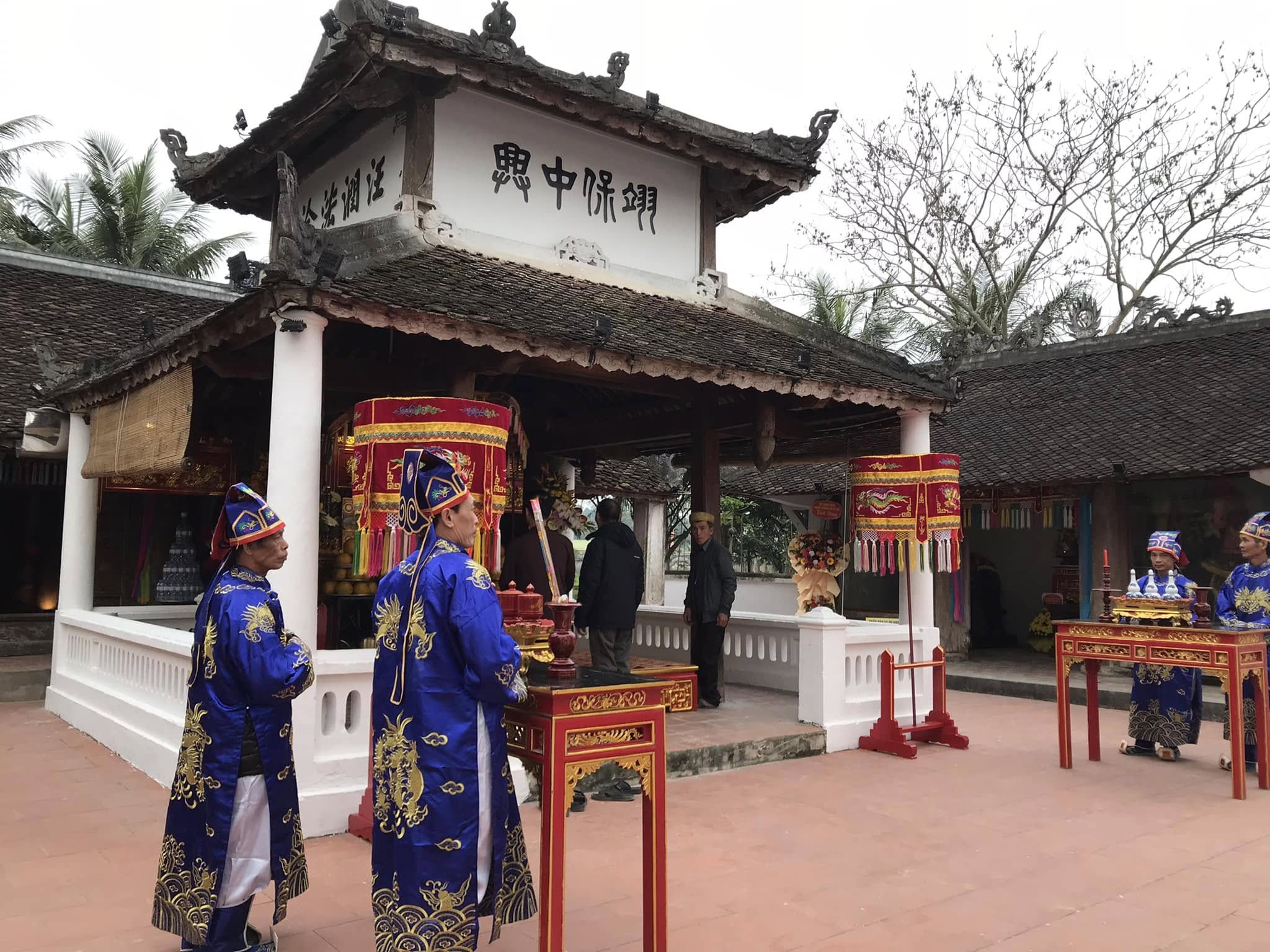
Bach Ma Temple is one of the notable historical and architectural-artistic heritage sites in Thanh Chuong, Nghe An Province. The temple is associated with the life and career of General Phan Da, a military commander who made important contributions to the Lam Son uprising against the Ming army. Beyond its ancient architecture and sacred atmosphere, Bach Ma Temple is also known for a distinctive traditional festival that reflects the Vietnamese tradition of remembering one’s roots, the martial spirit, and the strong community bonds of people living along the Lam River.
Bach Ma Temple is now located in Tan Ha Hamlet, Kim Bang Commune, Nghe An Province. The site was formerly located in Vo Liet Commune, Thanh Chuong District. For generations, the temple has been celebrated in a local saying:
“First Con, second Qua, third Bach Ma, fourth Chieu Trung.”
This traditional saying places Bach Ma Temple among the most renowned temples in Nghe An in terms of scale, architecture, and sacred significance.
Bach Ma Temple and General Phan Da
Bach Ma Temple was built around the 15th century to worship Phan Da, a young and talented general known for his courage and contributions to the resistance against the Ming invasion. Phan Da was born in the Chi Linh area of Tho Du District, now part of Khai Tien Hamlet, Kim Bang Commune, Nghe An Province. He came from a fishing family living along the Lam River and grew up during the period when Vietnam was under Ming occupation.
According to local legends and traditional sources, Phan Da was intelligent and handsome from an early age. He was physically strong and skilled in martial arts and archery. At a time when foreign forces brought hardship to the population, he gathered local young men, organized martial training, built up militia forces, and carried out numerous attacks and ambushes against the enemy.
In 1424, when the Lam Son forces led by Le Loi advanced into Nghe An, Phan Da brought his own forces to join the uprising. Thanks to his military ability and courage, he gained Le Loi’s trust and participated in important battles in areas including Tra Lan, Do Gia, Tien Hoa Cave and other parts of Nghe An.
Phan Da was said to have worn white armor, ridden a white horse, and led his troops at the forefront of battles. This image gave rise to the title “Bach Ma Deity”, which later became closely associated with the temple dedicated to him.
He was later assigned to defend Binh Ngo Citadel in the former Thanh Giang area. In 1426, during an unequal battle on the northern bank of the Lam River, Phan Da was seriously wounded. While being taken back toward his homeland, he died in the Cong Trung area of Lai Thanh, now Trung Thanh Hamlet, Thanh Long Commune, Nghe An Province. According to local tradition, his body was covered by ants at a place known as Mo Ca. Local people believed that the general had become a sacred protective spirit and established a shrine in his honor.
After ascending the throne, King Le Loi posthumously honored Phan Da with the title “Great General” and later bestowed the title “Do Thien Dai De Bach Ma Thuong Dang Phuc Than”. The court provided financial support for the construction of the temple and entrusted local residents with maintaining the worship. Later dynasties continued to confer increasingly exalted titles upon him, including “Thuong – Thuong – Thuong Dang Toi Linh Ton Than”.
Bach Ma Temple consists of five main buildings and has a substantial architectural scale, imposing appearance, and numerous finely carved decorative details. The complex was renovated several times, particularly during the Nguyen Dynasty, while retaining many traditional architectural features. The site was recognized as a national historical and architectural-artistic relic under Decision No. 226/QD-BT dated February 5, 1994, issued by the Ministry of Culture and Information, now the Ministry of Culture, Sports and Tourism.
The temple is also associated with several important historical events. In 1465, during the reign of King Le Thanh Tong, the king visited the temple and conducted a ceremonial offering while traveling on a southern military campaign. In 1770, during the reign of King Le Hien Tong, Marquis Bui The Dat also came to the temple to conduct a ceremony before departing for battle. According to local tradition, stories of miraculous responses following prayers and ceremonies contributed to the temple’s growing reputation for sacredness.
During the Xo Viet Nghe Tinh movement of 1930–1931 and the wars against French colonial forces and the United States, the Bach Ma Temple area continued to be associated with revolutionary activities undertaken by local people.
Distinctive Rituals of the Bach Ma Temple Festival
The Bach Ma Temple Festival has a history of approximately 500 years, developing alongside the establishment of the temple and the worship of General Phan Da. During the feudal period, the festival was once regarded as an official state ritual, known as “Dien Le Quoc Te” or “quoc tao”, in which ceremonies honoring deities were conducted according to formal regulations by court officials or representatives authorized by the royal court.
In the past, the festival was held on the 13th day of the sixth lunar month, believed to be the death anniversary of General Phan Da and associated with the Ky Phuc Luc Ngoat ritual. From around 1945 to 1994, due to historical circumstances, the festival was conducted on a reduced scale, with the traditional worship ceremonies and vat cu wrestling game being among the main activities that continued.
After Bach Ma Temple was recognized as a national relic in 1994, local authorities and residents gradually restored the festival, bringing back a wider range of rituals and activities. Today, the festival is usually held from the 8th to the 10th day of the second lunar month. This timing avoids the hottest period in central Vietnam and also corresponds with the agricultural off-season and traditional beliefs concerning the season of growth and renewal.
Purification, Cleansing and Inviting the Deity
At dawn on the 8th day of the second lunar month, the festival begins with rituals of purification, cleansing and bathing the sacred objects. The water used in the ceremony is collected from the area where the Ro, Giang and Lam rivers meet, together with aromatic leaves traditionally used for purification.
The ritual procession then travels to the tomb of General Phan Da in the Thanh Long Commune area to conduct purification rites and invite the spirit of the general to attend the festival. This is one of the important rituals in the festival sequence, symbolically connecting the temple, the tomb and the homeland of the revered general.
The chief celebrant formally invites Phan Da to witness the ceremony and bless the community with favorable weather, safe journeys, and peace and good fortune for residents and visitors attending the festival. The procession then continues to Phu Ngoai in Khai Tien Hamlet to conduct a ceremony honoring the parents of General Phan Da, expressing gratitude for the parents who gave birth to and raised the revered hero.
On the afternoon of the 9th day, local residents carry the ancestral tablet of Phan Da from Bach Ma Temple to Phu Ngoai for a ceremony honoring and inviting the general’s parents to attend the festival. The procession passes through the former territories of Vo Liet and Thanh Long, stopping at seven traditional reception points in Tan Ha, Truong Yen, Trung Duc, Lam Giang, Khai Tien, Lien Ky and Tien Thanh.
At each reception point, local residents prepare an altar, offerings, vegetarian and meat dishes, and appoint respected elders dressed in traditional long robes and turbans to welcome the procession. These stops serve as occasions for worship, offering incense, expressing gratitude and praying for blessings. They also allow the procession to rest, reorganize its formation and replenish incense and ceremonial offerings along the route.
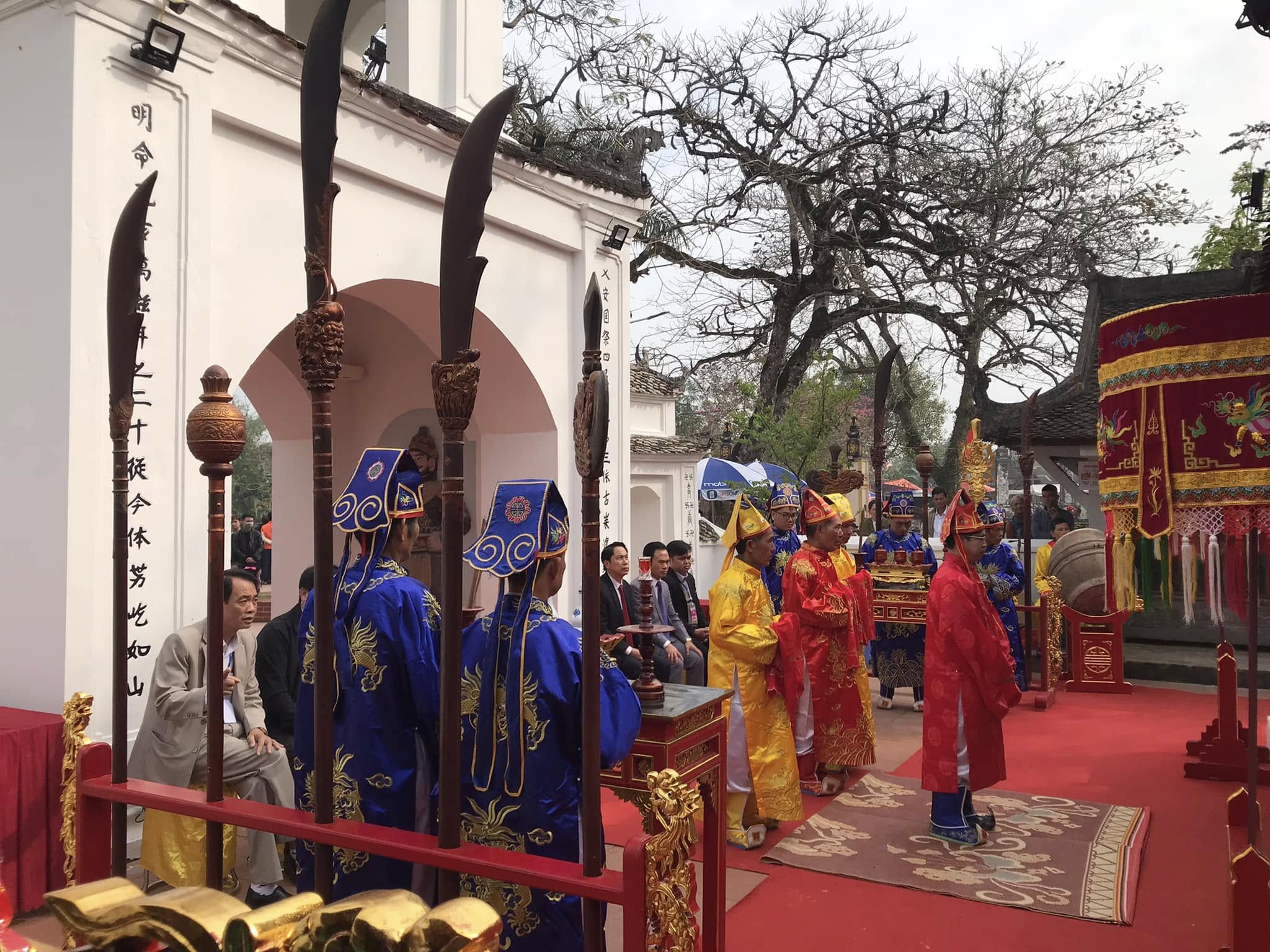
The procession includes two large palanquins, including a long-dinh palanquin and a banh palanquin used to carry General Phan Da and the accompanying deities. A smaller offering palanquin carried by two people leads the procession, followed by attendants carrying ceremonial objects and traditional weapons such as swords and blades. Palanquin bearers are carefully selected. They are expected to be physically strong, morally respectable, from well-regarded families, and trained before the festival.
When the procession reaches Phu Ngoai, the ceremonial committee conducts rites honoring the parents of Phan Da and formally invites them to attend the festival. The procession then returns to the temple for the yen cao ceremony, reporting to the deities and respectfully inviting them to witness the festival. One of the traditional offerings in this ceremony is fried river fish, a food closely associated with the lives of communities along the Lam River.
The 10th day of the second lunar month is devoted to the Great Ceremony and the thanksgiving ritual. Residents offer their gratitude to the deities, ancestors and historical figures believed to have protected the community and supported the successful organization of the festival. They also pray for peace, good harvests, healthy livestock and poultry, and prosperity for the community.
Vat Cu Wrestling and the Cultural Values of the Festival
Alongside its solemn rituals, vat cu wrestling is the most distinctive activity of the Bach Ma Temple Festival. It is regarded as a tuc hem, a traditional sacred performance that recreates aspects of General Phan Da’s recruitment and training of soldiers during the resistance against the Ming forces.
According to legend, while governing the Tho Du area, Phan Da selected strong and agile young men from surrounding villages to strengthen his fighting force. He organized vat cu competitions to identify people with physical strength, agility, coordination and team spirit. The game functioned both as a form of military recruitment and as physical and mental training for local militia members.
Traditionally, the cu ball was made from a large banana trunk, carved into a round shape approximately 30 centimeters in diameter and weighing between 5 and 7 kilograms. After being shaped, the ball was boiled briefly and then dried in the sun to increase its flexibility and reduce the risk of cracking during the competition.
In the past, the Bach Ma festival featured three forms of vat cu: cu gon, cu day and cu nuoc. Today, cu gon is the most commonly practiced form. Two holes measuring approximately 50 by 50 centimeters are dug at opposite ends of the playing field, with festival flags placed above them. Each match generally lasts around 15 minutes, with seven players on each team. Players compete to move the cu ball into the opponent’s hole, while direct holding or wrestling with opponents is prohibited.
A vat cu match combines strength, speed, judgment and collective strategy. Players must not only be physically strong but also coordinate with teammates, support one another and maintain discipline. According to local beliefs, victory in the game brings good fortune to the winning village in the coming year. Although the prizes are usually symbolic, the spiritual significance of the competition is considerable, expressing hopes for abundant harvests, thriving livestock, good health for young and old, and peaceful community life.
In addition to vat cu, the festival historically included mock battles, tug-of-war, cockfighting, swings, human chess, traditional board games, martial arts competitions and singing contests. These activities created an atmosphere that was both solemn and lively, attracting residents, officials and visitors from surrounding areas.
The rituals of the festival, from offerings, incense ceremonies and palanquin processions to the arrangement of sacred spaces, ceremonial costumes, movements and the sequence of worship, all bear traces of traditional court ceremonial practices. The festival therefore reflects an interaction between folk beliefs, the worship of national heroes and formal state rituals developed throughout Vietnamese history.
The Bach Ma Temple Festival is not only an occasion to commemorate and honor General Phan Da. It is also a cultural space where traditional customs, beliefs and community practices of the Thanh Chuong region continue to be preserved. The festival contributes to educating younger generations about patriotism, resistance against foreign aggression and gratitude toward those who sacrificed themselves for their homeland and country.
Beyond its connection with military recruitment and soldier training, vat cu is also interpreted as a symbol associated with agricultural beliefs in rice-growing communities. The movement of the cu ball and collective efforts to compete for it may be connected with traditional ideas of vitality, fertility and aspirations for prosperity.
With its outstanding historical, cultural, religious and folk-artistic values, the Bach Ma Temple Festival was included in the National Intangible Cultural Heritage List by the Minister of Culture, Sports and Tourism under Decision No. 2969/QD-BVHTTDL dated August 27, 2019.
Heritage Information
| Item | Information |
|---|---|
| Heritage name | Bach Ma Temple Festival |
| Heritage type | Traditional festival |
| Location | Bach Ma Temple, Tan Ha Hamlet, Kim Bang Commune, Nghe An Province |
| Festival space | Bach Ma Temple, procession routes through villages in the former Vo Liet and Thanh Long areas, and traditional reception points |
| Festival period | From the 8th to the 10th day of the second lunar month each year |
| Worshipped figure | General Phan Da, known as Bach Ma Thuong Dang Phuc Than |
| Associated monument | Bach Ma Temple, a national historical and architectural-artistic relic |
| Monument recognition | 1994 |
| Intangible heritage recognition | 2019 |
| Key values | Historical, religious, ritual, folk-artistic, martial and community values |
| Recognition decision | Decision No. 2969/QD-BVHTTDL dated August 27, 2019 |