Binh Duong pottery is a traditional handicraft with a history closely associated with the formation and development of local communities in southern Vietnam. The craft emerged in the mid-19th century, developing alongside the settlement of communities and the expansion of handicraft production in the region. Over time, pottery became an important part of the cultural and economic life of local residents.
The craft is particularly associated with traditional pottery-making centers such as Chánh Nghĩa, Lái Thiêu, and Tân Phước Khánh. Among these, Lái Thiêu became one of the areas with the longest and most distinctive pottery traditions.
Table of Contents
ToggleOrigins and Development
Binh Duong pottery began to take shape around the middle of the 19th century and was closely connected with communities of Chinese migrants who settled in the region. These communities brought pottery-making knowledge and techniques that gradually interacted with local conditions and materials.
Over generations, pottery production expanded and formed several important production centers. Chánh Nghĩa, Lái Thiêu, and Tân Phước Khánh became well-known pottery areas, each developing distinctive characteristics in production and products.
The development of pottery was closely connected with the needs of everyday life. Local kilns produced a wide range of household utensils and ceramic objects, making pottery an important traditional craft in the region.
Lái Thiêu Pottery
Among Binh Duong’s traditional pottery centers, Lái Thiêu is particularly notable for its long-standing history. The area developed into an important pottery-producing center and became widely known for household ceramics.
Binh Duong pottery reached an important period of development between approximately 1930 and 1950, when pottery production expanded and products were widely used in daily life.
Traditional products included various household vessels and utensils. Their forms and production methods reflected both practical needs and the skills accumulated by generations of local artisans.
Traditional Production Techniques
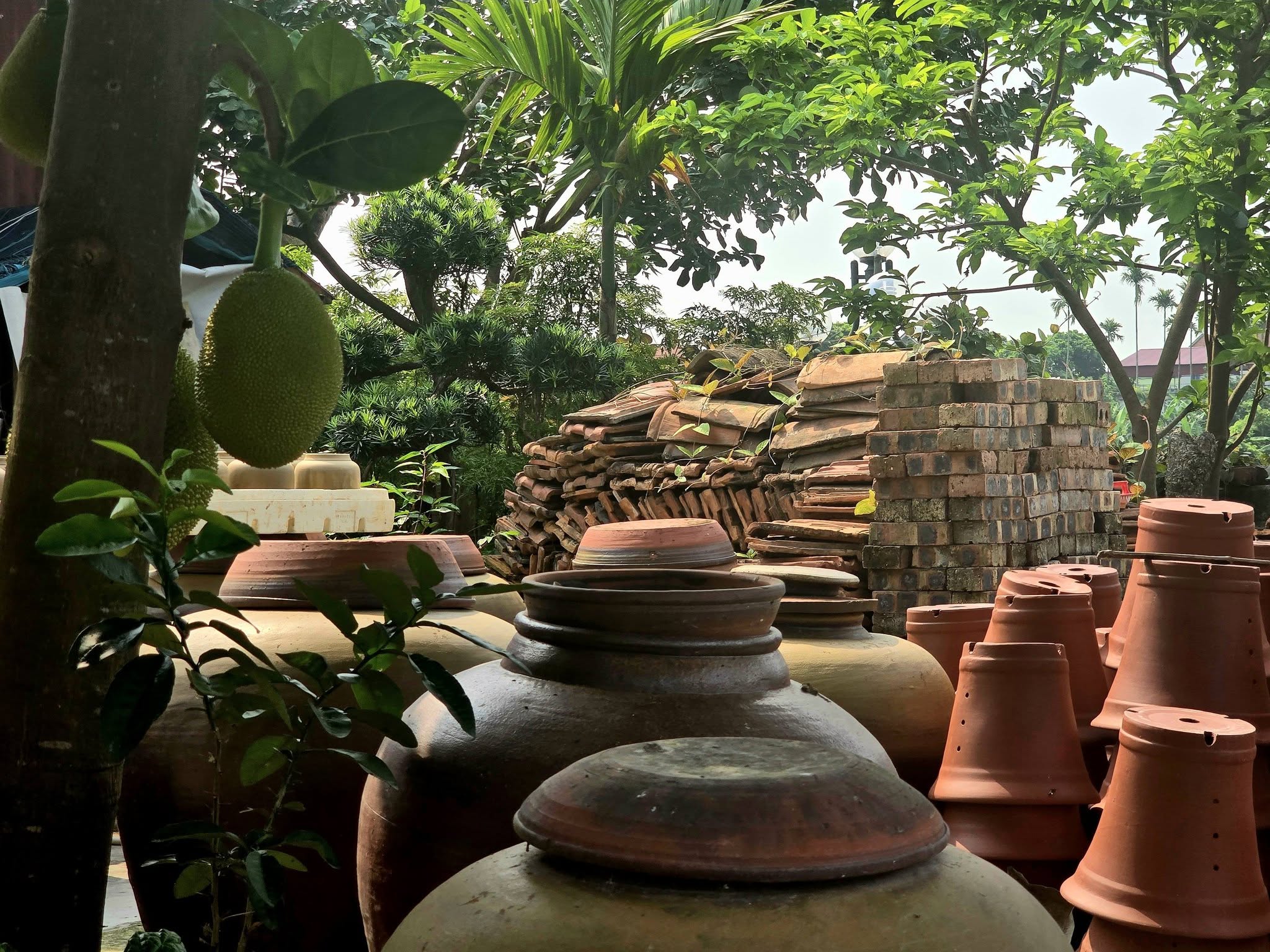
Traditional Binh Duong pottery relies on a combination of locally available materials, skilled craftsmanship, and firing techniques passed down through generations.
The production process requires artisans to carefully prepare the clay, shape the products, dry them, apply appropriate surface treatments, and fire them in kilns. Each stage demands experience and technical knowledge to ensure that the finished products achieve the desired form and quality.
Traditional kilns were therefore not merely places for firing ceramics. They were also important spaces where technical knowledge and craft traditions were transmitted from one generation to the next.
The Role of Traditional Kilns
Traditional kilns played a central role in the development of Binh Duong pottery. Among the surviving examples, the Đại Hưng Kiln is an important site associated with the history of the local craft.
The Đại Hưng Kiln was recognized as a provincial-level historical and cultural relic in 2006, contributing to the preservation of the material heritage associated with traditional pottery production.
Such kiln sites provide valuable evidence of the history, techniques, and working environment of generations of pottery artisans.
From Traditional Craft to Modern Production
Like many traditional handicrafts, Binh Duong pottery has undergone significant changes as production methods and consumer demand have evolved. Modern technology and industrial production have changed the way ceramic products are manufactured, while traditional pottery establishments have sought to adapt to new economic and market conditions.
Despite these changes, traditional techniques, product forms, craftsmanship, and the knowledge accumulated by generations of artisans remain important elements of the craft’s cultural identity.
The preservation of traditional pottery therefore involves not only maintaining physical products and old kilns but also safeguarding the knowledge, skills, production techniques, and cultural practices associated with the craft.
National Intangible Cultural Heritage
On February 3, 2021, Binh Duong pottery craft was included in the National Intangible Cultural Heritage List under the category of Traditional Handicrafts, according to Decision No. 598/QD-BVHTTDL issued by the Ministry of Culture, Sports and Tourism.
The recognition reflects the historical, cultural, and craftsmanship values accumulated through generations of pottery production in the region.
Today, Binh Duong pottery remains an important part of the cultural heritage of southern Vietnam. Its history reflects the interaction between communities, the adaptation of traditional craftsmanship to local conditions, and the continuity of knowledge and skills passed down through generations.
Quick Information
| Item | Information |
|---|---|
| Heritage name | Binh Duong Pottery Craft |
| Type | Traditional Handicraft |
| Origins | Mid-19th century |
| Traditional pottery centers | Chánh Nghĩa, Lái Thiêu, Tân Phước Khánh |
| Notable development period | Approximately 1930–1950 |
| Notable kiln | Đại Hưng Kiln |
| Đại Hưng Kiln recognition | Provincial-level relic, 2006 |
| National Intangible Cultural Heritage | Decision No. 598/QD-BVHTTDL, dated February 3, 2021 |
| Key values | Traditional craftsmanship, pottery-making knowledge, techniques, and community cultural heritage |
Location: Traditional pottery centers in the former Bình Dương area, including Chánh Nghĩa, Lái Thiêu, and Tân Phước Khánh, now within Ho Chi Minh City.