


The Con Dao National Historical Relics Conservation Center was established through the merger of the Con Dao Relics Management Board and the Con Dao Museum. Its primary responsibilities have included preserving, managing, and promoting the historical heritage of Con Dao, an archipelago off the southeastern coast of Vietnam.
The center has played an important role in protecting one of Vietnam’s most significant historical prison complexes, preserving buildings, documents, photographs, and artifacts associated with the country’s struggle for independence.
Through conservation, research, exhibitions, and educational activities, the historical legacy of Con Dao continues to be introduced to Vietnamese and international visitors.
History of the Con Dao National Historical Relics Conservation Center
The Con Dao National Historical Relics Conservation Center was formed by combining two organizations: the Con Dao Relics Management Board and the Con Dao Museum.
Under its former administrative structure, the center operated as a public institution under the Department of Culture and Sports of Ba Ria – Vung Tau Province.
Its responsibilities included preserving historical monuments, managing museum collections, restoring heritage structures, and promoting the cultural and historical significance of Con Dao.
The merger aimed to strengthen coordination between heritage conservation, historical research, artifact management, and visitor services.
Today, Con Dao’s historical sites continue to serve as important destinations for education, historical research, and cultural tourism.
Con Dao Prison Complex and Its Historical Significance
The Con Dao Prison Complex was established by the French colonial administration in 1862 and remained in operation until 1975.
During its 113-year history, the prison system was used to detain generations of Vietnamese patriots, political prisoners, and revolutionary activists under French colonial rule and later the Republic of Vietnam.
Several prison facilities remain as historical landmarks, including Phu Hai Prison, Phu Son Prison, Phu Tuong Prison, the French Tiger Cages, the American Tiger Cages, and the Cow Sheds detention area.
These structures provide evidence of the harsh detention conditions and treatment experienced by prisoners during different historical periods.
Beyond documenting imprisonment and suffering, the historical sites also preserve stories of solidarity, resistance, education, and political organization among prisoners.
Today, the surviving buildings are protected as part of Vietnam’s historical heritage and are open to visitors for educational and research purposes, subject to local regulations.
Con Dao’s Special National Historical Relic Status
Recognizing its outstanding historical significance, the Con Dao Prison Complex has received several important heritage designations.
On April 29, 1979, the Ministry of Culture and Information issued Decision No. 54/VHTT.QD, recognizing the Con Dao Revolutionary Historical Relic Complex as a site of exceptional national importance.
On May 10, 2012, the Prime Minister of Vietnam issued Decision No. 548/QD-TTg, officially recognizing the Con Dao Prison Historical Relic as a Special National Relic.
According to the published historical documentation, the protected heritage area covers approximately 110.69 hectares, including buildings and locations associated with the former prison system.
This designation acknowledges the historical importance of Con Dao and provides a legal framework for protecting, restoring, and promoting its heritage.
Conservation and Restoration of Historical Sites
One of the center’s main responsibilities has been the preservation and protection of historical structures within the Con Dao Prison Complex.
Conservation activities include documenting historical buildings, maintaining scientific records, monitoring their condition, preserving original architectural features, and proposing restoration projects.
Many structures have existed for decades or even more than a century. Their coastal location also exposes them to humidity, salt air, tropical rainfall, and other environmental factors.
As a result, conservation work requires careful planning and specialized techniques to protect the historical authenticity of each site.
In addition to preserving buildings, heritage management also involves protecting surrounding landscapes, courtyards, gardens, and other elements that contribute to the historical setting.
These efforts help ensure that Con Dao’s historical landmarks remain accessible and meaningful to future generations.
Historical Research, Collections, and Exhibitions
Beyond managing historical buildings, the center has undertaken research, documentation, collection, and preservation of materials related to Con Dao’s history.
According to the center’s historical introduction, the Con Dao Museum’s exhibitions have featured nearly 2,000 documents, artifacts, and photographs.
These collections provide insights into the development of the prison system, the daily lives of prisoners, and important events associated with Con Dao.
The museum also introduces visitors to the natural environment, local communities, and cultural heritage of the archipelago.
Through photographs, historical documents, personal belongings, and other artifacts, visitors can explore Con Dao’s past from different perspectives.
The exhibitions complement visits to the former prison facilities by providing historical context and helping visitors understand the stories behind the surviving structures.
Visitor Services and Historical Education
The Con Dao Prison Complex is one of the most important historical attractions for travelers visiting the archipelago.
Heritage-related visitor services include providing historical information, supporting educational visits, and facilitating research activities in accordance with applicable regulations.
For students, researchers, and educational groups, the complex offers opportunities to study Vietnamese history through preserved buildings and original historical materials.
For international travelers, visiting Con Dao provides insight into Vietnam’s colonial history, the Vietnam War, and the experiences of political prisoners.
Combining a visit to the former prison facilities with the Con Dao Museum is particularly valuable, as the museum’s exhibitions help explain the historical background of the sites.
Historical Attractions to Visit in Con Dao
Travelers interested in Vietnam’s history can explore several important locations associated with the Con Dao Prison Complex.
Phu Hai Prison
Phu Hai Prison is one of the oldest prison facilities in Con Dao.
The site is associated with different periods of the prison system’s history and preserves structures that help visitors understand detention conditions under colonial rule.
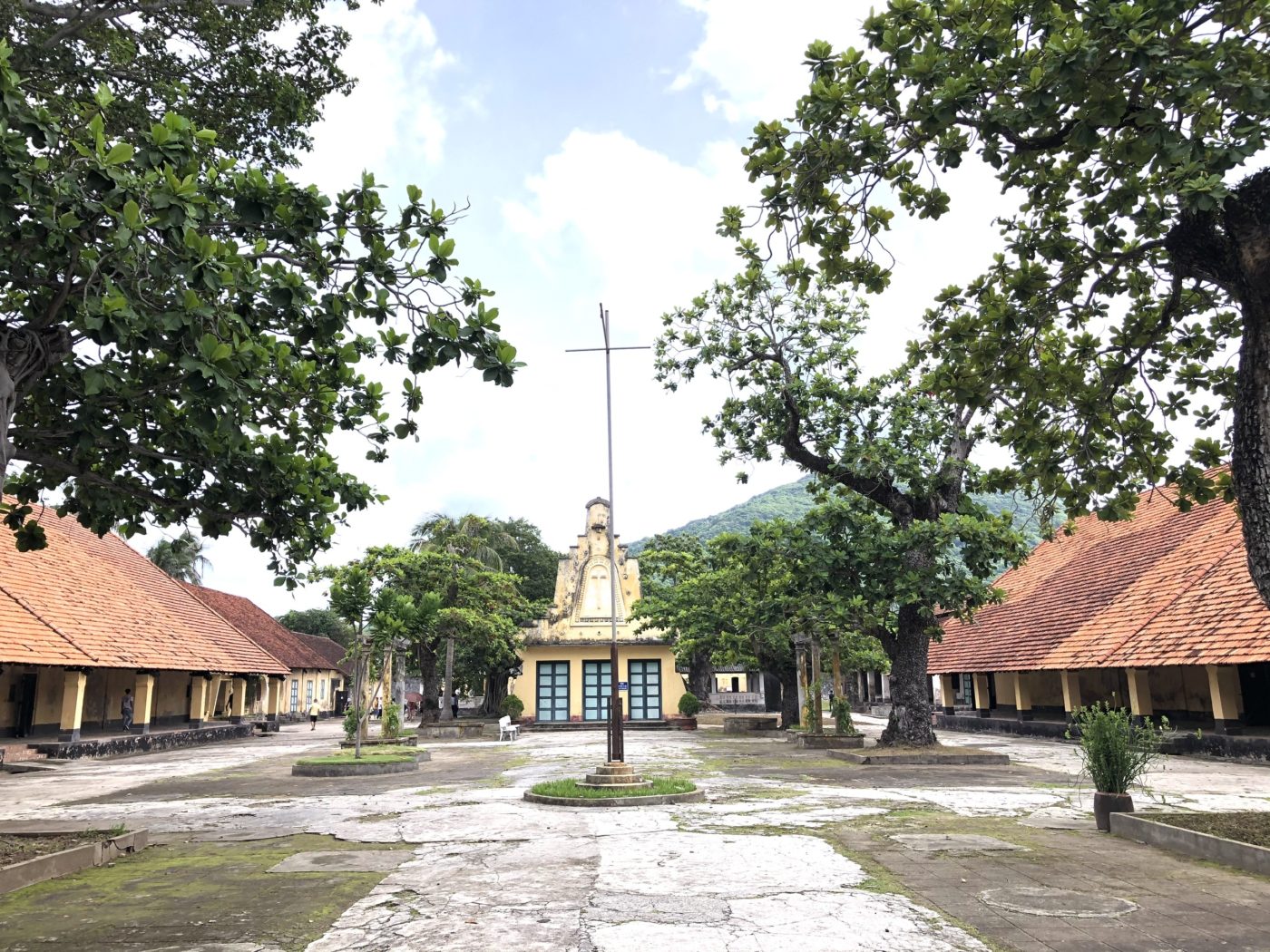
Phu Son Prison
Phu Son Prison, formerly known as Banh II, held many political prisoners during the French colonial period.
It is associated with several prominent Vietnamese revolutionary figures, including Hoang Quoc Viet, and with activities involving prisoner education, organization, and resistance.
French Tiger Cages
The French Tiger Cages are among the most widely recognized structures within the Con Dao Prison Complex.
They are known for their isolated cells and harsh detention conditions.
Today, the site is an important historical attraction that illustrates the treatment of prisoners during the colonial period.
American Tiger Cages
The American Tiger Cages were constructed and used during the Vietnam War.
The surviving structures provide further insight into the prison system during the later stages of its operation.
Con Dao Museum
The Con Dao Museum displays historical documents, photographs, and artifacts related to the archipelago.
Its exhibitions cover the history of the prison system as well as aspects of Con Dao’s natural environment and local communities.
Hang Duong Cemetery
Hang Duong Cemetery is an important memorial site where many Vietnamese patriots and revolutionary prisoners are buried.
Visitors often come to pay their respects and learn about the individuals whose lives were connected to Con Dao’s history.
Before visiting these attractions, travelers should check current opening hours, admission requirements, and access restrictions.
Preserving Con Dao’s Historical Heritage for Future Generations
The Con Dao historical relic complex is more than a collection of old prison buildings.
It preserves documents, artifacts, personal stories, and historical memories that form an important part of Vietnam’s national heritage.
Conservation, research, and educational activities help ensure that these historical values remain accessible to future generations.
As tourism continues to develop in Con Dao, protecting historical landmarks is essential to maintaining the archipelago’s cultural identity.
Responsible tourism should respect both the historical significance of these sites and the surrounding natural environment.
The Con Dao National Historical Relics Conservation Center, through its historical role in heritage management and preservation, has made important contributions to safeguarding and introducing the remarkable history of Con Dao.
For visitors, exploring the Con Dao Prison Complex and Con Dao Museum offers an opportunity to better understand Vietnam’s past while appreciating the importance of preserving historical heritage.
Note: The center’s former administrative affiliation with Ba Ria – Vung Tau Province reflects the organizational structure described in historical documents. Since July 1, 2025, Con Dao has been administered as a special administrative zone of Ho Chi Minh City. The center’s current official organizational name and supervising authority should be verified through updated government information.