The Dong Da – Tay Son Festival is one of the most distinctive traditional festivals of Binh Dinh, held annually on the fourth and fifth days of the first lunar month at the Quang Trung Museum in Phu Phong Town, Tay Son District. The festival commemorates the achievements of the leaders of the Tay Son movement, particularly Emperor Quang Trung – Nguyen Hue, while recalling the victory of Ngoc Hoi – Dong Da in 1789.
In the cultural life of Binh Dinh, the early-spring gathering in Tay Son is more than a historical commemoration. It is also a space where the cultural traditions of the region known as the Land of Martial Arts are performed and transmitted through traditional martial arts, Tay Son martial music, battle drums, tuong theatre, folk games, and historical reenactments.
From the solemn ceremonies on the fourth day to the public festivities on the fifth, the festival creates a cultural space connecting memories of the Tay Son movement with contemporary community life.
From the Memory of the Ngoc Hoi – Dong Da Victory to the Spring Festival
The festival is associated with the memory of the great victory over the Qing forces during the spring of 1789, under the command of Emperor Quang Trung – Nguyen Hue. The victory at Ngoc Hoi – Dong Da became an important event in Vietnamese history and has continued to occupy a significant place in the collective memory of the people of Binh Dinh.
Every Tet holiday, residents of the Land of Martial Arts return to Tay Son to participate in the festival. Historical remembrance is expressed not only through ceremonial rituals but also through music, martial arts, and historical performances.
Flags, ceremonial objects, drums, traditional costumes, war elephants, martial demonstrations, and battle reenactments create a highly symbolic environment in which historical stories are presented through visual and performing arts.
Ceremonies on the Fourth Day of the Lunar New Year
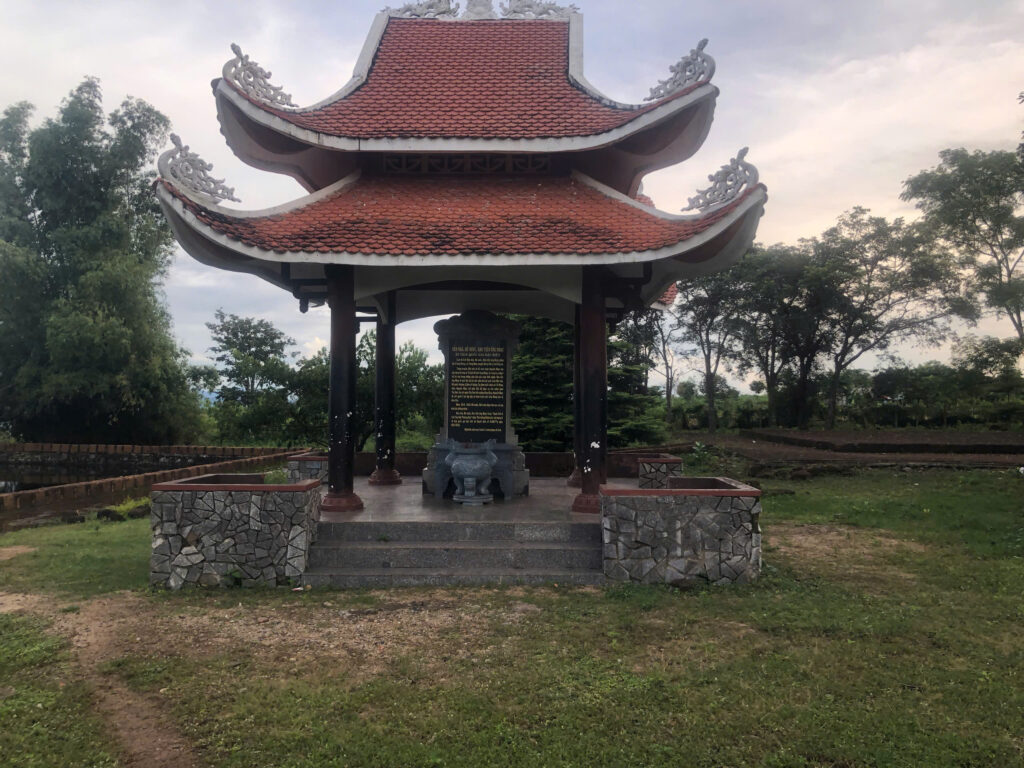
The ceremonial program begins on the afternoon of the fourth day of Tet, with traditional rites held at the Tay Son Shrine and ceremonial area.
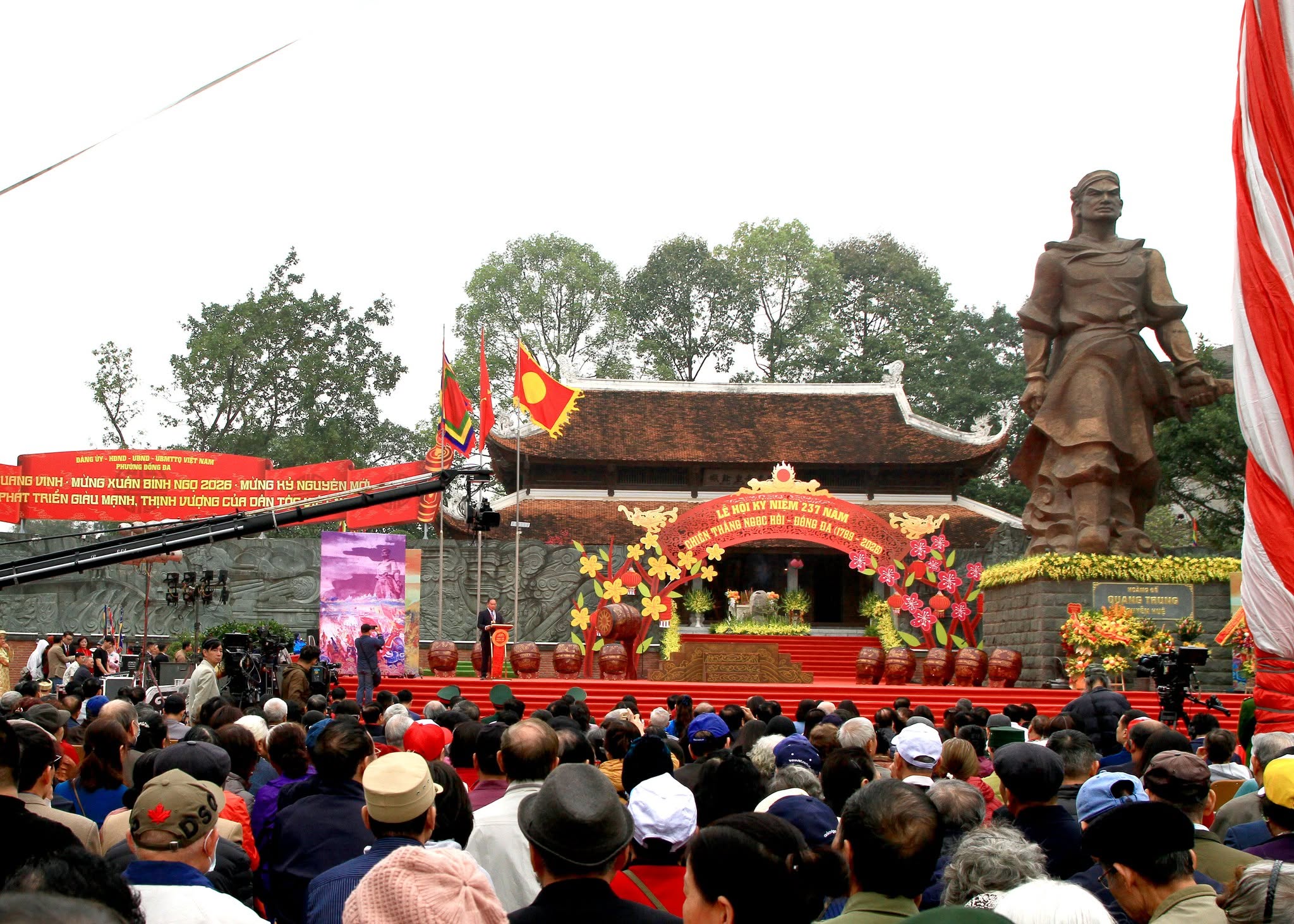
The ritual space is arranged solemnly with ceremonial flags, processional objects, drums, and traditional rites of remembrance. In this setting, the community comes together to commemorate historical figures associated with the Tay Son movement and the victory at Dong Da.
The ceremony also serves as the opening of the festival, gradually transitioning from a solemn atmosphere of remembrance to the lively community activities of the fifth day.
Tay Son Traditional Martial Arts and the Spirit of the Land of Martial Arts
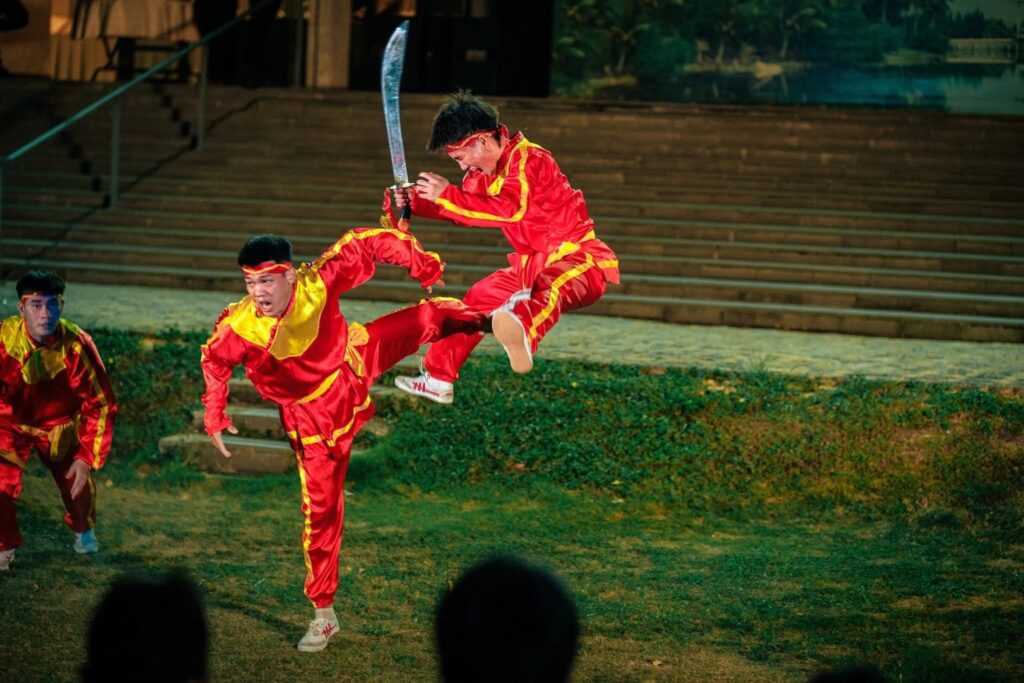
One of the most prominent elements of the festival is the performance of Tay Son traditional martial arts, featuring traditional forms and weapon techniques associated with the martial arts heritage of Binh Dinh.
Traditional forms presented at the festival include Lao Mai Doc Tho, Ngoc Tran Quyen, and Hung Ke Quyen. Weapon forms include Loi Long Dao, Song Phuong Kiem, Tuyet Hoa Song Kiem, and Loi Phong Tuy Hinh Kiem, together with traditional staff techniques such as Roi Thai Son and Roi Hac Dinh O Son.
Through these performances, martial arts are presented not simply as combat techniques but also as a form of cultural expression. The movements, forms, and weapon techniques introduce a martial tradition that has become an important part of Binh Dinh’s cultural identity.
Tay Son Martial Music and Battle Drums
Alongside martial arts, Tay Son martial music is one of the distinctive performances associated with the festival.
Performers use a set of 12 drums of different sizes, employing a technique known as “Song Thu Da Thap Nhi Co,” literally referring to striking twelve drums with both hands. Performers use their hands, wrists, elbows, and arms to strike the drumheads, rims, and bodies, producing powerful layers of sound.
Tay Son martial music therefore requires both musical sensitivity and considerable physical and technical skill. The powerful drum rhythms evoke the atmosphere of battle and have become an important element in historical performances at the festival.
When the drums resound together with calls, gongs, and martial arts performances, audiences are drawn into a theatrical representation inspired by the military world of the Tay Son movement.
Reenacting the Battle of Dong Da
One of the major performances of the festival is the reenactment of the Battle of Dong Da. The performance is staged on a large scale, combining flags, drums, ceremonial costumes, defensive structures, and coordinated formations.
Hundreds of participants may take part in the performance, creating an extensive community-based historical spectacle. In some years, war elephants have also appeared, adding another visual element to the reenactment.
The combination of martial arts, martial music, formations, costumes, and sound allows history to be presented through a form of community theatre. Rather than simply hearing about the victory, audiences can observe a performance built around historical memories of the campaign and battle.
The Festival on the Fifth Day
The fifth day of the first lunar month is the main festival day, featuring a wide range of cultural, artistic, and sporting activities. Although the program may change from year to year, its central themes remain closely connected with the history of Tay Son and the cultural traditions of Binh Dinh.
Alongside historical presentations about the campaign against the Qing forces, the program includes martial arts performances, Tay Son martial music, battle formations, folk games, boat racing, and tuong, the traditional Vietnamese classical theatre.
The combination of ceremonies, performing arts, and community activities allows the festival to retain its commemorative character while also creating the lively atmosphere of a traditional spring celebration.
For people in Binh Dinh, particularly communities in the Land of Martial Arts, attending the festival has become a familiar cultural practice during Tet. It is an occasion for generations to meet, remember history, and continue transmitting the cultural traditions of their homeland.
The Dong Da – Tay Son Festival in Binh Dinh’s Cultural Life
The distinctive character of the Dong Da – Tay Son Festival lies in the combination of historical remembrance and living cultural practice.
The history of the Tay Son movement is recalled through ceremonial rites. The martial tradition is expressed through traditional forms, staff techniques, and weapon performances. Martial music is performed through the twelve-drum ensemble, while memories of the Dong Da victory are conveyed through large-scale historical reenactments.
Together, these elements create a cultural space in which history is remembered not only through written records and historical objects, but also through sound, movement, costumes, ritual, and community participation.
For the people of the Land of Martial Arts, the early-spring festival in Tay Son therefore holds a special meaning. It is a time to return to a historical landscape associated with their homeland, commemorate the figures of the Tay Son movement, and continue cultural practices that have been connected with the community across generations.
From the sound of battle drums echoing through the spring festival to the movements of traditional martial arts, from solemn commemorative rites to the reenactment of the Battle of Dong Da, the festival creates a cultural continuum connecting Tay Son history, Binh Dinh’s martial arts heritage, and collective memory.
Festival Information
- Festival name: Dong Da – Tay Son Festival
- Location: Quang Trung Museum, Phu Phong Town, Tay Son District, Binh Dinh
- Time: Fourth and fifth days of the first lunar month, annually
- Key historical figure: Emperor Quang Trung – Nguyen Hue and the leaders of the Tay Son movement
- Historical event commemorated: The Ngoc Hoi – Dong Da victory of 1789
- Main ceremony: Commemorative rites at the Tay Son ceremonial area
- Key activities: Tay Son traditional martial arts, Tay Son martial music, battle drums, military formations, historical reenactments, boat racing, folk games, and tuong theatre
- Key values: Historical, cultural, martial arts, performing arts, and community values
- Significance: Commemorating the history of Tay Son, preserving the cultural heritage of the Land of Martial Arts, and creating a community gathering during Tet