Hai Chau Communal House and the Ancestral Temples of the Hai Chau Clans form a historic religious and architectural complex closely associated with the establishment and development of Da Nang, Vietnam. The site preserves the legacy of the early family clans traditionally believed to have accompanied King Le Thanh Tong on his southward expedition in the 15th century.
More than a place of worship, the complex reflects the Vietnamese traditions of honoring village founders, remembering ancestors, and preserving family heritage across generations.
With a history spanning more than 500 years, Hai Chau Communal House is an important cultural landmark for visitors interested in the origins of Da Nang, traditional village institutions, and the spiritual life of local communities.
Location and Architecture of Hai Chau Communal House
Hai Chau Communal House is located at Alley 42, Phan Chu Trinh Street, Residential Group 6, Hai Chau Ward, Da Nang, Vietnam.
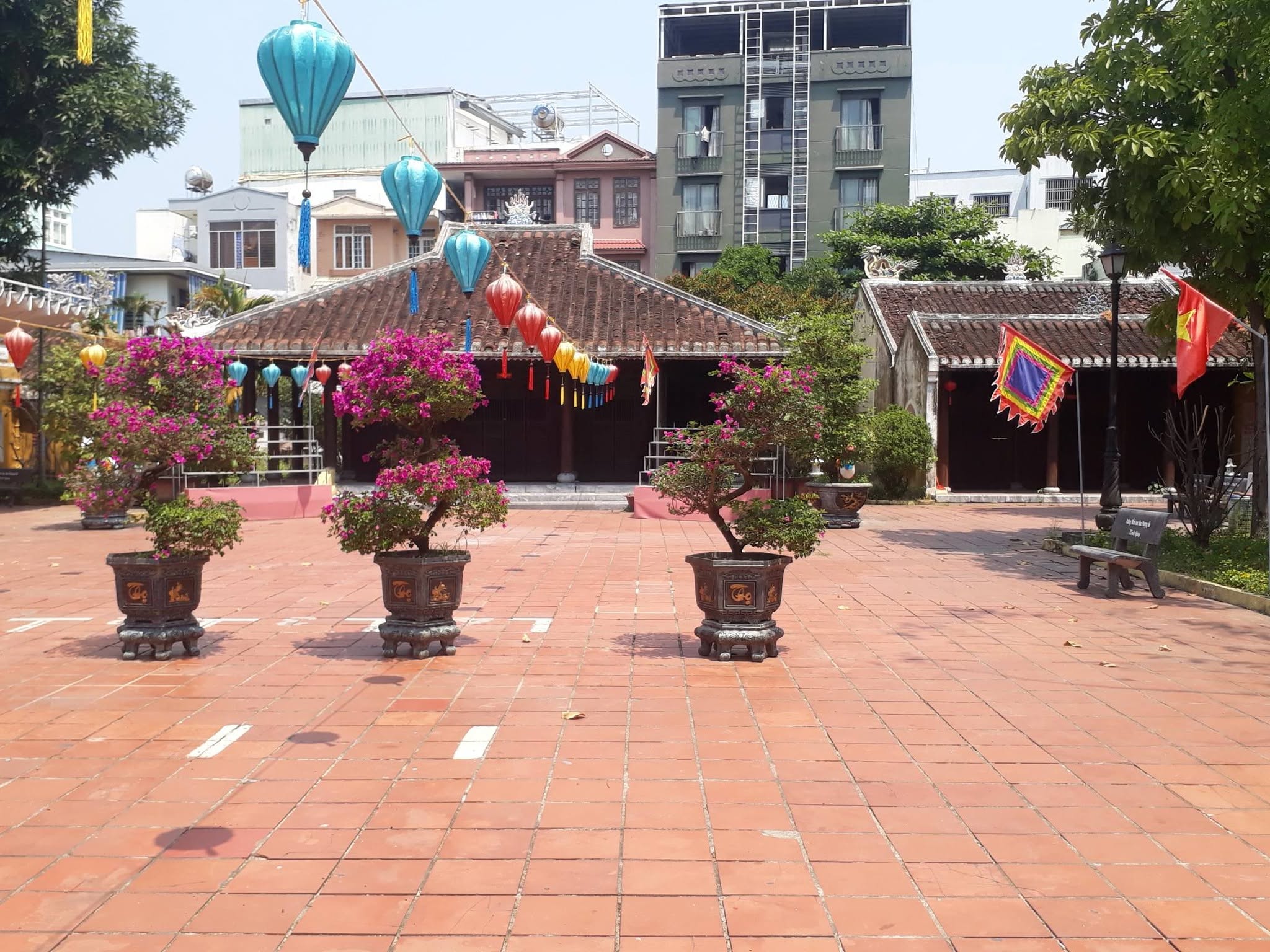
Despite its location in a busy urban area, the heritage complex retains a peaceful atmosphere reminiscent of a traditional Vietnamese village.
In front of the communal house is a spacious pond featuring an ornamental rock garden shaded by a Bodhi tree believed to be approximately a century old. The combination of water, greenery, and traditional architecture creates a tranquil setting within the modern city.
The main entrance features a traditional three-entrance gate (Tam Quan) bearing the Chinese inscription “Hải Châu Chánh Xã”, a historical designation associated with the identity and administrative status of Hai Chau Village.
Beyond the gate, a spacious courtyard leads to the principal structures of the complex, including Hai Chau Communal House, the Temple of Village Founders, and ancestral worship buildings belonging to local family clans.
The buildings follow a traditional architectural arrangement. The communal house and the Temple of Village Founders occupy the central section, flanked by two ancestral worship structures, forming a linear layout resembling the Chinese character “一”, meaning “one.”
On the left is the ancestral temple of the Nguyen Van clan, which was established as a separate worship space in a later period.
On the right stands Kinh An Tu, an ancestral temple housing 42 memorial tablets representing 42 family clans traditionally associated with the founding of Hai Chau Village.
This architectural arrangement reflects the close relationship between communal worship, ancestral traditions, and the historical identity of the local population.
The 42 Founding Clans and Their Southward Migration
According to local historical traditions, the 42 clans commemorated at Kinh An Tu originated from Hieu Hien Hamlet, Hai Chau Commune, Ngoc Son District, Tinh Gia Prefecture, Thanh Hoa Province.
These families are believed to have accompanied King Le Thanh Tong during his southward campaign in 1471, the Year of the Metal Rabbit in the traditional Vietnamese calendar.
Following the expansion into southern territories, King Le is traditionally associated with the establishment of Han Giang Settlement, an area historically connected with Quang Nam and present-day Da Nang.
Over time, the migrating families settled in the region, established communities, and contributed to the formation of Hai Chau Village.
The name Hai Chau was adopted from their ancestral homeland in Thanh Hoa, symbolizing the settlers’ enduring connection with their place of origin.
According to historical information associated with the monument, Hai Chau Village was later granted the designation “Chanh Xa” by the Nguyen Dynasty.
This title became part of the village’s historical identity and remains preserved in the inscription above the communal house entrance.
Over more than five centuries, the founding families and their descendants contributed to the cultivation, settlement, and development of the area that eventually became modern Da Nang.
The story of the 42 clans represents more than an account of historical migration.
It reflects the importance of community solidarity, ancestral remembrance, and the preservation of cultural identity among Vietnamese families establishing new settlements.
The memorial tablets at Kinh An Tu continue to symbolize these shared origins and the enduring bonds among the descendants of the founding clans.
The Ancient Bronze Bell and the Legacy of Phuoc Hai Pagoda
One of the most notable historical artifacts preserved at Hai Chau Communal House is an ancient bronze bell housed in the bell tower.
The bell bears a raised inscription in classical Chinese characters, providing valuable information about the history of religious worship and restoration activities in the area.
According to the translated inscription presented in the reference material, the text mentions the restoration of a pagoda during the fifth year of Emperor Minh Mang’s reign, corresponding to 1824.
It also refers to Phuoc Hai Pagoda and records the creation of the bell by the Hai Chau Chanh Dong community during the 13th year of Minh Mang’s reign, corresponding to 1832.
These inscriptions are significant historical sources because they preserve information about the religious institutions that once existed at the site.
According to historians cited in the heritage documentation, the present-day Hai Chau Communal House is associated with the former Phuoc Hai Pagoda.
Local traditions and historical accounts also refer to an event in 1719, the Year of the Earth Pig, when Lord Nguyen Phuc Chu reportedly visited Quang Nam and stayed at this location.
Following his visit, local residents are said to have established an altar to commemorate him.
These accounts contribute to the historical narrative of the site, although the traditional story of the lord’s visit should be distinguished from information directly documented by surviving inscriptions.
The bronze bell and references to Phuoc Hai Pagoda provide valuable evidence for understanding the evolution of religious institutions in Hai Chau.
They also demonstrate how communal houses, pagodas, and ancestral worship spaces could undergo changes in function and meaning over successive historical periods.
For historians and cultural researchers, such artifacts offer insights into local religious practices, village organization, and the historical development of Da Nang.
Historical, Architectural, and Cultural Significance
Hai Chau Communal House and its ancestral temples preserve several interconnected layers of historical and cultural significance.
Historical significance
The complex is closely associated with the traditional account of the founding clans who settled in the Da Nang region during the late 15th century.
The story of the 42 clans helps preserve the collective memory of the community and honors the contributions of earlier generations who established settlements and developed the local area.
Through ancestral tablets, inscriptions, and historical traditions, the site maintains an important connection between present-day residents and their ancestors.
Architectural significance
The complex represents the traditional architectural organization of a Vietnamese communal worship space.
Its three-entrance gate, courtyard, communal house, ancestral temples, pond, ornamental rock garden, and bell tower create a harmonious cultural landscape.
The arrangement of buildings reflects the importance of both collective village worship and individual family lineage traditions.
These architectural elements also provide a contrast with the modern urban environment surrounding the monument.
Religious and cultural significance
The communal house and ancestral temples embody the Vietnamese tradition of ancestor veneration and honoring village founders, commonly associated with the worship of tien hien, or pioneering ancestors.
Such practices express gratitude toward those who contributed to establishing and developing a community.
The continued preservation of these worship spaces helps maintain family traditions, ceremonial customs, and relationships among different clans.
Documentary and educational significance
The bronze bell, classical Chinese inscriptions, ancestral tablets, and historical narratives provide valuable materials for studying the formation of villages and the development of religious institutions in Da Nang.
The complex is therefore an important destination for cultural education and local history research.
Together, these values make Hai Chau Communal House a significant heritage site that connects the city’s modern identity with its historical roots.
Recognition as a National Historical Monument
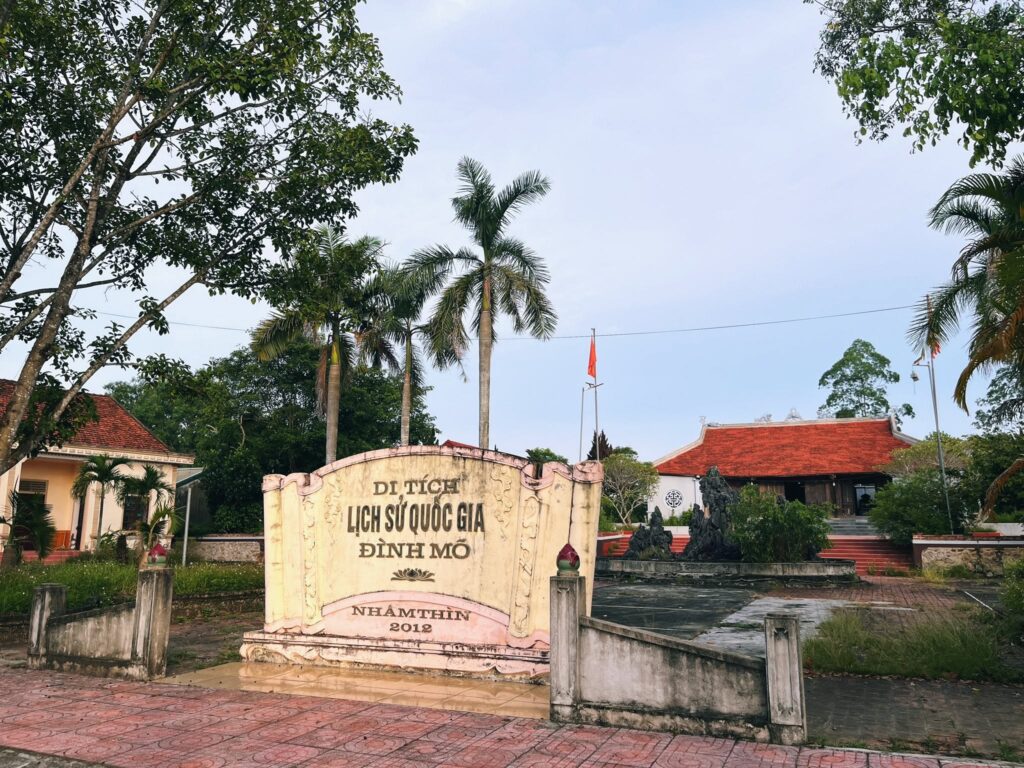
In recognition of its historical and cultural significance, Hai Chau Communal House was designated a National Historical Monument on July 12, 2001, by Vietnam’s Ministry of Culture and Information.
This designation acknowledges the site’s role in preserving the history of local settlement, ancestral traditions, and community heritage.
It also highlights the importance of protecting traditional religious and architectural monuments as Da Nang continues to develop as a modern urban center.
Today, Hai Chau Communal House and its associated ancestral temples remain a meaningful destination for visitors seeking to understand the city’s early history.
The site offers an opportunity to learn about the founding clans of Hai Chau, traditional Vietnamese ancestor worship, and the historical transformation of religious institutions over several centuries.
Visiting Hai Chau Communal House
Visitors to Hai Chau Communal House can explore the traditional architectural features and historical artifacts preserved within the complex.
The Tam Quan entrance gate, with its inscription “Hải Châu Chánh Xã,” is an important starting point for understanding the site’s historical identity.
The pond, ornamental rock garden, and mature Bodhi tree create a peaceful landscape that recalls the atmosphere of an old Vietnamese village.
Inside the complex, visitors can observe the communal house, the Temple of Village Founders, the Nguyen Van clan’s ancestral temple, and Kinh An Tu, where the memorial tablets of the 42 founding clans are preserved.
The ancient bronze bell is another significant feature, offering a tangible connection with the site’s religious history during the Nguyen Dynasty.
Because the complex remains a place of ancestral and religious worship, visitors should dress respectfully, maintain a quiet atmosphere, and follow any instructions provided by the site’s caretakers.
Those interested in learning more about the origins of the 42 clans, the history of Phuoc Hai Pagoda, or the significance of the bronze bell may wish to consult local heritage documentation.
A visit to Hai Chau Communal House offers a different perspective on Da Nang, revealing the city’s historical identity beyond its beaches, bridges, and modern urban attractions.
Hai Chau Communal House: Preserving the Roots of Da Nang
For more than five centuries, Hai Chau Communal House and its associated ancestral temples have represented the enduring relationship between community history, family heritage, and traditional spiritual practices.
The complex preserves memories of the founding clans who are traditionally believed to have settled in the region during the reign of King Le Thanh Tong.
Its architectural structures, ancestral tablets, and ancient bronze bell provide valuable evidence of the area’s historical development and changing religious traditions.
Recognized as a National Historical Monument in 2001, Hai Chau Communal House remains an important cultural landmark in the heart of Da Nang.
For travelers interested in Vietnamese history and heritage, the site offers an opportunity to discover the traditions of ancestor veneration, village formation, and community identity that helped shape the city over generations.
Quick Facts
| Information | Details |
|---|---|
| Official name | Hai Chau Communal House and Ancestral Temples of the Hai Chau Clans |
| Vietnamese name | Đình và Nhà thờ chư phái tộc Hải Châu |
| Address | Alley 42, Phan Chu Trinh Street, Residential Group 6, Hai Chau Ward, Da Nang, Vietnam |
| Historical origins | Associated with the tradition of 42 clans accompanying King Le Thanh Tong southward in 1471 |
| Major structures | Hai Chau Communal House, Temple of Village Founders, Nguyen Van Clan Ancestral Temple, and Kinh An Tu |
| Number of founding clans commemorated | 42 |
| Notable artifact | Ancient bronze bell bearing a classical Chinese inscription |
| Related historical site | Phuoc Hai Pagoda, according to local heritage documentation |
| Associated historical figure | Lord Nguyen Phuc Chu, according to local tradition |
| Heritage designation | National Historical Monument |
| Recognition date | July 12, 2001 |
| Main heritage values | Settlement history, ancestral worship, traditional architecture, and clan heritage |
| Visitor experience | Historical exploration, architectural appreciation, and cultural heritage discovery |