When people think of Da Lat, they often picture pine forests, flower gardens, vegetable farms and the cool mist that settles over the highlands. Among the many plants that have become closely associated with the city, artichoke holds a particularly distinctive place.
With its unusual appearance, large flower buds and edible leaves, the artichoke has been cultivated in Da Lat for generations. Over time, it has become more than an agricultural crop. It has become part of the city’s landscape, local products and culinary identity.
From the Mediterranean to Da Lat
Artichoke, scientifically known as Cynara scolymus, originated in the Mediterranean region. The plant was introduced to Da Lat during the early development of agriculture in the highlands in the early 20th century.
Da Lat’s cool climate, high elevation and relatively mild temperatures provided favorable conditions for the plant to adapt and grow.
Over the years, artichoke cultivation gradually expanded and became particularly associated with several agricultural areas around the city. The plant adapted well to the highland environment and eventually became one of the crops that helped define Da Lat’s agricultural character.
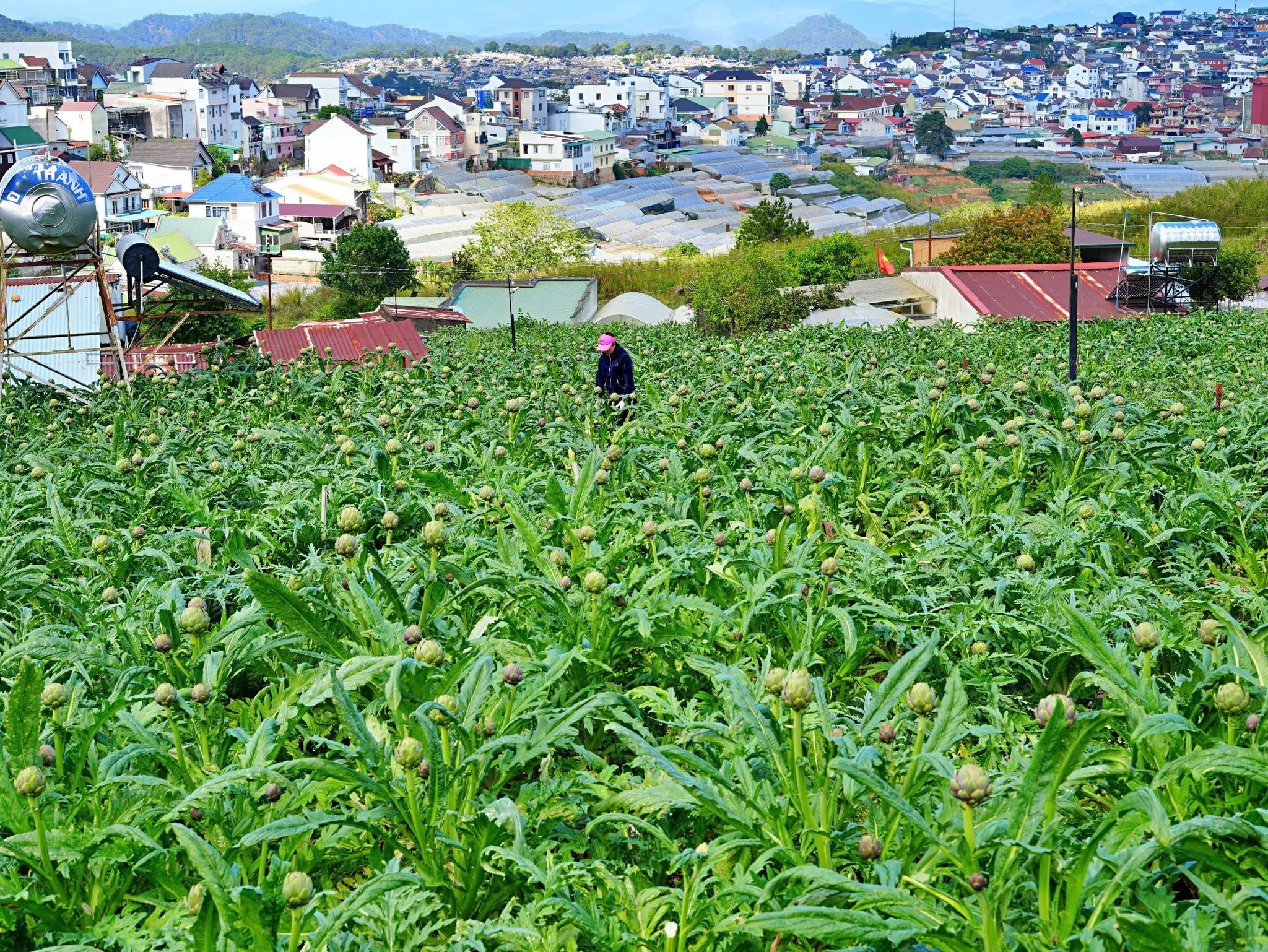
Today, artichokes can still be found growing in areas such as Thai Phien, Trai Mat, Cau Dat, Xuan Tho and Xuan Truong, where vegetable farming remains an important part of the local landscape.
Purple and Green Artichokes
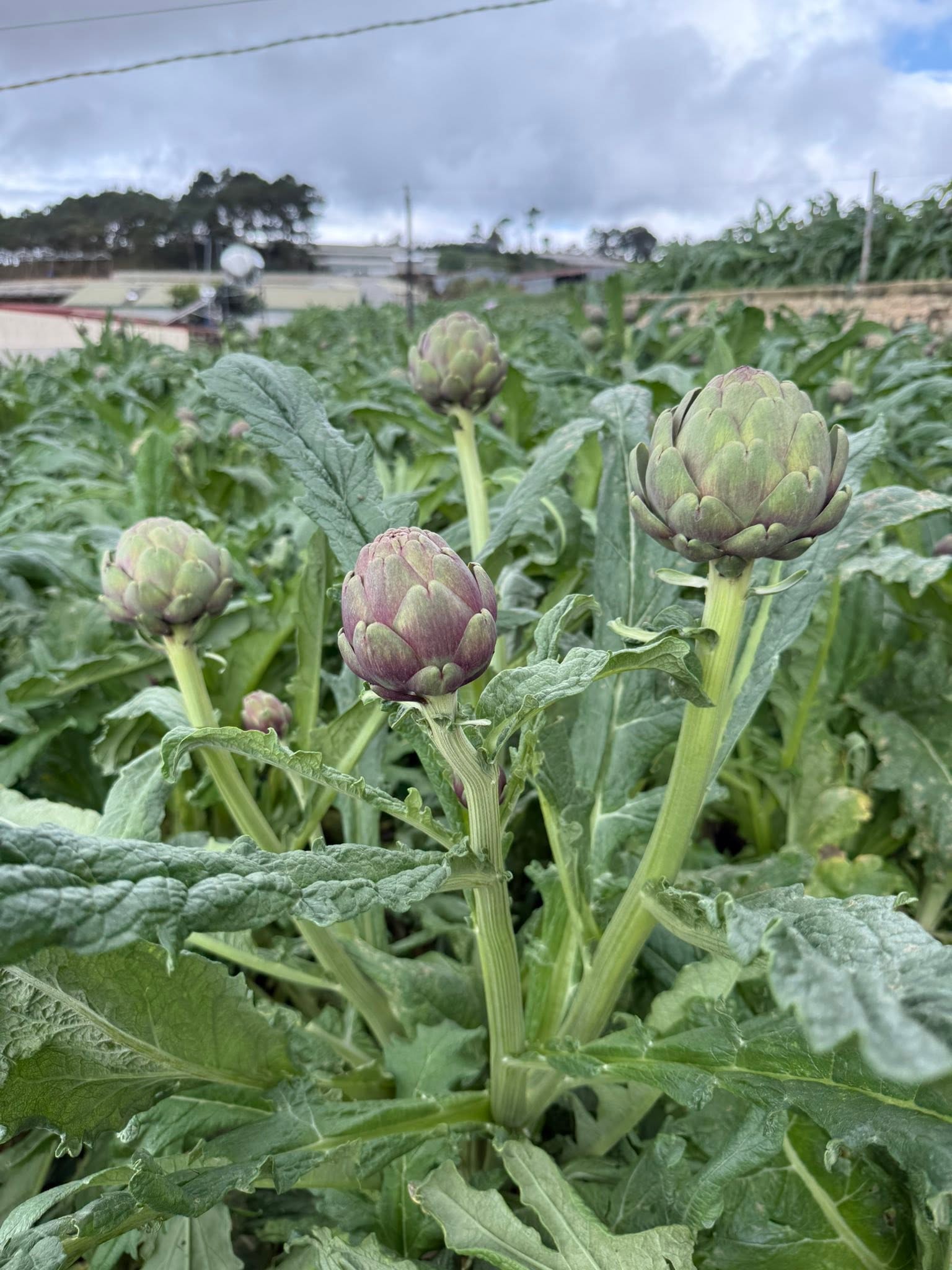
Da Lat is known for both green and purple varieties of artichoke.
The plants have a distinctive appearance, with large serrated leaves spreading outward from the stem. The flower buds develop at the center of the plant and are harvested before they fully bloom.
The purple variety is particularly attractive in the fields, with darker tones appearing on the outer leaves and flower buds. When grown in large quantities, artichoke fields create a distinctive agricultural landscape that is different from Da Lat’s more familiar flower gardens.
The plant’s appearance also makes it an interesting subject for visitors who want to explore the agricultural side of the city.
From the Field to the Kitchen
Artichoke is used in several ways in Da Lat’s local cuisine.
The flower buds and stems can be cooked into soups and other dishes. One of the most familiar preparations is artichoke soup, often cooked with pork ribs or other ingredients to create a light and delicate broth.
Artichoke is also widely processed into artichoke tea and artichoke extract, which have become recognizable Da Lat specialties.
The tea is especially popular among visitors and is commonly purchased as a local gift. Packaged artichoke products have also become part of the city’s broader agricultural specialty industry.
Artichokes in the Da Lat Cityscape
Artichoke is not confined to the countryside. It has also become part of Da Lat’s urban image.
The large artichoke sculpture standing at Lam Vien Square is one of the city’s recognizable landmarks. Rising prominently beside Xuan Huong Lake, the structure takes inspiration from the artichoke flower and reflects the importance of the plant in Da Lat’s agricultural identity.
For many visitors, the artichoke is therefore encountered in two very different settings: growing in highland fields and appearing as an architectural symbol in the heart of the city.
This connection between agriculture and urban identity is one of the interesting features of Da Lat.
A Highland Crop with a Local Identity
The story of Da Lat artichokes is closely connected to the transformation of the highlands into an important agricultural region.
From a plant originating far from Vietnam, the artichoke gradually adapted to Da Lat’s climate and became part of local farming practices. Generations of growers have cultivated the crop, while local food producers have developed products such as tea and extract from the harvest.
Today, artichoke is one of the plants that visitors can associate with Da Lat alongside flowers, strawberries, persimmons and vegetables.
For travelers exploring the city, discovering an artichoke field offers another perspective on Da Lat. Beyond its famous flower gardens and romantic streets, the city is also a living agricultural landscape where crops, gardens, local products and everyday life have developed together.
Da Lat artichokes are therefore not simply a highland crop. They are part of the agricultural story and visual identity of the city, connecting the fields of the surrounding countryside with the heart of Da Lat itself.