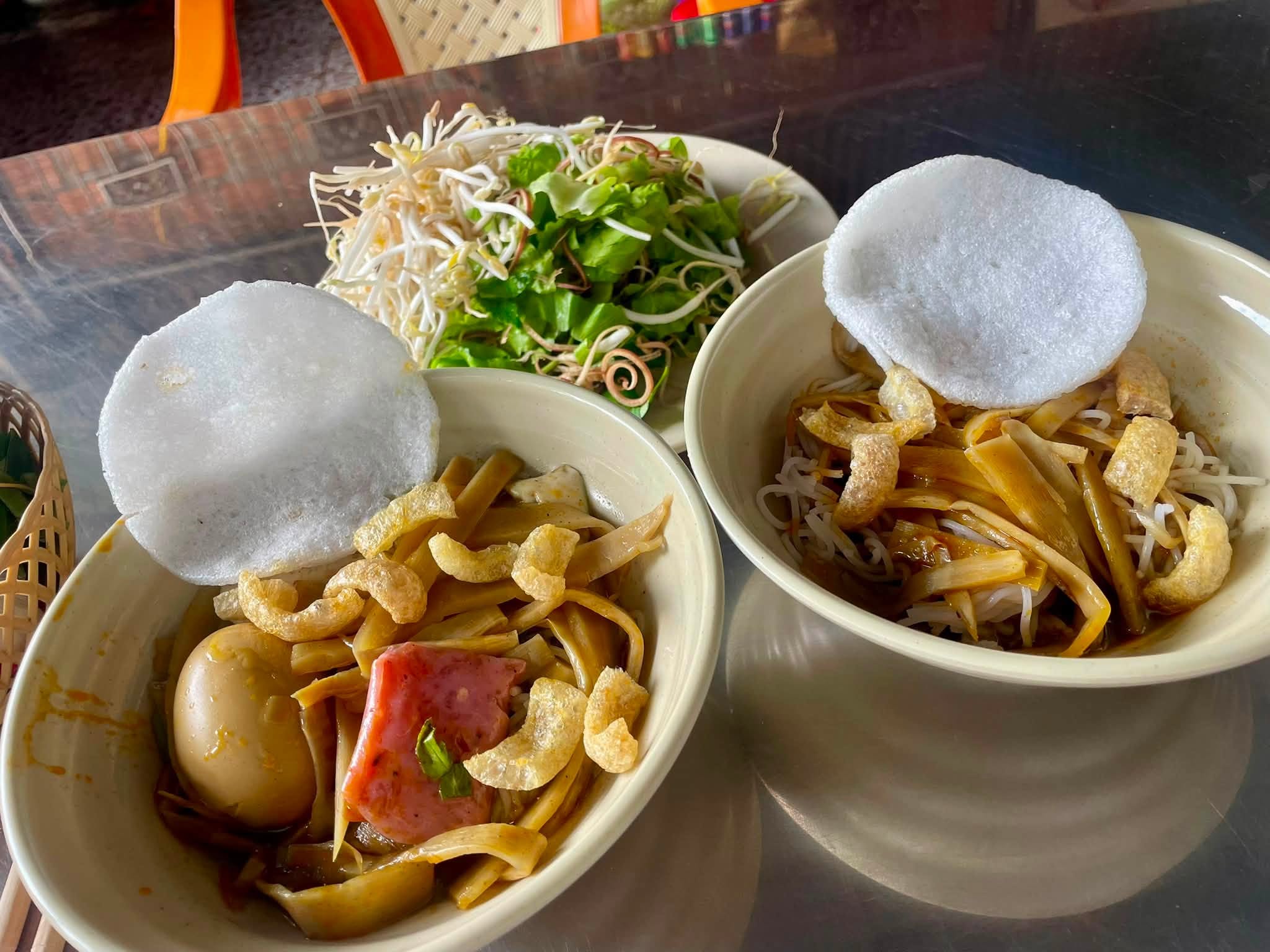
Bún mắm cua, also known locally as bún cua thối, is a distinctive specialty of Pleiku, Gia Lai. Unlike the familiar Vietnamese crab noodle dishes, this local delicacy is characterized by its dark, thick broth and the strong aroma of fermented freshwater crab.
For first-time visitors, the smell can be surprisingly intense. Yet for those accustomed to fermented foods, that bold aroma is precisely what makes the dish appealing. The broth combines the rich flavor of fermented crab with chili, lemongrass and fresh herbs, creating a distinctive taste deeply associated with the culinary culture of Gia Lai.
- Local name: Bún mắm cua
- Other name: Bún cua thối
- Origin: Pleiku, Gia Lai
- Main ingredients: Freshwater crab, rice vermicelli, bamboo shoots, pork skin, fried shallots, peanuts and duck eggs
- Signature feature: Dark fermented-crab broth with a strong aroma
- Serving style: Noodles are combined with the broth and toppings, accompanied by fresh herbs
- Flavor: Rich, salty, sour, spicy and strongly influenced by fermented crab
Table of Contents
ToggleFrom Freshwater Crab to the Signature Broth
The most distinctive element of bún mắm cua is the preparation of the crab broth.
Fresh freshwater crabs are cleaned and their shells removed. The bodies are then crushed or ground and filtered to extract the crab liquid. This fresh crab liquid is fermented for approximately one day and one night.
During fermentation, the liquid gradually turns dark and develops its characteristic strong aroma. This is the defining feature behind the local name “bún cua thối,” literally referring to the strong-smelling fermented crab noodle soup.
The fermentation period is particularly important. According to the traditional method described in the source material, the crab liquid needs to be fermented for an appropriate amount of time to achieve the desired aroma and flavor. If the fermentation is too strong or too weak, the resulting broth will not have the intended taste.
Once fermented, the crab liquid is simmered over low heat. Thinly sliced fresh bamboo shoots are added to the pot and cooked slowly. As the bamboo shoots release their natural sweetness, they help develop the depth of the broth.
Boiled duck eggs may also be cooked in the crab broth and are usually served when the dish is ordered.
A Bowl with a Very Distinctive Flavor
At first glance, bún mắm cua may appear quite simple. A typical serving contains rice vermicelli, bamboo shoots, crispy fried pork skin, fried shallots and peanuts, all topped with the dark fermented-crab broth.
The crispy pork skin adds richness and texture, while peanuts provide a nutty flavor and fried shallots contribute fragrance. Bamboo shoots add a subtle sweetness and crunch.
The duck egg cooked in the crab broth is another distinctive element. The egg white can take on a dark color from the broth and absorb some of its fermented crab flavor, creating an unusual combination of richness and aroma.
Bún mắm cua is traditionally served with a plate of fresh herbs and vegetables. Diners may add lime, chili or other seasonings according to their preference.
The Strong Aroma That Defines the Dish
Bún mắm cua is not necessarily an easy dish to appreciate on the first try.
The fermented crab broth has a powerful aroma, while its dark appearance is very different from the clear or reddish broths found in many other Vietnamese noodle dishes. For this reason, first-time diners often have very different reactions. Some find the flavor difficult to approach, while others become enthusiastic fans after becoming accustomed to it.
Once the noodles, bamboo shoots, crispy pork skin, peanuts, fried shallots and broth are thoroughly mixed together, the flavors become more balanced. The fermented crab provides a deep savory character, while chili and lime add acidity and heat. Fresh herbs help offset the intensity of the broth.
For local residents, the dish is an everyday food rather than simply a specialty prepared for visitors, and it is particularly associated with afternoon meals.
Bún Mắm Cua in Pleiku’s Culinary Culture
Bún mắm cua is a humble dish closely associated with the everyday food culture of Pleiku. Its ingredients are relatively familiar, but its fermentation technique gives the dish an identity unlike other crab noodle dishes in Vietnam.
A story recorded in the source material describes a bún mắm cua vendor who began selling the dish in Pleiku in 1998. The business initially operated from a roadside stall before eventually developing into a more comfortable dining space. According to the account, approximately 20 kilograms of fresh crab were fermented each day to meet customer demand.
Such details illustrate how bún mắm cua has existed not simply as a dish for tourists seeking unusual food, but as part of the everyday culinary life of Pleiku.
Enjoying Bún Mắm Cua in Gia Lai
For first-time diners, ordering a small portion can be a good way to become familiar with the fermented crab aroma. The noodles, broth and toppings should be mixed thoroughly before eating so that the flavors are evenly distributed.
Fresh herbs, lime and chili can be added according to individual taste. The duck egg is also worth trying for those who want to experience the combination of its rich texture with the distinctive fermented-crab broth.
According to the source material, some bún mắm cua eateries in Pleiku traditionally serve the dish from around midday until the evening and can become particularly busy during peak hours. Opening times, prices and individual establishments may change over time.
Bún mắm cua is not a dish designed to appeal to every palate. Its strong fermented aroma, dark broth and intense flavor give it a character of its own. For travelers interested in discovering the distinctive food culture of Gia Lai, a bowl of bún mắm cua in Pleiku offers an unusual and memorable taste of the Central Highlands.