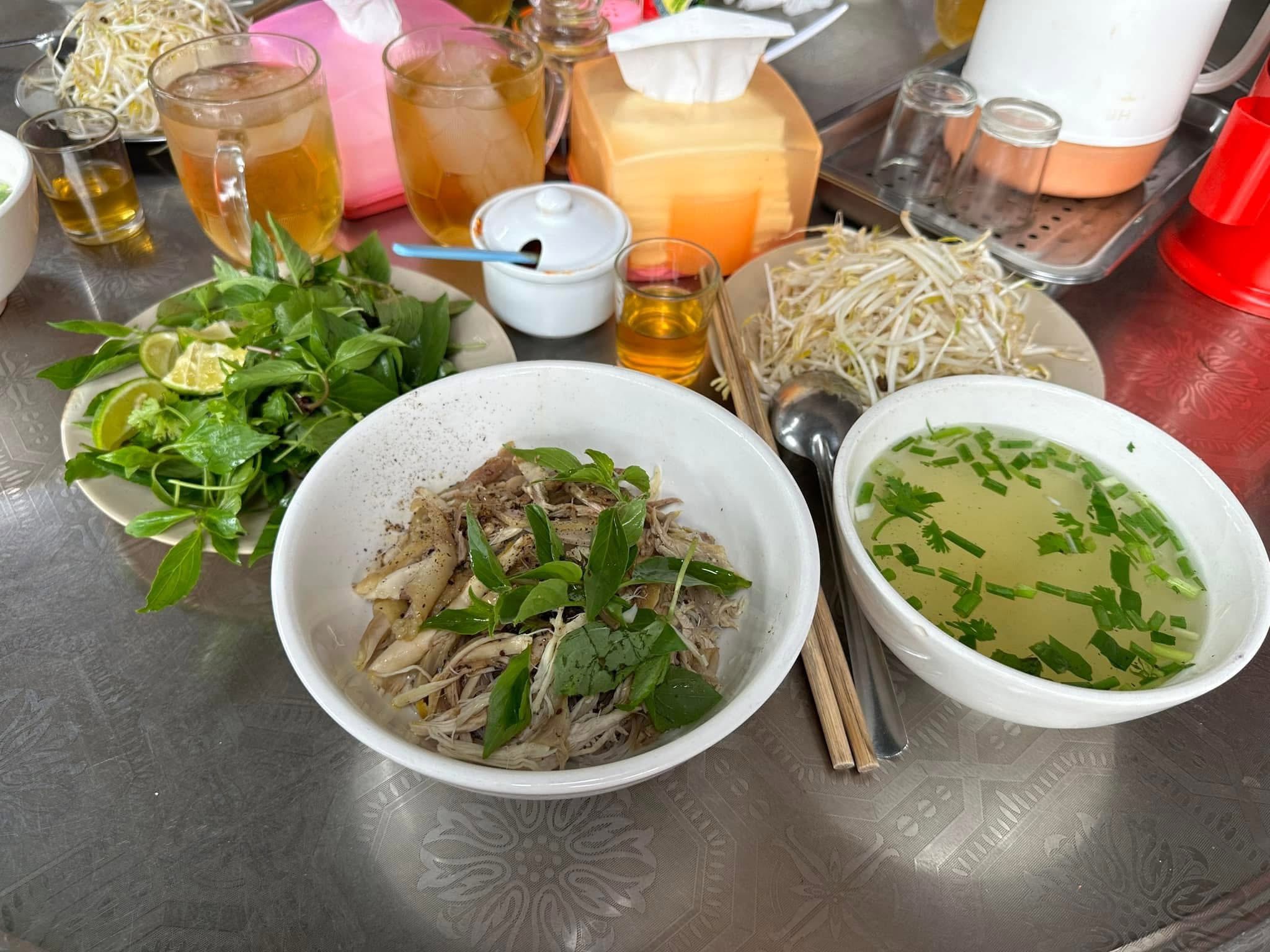
Unlike traditional phở nước, where noodles, meat and broth are served together in a single bowl, Gia Lai dry phở is presented in two separate bowls.
The first bowl contains the dry rice noodles, meat and other toppings. The second contains a clear, flavorful broth made from chicken or beef bones. Diners combine the noodles with the accompanying sauce and toppings while taking spoonfuls of hot broth separately.
This distinctive serving style has given the dish its familiar local name, “phở hai tô”, meaning “two-bowl phở.”
- Local name: Phở khô Gia Lai
- Also known as: Phở hai tô, or “two-bowl phở”
- Origin: Gia Lai, particularly Pleiku
- Main ingredients: Rice noodles, chicken or beef, bean sprouts, fried pork fat, fried shallots, herbs and soybean-based sauce
- Serving style: Noodles and toppings are served in one bowl, while hot broth is served separately in another
- Typical local experience: Often enjoyed for breakfast, accompanied by coffee
Table of Contents
ToggleThe Characteristic Dry Rice Noodles
The noodles are made from rice and have a distinctive appearance and texture. They are generally thinner and smaller than the broad, fresh noodles used in traditional phở.
After being blanched, the noodles should remain slightly firm and chewy rather than becoming soft or mushy. Their relatively dry texture allows them to absorb the soybean-based sauce while maintaining their structure.
Although the noodles may resemble other types of Vietnamese rice noodles, the combination of texture, toppings, sauce and separate broth gives Gia Lai dry phở its own identity.
Ingredients and Preparation
Chicken and beef are the two most common versions.
The chicken version is usually served with shredded chicken, including the skin, minced pork, fried pork fat and fried shallots. Bean sprouts are commonly added, while the accompanying broth is prepared from chicken bones.
The beef version may include rare beef, beef balls and other cuts of beef. Its broth is generally cooked from beef bones and may carry a subtle aroma of cardamom and other spices.
One of the most distinctive elements is the soybean-based sauce. Rather than relying primarily on fish sauce, the dish is traditionally seasoned with a fermented soybean sauce, sometimes combined with yellow sugar or soy sauce. The sauce provides the salty, slightly sweet and savory flavor that binds the noodles and toppings together.
How to Eat Gia Lai Dry Phở
The traditional experience is not simply to eat the noodles separately from the broth.
First, loosen the bundle of noodles with chopsticks and a spoon. Add the toppings and soybean sauce, then mix everything together so that the sauce coats the noodles evenly.
The noodles are eaten together with the meat, bean sprouts, fried pork fat and shallots. At the same time, diners take spoonfuls of the hot broth from the second bowl.
The contrast between the seasoned noodles and the warm, fragrant broth is an important part of the dish’s character.
Phở Khô in Pleiku’s Culinary Culture
Dry phở has become one of the foods most closely associated with Pleiku. For many visitors, enjoying a bowl of phở khô in the morning, followed by a cup of coffee, is part of experiencing the everyday rhythm of the highland city.
The dish also reflects the broader culinary character of Central Highlands cuisine. Rather than emphasizing an abundance of ingredients, it relies on the balance between rice noodles, meat, fermented soybean sauce, herbs and a carefully prepared broth.
Although dry phở can now be found in many parts of Vietnam, the version served in Gia Lai retains a particular connection with Pleiku’s local food culture.
Where to Try Phở Khô in Gia Lai
In Pleiku, dry phở can be found at many local eateries, particularly around streets such as Nguyễn Thái Học, Nguyễn Trãi, Nguyễn Văn Trỗi and Phan Đình Phùng.
The source material mentions several local establishments, including Ngọc Sơn, Hồng, Tàu Lý and Bé Tư. Prices in the source range from approximately 30,000 to 50,000 VND per bowl, depending on the type and quantity of meat. Actual prices may change over time.
For visitors exploring Gia Lai, phở khô is more than simply a regional noodle dish. It is a culinary expression of Pleiku, where a bowl of dry noodles, a separate bowl of broth and a distinctive fermented soybean sauce come together to create one of the Central Highlands’ recognizable food experiences.