Among the many agricultural products associated with Da Lat and Lam Dong, mulberries hold a particularly distinctive place. Less visually striking than flowers and less immediately recognizable than some of the region’s famous fruits, these small berries are closely connected to the long history of mulberry cultivation, silkworm farming, silk production and specialty food processing in the highlands.
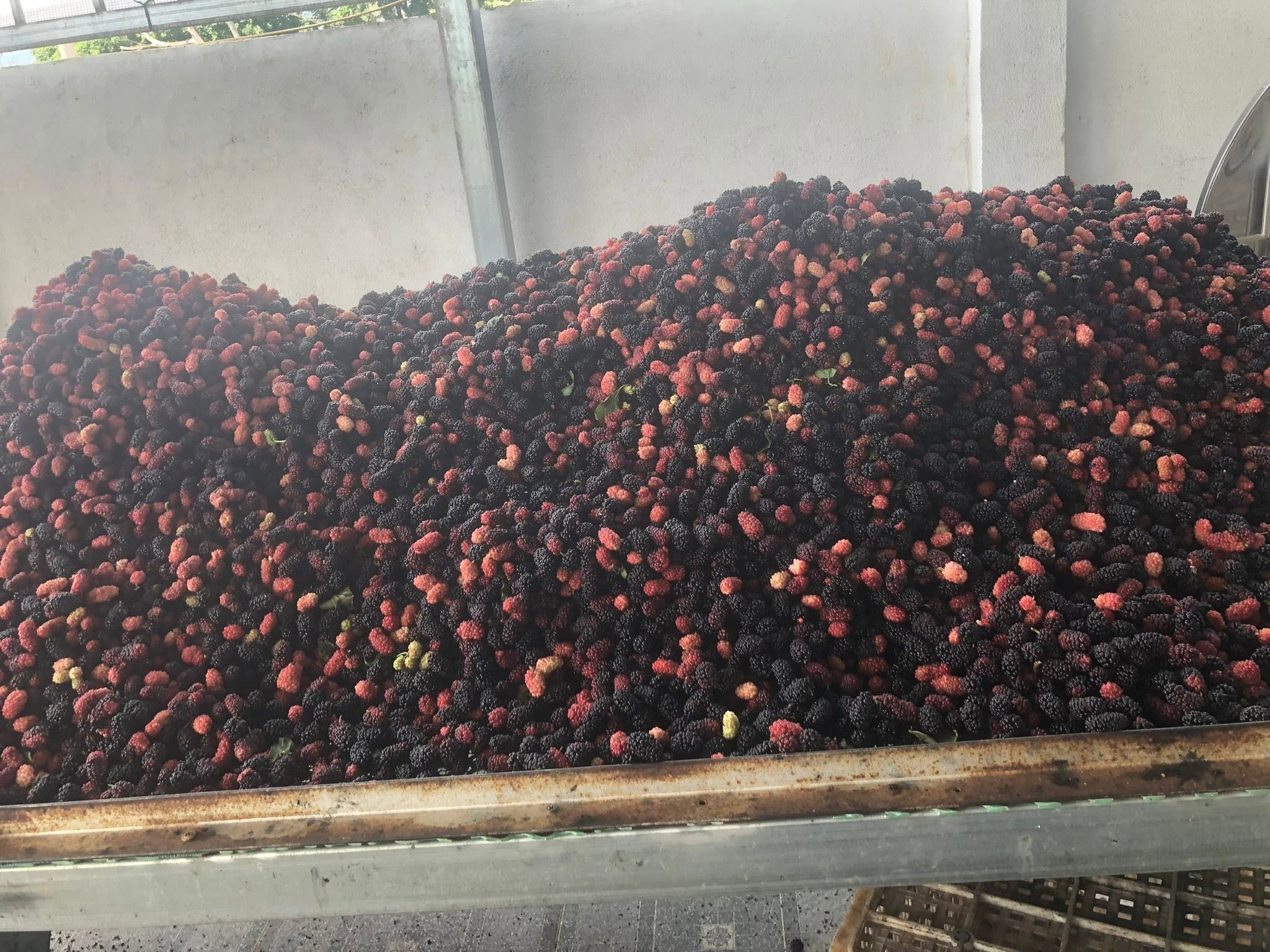
Mulberry is scientifically known as Morus alba, belonging to the Moraceae family. When ripe, the fruit changes from green to pinkish red and finally to a deep purple-black, with a refreshing balance of tartness and sweetness.
In Lam Dong, mulberry trees were originally cultivated primarily for their leaves, which are used to feed silkworms. Over time, however, local growers discovered that the ripe berries could also be turned into syrups, jams and fermented beverages.
From a crop supporting the silk industry, the mulberry gradually became part of the culinary identity of the highlands.
Mulberry Trees and the Silk-Making Tradition of Lam Dong
The history of mulberry cultivation in Lam Dong is closely connected to the development of agriculture and sericulture in the highlands during the early 20th century.
During the period of French agricultural development in the region, Lam Dong’s relatively cool climate and fertile red basalt soil were considered suitable for growing mulberry trees and raising silkworms.
Mulberry plantations gradually appeared in different parts of the highlands, extending from Da Lat and surrounding areas to warmer districts such as Lam Ha and Bao Loc.
The original purpose of these plantations was straightforward: to produce leaves for silkworms.
The leaves became the primary food source for silkworms, while the cocoons were subsequently processed through reeling, spinning and silk weaving. Over the decades, Lam Dong developed into one of Vietnam’s major mulberry and sericulture regions.
For this reason, the story of Lam Dong mulberries cannot be separated from the story of bamboo trays of silkworms, silk cocoons and the traditional craft that became an important part of the region’s economic identity.
From Mulberry Leaves to Clusters of Purple Fruit
For many years, the leaves were the most valuable part of the mulberry plant. The berries themselves were not the main focus of cultivation, and many ripe fruits simply fell from the trees.
As Da Lat’s specialty food industry developed, ripe mulberries began to be used more extensively.
Young berries are green, gradually turning pink and then deep purple-black when fully ripe. The fruit is small but juicy, with a noticeable tartness balanced by a mild sweetness.
These characteristics make mulberries particularly suitable for processing methods that combine acidity and sweetness.
Local producers began using ripe berries to make syrups, jams and fermented beverages. In this way, mulberries gradually moved beyond the traditional mulberry fields used primarily for silkworm production and became a recognizable local ingredient.
Mulberry Varieties in Da Lat and Lam Dong
Mulberry cultivation in Lam Dong can broadly be understood according to its intended use, with some varieties grown primarily for fruit and others mainly for silkworm feed.
Traditional local mulberries, sometimes referred to as Vietnamese mulberries, generally have relatively slender branches and small fruits. When ripe, the berries turn deep purple-black. The flesh is soft and juicy, with a noticeable tart flavor followed by mild sweetness.
These varieties are particularly suitable for producing mulberry syrup, mulberry jam and fermented products.
There are also long-fruited mulberry varieties, including cultivars grown by gardens that focus on fruit production and agricultural tourism. Their berries are considerably longer and larger, with firmer flesh and a sweeter flavor.
Such orchards are often developed alongside visitor experiences, allowing travelers to pick and taste the fruit directly from the trees.
In addition, Lam Dong has mulberry varieties cultivated primarily for their leaves, selected for vigorous growth, leaf yield and suitability for silkworm farming.
These varieties remain important to the province’s sericulture supply chain, particularly in specialized mulberry-growing areas.
Mulberry-Growing Areas Around Da Lat
Lam Dong has long been recognized as one of Vietnam’s major centers for mulberry cultivation and sericulture. Mulberry plantations are not limited to Da Lat but are distributed across several districts of the province.
Around Da Lat, mulberry trees can be found in some suburban agricultural areas such as Ta Nung, Xuan Tho and Trai Mat, as well as in gardens that combine farming with agricultural tourism.
Gardens designed for visitors are often managed not only for agricultural production but also for direct experiences. Travelers can walk among the trees, observe the developing fruit, learn about cultivation and taste ripe mulberries at the garden.
Lam Ha, particularly areas such as Nam Ban and Phu Son, also plays a role in Lam Dong’s mulberry supply chain. Its somewhat warmer climate is suitable for both sericulture and the production of fruit for processing.
Further south, areas such as Bao Loc and Da Teh are strongly associated with the mulberry and silk industry. From the mulberry fields, leaves are supplied to silkworm farms, where they become part of the production cycle that eventually produces cocoons, silk and woven textiles.
The Da Lat Mulberry Season
Mulberries can produce fruit at different times depending on the variety and growing conditions, but around Da Lat the main fruit season is commonly associated with March to June.
During this period, clusters of berries begin to ripen in large numbers. Green fruit gradually changes to pink and then deep purple-black.
At the height of the season, the trees can be heavily laden with fruit. Because ripe mulberries are extremely soft and delicate, harvesting needs to be done carefully.
Unlike fruits that can withstand vigorous harvesting methods, mulberries are generally picked by hand, with ripe berries handled gently to prevent them from breaking.
Their short shelf life makes processing particularly important. Turning freshly harvested mulberries into syrups, jams and fermented products helps reduce losses while increasing the value of the crop.
Mulberry Syrup – A Familiar Da Lat Flavor
One of the most popular products made from mulberries is mulberry syrup.
Ripe berries are selected, cleaned and combined with sugar through soaking or cooking to produce a concentrated juice with a deep red-purple color.
When mixed with water and ice, the syrup becomes a refreshing drink with a pleasant balance of tartness and sweetness.
The natural color of the berries gives the drink a distinctive appearance, while the acidity of the fruit provides a refreshing contrast to the sweetness of the sugar.
Mulberry syrup is also commonly bottled and sold as a local specialty for visitors to take home.
Mulberry Jam and Other Specialty Products
Mulberries are also transformed into mulberry jam, in which the fruit is cooked or simmered with sugar until much of the liquid has been reduced.
The finished jam has a deep purple-red color, a thick and chewy texture, and a pronounced sweet-and-tart flavor. Depending on the preparation, the tiny seeds may remain in the jam, adding a subtle texture when eaten.
Mulberry jam can be enjoyed with bread and biscuits or used as an ingredient in cakes and desserts.
Other processed products include fruit drinks and packaged specialty foods.
The common purpose of these products is to extend the useful life of the berries, which deteriorate quickly after harvest.
Mulberries and Da Lat Wine
One of the most notable appearances of mulberries in Da Lat’s culinary culture is mulberry wine.
As the local beverage-processing industry developed, mulberries were incorporated into fermentation recipes, producing wines with a deep red-purple color and a distinctive fruit character.
During fermentation, the natural acidity and sweetness of the berries combine with their aroma to create a richly colored beverage with its own recognizable profile.
Mulberry wine helped transform the berry from a humble agricultural ingredient into a specialty product with commercial value.
For visitors, fruit wines carrying the flavors of the highlands are often purchased alongside jams, tea and other local specialties when exploring Da Lat.
Mulberries and Agricultural Tourism
Today, mulberry trees are found not only in production areas but also within Da Lat’s agricultural tourism landscape.
At some gardens, visitors can learn about mulberry cultivation, observe berries developing on the branches and taste ripe fruit directly from the trees.
During the fruit season, clusters of dark purple berries against green foliage create a landscape quite different from the flower gardens and strawberry farms for which Da Lat is better known.
A visit to a mulberry garden also offers a chance to understand the connection between fruit cultivation and the traditional sericulture industry. Behind a small cluster of berries lies an agricultural system that has developed across generations.
From Mulberry Trees to Silk
The special value of the mulberry tree in Lam Dong lies in its ability to connect agriculture, traditional craft and local culture.
Mulberry leaves feed silkworms. Silkworms produce cocoons. The cocoons are processed into silk. Silk becomes the raw material for textiles.
At the same time, the berries, once largely overlooked, become the basis for syrups, jams and fermented beverages.
Two different values therefore coexist on the same tree: the leaves support sericulture, while the fruit contributes to the culinary identity of the highlands.
This connection makes the mulberry an important part of Lam Dong’s agricultural and cultural story.
The Purple Flavor of the Highlands
Da Lat mulberries may not be the most famous fruit of the highlands, but they carry a story of their own.
From mulberry gardens originally cultivated to feed silkworms, the crop gradually became a source of ingredients for a wide range of specialty products. Small clusters of ripe berries are transformed into deep-purple syrups, chewy jams, fermented beverages and other local delicacies.
Behind the fruit lies an even larger story: the mulberry and silk industry of Lam Dong, a tradition that has helped shape the economic and cultural identity of the highlands.
For travelers, a glass of chilled mulberry juice, a jar of mulberry jam or a bottle of mulberry wine may seem like a simple local specialty. Look a little deeper, however, and these products offer a taste of the highlands themselves, where mulberry gardens, silkworms, silk cocoons and ripe fruit have become part of the same story across generations.