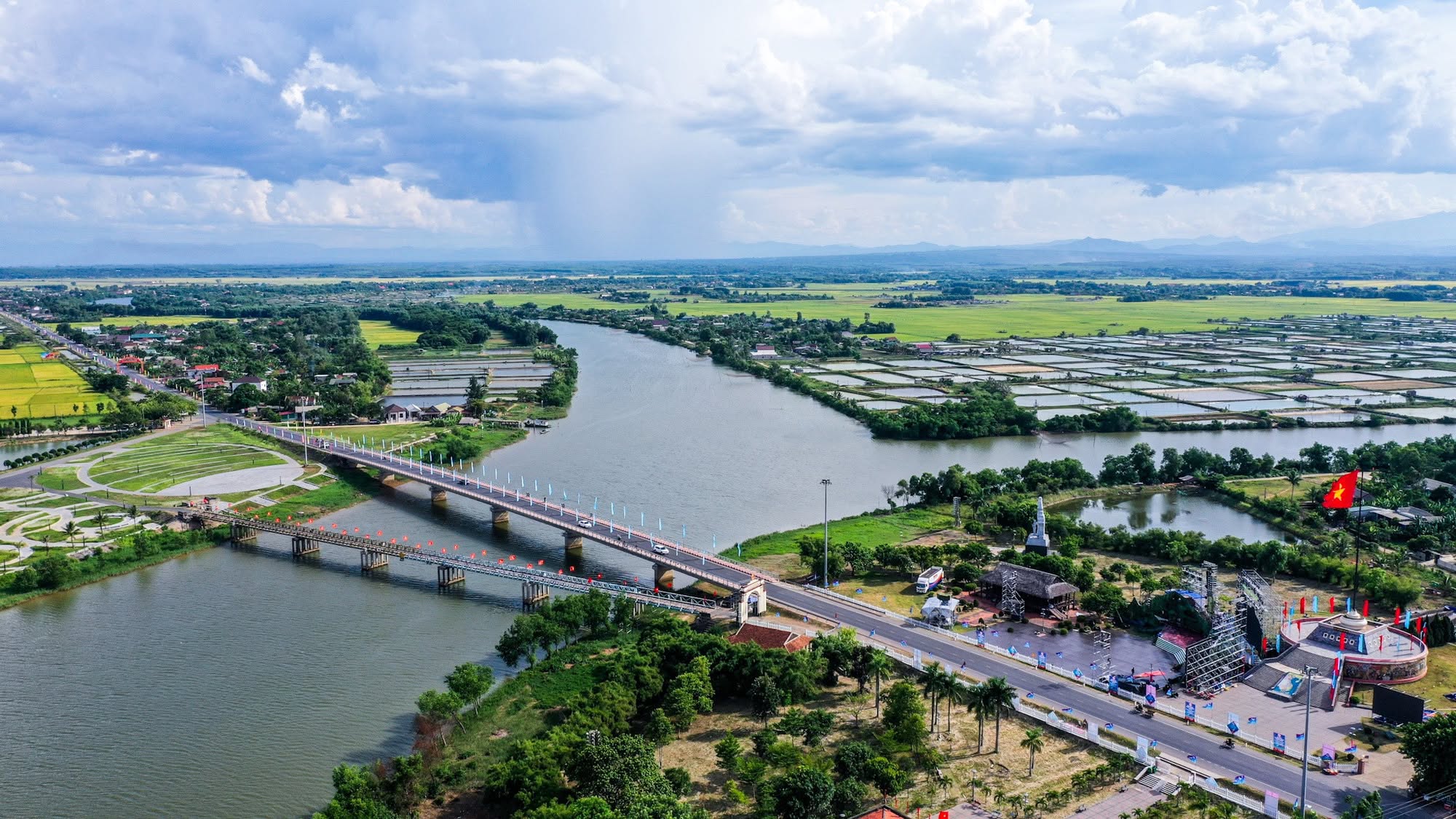
The Hien Luong – Ben Hai Banks Historical Site is one of Vietnam’s most significant historical sites associated with the period when the country was temporarily divided and with the long struggle for national independence and reunification.
Hien Luong – Ben Hai: A Witness to a Divided Vietnam
After the Geneva Accords were signed on July 20, 1954, Vietnam was temporarily divided into two zones, with the 17th parallel and the Ben Hai River serving as the provisional military demarcation line. A nationwide general election was scheduled for July 1956 with the aim of reunifying the country.
However, subsequent historical developments led Vietnam into more than two decades of war. Throughout this period, Hien Luong – Ben Hai became a place of profound historical significance. It directly witnessed the division between North and South Vietnam and the persistent struggle of people on both sides for independence and national reunification.
Today, the heritage site is organized along a north-south axis, with the historic Hien Luong Bridge at its center. From the bridge, the site extends from the Hien Luong Flagpole on the northern bank to the “Aspiration for Reunification” Monument Complex on the southern bank, together with numerous structures and locations associated with the history of the provisional military demarcation line.
The Hien Luong Bridge Area
Hien Luong Bridge
From late 1954 until it was destroyed by American bombing in 1967, Hien Luong Bridge became one of the most visible symbols of Vietnam’s division. More than a bridge crossing the Ben Hai River, it was closely associated with the fierce struggle to defend the demarcation line and the enduring aspiration for national reunification.
To preserve this historical evidence, the bridge was reconstructed based on the design of the steel bridge built by the French in 1952. It is 183.65 meters long and 5.50 meters wide, with a 3.20-meter-wide traffic section. Reconstruction began in 2001, and the restored bridge was completed and inaugurated in 2008.
The Joint House
The present Joint House was reconstructed based on the original structure that once stood at the demarcation line. The building features a four-sided stilt-house design, with its main facade facing National Highway 1A.
The interior is divided into three areas, with the central section consisting of four interconnected rooms. It once served as the venue for regular meetings of the Joint Commission representing North and South Vietnam, under the supervision of International Team 76. Today, the exhibition space recreates part of the activities that took place here during the period of the provisional military demarcation line.
Hien Luong Flagpole
The Hien Luong Flagpole, also known as the Hien Luong Flag Tower, consists of a tower base and flagpole. Built on elevated ground, it stands prominently within the historical site.
The flagpole is 28 meters high and consists of six interconnected sections of tubular steel. Rectangular steel bars along the pole form a ladder system. When the flag was raised, cables, pulleys and a winch were used to hoist it to the top.
The image of the national flag flying above Hien Luong became a powerful symbol of the determination to defend national sovereignty, the spirit of resistance and the aspiration for a reunified Vietnam.
Northern Loudspeaker System
About 30 meters from the northern end of Hien Luong Bridge is the reconstructed loudspeaker system, consisting of two speaker structures on the eastern and western sides.
Each structure stands close to the riverbank and is supported by three concrete pillars arranged in a tripod-like formation. The system contains 33 loudspeakers, including 27 facing the southern bank, 2 facing the northern bank and 4 facing east.
The loudspeakers are among the most distinctive features associated with the struggle along the Hien Luong – Ben Hai demarcation line. During the years of division, sounds broadcast from both sides of the river became an important part of everyday life and the spiritual landscape of the people living along the line.
Hien Luong Police Station
The Hien Luong Police Station is located near the northern bridge abutment, east of National Highway 1A. The present structure was reconstructed based on the original Hien Luong Police Station, which operated from 1955 to 1967.
The building consists of structural columns, load-bearing walls and a roof, forming a three-bay house with two side compartments. The main entrance faces west. A badge representing the Border Guard force is mounted on the southern roof ridge.
“17th Parallel and the Aspiration for Reunification” Exhibition House
Located on the southern bank of the Ben Hai River, the exhibition house consists of a ceremonial hall and an exhibition area. The ceremonial hall features a statue of President Ho Chi Minh with a relief behind it.
The exhibition focuses on four main themes: the Geneva Accords and the provisional military demarcation line; the resilience of the people of Vinh Linh and their struggle to defend the northern gateway of the demarcation line; the struggle of people south of the 17th parallel for national reunification; and the 17th parallel after Quang Tri was liberated in 1972.
The exhibition house preserves 53 documents and artifacts directly related to the struggle of Vietnamese soldiers and civilians along the Hien Luong – Ben Hai banks during the resistance war against the United States.
Southern Police Stations and Posts
After the war, the network of police stations, posts and loudspeaker structures on the southern bank of the Ben Hai River was no longer maintained. During the restoration and upgrading of the Hien Luong Bridge area, a number of structures on the southern bank were incorporated into the site plan to recreate the historical landscape and support visitors.
Restored facilities include the grounds, festival square, water feature, reception house, duty station and the area surrounding the “Aspiration for Reunification” Monument Complex.
“Aspiration for Reunification” Monument Complex
The monument complex stands on the southern bank of the Ben Hai River, east of National Highway 1A, covering an area of approximately 2,700 square meters.
The complex consists of a pedestal and sculptural figures. The pedestal is formed from multiple stone blocks of different dimensions and features relief panels along its sides. The sculptures depict a 7.70-meter-tall mother from southern Vietnam and her 5.50-meter-tall son, carved from Thanh Hoa green stone.
The image of mother and son conveys the faith, affection and aspirations of people in southern Vietnam as they looked toward the day when the country would achieve victory and reunification.
Cua Tung Police Station
The site of the former Cua Tung Police Station is now located within the compound of Border Guard Station 204. The facility serves the unit’s present-day functions while also preserving its historical association with national security and the revolutionary struggle.
Part of the lower floor of the two-story building has been converted into a traditional exhibition house, displaying 92 documentary photographs and 60 artifacts directly related to the revolutionary history of officers and soldiers of Cua Tung Police Station, the stations and posts along the northern bank of the Ben Hai River, and Border Guard Station 204 since 1954.
Ferry Crossings Along the Hien Luong – Ben Hai River
In addition to the Hien Luong Bridge area, the network of ferry crossings along the Hien Luong – Ben Hai River forms an important part of the historical landscape. During the war, these crossings transported officials, soldiers and supplies across the river, supporting military operations and logistical efforts on the battlefield.
Cua Tung Ferry Crossing
The Cua Tung Ferry Crossing, also known as Ferry A, covers an area of 187.6 square meters and is enclosed by a surrounding wall.
The memorial consists of a pedestal and an artistic architectural composition. A prominent feature is the image of boats crossing rough waters to transport officials and soldiers across the river. The scene also symbolizes the aspiration for national reunification.
Tung Luat Ferry Crossing
The Tung Luat Ferry Crossing, also known as Ferry B, once extended for approximately 150 meters along a section of the northern bank in Tung Luat Village, Vinh Giang Commune.
The memorial consists of a pedestal and a symbolic artistic composition depicting boats moving forward through bombardment and danger. The crossing once served as an important route for transporting supplies, officials and soldiers toward the battlefield.
Lui Ferry Crossing
The Lui Ferry Crossing, or Ferry C, was located in Co My Village, Vinh Giang Commune. The ferry was no longer used after the war, but its location has been preserved as part of the historical site, helping recreate the network of waterways that once operated along the Ben Hai River.
Thuong Dong and Duc Duc Ferry Crossings
The Thuong Dong Ferry Crossing is located in Huynh Thuong Village, Vinh Son Commune, while the Duc Duc Ferry Crossing is in Duc Duc Village, Vinh Son Commune. Together with the other ferry crossings along the Hien Luong – Ben Hai River, these locations were associated with the wartime transportation of people and supplies.
Reunification Festival
Every year on April 30, the Reunification Festival is held at the Hien Luong – Ben Hai Banks Historical Site. The event carries important historical and cultural significance. It commemorates and honors those who sacrificed their lives in the struggle for independence, while also promoting historical awareness and reminding visitors of the value of peace, independence and national reunification.
By tradition, in odd-numbered years the festival is organized by the local authorities. In even-numbered years, it is jointly organized by the Ministry of Culture, Sports and Tourism and the People’s Committee of Quang Tri Province.
The festival helps bring the historical stories of Hien Luong – Ben Hai closer to residents and visitors while adding a meaningful cultural experience to journeys through Quang Tri.
Historical and Cultural Value of Hien Luong – Ben Hai
Today, Hien Luong – Ben Hai is more than a historical site. It is also a memorial space and a place for historical and civic education. The bridge, river, flagpole, loudspeaker systems, ferry crossings and reconstructed structures together tell the story of a defining period in modern Vietnamese history.
A visit to the site offers travelers a clearer understanding of the years when Vietnam was divided, the devastation caused by war, and the determination of Vietnamese soldiers and civilians in their struggle for independence and national reunification.
For its outstanding historical and cultural values, the Hien Luong – Ben Hai Banks Historical Site was recognized by the Prime Minister as a Special National Relic under Decision No. 2383/QD-TTg dated December 9, 2013.
Today, it remains an important destination for anyone seeking to understand the history of Quang Tri, where every structure and place preserves a part of the memory of a divided Vietnam and the aspiration for reunification that ultimately became reality.