


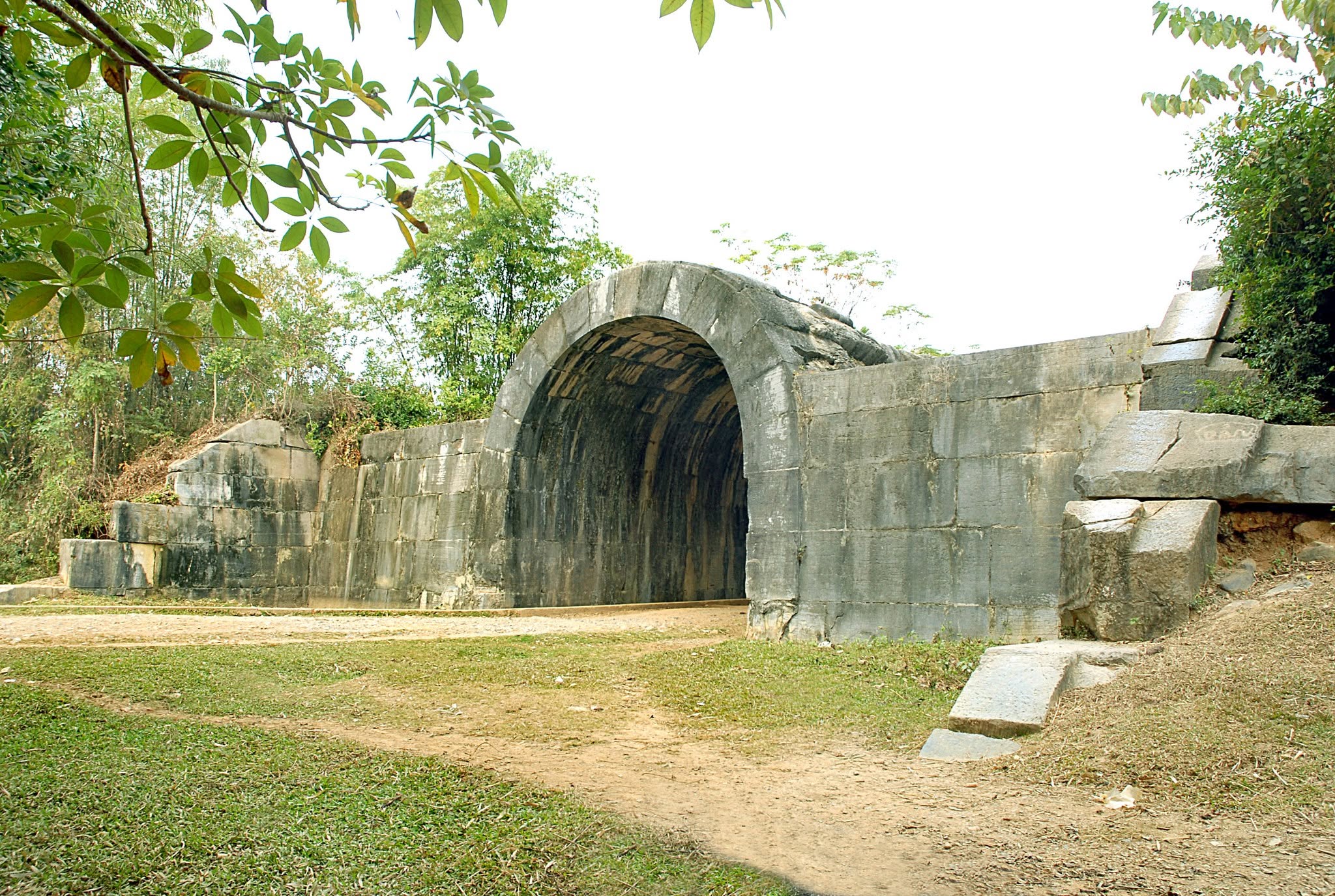
Ho Citadel, also known as Tay Do, or the Western Capital, is one of Vietnam’s most remarkable stone architectural complexes. Built in the late 14th century under the Ho Dynasty, the citadel served as the imperial capital for a relatively short period but has preserved outstanding values in history, architecture, urban planning, construction technology, archaeology, and cultural landscape.
On June 27, 2011, at the 35th session of the UNESCO World Heritage Committee held in Paris, France, Ho Citadel in Thanh Hoa Province was officially inscribed on the World Heritage List as a Cultural Heritage Site. The inscription recognized the site’s Outstanding Universal Value and affirmed its importance within the heritage of Vietnam and East and Southeast Asia.
As a State Party to the 1972 UNESCO Convention concerning the Protection of the World Cultural and Natural Heritage, Vietnam participated in the session through representatives of the Ministry of Culture, Sports and Tourism, the Ministry of Foreign Affairs, the Thanh Hoa Provincial People’s Committee, and representatives of several provinces and cities in Vietnam that are home to World Heritage properties.
History and Structure of Ho Citadel
Ho Citadel was commissioned by Ho Quy Ly in 1397, during a period of major political and social transformation in Vietnam. After its completion, the capital was moved from Thang Long to the new imperial city. The citadel was called Tay Do, or Western Capital, to distinguish it from Dong Do, the Eastern Capital, referring to Thang Long.
The construction of Tay Do was closely connected with the political, military, and ideological changes taking place in Vietnam at the end of the 14th century. In 1400, Ho Quy Ly established the Ho Dynasty, and Tay Do became the political center of the country.
Although the Ho Dynasty lasted only a short time, the citadel remains an important physical record of a major transitional period in Vietnamese history.
The most remarkable feature of Ho Citadel is its system of massive stone walls. The main citadel was laid out on an approximately square plan, with four sides enclosed by enormous stone blocks. The construction is estimated to have used approximately 20,000 cubic meters of stone, together with nearly 100,000 cubic meters of earth for foundations, embankments, and related structures.
Many of the stone blocks weigh between 10 and 26 tonnes. Quarrying, shaping, transporting, lifting, and positioning such massive blocks would have required sophisticated organization and construction techniques for the period.
Ho Citadel was not an isolated fortress. It formed part of a much larger historical and cultural landscape that included the citadel moat, La Thanh outer wall, Nam Giao Altar, archaeological remains beneath the ground, ancient villages, temples and pagodas, caves, mountains, rivers, and other natural features associated with the former imperial capital.
Archaeological research has revealed important evidence relating to the organization and development of Tay Do. Alongside the stone citadel, Nam Giao Altar and La Thanh are significant components of the heritage area and contribute to an understanding of the political, religious, military, and urban structure of the Ho Dynasty capital.
The Nam Giao Altar, located to the south of the citadel, was a ceremonial site associated with rituals dedicated to Heaven. Its discovery and archaeological investigation have provided valuable evidence concerning the ritual landscape of the imperial capital.
La Thanh, situated outside the main stone citadel, formed part of the broader defensive and spatial organization of Tay Do. Together with the moat and other associated remains, it demonstrates that the capital was conceived not simply as a stone fortress but as an integrated urban, military, ceremonial, and landscape system.
Ho Citadel was already recognized as a nationally important historical and cultural monument during the first major round of national monument classifications in 1962. Other important sites within the area, including Nam Giao Altar and La Thanh, were subsequently recognized at the national level, providing an important legal foundation for the preservation of the wider heritage complex.
Outstanding Universal Value
The inscription of Ho Citadel on the UNESCO World Heritage List was based on its Outstanding Universal Value, together with its integrity, authenticity, and management arrangements.
Ho Citadel meets two UNESCO World Heritage criteria, criteria (ii) and (iv).
Under criterion (ii), the heritage site provides outstanding evidence of the exchange and interaction of important human values between Vietnam and other societies in East and Southeast Asia during the late 14th and early 15th centuries.
The site reflects the transmission and creative adaptation of political, philosophical, architectural, and technical ideas during a period of significant transformation in Vietnam. Influences associated with Confucian thought and East Asian traditions were combined with Vietnamese cultural characteristics and adapted to local circumstances.
These exchanges are particularly evident in the planning of the imperial city, the design of the stone citadel, the construction of massive stone walls, and the broader influence of the site on the development of defensive and urban architecture in East and Southeast Asia.
Under criterion (iv), Ho Citadel represents an outstanding example of an East Asian imperial capital that combined royal authority with strong military and defensive functions.
One of its most distinctive characteristics is the harmonious relationship between architecture, military engineering, and the natural landscape. The citadel was situated within a landscape of mountains, rivers, and plains, reflecting the application of traditional concepts of topography, geomancy, and cultural landscape planning to the organization of an imperial capital.
The construction of the massive stone walls represents one of the most remarkable technical achievements associated with the site. The building process required a complex sequence of operations, including quarrying stone, selecting and shaping blocks, transporting stones weighing many tonnes, preparing foundations, lifting blocks to considerable heights, and assembling them into large and stable walls.
The stones were carefully worked and fitted to create a remarkably durable structure. The construction demonstrates not only advanced technical knowledge but also the ability to organize large-scale labor and logistics in the late 14th century.
The combination of Vietnamese construction traditions with influences from East and Southeast Asia resulted in a highly distinctive architectural achievement. Ho Citadel therefore occupies a special place in the history of Vietnamese and regional fortification architecture.
Integrity and authenticity
The heritage site meets the fundamental requirements concerning integrity and authenticity established under the Operational Guidelines for the Implementation of the 1972 UNESCO World Heritage Convention.
The principal components of the heritage area, including the stone citadel, moat, La Thanh, Nam Giao Altar, archaeological remains, and associated cultural landscape, together provide an important representation of the historical structure and character of Tay Do.
Preserving these components as an interconnected cultural landscape is essential to maintaining the meaning and authenticity of the World Heritage Site.
Management and Conservation
The protection and management of Ho Citadel are carried out under Vietnam’s heritage legislation and regulations specifically established for the site and its surrounding monuments.
On February 8, 2007, the Thanh Hoa Provincial People’s Committee issued regulations concerning the management, protection, and promotion of the values of Ho Citadel and its associated monuments.
On September 21, 2010, the Thanh Hoa Provincial People’s Committee issued Decision No. 3341/QD-UBND, establishing the Ho Citadel Heritage Conservation Center. The center was assigned responsibility for managing, protecting, conserving, and promoting the heritage values of Ho Citadel.
These legal and institutional measures provided an important foundation for the protection of the site, particularly during the period leading up to its UNESCO inscription.
Long-term conservation, however, requires continuous efforts to protect the integrity and authenticity of the heritage area. Conservation must extend beyond the stone walls themselves to include archaeological remains, the historic landscape, surrounding villages, natural features, and the broader spatial relationships that contribute to the significance of Tay Do.
From National Monument to World Heritage
The preparation of Ho Citadel’s World Heritage nomination dossier was a long-term process involving government agencies, local authorities, researchers, archaeologists, architects, historians, and heritage specialists.
At the request of the Ministry of Culture and Information, now the Ministry of Culture, Sports and Tourism, the Vietnamese Government authorized the preparation of the nomination dossier beginning in January 2006.
Extensive research was subsequently carried out into the history, archaeology, architecture, urban planning, landscape, construction techniques, and cultural significance of the site. The research helped establish the importance of Ho Citadel not only within Vietnamese history but also within the wider history of East and Southeast Asia.
On June 27, 2011, the UNESCO World Heritage Committee officially approved the inscription of Ho Citadel on the World Heritage List at its 35th session in Paris.
The inscription represented international recognition of the exceptional values of the citadel and the wider Tay Do cultural landscape. It also marked an important milestone in Vietnam’s efforts to conserve and promote the values of its historic heritage.
Today, Ho Citadel is more than an ancient stone fortress. It is a large-scale historical, archaeological, architectural, and cultural landscape that preserves evidence of the Ho Dynasty and a period of profound transformation in Vietnamese history.
The stone walls, moat, La Thanh, Nam Giao Altar, archaeological remains, ancient settlements, surrounding mountains and waterways together form a distinctive heritage landscape. They provide important evidence for understanding the political organization, architecture, engineering, religious practices, and cultural exchanges of Vietnam in the late 14th and early 15th centuries.
With its massive stone architecture, sophisticated construction techniques, carefully planned imperial landscape, and exceptional historical significance, Ho Citadel remains one of Vietnam’s most important World Heritage Sites and an outstanding monument to the architectural and engineering achievements of medieval Vietnam.

