
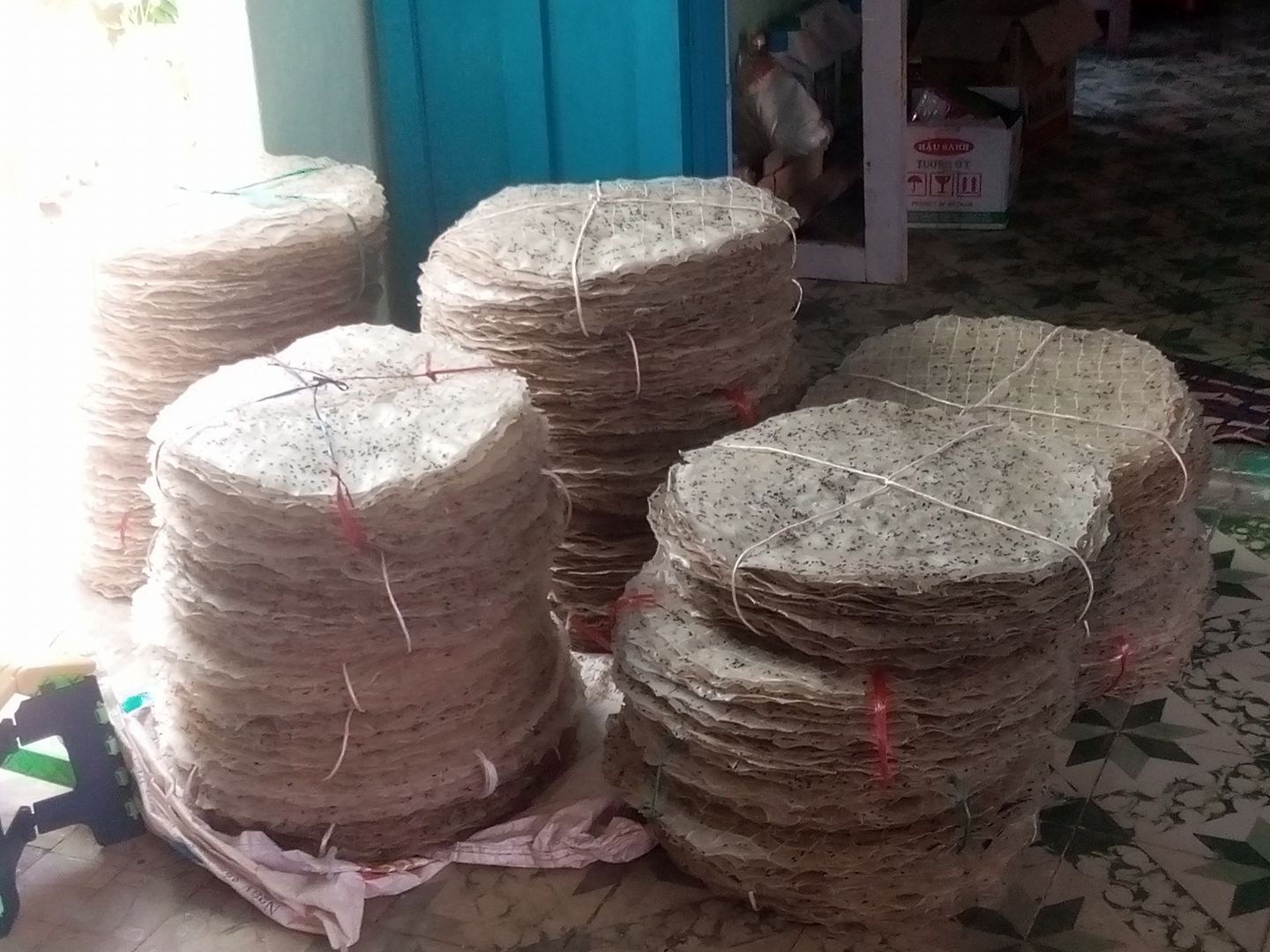
Ngu Phung Rice Paper Village on Phu Quy Island was once a thriving center of traditional cassava rice paper production. For generations, local families made thin sheets of cassava-based rice paper by hand, supplying not only island residents but also customers on the Vietnamese mainland.
Today, this traditional craft is gradually disappearing. Only a small number of households continue making cassava rice paper, preserving a valuable part of Phu Quy Island’s culinary heritage and local identity.
Hidden among the island’s quiet residential lanes, the remaining workshops offer a glimpse into a time when rice paper production was an important part of everyday life.
Ngu Phung – A Once-Thriving Traditional Craft Village
Ngu Phung is a historic residential area on Phu Quy Island, known for its long-standing tradition of producing cassava rice paper.
The former Ngu Phung Commune included three villages: Quy Thanh, Thuong Chau, and Phu An.
In the past, rice paper production was widespread throughout the community. Many households participated in preparing cassava, processing flour, making rice paper, and drying the finished products under the sun.
During the cassava harvest season, the villages became especially lively.
Families worked together from early morning until late in the day, turning locally grown cassava into traditional rice paper.
Some households produced rice paper for sale, while others continued the craft mainly for family consumption or to preserve techniques passed down from their parents and grandparents.
Over time, however, the number of families maintaining the craft declined significantly.
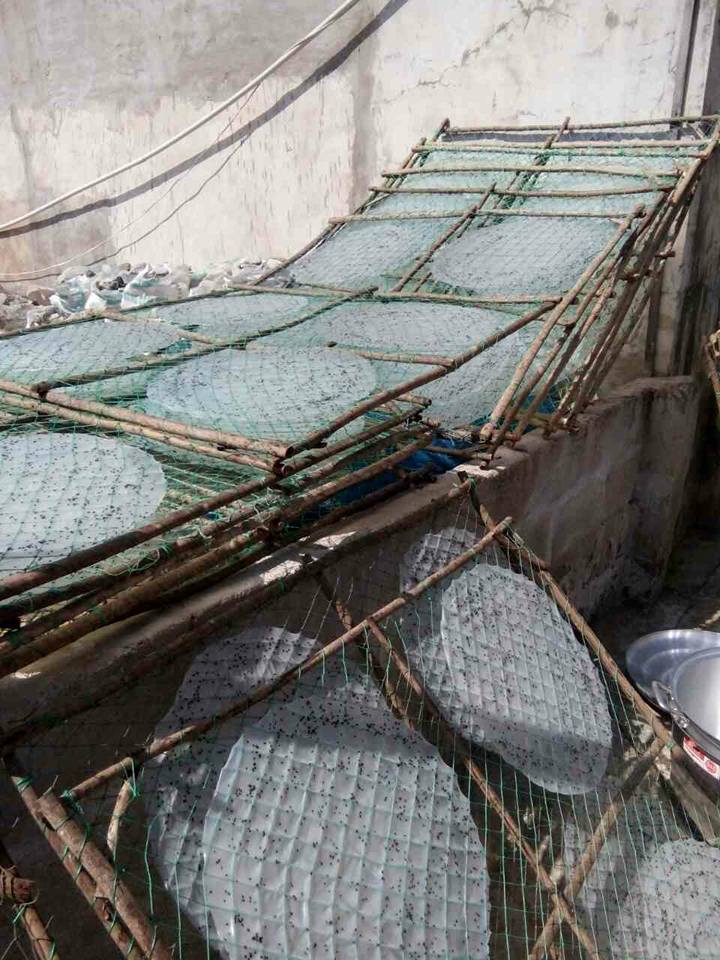
How Traditional Cassava Rice Paper Is Made
Unlike conventional Vietnamese rice paper made primarily from rice flour, the traditional product of Ngu Phung is made from cassava, known locally as khoai mì or simply mì.
Cassava harvesting on Phu Quy Island traditionally takes place around the first and second months of the lunar calendar.
During the harvest season, farmers select suitable cassava roots for processing.
The cassava is cut, soaked, ground, and filtered to obtain the starch used for making rice paper.
The quality of the cassava plays an important role in the texture and flavor of the finished product.
Once the batter is prepared, it is spread into thin sheets over a heated surface, where it is steamed or cooked.
The freshly prepared sheets are then carefully transferred onto drying racks and placed outdoors under the sun.
When properly dried, the rice paper can be stored, sold, or used in local cooking.
Although the process may appear simple, producing good-quality rice paper requires experience, patience, and careful attention to weather conditions.
A Traditional Craft That Begins at Midnight
One of the most remarkable aspects of cassava rice paper production in Ngu Phung is the demanding working schedule.
According to accounts from local craft makers, production often begins around midnight.
Families work through the early morning hours to prepare enough rice paper for drying when the sun rises.
The process may continue until midday, depending on the quantity produced and weather conditions.
Because the work involves several stages, including preparing batter, cooking sheets, arranging drying racks, and collecting the finished products, multiple family members often participate.
Hiring outside workers can be too expensive for small household producers.
As a result, rice paper making has traditionally been a family-based activity, with knowledge and responsibilities shared across generations.
When the Weather Becomes Part of the Craft
Sunlight plays an essential role in traditional rice paper production.
After the sheets are prepared, they must be dried under suitable conditions to achieve the desired texture.
Sudden rain can disrupt the entire process.
Older residents recall occasions when families and neighbors rushed together to move drying racks and protect the rice paper from unexpected showers.
These moments reflect the close relationships and spirit of cooperation that once characterized the traditional craft village.
The production of rice paper was therefore more than an economic activity. It was also part of the community’s shared rhythm of life.
Why Is the Traditional Rice Paper Craft Disappearing?
Traditional cassava rice paper production requires considerable manual labor, long working hours, and favorable weather.
Despite the effort involved, earnings from the craft have often been modest.
In the past, rice paper was commonly sold in batches of 1,000 sheets, known locally as một thiên.
Later, some producers began selling their products by weight.
However, the income generated has not always been sufficient to compensate for the time and physical effort required.
Changing economic conditions, alternative employment opportunities, and the difficulty of maintaining labor-intensive production have contributed to the decline of the craft.
Today, only a few households are known to continue the tradition, particularly in the Quy Thanh area.
The exact number of active producers has not been established in the historical account on which this article is based.
Preserving the Culinary Heritage of Phu Quy Island
For the remaining craft makers, producing cassava rice paper is not simply a way to earn a living.
It is also a connection to family history and the traditions of previous generations.
The familiar sounds of firewood burning beneath the cooking stove, the sight of thin rice paper sheets drying in the sun, and the aroma of freshly prepared batter are memories closely associated with the village.
Some older residents continue the craft because they want younger generations to remember how their parents and grandparents lived.
Even as production declines, these traditions remain an important part of Phu Quy’s cultural identity.
Preserving the stories, techniques, and memories of the craft can help maintain the island’s intangible cultural heritage.
Discovering Local Life on Phu Quy Island
Phu Quy Island is best known for its coastal scenery, fishing communities, and peaceful island atmosphere.
However, beyond its beaches and natural attractions, the island also has a rich history of traditional livelihoods.
Cassava rice paper production in Ngu Phung is one example of the skills and knowledge developed by local communities over generations.
For travelers interested in Vietnamese culture, learning about these traditional crafts offers a deeper understanding of everyday island life.
Visitors may discover local food traditions, hear stories about family-based production, and appreciate the dedication required to maintain handmade products.
Because only a small number of households may still practice the craft, visitors should not assume that workshops are regularly open to tourists.
Any visit to a working household should be arranged respectfully and with the owner’s permission.
Traditional Crafts and Sustainable Community Tourism
Traditional craft villages can contribute to sustainable tourism by introducing visitors to local culture while creating opportunities for community-based economic activities.
For Phu Quy Island, preserving the heritage of cassava rice paper production could help diversify the island’s cultural tourism experiences.
Activities such as documenting traditional production methods, introducing local food products, and supporting small household businesses may contribute to the preservation of this heritage.
However, tourism development should respect the privacy and daily lives of local residents.
The value of Ngu Phung’s rice paper tradition lies not only in the finished product but also in the skills, memories, and relationships that have sustained the craft over time.
Ngu Phung Rice Paper Village – A Memory Worth Preserving
The traditional cassava rice paper village of Ngu Phung is a reminder of Phu Quy Island’s agricultural past and the resilience of its local communities.
What was once a lively village industry has gradually become a rare household tradition.
The sight of rice paper drying beneath the island sun, the warmth of a wood-fired stove, and the dedication of elderly craft makers continue to tell the story of a disappearing way of life.
Ngu Phung’s traditional cassava rice paper is more than a local food product. It represents generations of craftsmanship, family memories, and the cultural heritage of Phu Quy Island.
For travelers exploring Phu Quy, understanding these local traditions offers a meaningful perspective on the island beyond its natural beauty.
Travel Note: This article is adapted from a historical account of traditional cassava rice paper production in Ngu Phung. The number of active households, availability of products, and opportunities to visit workshops may have changed. Visitors should confirm local arrangements before planning a craft-related visit.