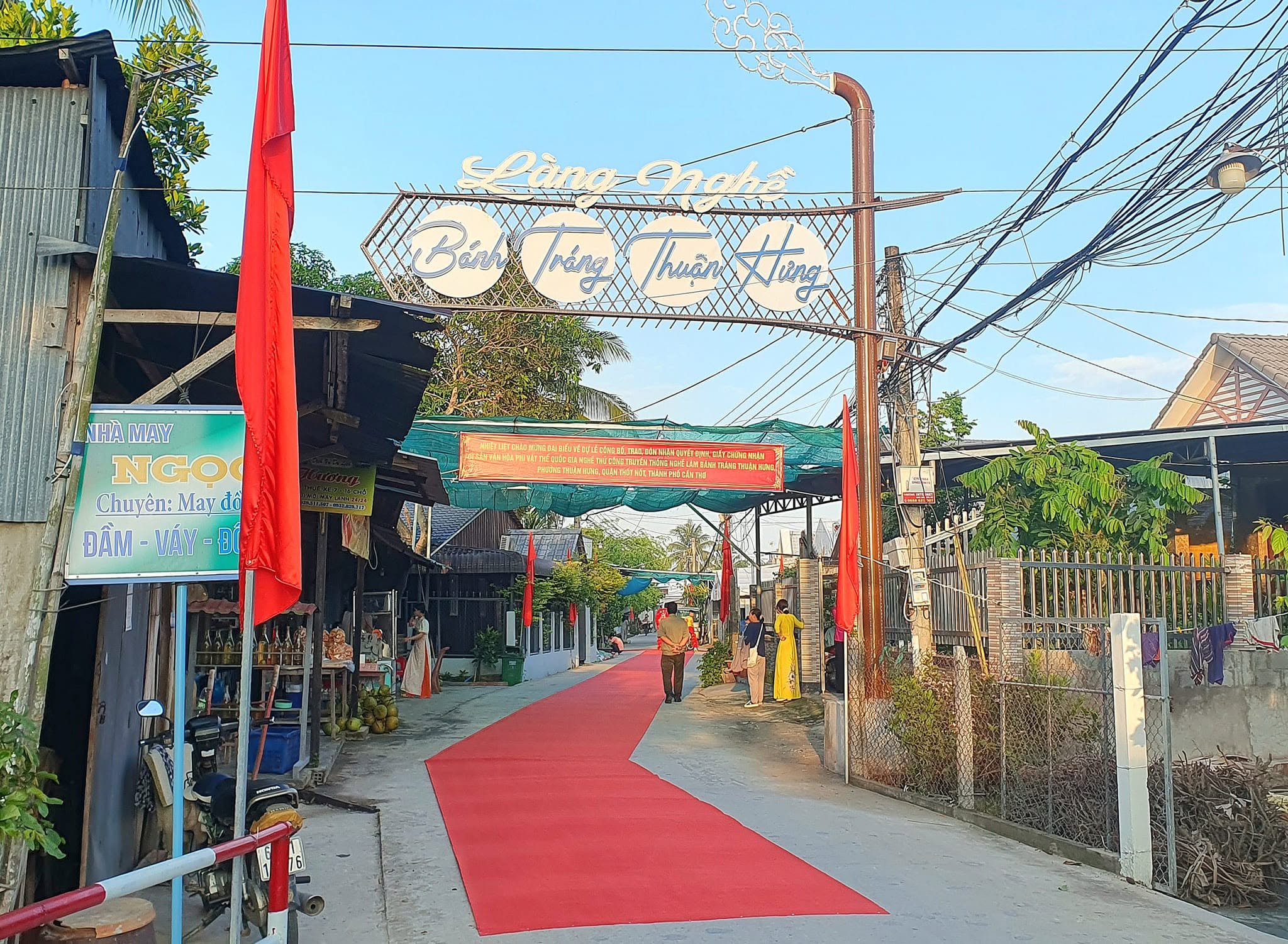
The traditional rice paper making craft of Thuận Hưng in Cần Thơ is a long-standing local craft associated with the culinary culture and riverine life of the Mekong Delta. Passed down through generations, the craft has preserved traditional techniques while gradually incorporating machinery into several stages of production.
Located in Thuận Hưng Ward, Cần Thơ City, the craft is believed to have developed around the mid-19th century. For generations, local families have made rice paper from familiar ingredients such as rice, coconut, sesame, sugar and salt. In 2008, the Thuận Hưng rice paper production village was officially recognized by Cần Thơ authorities as a qualified craft village.
On March 6, 2023, the Ministry of Culture, Sports and Tourism officially included Thuận Hưng Rice Paper Making Craft in the National Intangible Cultural Heritage List under Decision No. 478/QĐ-BVHTTDL, in the category of Traditional Craft. This recognition reflects not only the value of the finished product but also the traditional knowledge, skills and community practices preserved through the craft.
From Rice to Thuận Hưng Rice Paper
Rice is the essential ingredient in Thuận Hưng rice paper. Local artisans select suitable rice, soak and grind it into flour, then filter and adjust the mixture before steaming. Depending on the type of rice paper being made, ingredients such as coconut, sesame, sugar or salt may be added.
Local craft knowledge places particular importance on the quality and condition of the rice. Some families traditionally allow harvested rice to rest for several months before processing, believing that properly aged rice produces a better texture and makes the finished rice paper easier to handle.
Thuận Hưng produces several varieties, including savory rice paper, plain rice paper, rice paper for spring rolls and coconut rice paper. Coconut rice paper is often mixed with coconut and sesame, creating a distinctive aroma and slightly chewy texture.
Although machines are now used for tasks such as grinding rice and grating coconut, the essential techniques of steaming, spreading and sun-drying remain closely connected to traditional production.
The process begins by soaking and grinding rice into a smooth flour mixture. The flour is then carefully adjusted with water and other ingredients. A measured amount of batter is poured onto a cloth stretched over a steaming pot, where the artisan quickly spreads it into a thin, even layer.
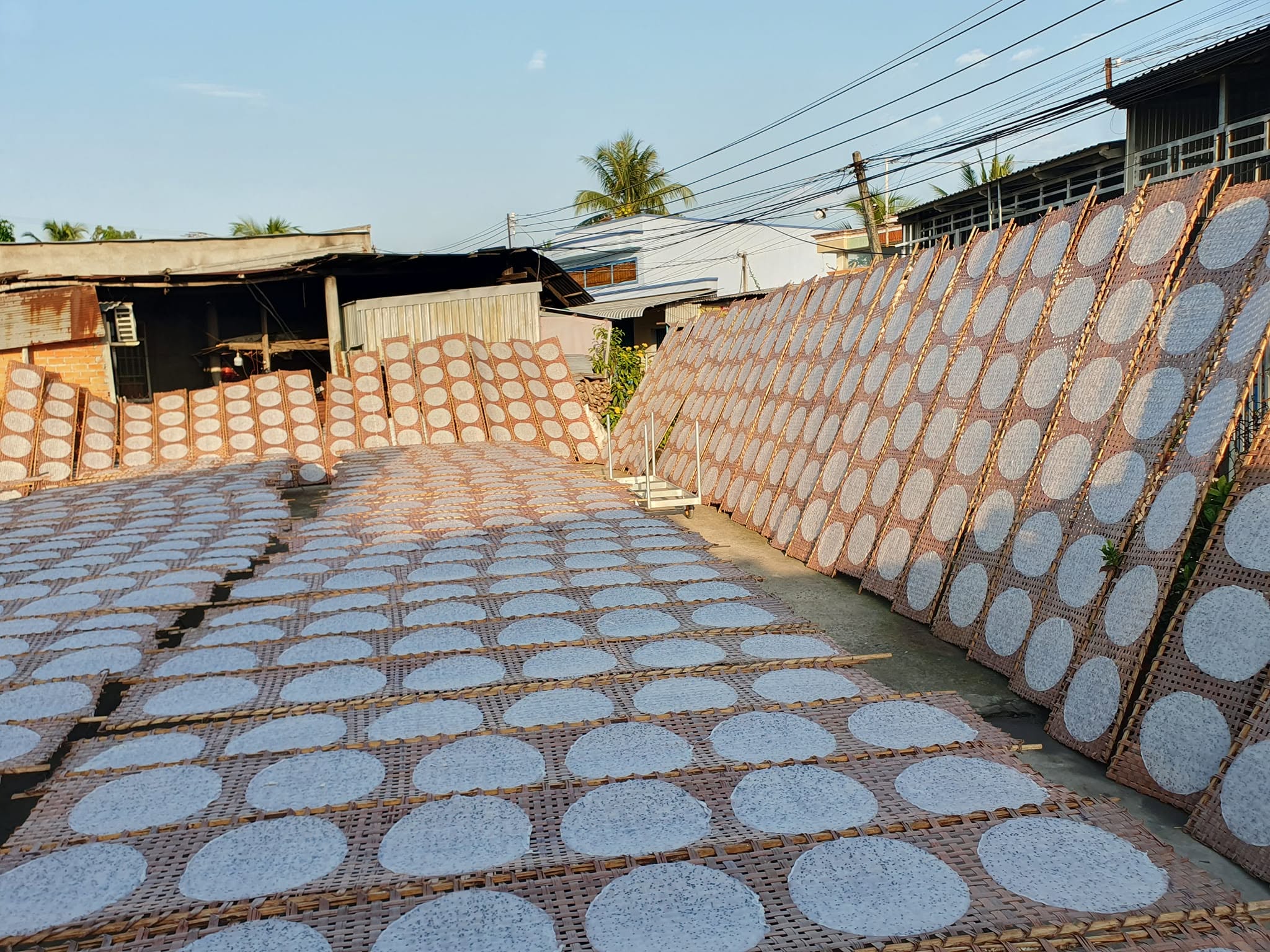
The rice paper is steamed for only a short time before being carefully lifted from the cloth and transferred to a bamboo drying rack. This stage requires experience because the freshly steamed sheet is delicate and can tear easily.
Sun-drying is equally important. The drying time depends on the strength of the sunlight and weather conditions. If the sheets are removed too early, they may retain too much moisture; if they are left too long, they can become brittle. Knowing when the rice paper has reached the right condition is part of the practical knowledge passed down among local artisans.
A Living Craft Heritage in Cần Thơ
Thuận Hưng rice paper is valued for its smooth surface, fragrant rice aroma and characteristic texture. The products are used in everyday meals as well as in traditional dishes and regional cuisine.
More importantly, the craft represents a form of local knowledge built around rice, water, steam, sunlight and manual skill. Artisans must understand the consistency of the flour, the heat of the steaming pot, the speed required to spread the batter and the weather conditions suitable for drying. These skills are difficult to preserve through written instructions alone and are traditionally learned through observation and hands-on practice.
The craft has also become part of the cultural tourism experience in Cần Thơ. Visitors to Thuận Hưng can observe traditional rice paper production, learn about the ingredients and techniques, and in some settings experience parts of the process themselves.
Today, the Thuận Hưng rice paper making craft continues to connect traditional knowledge with contemporary life. Its recognition as a National Intangible Cultural Heritage helps highlight the cultural value of an occupation that has long been woven into the daily life and food traditions of the Mekong Delta.
Heritage Information
- Heritage: Thuận Hưng Rice Paper Making Craft
- Category: Traditional Craft
- Location: Thuận Hưng Ward, Cần Thơ City, Vietnam
- National recognition: March 6, 2023
- Decision: No. 478/QĐ-BVHTTDL
- Heritage list: National Intangible Cultural Heritage