The Art of Bài Chòi in Central Viet Nam is a distinctive form of Vietnamese folk art that combines music, poetry, performance, visual arts, language and folk literature. Originating as a form of entertainment and cultural activity within village communities, Bài Chòi has developed into a living cultural space where traditional knowledge, artistic creativity and regional cultural values are practiced and transmitted from one generation to the next.
On 7 December 2017, during the 12th session of the UNESCO Intergovernmental Committee for the Safeguarding of the Intangible Cultural Heritage, held in Jeju, Republic of Korea, the Art of Bài Chòi in Central Viet Nam was officially inscribed on the Representative List of the Intangible Cultural Heritage of Humanity.
The heritage is practiced across Quảng Bình, Quảng Trị, Thừa Thiên Huế, Quảng Nam, Quảng Ngãi, Bình Định, Phú Yên, Khánh Hòa and Đà Nẵng. Bài Chòi serves not only as entertainment but also as a means of transmitting stories, life experiences, moral lessons, love of homeland and a sense of community.
Bài Chòi and Central Vietnamese Cultural Life
Bài Chòi is a form of community-based cultural activity closely associated with village life in Central Viet Nam. Artistic elements such as poetry, music, visual arts, language and traditional customs are presented in a simple and natural manner, making the art accessible and appealing to audiences.
Over time, Bài Chòi has become a space for artistic practice and creativity, while also preserving folk literature, performance styles and cultural values characteristic of different Central Vietnamese communities.
The stories, verses and performances often draw on everyday life and communicate experiences, moral lessons, love of homeland and solidarity among community members.
Two Main Forms of Bài Chòi
The Art of Bài Chòi has two principal forms of practice: Bài Chòi Playing and Bài Chòi Performance.
Bài Chòi Playing
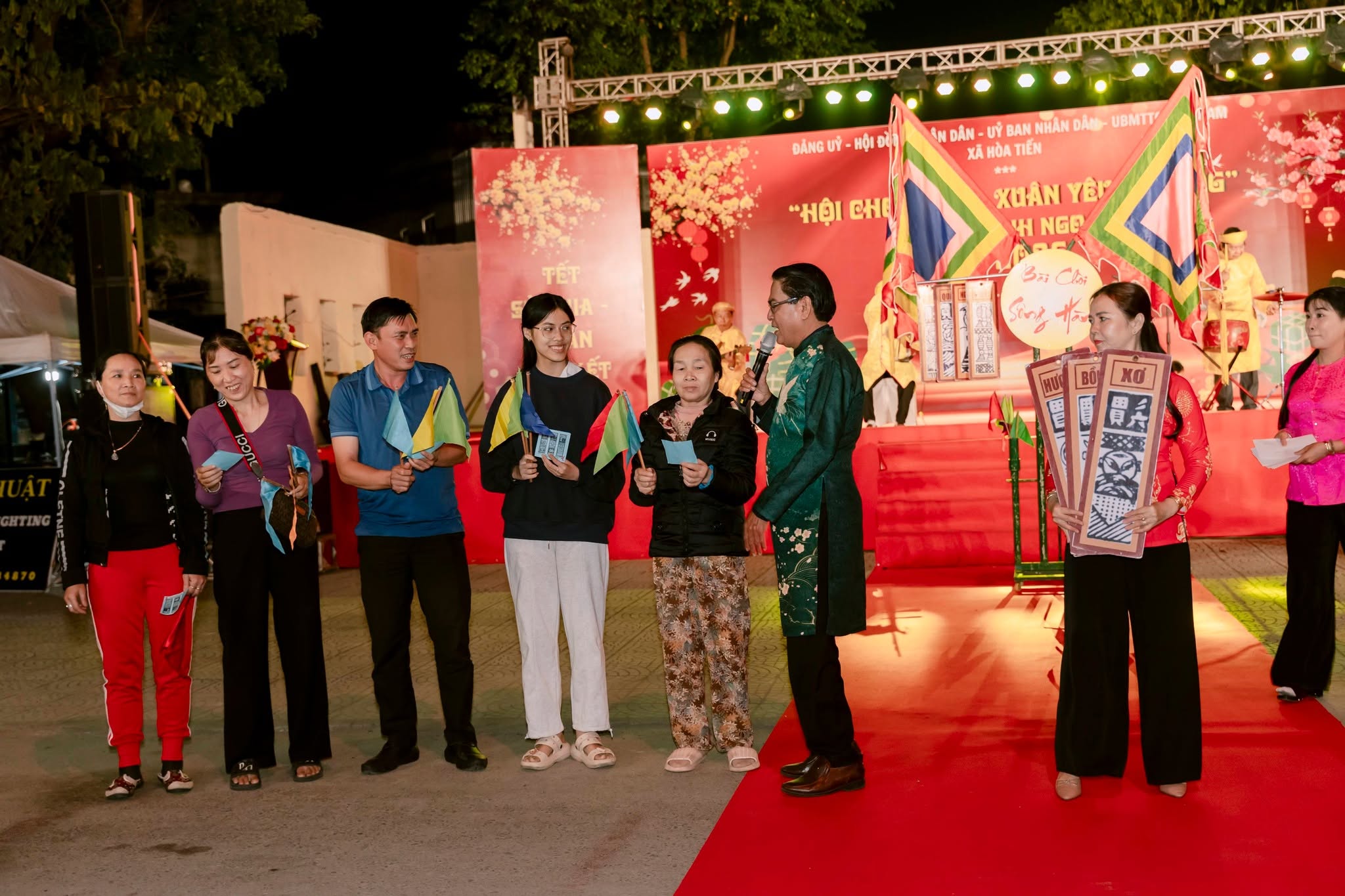
Bài Chòi playing is a traditional card game usually organized in bamboo huts during the Lunar New Year.
Players participate in the game within a communal space formed by the huts. The activity combines the elements of a traditional game and live performance, creating a lively and festive atmosphere during the New Year celebrations.
Bài Chòi Performance
In performance settings, male and female Bài Chòi performers, known as anh Hiệu and chị Hiệu, perform on woven mats or travel from one location to another. Bài Chòi can also be performed during private family occasions.
Performers use singing, language, acting and performance techniques to communicate stories and cultural messages to audiences.
Anh Hiệu, Chị Hiệu and the Bearers of the Heritage
Anh Hiệu and chị Hiệu play an important role in practicing and transmitting Bài Chòi. Other bearers include individual Bài Chòi performers and artisans skilled in making the traditional cards.
Performers and their families contribute significantly to safeguarding the heritage by teaching younger generations traditional pieces, singing techniques, performance skills and methods of making Bài Chòi cards.
Most practitioners traditionally learned the skills of calling, singing and performing Bài Chòi within their families, primarily through oral transmission. Today, transmission also takes place through associations, clubs and schools.
Together with local communities, practitioners have established nearly 90 teams, groups and clubs dedicated to practicing and teaching Bài Chòi, encouraging broad community participation in safeguarding the tradition.
Bài Chòi as a Form of Community Education
One of the important values of Bài Chòi is its ability to transmit folk cultural knowledge through games and performance.
Through songs, stories and accessible forms of expression, Bài Chòi communicates traditional knowledge and lessons about life and social behavior. It provides younger generations with an opportunity to encounter traditional culture naturally through participation and observation.
However, the transmission of Bài Chòi also faces challenges. Practicing the art requires talent, ability and dedication, while opportunities and performance spaces, as well as audiences, have become more limited. Many practitioners are elderly, face economic difficulties, and have limited financial support for learning and practicing the heritage.
Safeguarding and Promoting the Heritage
The provinces and cities where Bài Chòi is practiced have implemented various measures to safeguard and promote the heritage.
Bình Định, Khánh Hòa, Quảng Nam and Phú Yên prepared dossiers on Bài Chòi and had the heritage included by the Ministry of Culture, Sports and Tourism in the National Intangible Cultural Heritage List during 2013-2014.
In 2012, the Vietnam National Institute of Culture and Arts Studies conducted an inventory of Bài Chòi heritage in eight Central Vietnamese provinces and incorporated the information into its database. By 2014, cultural authorities in nine provinces and cities had cooperated with the Vietnam Institute of Music to conduct further inventories, with the results stored in the intangible cultural heritage management information system of the Department of Cultural Heritage.
The Ministry of Culture, Sports and Tourism assigned the Vietnam Institute of Music to work with local cultural authorities to organize annual training and inventory activities, identify and document the heritage, restore elements that had fallen into decline, recover related folk knowledge and organize Bài Chòi festivals.
These activities have provided a foundation for communities to continue practicing, transmitting and promoting the heritage.
Community Participation
Communities play a central role in safeguarding the Art of Bài Chòi. Representatives of 86 Bài Chòi teams, groups and clubs across the nine provinces and cities where the heritage is practiced expressed their support for the preparation of the UNESCO nomination dossier.
Community participation in inventorying, documentation, teaching and nomination demonstrates that Bài Chòi is not simply an art form preserved by cultural authorities. It is above all a living heritage of the communities that practice and transmit it.
UNESCO Inscription Criteria
According to the UNESCO Intergovernmental Committee for the Safeguarding of the Intangible Cultural Heritage, the nomination of the Art of Bài Chòi in Central Viet Nam fulfilled criteria R.1 through R.5 for inscription on the Representative List of the Intangible Cultural Heritage of Humanity.
R.1: Importance to Communities
Bài Chòi is an important cultural activity within village communities, providing opportunities for entertainment and artistic appreciation. Its stories convey moral lessons, love of homeland, community solidarity and knowledge derived from everyday life.
Transmission takes place primarily within families, villages, associations, clubs and schools. The practice of Bài Chòi also promotes gender equality and mutual respect among communities.
R.2: Dialogue and Cultural Diversity
The inscription of Bài Chòi encourages dialogue among communities, groups and individuals and creates opportunities for practitioners to exchange experiences.
Because Bài Chòi combines several cultural and artistic fields, including poetry, music, performance, visual arts and language, it contributes to greater awareness of the diversity of intangible cultural heritage.
R.3: Safeguarding Measures
The nomination dossier documented past and ongoing efforts to safeguard the heritage, including the organization of Bài Chòi associations, performances and teaching activities covering songs, singing skills, performance techniques, card-making methods and the skills required to play Bài Chòi.
The State, local authorities, communities and practitioners have participated in safeguarding activities. These include scientific research, collection and documentation, restoration of endangered elements, educational programs and efforts to raise public awareness of the heritage.
R.4: Community Participation
Communities participated in collecting and documenting the heritage, completing inventory forms and preparing the nomination dossier. Individuals and representatives of Bài Chòi groups and clubs expressed their voluntary consent to the nomination.
The Department of Cultural Heritage and the Vietnam Institute of Music were entrusted with coordinating consultation activities through meetings and workshops held during the preparation of the nomination.
R.5: Inventory and Documentation
The Art of Bài Chòi was included by the Ministry of Culture, Sports and Tourism in the National Intangible Cultural Heritage List during 2014-2016.
Inventory results are maintained within the intangible cultural heritage management information system of the Department of Cultural Heritage. Cultural authorities in the nine provinces and cities where Bài Chòi is practiced cooperate with communities to update inventory information annually. The Vietnam Institute of Music maintains a database on the Art of Bài Chòi and updates it periodically.
Bài Chòi in Contemporary Life
Bài Chòi is a distinctive example of the combination of traditional games, performing arts and community life. From bamboo huts and woven mats in village spaces, Bài Chòi has developed into a means of preserving and transmitting the cultural memory of Central Vietnamese communities.
Its value lies not only in performance techniques but also in the body of knowledge, language, music, poetry, stories and life experiences transmitted from one generation to another.
The UNESCO inscription in 2017 recognized the cultural value of Bài Chòi for its communities and highlighted the important role of communities in maintaining, transmitting and promoting this traditional heritage.
Quick Information
| Item | Information |
|---|---|
| Heritage name | The Art of Bài Chòi in Central Viet Nam |
| Vietnamese name | Nghệ thuật Bài chòi Trung Bộ Việt Nam |
| Heritage type | Intangible Cultural Heritage |
| UNESCO status | Representative List of the Intangible Cultural Heritage of Humanity |
| Year of inscription | 2017 |
| Date of inscription | 7 December 2017 |
| UNESCO session | 12th session of the UNESCO Intergovernmental Committee |
| Place of inscription | Jeju, Republic of Korea |
| Geographical scope | Quảng Bình, Quảng Trị, Thừa Thiên Huế, Quảng Nam, Quảng Ngãi, Bình Định, Phú Yên, Khánh Hòa and Đà Nẵng |
| Main forms | Bài Chòi Playing and Bài Chòi Performance |
| Key practitioners | Anh Hiệu, chị Hiệu and Bài Chòi artisans |
| Practice settings | Villages, festivals, families, associations, clubs and schools |
| Key values | Music, poetry, performance, visual arts, language, folk literature and community solidarity |
Location: Central Viet Nam, including Quảng Bình, Quảng Trị, Thừa Thiên Huế, Quảng Nam, Quảng Ngãi, Bình Định, Phú Yên, Khánh Hòa and Đà Nẵng.