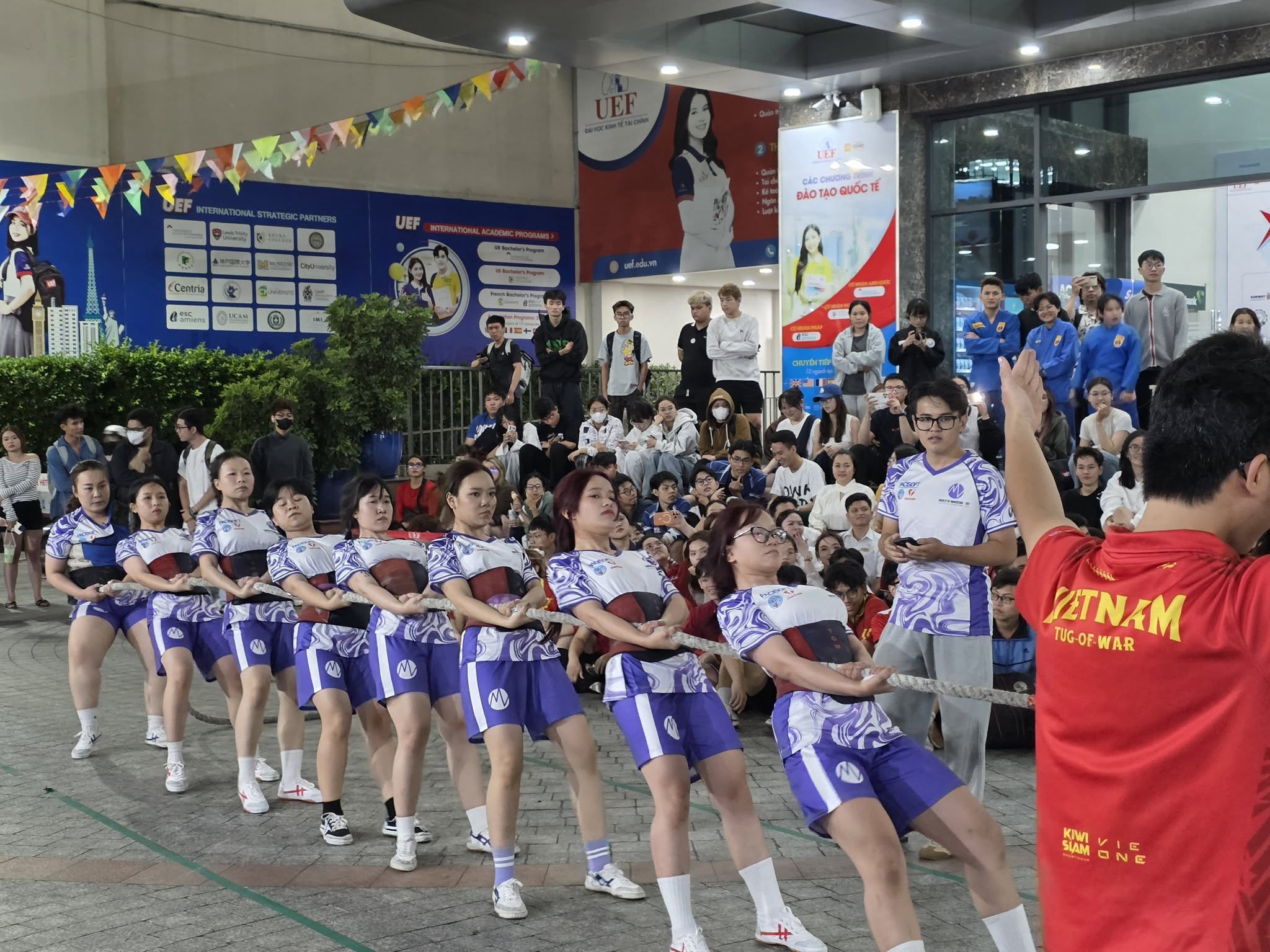
Tugging rituals and games are traditional social practices associated with agricultural communities in Vietnam, Cambodia, the Republic of Korea and the Philippines. Closely connected with rice cultivation, these rituals and games are often performed with wishes for favorable weather, abundant harvests and prosperity, while in some communities they are also associated with divination concerning the success or failure of agricultural production.
The heritage was inscribed in 2015 on the UNESCO Representative List of the Intangible Cultural Heritage of Humanity. The inscription was made on 2 December 2015, during the 10th session of the UNESCO Intergovernmental Committee for the Safeguarding of the Intangible Cultural Heritage, held in Windhoek, Namibia.
The practice demonstrates the diversity of cultural expressions that have developed among agricultural communities in East and Southeast Asia. Although the basic form involves groups pulling against each other, each community has developed its own rules, rituals, meanings and ways of transmission.
Tugging Rituals in Agricultural Communities
Tugging rituals and games are particularly widespread in regions where rice cultivation has played an important role in community life. Beyond the physical contest, the practice expresses people’s aspirations for favorable natural conditions, good crops and community prosperity.
The rituals are often associated with agricultural calendars and community festivals. Participation brings people together, creating opportunities for cooperation, social interaction and the transmission of knowledge and traditional practices from one generation to another.
The heritage also demonstrates how a common cultural practice can take different forms according to local ecological conditions, social structures and cultural traditions.
Tugging Rituals in Cambodia
In Cambodia, tugging rituals and games are practiced among rice-growing communities around the Great Lake, Tonle Sap, as well as in areas north of Angkor.
The practice is closely associated with agricultural life and community aspirations for favorable weather and successful harvests. Its continued practice reflects the relationship between traditional games, agricultural production and community cultural life.
Tugging Rituals in the Philippines
In the Philippines, tugging rituals and games are practiced in Hungduan, Ifugao, an area bordered by Mountain Province to the northwest and Benguet to the southwest.
The practice is found among communities in several barangays, including Hapao Proper, Nungulunan and Baang. Hungduan is characterized by extensive rice terraces constructed with stone walls, providing an important agricultural setting for the transmission and practice of the tradition.
The ritual reflects the close relationship between community life, rice cultivation and traditional forms of collective activity.
Tugging Rituals in the Republic of Korea
In the Republic of Korea, tugging rituals and games are practiced in many towns located in agricultural areas, particularly across broad plains and in the southwestern part of the Korean Peninsula.
Notable communities include Dangjin, Namhae, Milyang, Uiryeong and Changnyeong, as well as Samcheok, where agricultural and fishing traditions coexist.
Different communities have developed their own forms and practices, demonstrating the adaptability of the tradition to local social and environmental conditions.
Tugging Rituals in Vietnam
In Vietnam, tugging rituals and games are concentrated particularly in the midland regions, the Red River Delta and the North Central region, areas historically associated with Vietnamese rice-growing culture.
The practice is especially found in Vĩnh Phúc, Bắc Ninh and Hà Nội, while ethnic communities also maintain distinctive forms of the tradition. These include the Tày people in Tuyên Quang, the Thái people in Lai Châu and the Giáy people in Lào Cai.
Although the forms of tugging vary between communities, the practice generally combines physical competition with ritual and social meanings. It provides an opportunity for community members to participate collectively and to transmit traditional knowledge through direct participation and observation.
A Practice of Community Participation and Social Connection
Tugging rituals and games create a shared space in which community members participate regardless of differences in social position. The practice encourages interaction, cooperation and a sense of equality among participants.
Knowledge and skills associated with the heritage are transmitted through oral instruction, observation and direct participation. In some places, traditional knowledge is also supported through training centers, schools and museums.
The practice therefore serves not only as a traditional game but also as a means of maintaining social relationships and strengthening connections between generations.
Diversity and Adaptation
One of the distinctive characteristics of tugging rituals and games is the diversity of their forms across the four participating countries.
Local communities have adapted the practice to different ecological and cultural environments while maintaining its fundamental character as a collective activity. This diversity demonstrates the ability of communities to continually recreate traditional practices through their own creativity.
The heritage also illustrates the relationship between cultural traditions and sustainable community life. Its continued practice allows traditional knowledge, social values and local customs to remain part of contemporary community activities.
A Multinational Heritage Nomination
The inscription of tugging rituals and games was notable because Vietnam, Cambodia, the Republic of Korea and the Philippines jointly submitted the nomination dossier.
For Vietnam, this was the first multinational nomination dossier for intangible cultural heritage jointly submitted with other countries and subsequently inscribed by UNESCO.
The multinational nomination demonstrates that a shared cultural practice can provide a basis for dialogue and cooperation among communities and countries, while still preserving the distinctive expressions found in each locality.
UNESCO Inscription Criteria
The inscription was supported by the five UNESCO criteria for the Representative List of the Intangible Cultural Heritage of Humanity.
Criterion R.1: The practice functions as a social activity that promotes equality and has diverse expressions in each participating country. Knowledge and skills are transmitted through oral teaching, observation and direct participation, as well as through training centers, schools and museums.
Criterion R.2: The diversity of the practice and its adaptation to different ecological conditions demonstrate its role in sustainable development. Its continued recreation also reflects human creativity. The joint nomination by four countries demonstrates its potential to promote intercultural dialogue.
Criterion R.3: Each participating country and community established safeguarding plans and measures to maintain the practice, including measures addressing the possible effects of commercialization.
Criterion R.4: Communities, groups, individuals, experts and relevant institutions participated in the nomination process. Evidence of community consent and voluntary participation was included in the nomination.
Criterion R.5: The heritage had been included in national or community inventories. The relevant inventories were established in the Republic of Korea in 1969, Cambodia in 2013, the Philippines in 2013 and Vietnam in 2013.
A Shared Heritage of Four Countries
Tugging rituals and games demonstrate how a simple collective activity can carry diverse cultural meanings. Across Vietnam, Cambodia, the Republic of Korea and the Philippines, the practice is connected with agricultural life, community relationships, traditional knowledge and hopes for prosperity.
Its UNESCO inscription recognizes not only the physical game itself but also the rituals, knowledge, social practices and cultural values transmitted through generations.
The heritage remains a living tradition because communities continue to practice, adapt and transmit it. Its multinational character also provides an example of how communities sharing related cultural practices can cooperate in safeguarding intangible cultural heritage while maintaining their own local identities.
Quick Information
| Item | Information |
|---|---|
| Name | Tugging Rituals and Games |
| Heritage type | Social practices, rituals and traditional games |
| UNESCO status | Representative List of the Intangible Cultural Heritage of Humanity |
| Inscription year | 2015 |
| Inscription date | 2 December 2015 |
| Participating countries | Vietnam, Cambodia, Republic of Korea and the Philippines |
| Cultural context | Agricultural and rice-growing communities |
| Main values | Community solidarity, agricultural traditions, social interaction and intergenerational transmission |
| Nomination | Joint multinational nomination |
Location: Communities in Vietnam, Cambodia, the Republic of Korea and the Philippines.