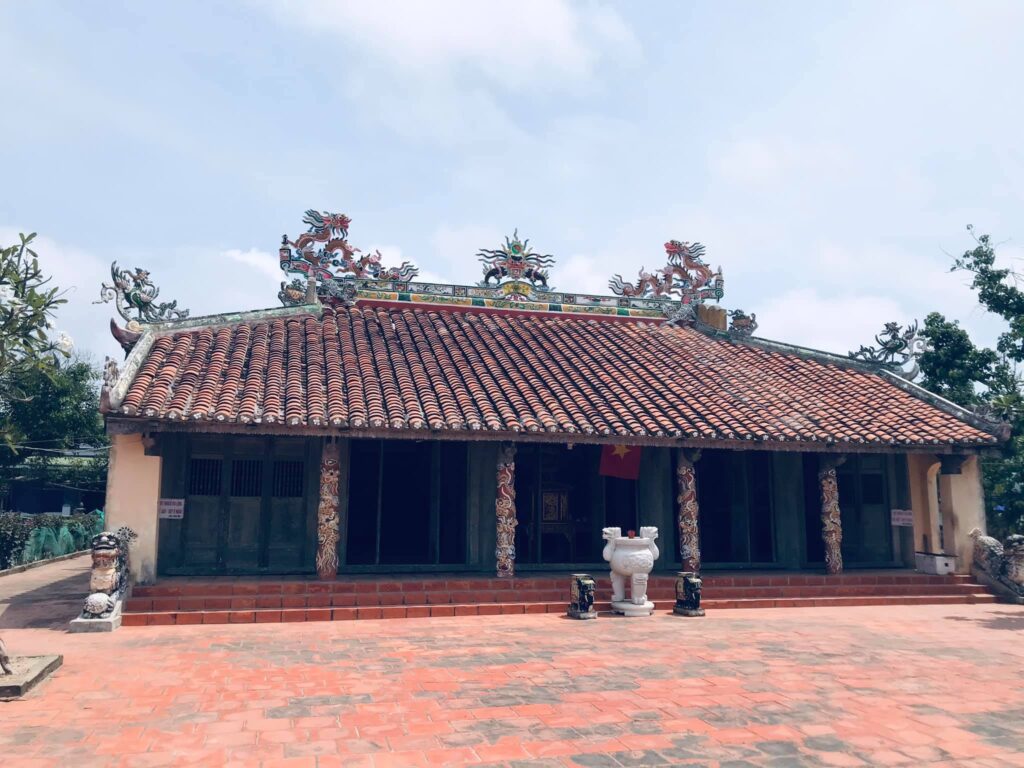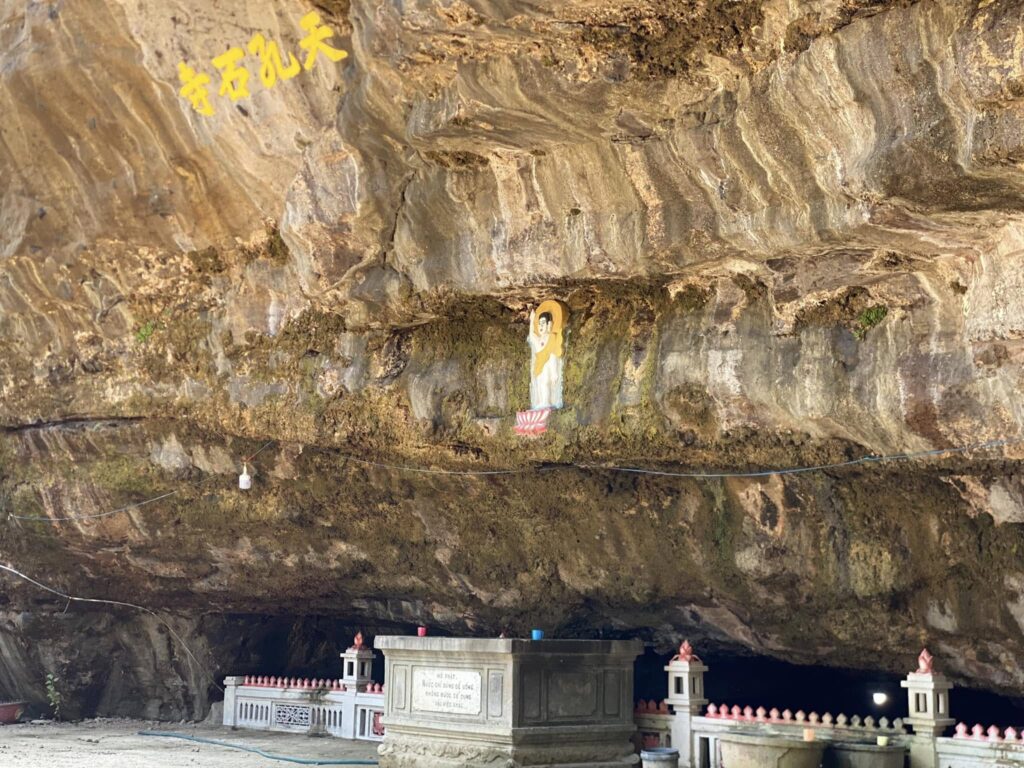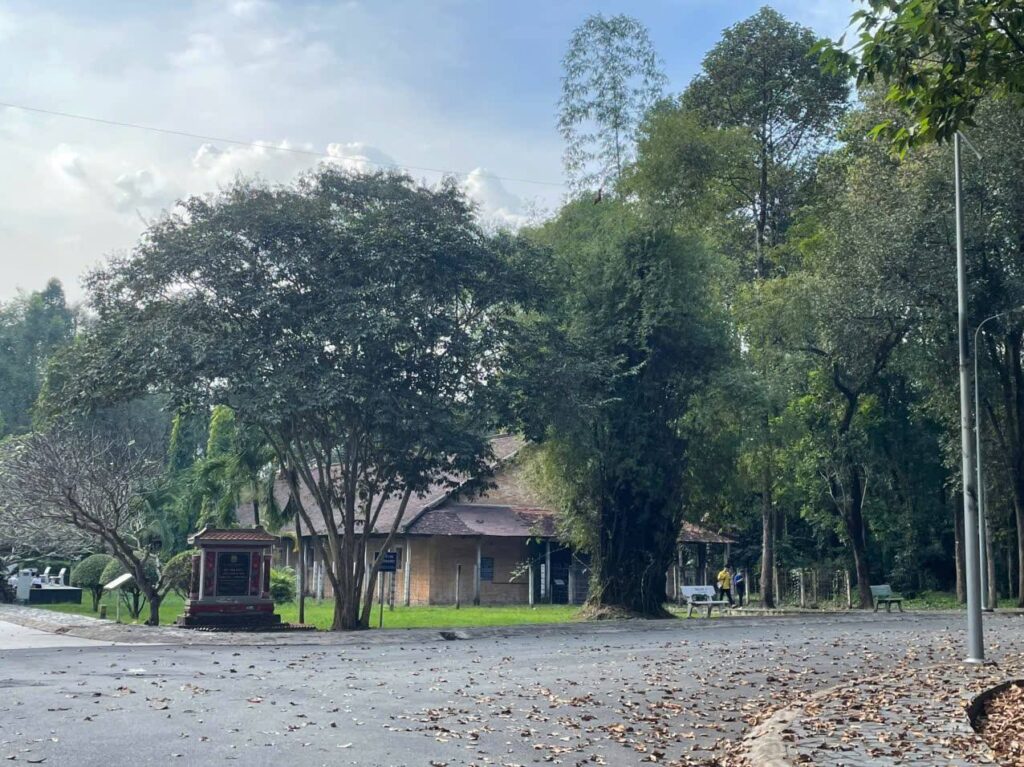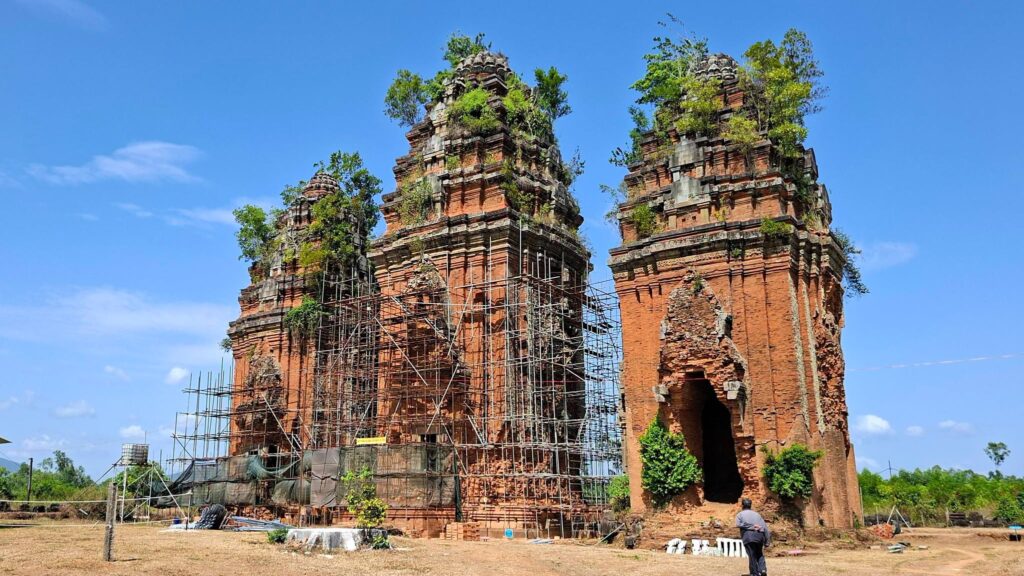
An Cuu Communal House is located in An Cuu Hamlet, Tuy Phuoc Bac Commune, Gia Lai Province, covering an area of approximately 1,033.4 square meters. It is a traditional cultural institution closely associated with the formation and development of the local community and has long served as an important space for religious practices and communal cultural activities.
According to historical records and the memories of local elders, An Cuu Communal House was established before the 19th century. The communal house is dedicated to the Thanh Hoang Ban Canh, the village guardian deity, and Thai Giam Bach Ma Ton Than. These figures have long been revered by the local community as spiritual protectors who safeguard the village and its people.
With its historical, cultural and architectural values, An Cuu Communal House was recognized as a provincial-level historical and cultural heritage site under Decision No. 871/QD-UBND dated March 10, 2026.
A Traditional Community Institution
In traditional Vietnamese village life, the communal house was not simply a place of worship. It also served as a shared space for community activities, religious ceremonies and important village gatherings.
An Cuu Communal House has fulfilled this role for generations. Over time, it has become part of the collective memory of the local community, closely connected with the formation of the settlement and the development of the surrounding area.
The worship of the Thanh Hoang Ban Canh and Thai Giam Bach Ma Ton Than reflects the traditional belief in guardian deities who protect the village, bring peace to the community and safeguard the lives of its residents.
The communal house therefore combines a sacred religious function with a strong sense of community identity.
Four Royal Edicts from the Nguyen Dynasty
One of the most significant historical values of An Cuu Communal House is its collection of four royal edicts issued by Nguyen Dynasty emperors, dating to the reigns of Thanh Thai, Duy Tan and Khai Dinh.
These documents are valuable Sino-Nom historical materials associated with the recognition and honoring of the deities worshipped by the local community. Their presence at the communal house reflects the relationship between village religious traditions and the system of official divine titles under the Nguyen Dynasty.
Beyond their documentary value, the royal edicts provide insight into the spiritual life and religious traditions of the local community across generations.
For a traditional communal house, these historical documents are more than ancient artifacts. They form part of the community’s historical memory, preserving the names and status of the deities worshipped and reflecting the role of religious beliefs in traditional village society.
Traditional Architecture and Decorative Arts
An Cuu Communal House retains architectural elements characteristic of traditional Vietnamese communal houses, including a three-entrance gate, ornamental pillars, screen wall and main worship hall.
These architectural components are complemented by decorative motifs rooted in traditional folk culture. The decorative details serve not only an aesthetic purpose but also express traditional concepts of symbolism and visual representation.
The main worship hall forms the central architectural space of the complex, where important worship ceremonies and religious activities are conducted. The preservation of its architectural and decorative elements helps maintain the character of a traditional village communal space in contemporary life.
Horizontal Plaques, Couplets and Traditional Rituals
The interior of An Cuu Communal House also preserves a system of horizontal plaques, Chinese-character couplets and traditional worship practices.
The inscriptions generally praise the merits of deities, ancestors and respected figures while expressing values such as gratitude and respect for previous generations. Through Sino-Nom inscriptions and traditional rituals, these ideas have been transmitted from one generation to another.
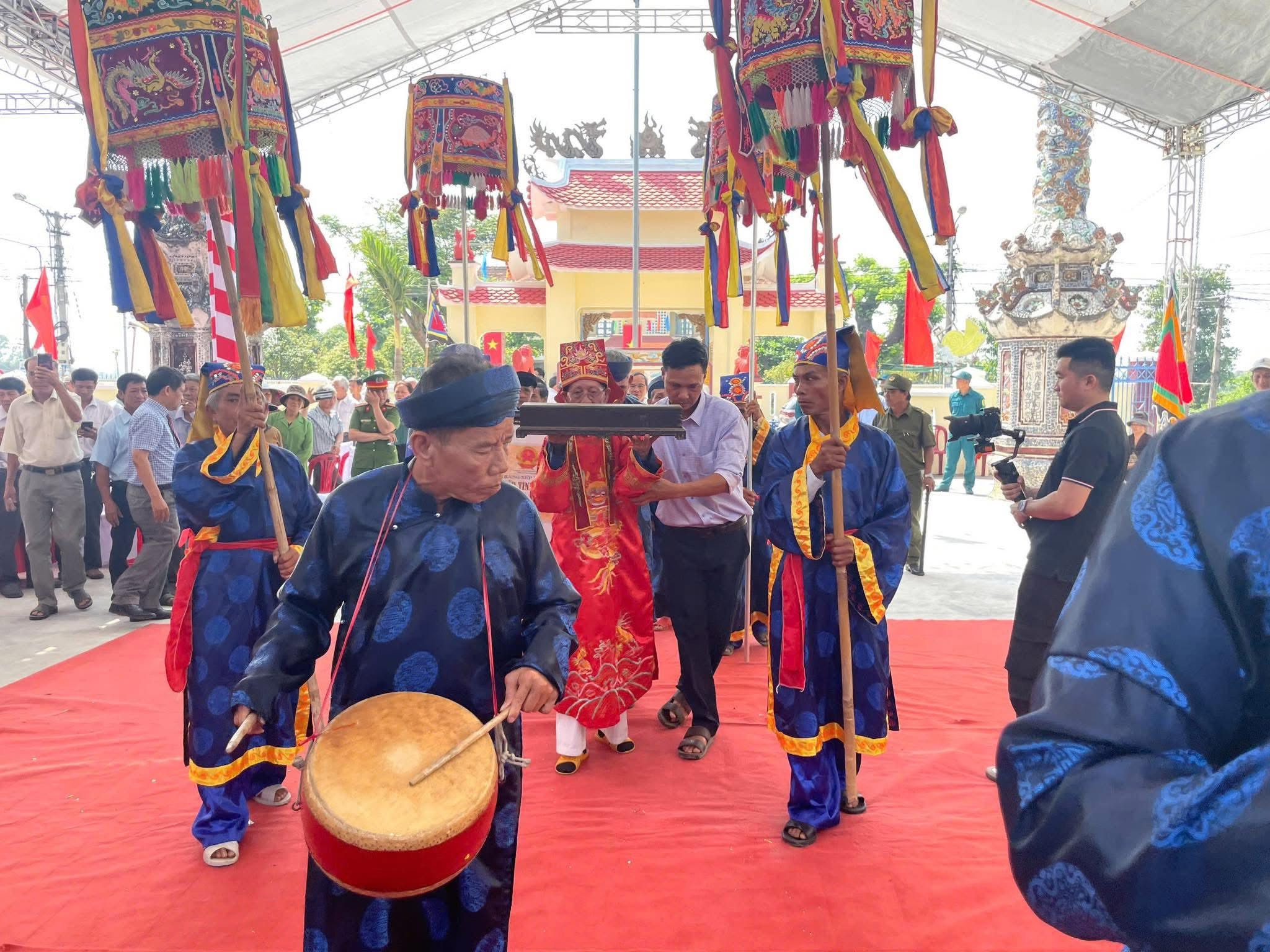
Traditional ceremonies such as Thanh Minh, Xuan Ky and Thu Te continue to be maintained. These occasions provide opportunities for local residents to gather, honor their ancestors and deities, practice traditional beliefs and strengthen community ties.
Together, the architecture, inscriptions and rituals create a cultural space that reflects the continuity of traditional village life.
A Living Heritage of the Local Community
Despite the passage of time and changes in modern society, An Cuu Communal House continues to serve as a place of religious and cultural activities for local residents.
Its value lies not only in its age or architectural features but also in its ability to preserve layers of cultural memory accumulated over generations.
The royal edicts from the Nguyen Dynasty, the worship system, traditional architecture, inscriptions and annual ceremonies all contribute to the cultural character of the communal house.
Preserving An Cuu Communal House therefore has significance beyond the conservation of a physical structure. It helps maintain traditional cultural values and provides younger generations with an opportunity to understand the history and development of their local community.
A Provincial-Level Heritage Site
Recognizing its historical, cultural and architectural significance, the People’s Committee of the province classified An Cuu Communal House as a provincial-level heritage site under Decision No. 871/QD-UBND dated March 10, 2026.
The recognition acknowledges the values preserved at the communal house and provides an important basis for continued conservation and promotion of its heritage significance.
Today, An Cuu Communal House remains both a place of worship and a repository of historical and cultural values associated with the formation and development of the local community.
Amid the changes of contemporary life, the communal house continues to serve a distinctive role: preserving the memory of the village, maintaining traditional rituals and carrying historical, religious and community values forward to future generations.
Basic Information
| Item | Information |
|---|---|
| Site name | An Cuu Communal House |
| Location | An Cuu Hamlet, Tuy Phuoc Bac Commune, Gia Lai Province |
| Area | 1,033.4 m² |
| Period of establishment | According to the source, before the 19th century |
| Worshipped deities | Thanh Hoang Ban Canh and Thai Giam Bach Ma Ton Than |
| Royal edicts | 4 royal edicts from the Nguyen Dynasty |
| Reigns represented | Thanh Thai, Duy Tan and Khai Dinh |
| Heritage type | Historical, cultural and architectural heritage |
| Key architectural elements | Three-entrance gate, ornamental pillars, screen wall and main worship hall |
| Traditional ceremonies | Thanh Minh, Xuan Ky and Thu Te |
| Heritage status | Provincial-level heritage site |
| Recognition decision | Decision No. 871/QD-UBND dated March 10, 2026 |