The Rain-Praying Ceremony of Yang Pơtao Apui, also associated with legends about the “Fire Kings” of the Jrai people, is a distinctive folk religious ritual closely connected with the spiritual life and agricultural production of communities in the former Cheo Reo region, now located in Chư A Thai Commune, Gia Lai Province.
Depending on the locality and weather conditions, the ritual may take place between March and May, either at the beginning of the dry season or the onset of the rainy season. The ceremony is associated with the belief in Yang Pơtao Apui, a deity known by the community as the “Fire King,” who possesses the power to communicate with supernatural forces, call for rain and wind, and bring water to nourish the land and crops. With its outstanding historical, cultural, and religious values, the Rain-Praying Ceremony of Yang Pơtao Apui was included in Vietnam’s National Intangible Cultural Heritage List by the Ministry of Culture, Sports and Tourism in 2015.
Origins and Religious Significance
In the traditional life of the Jrai people, nature plays a particularly important role. Rain, sunlight, water sources, and the movements of heaven and earth directly affect crops, livestock, and the survival of the community. The rain-praying ceremony therefore developed as a ritual through which people express their desire to communicate with nature, seek protection from deities, and ensure favorable conditions for agricultural production.
The ceremony is often performed during transitional periods between seasons or during prolonged droughts, when the soil becomes cracked, vegetation lacks water, and crops face the risk of failure.
The Rain-Praying Ceremony is one of the important rituals associated with the belief in Yang Pơtao Apui. Traditionally, it may only be performed by Pơtao Apui or by individuals who inherit and are responsible for conducting the ritual according to customary practices. The Jrai believe that the “sacred sword” is a holy object and the only intermediary capable of connecting human beings with the deities to ask for rain.
The ceremony is not only intended to pray for favorable weather and flourishing crops, but also expresses wishes for prosperity, healthy families, thriving livestock, peaceful villages, and solidarity within the community.
Ritual Performance Spaces
The Rain-Praying Ceremony is generally held at places regarded by the community as sacred, such as sacred forests, the sources of streams, communal houses, or locations associated with legends about the Pơtao Apui.
In Gia Lai, the Plei Ơi National Historical-Cultural Monument and the area around Chư Tao Yang Mountain are closely connected with the legends of the Fire Kings and the rain-praying tradition of the Jrai people.
The ritual space is both solemn and reverent, while also reflecting a strong communal atmosphere through the participation of village elders, respected individuals, artisans, and villagers. The sounds of gongs, traditional musical instruments, and ritual prayers create a sacred atmosphere, expressing the connection between human beings, heaven and earth, deities, and ancestors.
The Rain-Praying Ritual
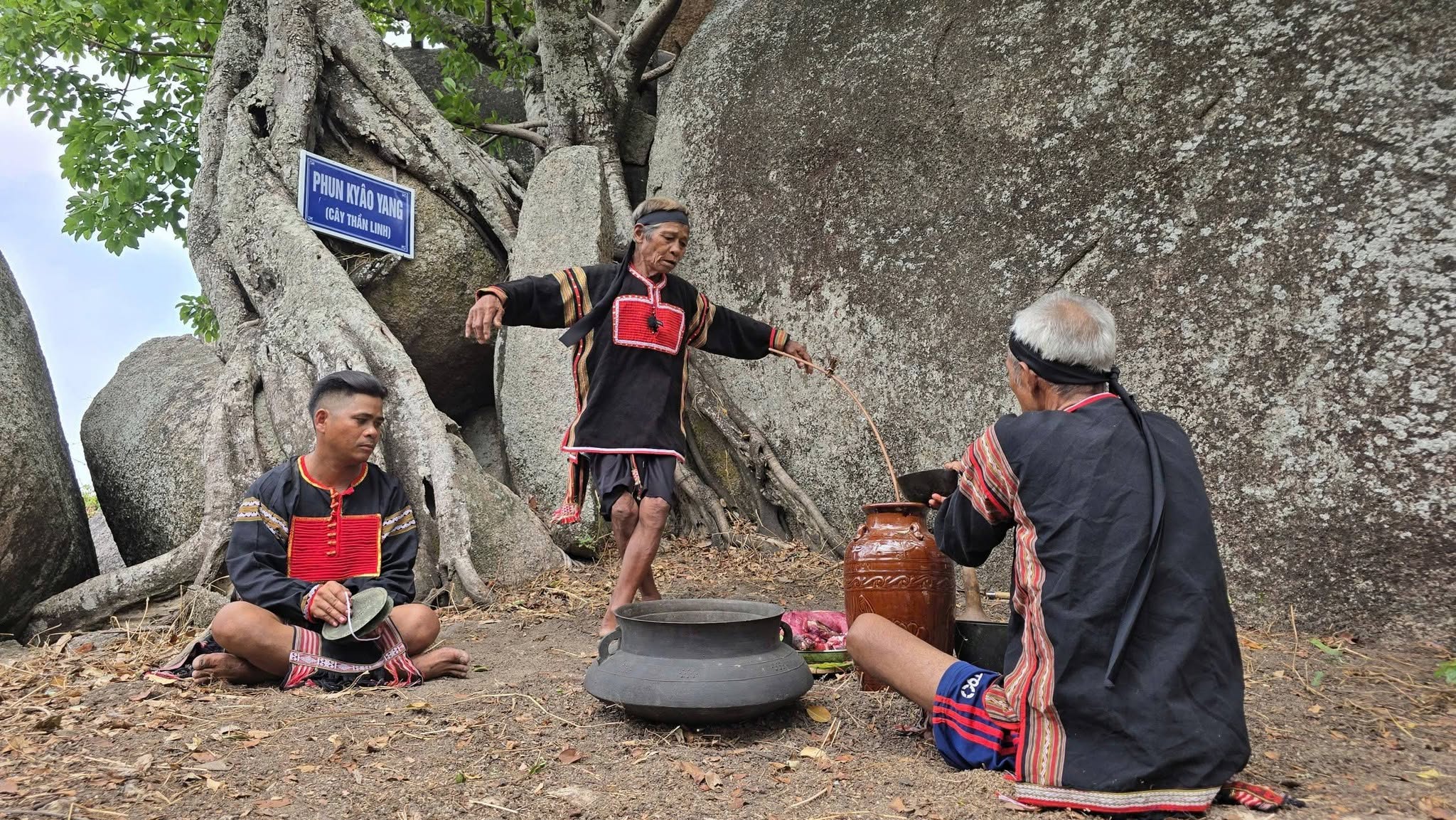
When the dry season lasts too long or harsh weather conditions occur, Jrai communities gather at sacred places to perform the rain-praying ceremony. The ritual practitioner prepares offerings, conducts traditional rites, and addresses prayers to heaven, earth, and the deities.
In the Chư Tao Yang Mountain area, Siu Phơ, who once served as an assistant to the last Fire King, is remembered as a person who practices the rain-praying ritual according to tradition. During the ceremony, he recites prayers and conveys the wishes of the community to supernatural powers, asking for favorable weather, abundant rainfall, thriving vegetation, productive crops, and peaceful lives.
Village elders, respected senior members, and villagers gather around the ritual area in a solemn atmosphere. They respectfully direct their attention toward the ritual leader, placing their faith in the spiritual power of the deities and the sacred traditions passed down through generations.
The ritual combines prayers, offerings, sacred objects, traditional music, and community participation. Among these elements, the sacred sword holds a particularly important position. It is regarded as a symbol of the power of Pơtao Apui and as a means of communication between human beings and the supernatural world.
Community Cultural Activities
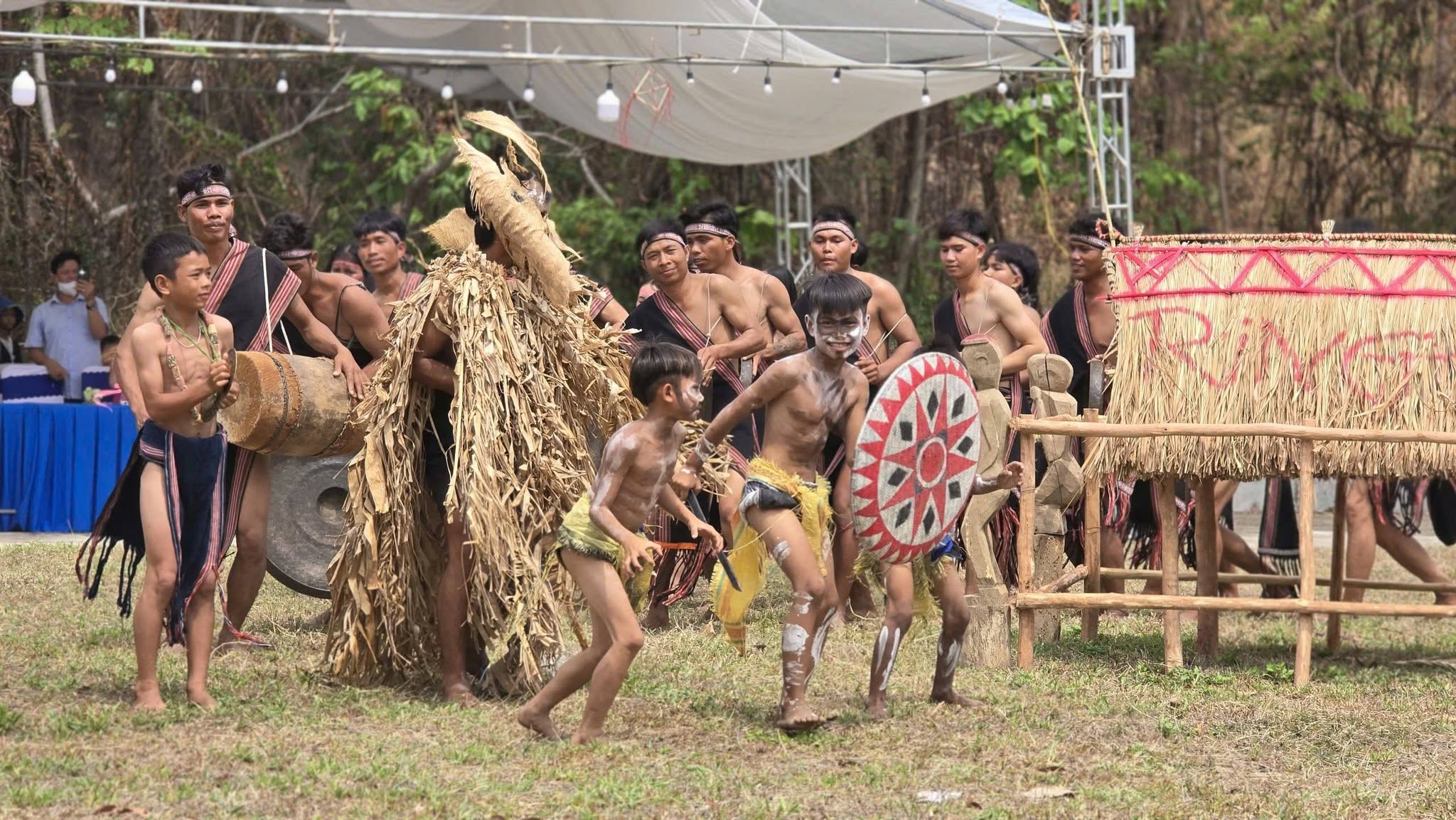
Following the ritual, various traditional cultural activities are often organized, creating a lively and distinctive community cultural space. These activities may include:
- Gong performances and traditional instrumental music.
- Traditional brocade weaving demonstrations.
- Basketry and other forms of traditional handicraft.
- Folk wood carving and sculpture.
- Folk singing, dancing, and cultural performances.
- Enjoying bamboo-cooked rice, rice wine served in jars, and traditional dishes.
- Participating in folk games such as stilt walking, crossbow shooting, and other community activities.
These activities often take place in familiar Jrai cultural spaces, including water wharves, communal houses, tomb-house areas, and shared village spaces. These locations preserve collective memories and provide places where generations meet, interact, and transmit traditional cultural values.
The festival space therefore serves not only a spiritual purpose but also recreates the cultural life of the Jrai people through gong sounds, colorful brocade textiles, traditional art, cuisine, and community customs.
Cultural and Humanistic Values
The Rain-Praying Ceremony of Yang Pơtao Apui profoundly reflects the close relationship between the Jrai people and nature. According to traditional beliefs, human beings do not exist separately from the natural world but live in constant interaction with heaven and earth, forests, mountains, water sources, plants, and supernatural forces.
The ritual expresses hopes for favorable weather, abundant harvests, prosperity, and good health. At the same time, it allows the community to show respect for deities, ancestors, and those who have contributed to preserving the spiritual life of the village.
The ceremony also strengthens internal solidarity, reinforces community awareness, and passes on knowledge of beliefs, customs, rituals, and Jrai cultural history to younger generations. During the practice of the heritage, local people are not merely spectators but actively participate in preserving, recreating, and transmitting the tradition.
Organizing the ceremony at the Plei Ơi National Historical-Cultural Monument also highlights the close relationship between intangible cultural heritage, sacred landscapes, historical sites, and the legends surrounding the Pơtao Apui. This connection provides an important foundation for developing cultural and community-based tourism and promoting the cultural identity of the Central Highlands.
Preservation and Promotion of Heritage Values
Recognized as a National Intangible Cultural Heritage, the Rain-Praying Ceremony of Yang Pơtao Apui is evidence of the enduring vitality of Jrai folk beliefs. The heritage is valuable not only as a ritual practice but also as a repository of indigenous knowledge concerning nature, agricultural production, community organization, and harmonious interaction with the environment.
The preservation of the rain-praying ceremony should emphasize the role of the community as the principal custodian, particularly village elders, artisans, respected individuals, and those who possess traditional ritual knowledge. At the same time, tourism promotion and development should respect the sacred space, ritual sequence, and spiritual meaning of the heritage.
The Rain-Praying Ceremony of Yang Pơtao Apui is not merely a prayer addressed to heaven and earth. It is also a unique cultural symbol of the Jrai people and the Central Highlands as a whole. The heritage demonstrates the diversity of Vietnamese culture and offers visitors an opportunity to explore a distinctive cultural environment where spirituality, nature, traditional music, and community life are closely intertwined.
Heritage Information
| Category | Information |
|---|---|
| Name of heritage | Rain-Praying Ceremony of Yang Pơtao Apui |
| Type of heritage | Social practices and beliefs |
| Location | Plei Ơi National Historical-Cultural Monument, Chư A Thai Commune, Gia Lai Province |
| Recognition document | Decision No. 1877/QD-BVHTTDL |
| Date of recognition | June 8, 2015 |
The Rain-Praying Ceremony of Yang Pơtao Apui is a distinctive cultural heritage that reflects the Jrai people’s longstanding belief in the power of nature and the supernatural world. Through the ritual, the community expresses its hopes for peaceful lives, favorable agricultural conditions, and the continued preservation of traditional cultural values passed down through generations.