


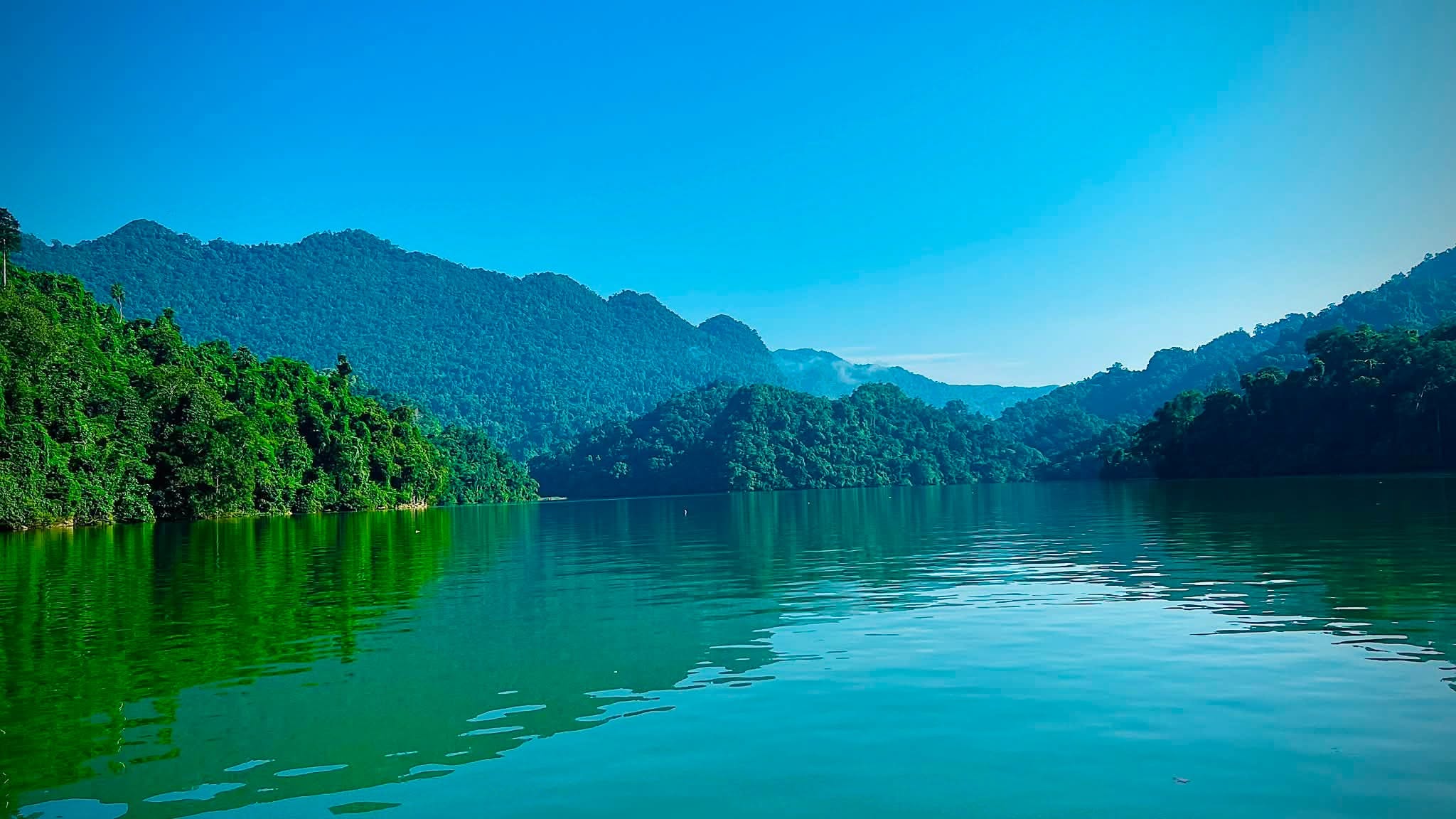
Ba Be Lake Scenic Landscape is located within Ba Be National Park in Thai Nguyen Province. It is a natural landscape complex of outstanding geological, geomorphological, biodiversity, archaeological, historical, and cultural value. The entire area is designated for conservation with a total area of 10,048 hectares, including a Zone I protection area of 952.75 hectares and a Zone II protection area of 9,095.25 hectares. Zone I covers Ba Be Lake, its lakeside ecological landscape, and associated scenic sites, while Zone II forms the surrounding area adjoining Zone I.
Ba Be Lake is one of the major natural freshwater lakes situated amid limestone mountains. It was formed through geological processes that took place over thousands of years. Studies indicate that the lake developed on a karst landscape approximately 10,000 years ago, in an area with a complex tectonic history, diverse rock formations, and distinctive geological structures. The interaction of geology, geomorphology, climate, and natural environmental conditions has created a rich ecosystem, most notably tropical humid evergreen forests growing on limestone mountains.
According to surveys, the Ba Be area is home to approximately 1,268 species of vascular plants and 470 species of vertebrates, including 81 mammal species, 234 bird species, 30 reptile species, 18 amphibian species, and 107 fish species. Scientists have also recorded at least 367 butterfly species, along with numerous other groups of invertebrates, demonstrating the area’s high level of biodiversity.
Natural Landscape and Geological Values
Ba Be Lake Scenic Landscape encompasses a diverse system of natural features, ranging from karst plateaus, lakes, and streams to waterfalls, gorges, and caves. Notable features include Ba Be Lake, Dau Dang Waterfall, the karst gorge of the Nang River, and cave systems such as Puong Cave and Hua Ma Cave. The area also contains places associated with local legends, beliefs, and the cultural life of local communities, including Fairy Pond, Tien Cave, An Ma Islet, and Widow Islet.
Ba Be Lake lies at an elevation of approximately 150 meters above sea level and consists of three interconnected lake sections. It receives water from two streams to the south and drains into the Nang River to the north. The lake maintains a relatively stable water level and does not dry up, while its water is clear and clean. The average depth ranges from approximately 17 to 23 meters, with the deepest point reaching about 35 meters. The lake is estimated to contain around 90 million cubic meters of water. Limestone islands rise from the lake, while surrounding tropical evergreen forests cover the limestone mountain landscape.
The outstanding value of Ba Be Lake lies first in its distinctive geological and geomorphological structure. The area represents a typical karst landscape, reflecting the long-term formation, transformation, and evolution of geological and geomorphological processes. The interplay of limestone mountains, open water, caves, waterfalls, and gorges creates a landscape complex of considerable scientific and aesthetic value.
The Ba Be ecosystem is also important for biodiversity conservation. The area has recorded 51 threatened and rare plant species, including species listed in the Vietnam Red Data Book and on the IUCN Red List. A number of plant species endemic to Vietnam have also been identified here. The area’s fauna includes numerous species of conservation importance, including those listed in the Vietnam Red Data Book and on the IUCN Red List. Ba Be National Park is also an important habitat for the white-cheeked black langur and for various nationally threatened amphibian and reptile species.
Prehistoric Settlement and Cultural Life
Archaeological surveys and excavations indicate that the Ba Be area has been inhabited since prehistoric times. At Tham Thinh Cave in Quang Khe, archaeologists discovered stone tools dating to the Late Paleolithic, approximately 15,000 to 20,000 years ago. Similar traces have also been found at Puong Cave.
At Puong Cave, stone tools belonging to the Early Neolithic period, dating back approximately 10,000 years, have been discovered. These remains were once identified as among the notable traces of the Hoa Binh culture in the former Bac Kan area. In addition, preliminary archaeological discoveries at Na Ca, Na Tem, and Khau La have revealed sites dating from the Late Neolithic to the Early Metal Age, approximately 4,000 to 3,000 years ago.
The caves in the area also preserve traces from later historical periods. At Puong Cave and Hua Ma Cave, archaeologists have identified remains dating to the Le and Mac dynasties, around the 16th century, providing further evidence of how people inhabited and used the natural environment of Ba Be over different periods of history.
Alongside its geological, ecological, and archaeological values, Ba Be Lake is closely associated with the cultural and spiritual life of local communities. Every year, on the ninth day of the first lunar month, local communities hold a spring festival featuring a range of cultural and religious activities. One of the notable rituals is the palanquin procession at An Ma Temple. The festival also includes camping activities and traditional games such as con throwing, blindfolded goat catching, bull fighting, tug of war, and cultural performances, creating a distinctive communal atmosphere around the lake.
With its combination of a karst landscape, natural freshwater lake, limestone mountain forests, cave systems, archaeological remains, and living community traditions, Ba Be Lake forms a heritage landscape of exceptional natural and cultural value. These elements together create an interconnected environment where geology, ecology, history, and human life have developed alongside one another.
On September 27, 2012, the Prime Minister issued Decision No. 1419/QD-TTg, recognizing Ba Be Lake Scenic Landscape as a Special National Relic. The designation provides an important legal foundation for conserving the landscape, ecosystem, geological and archaeological resources, and cultural values of the area, while also promoting Ba Be Lake for research, education, and tourism.


