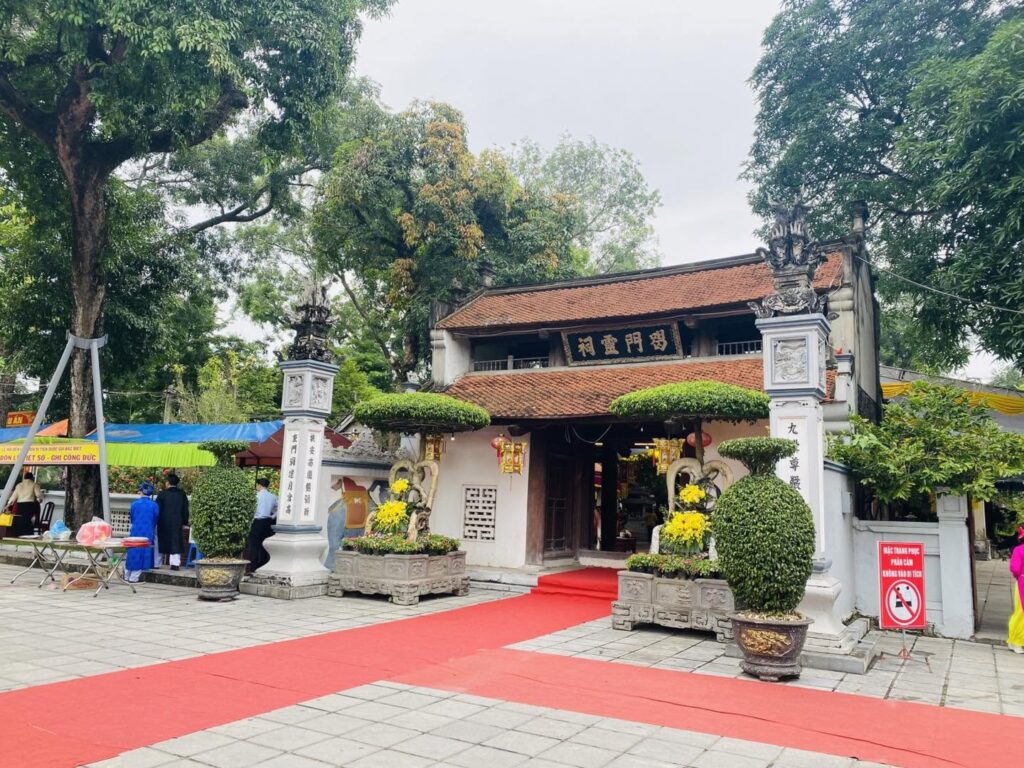
Bat Trang pottery making is a renowned traditional craft closely associated with the history and development of Bat Trang Village over many centuries. From clay, kaolin and fire, generations of artisans have created a rich variety of products, ranging from household ceramics and ritual objects to decorative works.
According to local tradition, Bat Trang was once said to have 72 mounds of white clay. Some pottery makers from Bo Bat, now in Ninh Binh, are believed to have migrated here together with members of the Nguyen Ninh family and established pottery kilns. The settlement was known as Bach Tho Phuong, meaning the “White Clay Ward.” By the 15th century, historical records had recognized Bat Trang as a famous pottery village, and the imperial court selected it to supply tribute ceramics to the Ming dynasty.
From Local Clay to a Famous Craft Village
The traditional raw materials of Bat Trang pottery include clay and kaolin. As local clay resources gradually became depleted from the 18th century onward, potters began sourcing materials from areas including Son Tay, Phuc Yen, Dong Trieu and Hai Duong. Among these sources, clay from Truc Thon was particularly valued by Bat Trang artisans.
Over time, pottery production developed alongside changes in firing technology. Early lo ech and temporary kilns were fired with straw, bamboo and other plant materials. When dome-shaped kilns became common, villagers combined straw with various types of wood. Later, when vertical kilns were introduced, fine coal from Quang Ninh became the principal fuel, while wood was mainly used to start the fire.
Today, pottery producers use modern technologies including gas-fired kilns, electric kilns and tunnel kilns, improving production efficiency while reducing physical labor.
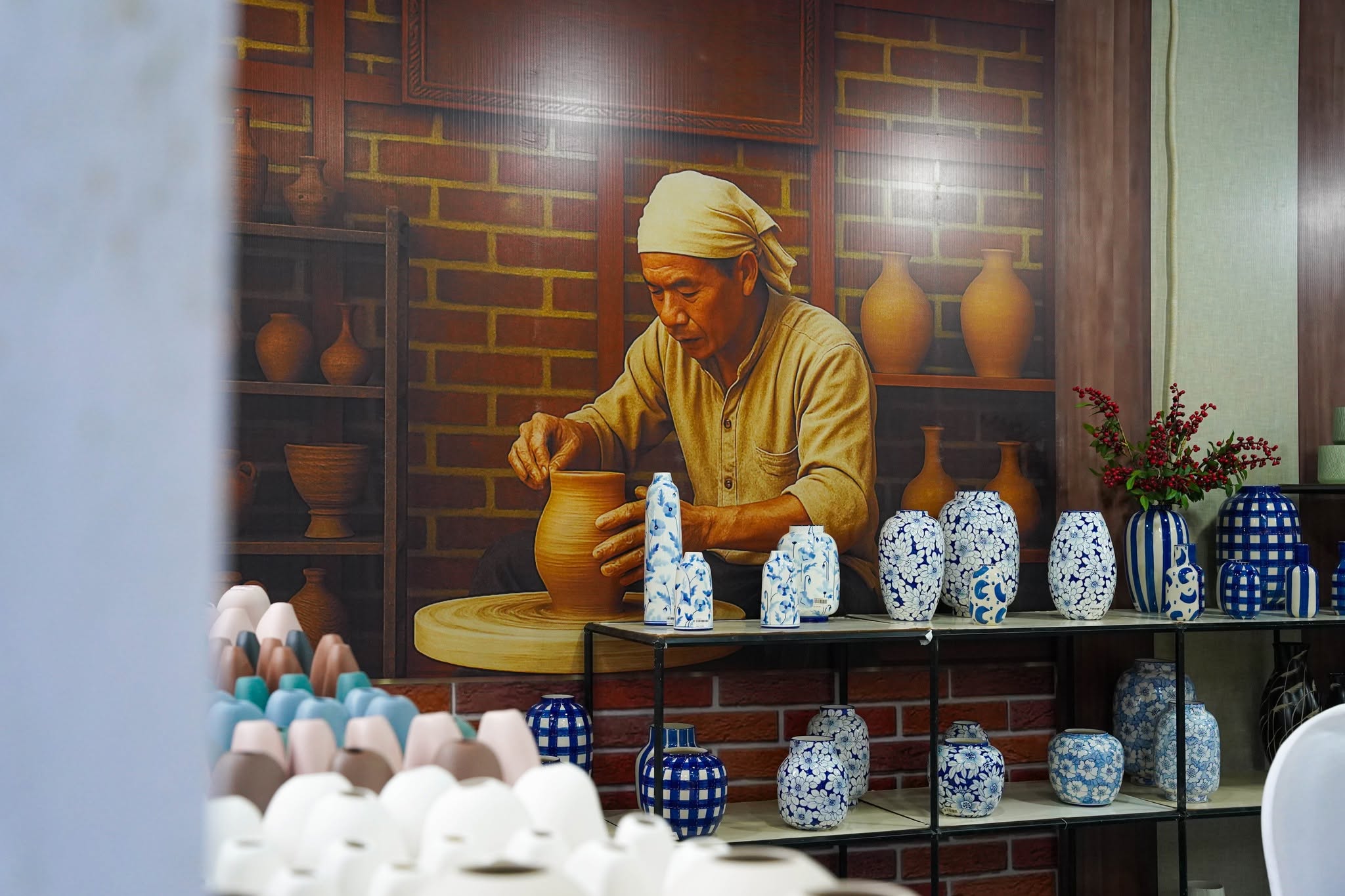
The pottery wheel remains an essential tool for shaping products. Traditionally powered by the artisan, the wheel is now commonly fitted with a motor to reduce physical effort.
Seven Stages of Bat Trang Pottery Making
Traditional Bat Trang pottery production involves a series of stages, from preparing the clay to shaping, decorating, glazing and firing. Artisans summarize the importance of these stages in the traditional saying: “First the body, second the skin, third the kiln,” emphasizing the importance of the ceramic body, glaze and firing technique.
The first stage is clay preparation and formulation. Clay is soaked in water and processed through a system of settling and storage tanks. Depending on the characteristics of the clay, the process may include mixing, settling, drying and aging. For higher-quality clay, artisans may use a simpler process of removing impurities, soaking and thoroughly working the clay before cutting it repeatedly until it reaches the required smoothness and plasticity. Depending on the type of ceramic being produced, kaolin or sand may be added or removed to achieve the desired composition.
Once the clay has been prepared, the artisan shapes the product on the pottery wheel. Smaller objects are commonly formed directly by hand, while larger pieces require the technique known as be trach, in which clay is pulled, pressed and modeled to build up the form. Today, Bat Trang artisans also use hand modeling, molds, printed molds and slip casting. The shaped pieces are then air-dried or dried in kilns.
After the clay body has become firm, artisans refine and correct the shape. Excess clay is trimmed, defects are repaired, individual components are assembled, and surfaces are smoothed. Depending on the product, artisans may drill holes, carve details, refine decorative patterns, add relief or create incised motifs.
Decorative Arts and Traditional Motifs
Decoration is the stage in which artisans express their artistic skills on the ceramic surface. Techniques have evolved through different historical periods.
From the incised decoration and brown-glaze painting associated with the Ly and Tran dynasties, Bat Trang pottery later developed raised decoration and blue-and-white painting. Traditional motifs include dragons, phoenixes, clouds, winged horses, human figures, lotus petals, floral vines, bodhi leaves and landscape scenes.
Artisans traditionally use brushes to paint directly onto the ceramic body. Other techniques include painted lines, flowing glazes and colored glazes, which create natural variations as the glaze melts during firing.
Alongside traditional techniques, contemporary Bat Trang production also includes printed decorative designs transferred from prepared paper. These methods make production faster, although the source material notes differences in creativity and artistic character compared with hand decoration.
Traditional Glazes of Bat Trang
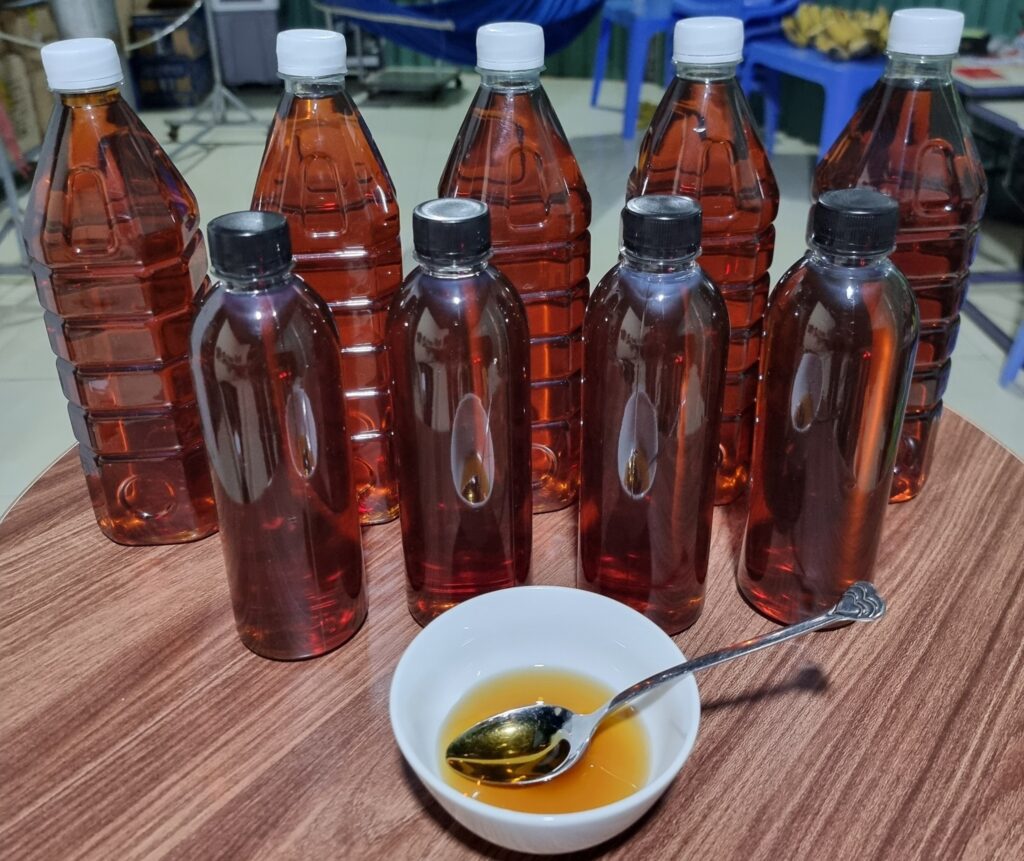
Glaze is one of the defining elements of Bat Trang ceramics. Among the traditional varieties, ash glaze has been particularly important. It is made from rice-husk ash combined with white clay, quicklime and other materials.
From ash glaze, Bat Trang artisans developed several characteristic glaze families, including brown glaze, blue glaze, crackle glaze, celadon glaze and ivory-white glaze. Each produces distinctive shades and surface effects, contributing to the visual identity of Bat Trang ceramics.
Traditional artisans commonly use wet glaze preparation. Finely ground glaze materials are mixed with water, stirred and allowed to settle. The appropriate suspended material is then collected to form the glossy coating on the ceramic body.
The experience of adjusting the fineness of ash and clay was preserved in the traditional saying “fine ash, coarse clay,” reflecting the specialized knowledge passed down among generations of potters.
After the ceramic body has been completed, different glazing techniques may be applied. The most common is coating the exterior surface, while more demanding techniques include quay men and duc men. The former applies glaze to both the inside and outside of a vessel, while the latter focuses on glazing the interior.
These methods are both technical and artistic. They were preserved through generations and, in the past, some were regarded as closely guarded craft secrets. Once glazing is complete and the surface has dried, artisans carry out a final correction stage, adding or removing excess glaze before firing.
The Art of Controlling Fire
Once the ceramic pieces have been fully prepared, they are arranged inside the kiln. The stacking method depends on the type, shape and size of the products, the kiln furniture and the type of kiln being used. Artisans must calculate how to maximize kiln space, save fuel and achieve effective firing.
Firing is the decisive stage of pottery production. Traditionally, potters perform a small ritual and offer prayers before firing a kiln, expressing the spiritual dimension of the craft and the community’s hopes for a successful batch.
The essential skill is controlling the fire. The temperature must be raised gradually until the kiln reaches its required peak temperature, followed by a gradual cooling process once the pottery has matured.
With traditional kilns, the master kiln worker relies heavily on experience, observing smoke, steam, smell and other signs to regulate the fire. Traditional expressions such as “vinegar-like steam, acrid smoke, then foul smoke” describe observations used by artisans to determine changes in the kiln and adjust the fire accordingly.
Modern shuttle and tunnel kilns use fuels such as oil or gas, while temperature can be monitored with pyrometers and adjusted semi-automatically or automatically.
A Diverse Range of Bat Trang Ceramics
Bat Trang ceramics encompass a wide range of products, traditionally divided into three main groups: household ceramics, ritual and worship objects, and decorative products for domestic and international markets.
Alongside traditional designs, Bat Trang workshops continually develop new forms and products to respond to changing consumer preferences. Technological innovation has also introduced equipment such as gas kilns, clay mixers, compressors and molds to support production.
The pottery craft continues to be practiced and developed by the Bat Trang community. Individual households often operate as independent production units, while modern technologies are adopted to improve product quality and output, reduce production time and labor requirements, and address environmental concerns.
A Living Heritage of the Bat Trang Community
The value of Bat Trang pottery lies not only in the finished ceramic objects but also in the extensive body of knowledge accumulated over generations. Artisans combine techniques inherited from their predecessors with experimentation and creativity, developing new decorative motifs, techniques and product designs to meet changing market demands.
Even within the same village, individual artisans can create pieces with their own distinctive character. Through this process, the pottery craft preserves traditional cultural symbols, glaze techniques and production knowledge while encouraging new forms of creative expression.
The craft also contributes significantly to the local economy by creating employment and income for residents. A broad network of pottery practitioners, together with the Bat Trang Ceramics Association, has developed economic relationships that extend beyond the village and strengthen cooperation among people involved in the craft.
Bat Trang pottery is therefore more than a collection of ceramic products. It is a living system of knowledge encompassing raw materials, shaping techniques, decorative arts, glaze preparation, kiln technology and the accumulated experience of controlling fire.
Recognizing its outstanding historical, technical, artistic, economic and community values, Bat Trang Pottery Making was included in Vietnam’s National Intangible Cultural Heritage List under Decision No. 4610/QĐ-BVHTTDL dated December 20, 2019, issued by the Minister of Culture, Sports and Tourism.
Basic Information
| Information | Details |
|---|---|
| Heritage | Bat Trang Pottery Making |
| Location | Bat Trang Village |
| Type | Traditional craft |
| Main materials | Clay and kaolin |
| Key techniques | Clay preparation, shaping, decoration, glazing and firing |
| Main products | Household ceramics, ritual objects and decorative ceramics |
| Key values | Craftsmanship, folk knowledge, aesthetics, economy and community |
| Heritage status | National Intangible Cultural Heritage |
| Recognition | Decision No. 4610/QĐ-BVHTTDL, December 20, 2019 |