When talking about Da Lat, people often think of misty hills, pine forests, flower gardens and cool mountain air. Yet beyond its flowers and vegetables, the city is also home to many fruit varieties that have become part of its agricultural identity. Among them, Da Lat plums hold a special place.
Not as famous as strawberries or persimmons, Da Lat plums carry a quieter charm. They are associated with old garden houses, cool highland orchards and the memories of a period when fruit cultivation gradually became part of Da Lat’s agricultural landscape.
A Fruit with a Long History in Da Lat
Plum cultivation appeared in Da Lat quite early, alongside the development of agriculture in the highlands during the early 20th century. Historical accounts from the 1930s mention plum varieties being grown in the area, reflecting the gradual introduction and adaptation of temperate and subtropical fruit trees to Da Lat’s cool climate.
Over time, plum trees became familiar in many family gardens around the city. Some older varieties were gradually joined by plum varieties brought from northern Vietnam and other growing regions.
The result was a distinctive group of plums adapted to Da Lat’s highland conditions. Their fruit is generally small to medium in size, with crisp flesh and a characteristic balance between sweetness and tartness.
Today, old plum trees can still be found in several garden areas around Da Lat, particularly in places such as Trai Mat, Xuan Tho and Xuan Truong. Although plum cultivation is no longer as widespread as it once was, these orchards remain a small but meaningful part of the city’s agricultural heritage.
The Flavor of a Cool-Climate Orchard
Da Lat’s climate gives its plums a character that is closely connected to the highlands.
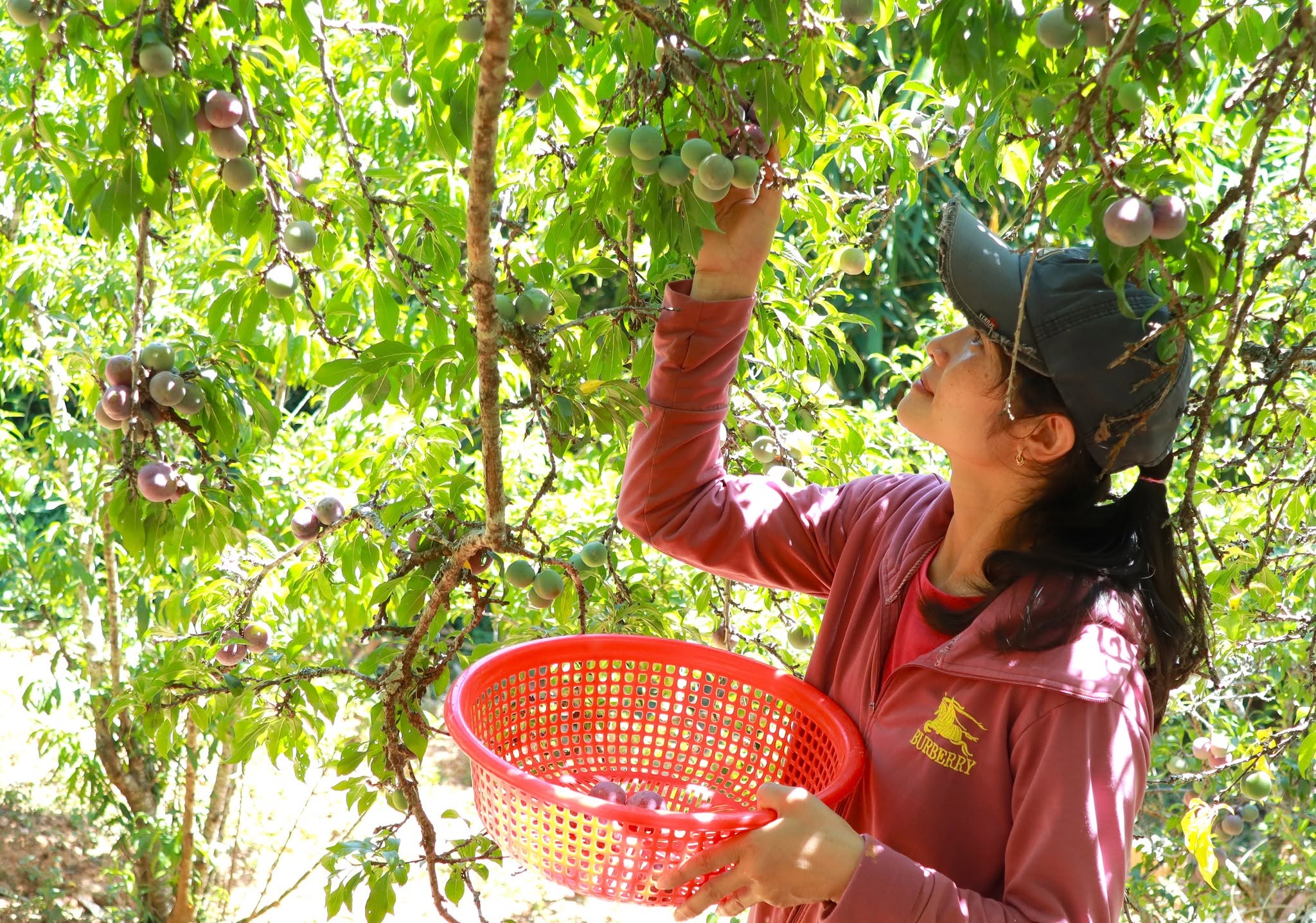
The fruit develops under cool temperatures and strong differences between day and night. When ripe, the skin may turn from green to shades of red or purple depending on the variety and stage of ripeness. Inside, the flesh is firm and juicy, with a refreshing acidity that makes the fruit particularly enjoyable when eaten fresh.
For many visitors, the most memorable experience is not simply buying a bag of plums at a market. It is visiting a garden, walking among the trees and tasting freshly picked fruit while surrounded by the cool air of the Da Lat countryside.
The flavor is simple, crisp and unmistakably associated with the highlands.
From Fresh Fruit to Local Products
Fresh plums are the most familiar form, but Da Lat’s plum harvest has also inspired a range of traditional processed products.
Depending on the season and the variety, plums may be used to make plum jam, plum syrup and xí muội, creating different expressions of the same fruit.
Fresh plums offer a crisp, naturally tart flavor, while processed products tend to emphasize a deeper combination of sweetness, acidity and saltiness. These products are also commonly associated with Da Lat’s tradition of producing fruit preserves and specialty foods for visitors.
For many travelers, a small package of local fruit products is more than a souvenir. It is a way of bringing home a taste of the highlands.
Plum Gardens and Da Lat’s Agricultural Tourism
In recent years, agricultural tourism has become an increasingly important part of the Da Lat travel experience.
Visitors are drawn not only to flower gardens and vegetable farms but also to fruit-growing areas where they can see how local produce is cultivated. Plum orchards, especially during the harvest season, offer a more intimate experience of Da Lat’s countryside.
Walking through an orchard, seeing fruit hanging among the leaves and tasting freshly harvested plums allows visitors to experience a side of Da Lat that is different from its well-known urban attractions.
For older garden areas, these orchards also preserve something of the city’s agricultural memory. The trees, gardens and traditional cultivation practices reflect how Da Lat developed from a highland settlement into one of Vietnam’s best-known agricultural and tourism destinations.
A Small Fruit with a Place in Da Lat’s Memory
Da Lat has changed considerably over the decades. New varieties, modern cultivation methods and high-tech agriculture have transformed the city’s farming landscape. Some traditional crops have become less common as growers have shifted toward varieties with stronger commercial value.
Yet the plum remains part of the story.
Its presence in older gardens and fruit-growing areas reminds us that Da Lat’s agricultural identity was built not only around flowers and vegetables, but also around the gradual adaptation of many different crops to the cool highland climate.
Today, Da Lat plums may not occupy the spotlight, but they offer a quieter and more personal way to discover the city. Behind every basket of ripe fruit is a garden, a season and a small piece of the agricultural landscape that has shaped Da Lat over generations.
For travelers willing to look beyond the city’s famous flowers and cafés, a plum orchard can reveal another side of Da Lat: a cool highland city where agriculture, landscape and local flavors have grown together over time.