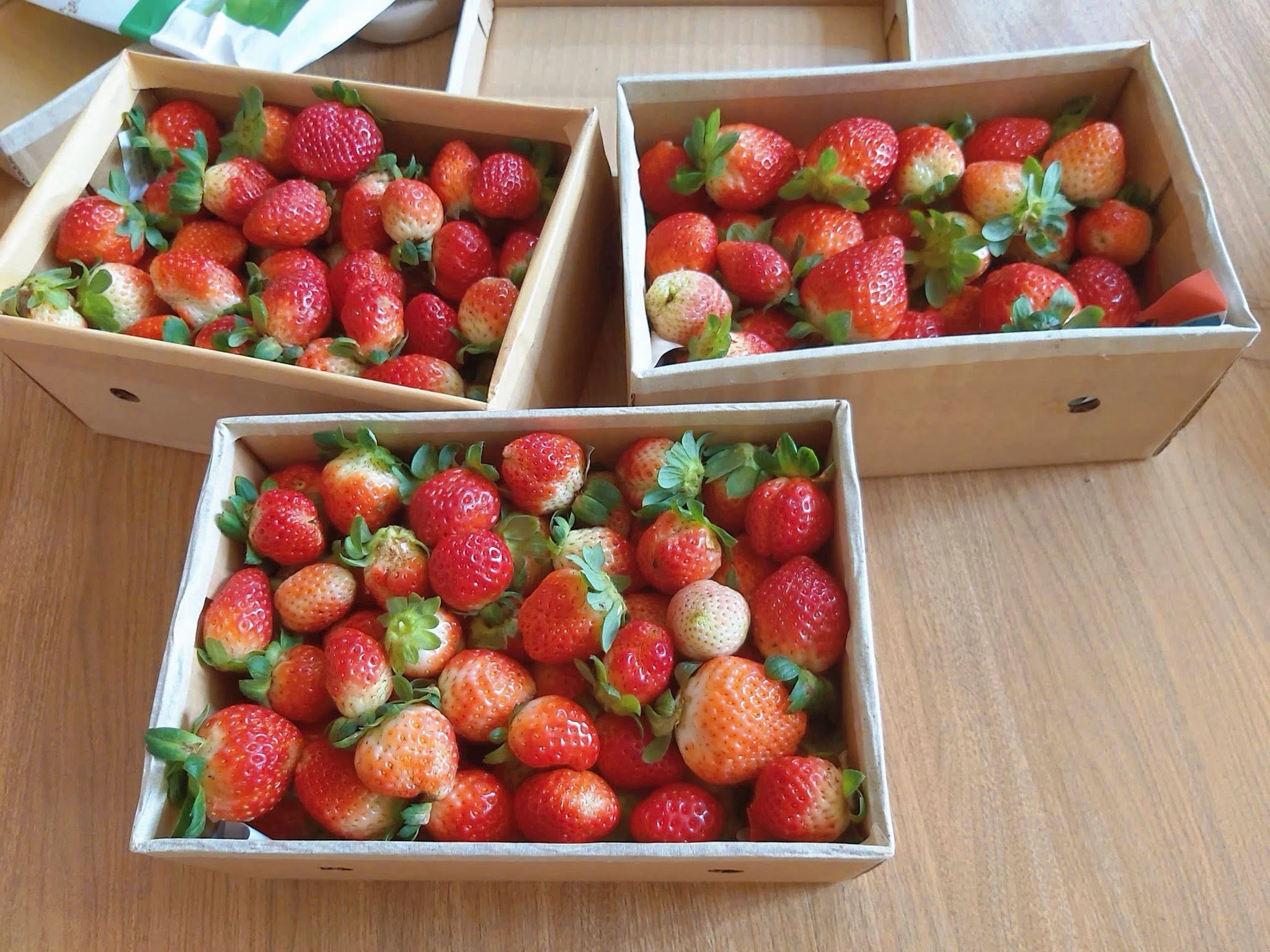
Among the many agricultural products associated with Da Lat, strawberries hold a special place. Alongside flowers, persimmons, artichokes, avocados, and vegetables, strawberries have become one of the most recognizable products of this cool highland city.
Bright red, fragrant, and pleasantly sweet and tangy, Da Lat strawberries are not only an important agricultural product but also an essential part of the city’s agritourism experience. Visiting a strawberry farm, walking among the plants, and picking ripe berries directly from the garden have become favorite activities for many travelers.
From traditional soil-grown fields to modern greenhouses and substrate-based cultivation, the story of Da Lat strawberries also reflects the transformation of highland agriculture over generations.
From European Varieties to Da Lat’s Strawberry Farms
The strawberry (Fragaria × ananassa) belongs to the rose family, Rosaceae. Originally associated with temperate regions of Europe and later developed into numerous commercial varieties around the world, strawberries found a suitable environment in the cool climate of Da Lat.
The crop is believed to have been introduced to Da Lat around the 1930s and 1940s, during the period when the French were developing the city as a resort destination and agricultural center.
The high elevation, cool year-round climate, and noticeable difference between daytime and nighttime temperatures provided favorable conditions for temperate crops, including strawberries.
The early varieties grown in Da Lat were quite different from many of the premium varieties found today. The berries were generally smaller, more noticeably tart, and produced lower yields. They were mainly consumed locally or used to make desserts, jams, and other preparations.
After 1975, strawberry cultivation gradually expanded throughout Da Lat’s vegetable and flower-growing communities. For many years, Mỹ Đá strawberries, a traditional variety, became familiar to both growers and consumers. The variety adapted well to local conditions, had relatively firm fruit, and was suitable for transportation to markets outside Da Lat.
From around the 2010s onward, the development of high-tech agriculture began to transform strawberry cultivation. Farmers increasingly experimented with varieties from Japan, South Korea, New Zealand, and other countries, together with greenhouse production, drip irrigation, and substrate-based growing systems.
The strawberry therefore evolved from a traditional highland crop into one of the most recognizable symbols of Da Lat’s modern agricultural sector.
Strawberry Varieties Grown in Da Lat
Today, Da Lat strawberries are represented by a range of varieties, each with different characteristics in terms of shape, color, texture, sweetness, and aroma.
Mỹ Đá strawberries remain associated with traditional soil-based cultivation. The fruit is usually cone- or heart-shaped, with a relatively deep red color and firm flesh. Its flavor is pleasantly tart with a mild sweetness and a familiar strawberry aroma. These characteristics make it suitable for fresh consumption as well as products such as strawberry syrup, yogurt, and jam.
In high-tech farms, visitors may encounter varieties originating from Japan, South Korea, and New Zealand. These varieties are often larger and more uniform, with attractive colors and a sweeter flavor.
Korean varieties such as Maehyang and other premium commercial lines are known for their relatively large fruit, bright red color, juicy flesh, and pronounced sweetness. Some Japanese varieties are particularly valued for their fragrance, sweetness, and attractive shape, although they generally require more carefully controlled growing conditions.
Some farms also cultivate white strawberries, sometimes known as White Albino or Snow White strawberries. When ripe, the fruit can have a creamy white or pale pink appearance, with the seeds standing out clearly against the surface. Their unusual appearance makes them especially interesting to visitors.
This diversity means that a visit to a strawberry farm can offer more than simply picking fruit. Different varieties can provide noticeably different experiences in terms of texture, sweetness, acidity, and aroma.
Strawberry-Growing Areas Around Da Lat
Strawberries are grown in several parts of Da Lat and the surrounding highlands, particularly in areas with cool temperatures and suitable agricultural conditions.
Within the city, strawberry farms can be found around areas such as Thanh Mau, Dan Kia, Mai Anh Dao, Phu Dong Thien Vuong, Thai Phien, and Trai Mat.
Nearby areas such as Lac Duong have also developed a number of greenhouse and substrate-based strawberry farms.
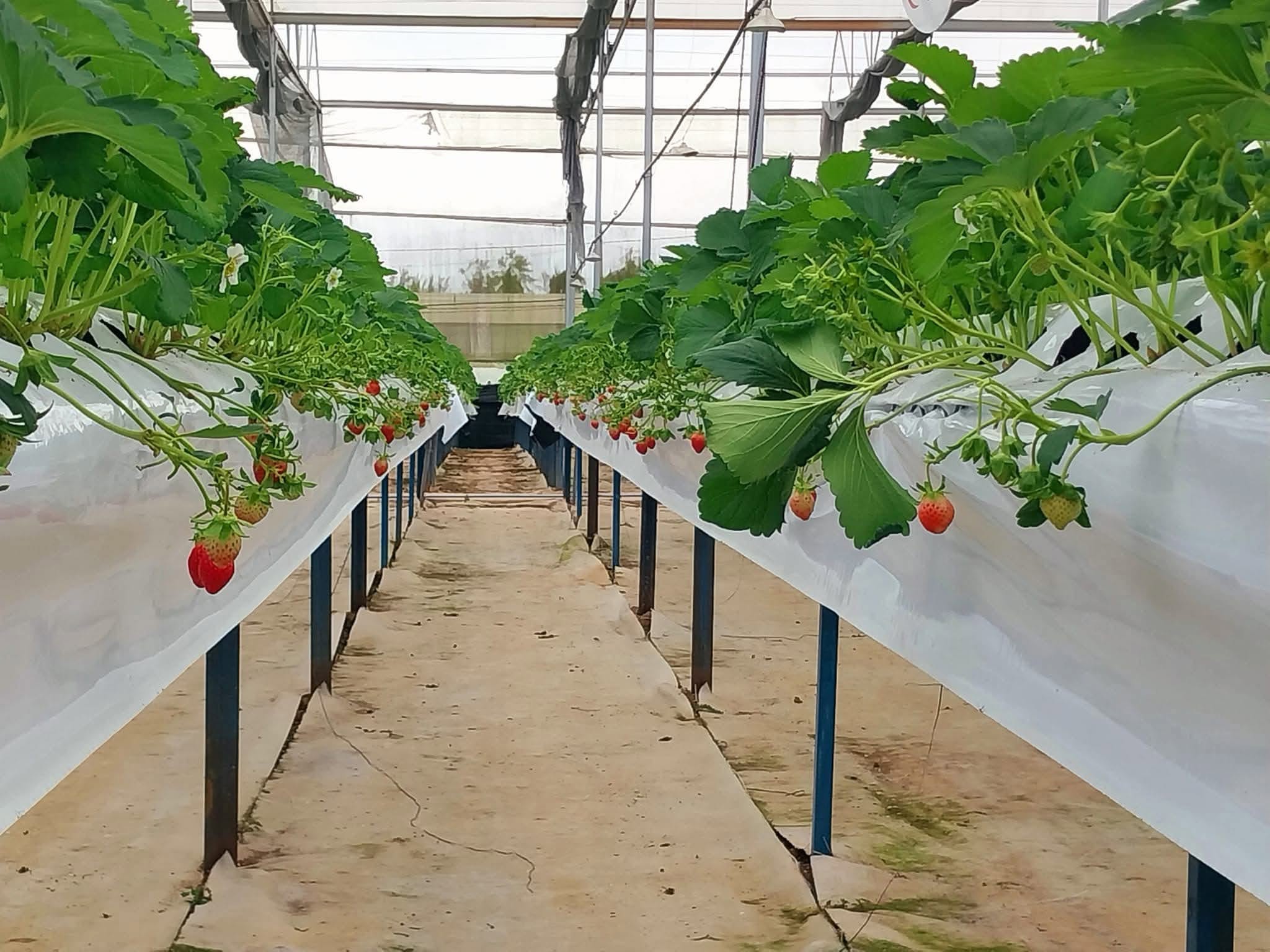
Each growing area has farms with different scales and cultivation methods. Some continue to grow strawberries in traditional soil beds, while others have shifted toward greenhouses equipped with irrigation systems and environmental controls.
This creates two distinct images of Da Lat strawberry cultivation: traditional fields close to the soil and modern farms where strawberry plants grow on elevated beds or systems above ground.
Strawberry Season in Da Lat
Thanks to greenhouse cultivation and modern farming techniques, strawberries can now be produced during many periods of the year. However, the dry season, roughly from November to April, is generally a favorable period for visitors hoping to see strawberry farms during harvest.
During this period, Da Lat’s weather is typically drier, making it more convenient to visit farms. Green strawberry plants fill the growing beds, with berries gradually changing from pale green to white, pink, and finally bright red as they ripen.
Some farms continue production during the rainy season from approximately May to October, particularly those using greenhouse systems. However, cultivation during periods of high humidity requires greater attention to plant health and fungal diseases.
For travelers planning to combine farm visits and strawberry picking, it is therefore a good idea to check the current harvest conditions of individual farms before visiting.
From Fresh Strawberries to Da Lat Specialties
The simplest way to enjoy Da Lat strawberries is to eat them fresh, particularly when they have just been picked and still retain their natural fragrance and juiciness.
In Da Lat, strawberries are also commonly used to prepare strawberry yogurt, strawberry smoothies, fresh juice, and other desserts. Their natural balance of sweetness and acidity pairs particularly well with milk and yogurt.
Fresh strawberries are also processed into a wide range of local specialty products, including strawberry jam, dried strawberries, strawberry syrup, and other packaged products.
These products have become part of Da Lat’s souvenir culture. Visitors can find strawberry specialties at local markets, specialty stores, and agricultural-product shops throughout the city.
Strawberries therefore reach consumers in more forms than fresh fruit alone, allowing the flavor of the harvest to be enjoyed long after visitors have left the farms.
Picking Strawberries at the Farm
What makes strawberries particularly important to Da Lat tourism is not simply the fruit itself, but the way visitors experience it.
Many strawberry farms welcome visitors into designated growing areas where they can learn about cultivation and pick ripe berries themselves.
The experience is especially appealing to families with children. Instead of seeing strawberries only in boxes at a shop or market, children can observe the plants, see how the fruit develops, and pick a ripe strawberry directly from the plant.
For adults, walking among the green beds and searching for bright red berries hidden beneath the leaves offers a relaxing experience that feels quite different from conventional sightseeing.
Some farms charge according to the amount of fruit picked, while others combine farm visits with areas selling processed products and local specialties.
This creates a connection between agriculture, local products, and tourism, which has become one of the defining features of Da Lat’s agritourism model.
Strawberries and the Transformation of Da Lat Agriculture
The story of strawberries also reflects the broader transformation of agriculture in Da Lat.
Traditional soil cultivation has gradually been supplemented by greenhouses, substrate systems, drip irrigation, and other controlled growing techniques. New varieties continue to be introduced and tested to meet changing consumer preferences.
Yet the value of a strawberry farm is no longer measured solely by its agricultural output. For many growers, the visitor experience has become another part of the value of the crop.
A strawberry sold at the farm can simultaneously become a tourism experience: visitors see the plants, pick the fruit, take photographs, taste it, and bring it home as a souvenir.
This is one reason strawberries have become so closely connected with Da Lat’s agritourism industry.
A Sweet Symbol of the Misty Highlands
Strawberries may not be the only fruit that represents Da Lat, but few agricultural products connect so naturally with the city’s farming, food, and tourism culture.
From the history of temperate crops arriving on the highlands, to traditional strawberry fields, modern greenhouses, local specialties, and farm-picking experiences, Da Lat strawberries tell a story that goes far beyond the fruit itself.
For farmers, strawberries are an important agricultural crop. For food producers, they are an ingredient for local specialties. For travelers, a box of freshly picked berries can become a small but memorable reminder of a journey through the highlands.
Amid Da Lat’s flowers, mist, greenhouses, and mountain gardens, the bright red strawberry has become an inseparable part of the city’s image.
Da Lat strawberries are more than a fruit. They are part of the agricultural heritage, culinary culture, and agritourism experience of Vietnam’s misty highland city.