


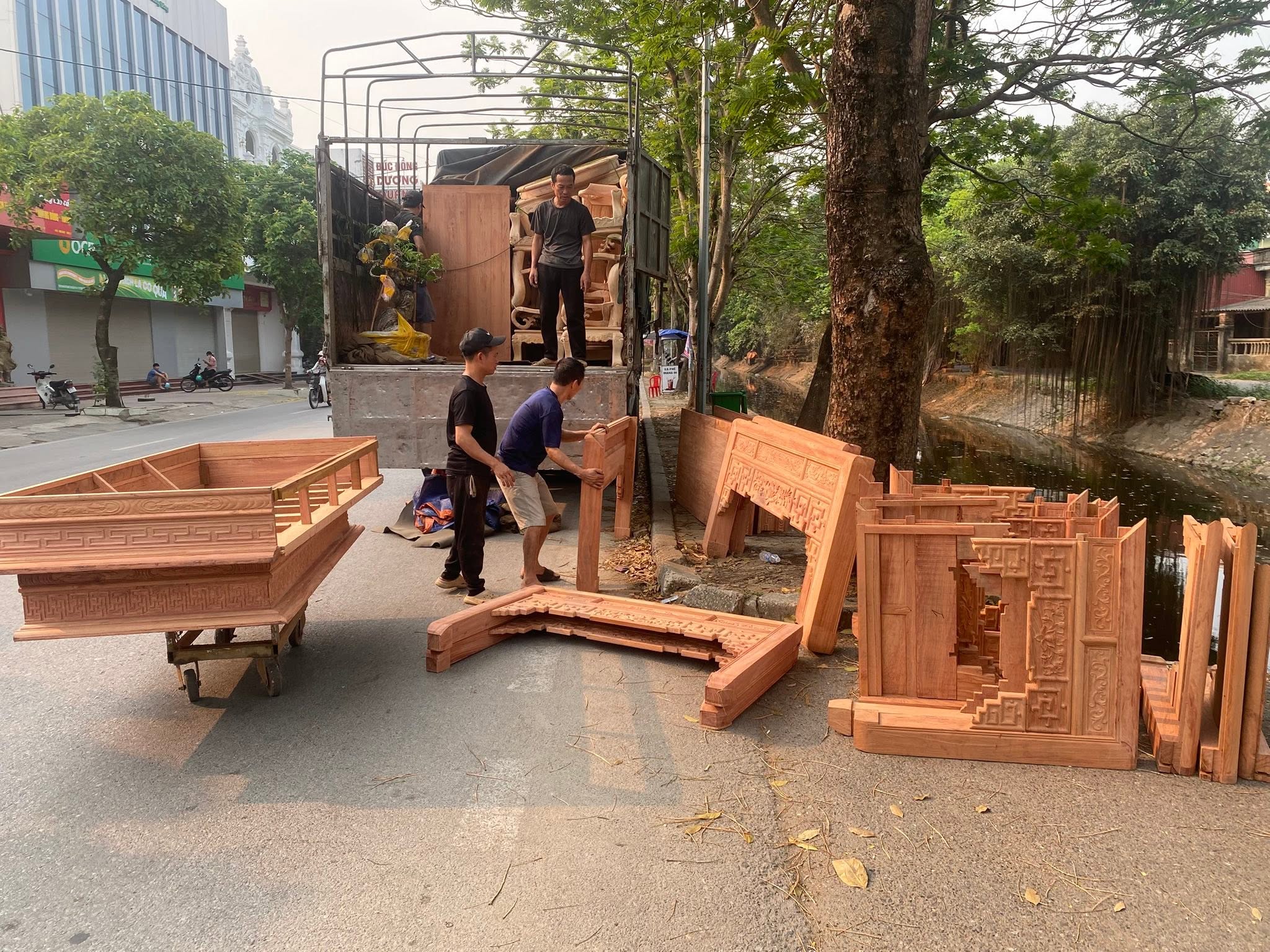
Phuc Loc Woodworking Village, located in Nam Hoa Lu Ward, Ninh Binh Province, is one of the traditional craft villages associated with the cultural heritage of Vietnam’s ancient capital region. Known for its finely crafted wooden furniture, decorative carvings, and traditional architectural woodwork, the village has preserved woodworking skills passed down through generations.
From everyday household furniture to elaborate wooden sculptures and ornamental details used in temples, pagodas, communal houses, and ancestral worship buildings, Phuc Loc craftsmanship reflects the patience, creativity, and artistic abilities of local artisans.
Despite changes in production techniques and consumer preferences, the village continues to maintain its traditional identity while incorporating modern equipment and developing products for contemporary markets.
The enduring tradition of Phuc Loc woodworking represents an important connection between skilled craftsmanship, cultural heritage, and the economic life of local communities in Ninh Binh.
History and Development of Phuc Loc Woodworking Village
Phuc Loc Woodworking Village is situated in present-day Nam Hoa Lu Ward, Ninh Binh Province, within the historic region surrounding the ancient capital of Hoa Lu.
According to local traditions, woodworking in Phuc Loc originated during the Dinh and Early Le dynasties, when Hoa Lu served as the capital of Dai Co Viet.
Over the centuries, the craft was preserved primarily through family-based apprenticeship, with experienced craftsmen passing their knowledge and techniques to younger generations.
In earlier times, Phuc Loc artisans produced not only household objects but also wooden architectural components and decorative elements for traditional buildings.
These included doors, window screens, columns, beams, carved panels, horizontal lacquered boards, parallel wooden inscriptions, and ornamental features used in communal houses, temples, pagodas, and ancestral halls.
Producing such items required a thorough understanding of wooden structures, traditional joinery, and decorative carving.
The artisans needed to ensure that every component was accurately measured, properly fitted, and visually harmonious with the overall architectural design.
Before modern woodworking machinery became widely available, most production stages were completed using hand tools such as saws, chisels, planes, drills, and specialized carving instruments.
From rough pieces of timber, craftsmen measured, cut, shaped, joined, carved, and finished each component by hand.
Depending on the size and complexity of the product, the process could require considerable time and effort.
The reputation of Phuc Loc woodworking gradually developed through the dedication, patience, and accumulated experience of generations of artisans.
According to local craft village materials, the skills of Phuc Loc woodworkers became known beyond Ninh Binh, reaching neighboring provinces such as Thanh Hoa and Nghe An.
Over time, woodworking became an important occupation, supporting local livelihoods while preserving traditional techniques and artistic knowledge.
Traditional Wood Carving Techniques and Signature Products
One of the defining characteristics of Phuc Loc woodworking is the combination of practical carpentry skills and decorative wood carving.
The village produces a wide range of items, from functional household furniture to elaborate works of traditional wood craftsmanship.
Common products include wooden beds, wardrobes, tables, chairs, sofa sets, doors, window screens, staircase handrails, and interior decorative elements.
Experienced artisans also create traditional furniture such as tu che, an ornate Vietnamese display cabinet, and sap gu or sap lim, traditional wooden platforms made from selected hardwoods.
These products require precise woodworking techniques, careful material selection, and an understanding of traditional Vietnamese furniture design.
Phuc Loc artisans are particularly skilled in producing carved wooden objects for religious and ceremonial settings.
Such products may include worship statues, horizontal inscribed panels, parallel inscriptions, altar furnishings, and decorative components for temples, pagodas, communal houses, and ancestral halls.
Traditional motifs often include dragons, phoenixes, lotus flowers, foliage, clouds, and geometric patterns.
Depending on the design, these decorative elements may be created using relief carving, recessed carving, or openwork techniques.
The production of a wooden object typically begins with selecting suitable timber, followed by measuring, designing, cutting, shaping, joining, carving, and surface finishing.
Each type of wood has different characteristics, including hardness, grain patterns, color, and workability.
Choosing the appropriate material is therefore essential to the quality, appearance, and durability of the finished product.
Traditional joinery is another important aspect of the craft.
Artisans must carefully shape joints and connecting components to ensure that wooden structures fit securely and maintain their intended form.
In decorative carving, skilled craftsmen use chisels and other tools to create flowing lines, balanced compositions, and intricate details.
For highly elaborate pieces, technical ability alone is not enough. Artisans must also understand proportion, depth, visual rhythm, and traditional artistic symbolism.
Their craftsmanship transforms natural timber into objects that combine practical function with cultural and aesthetic value.
Today, many woodworking households and workshops in Phuc Loc use modern equipment, including electric saws, planers, drills, and lathes.
These machines help reduce physically demanding tasks, improve precision, and increase production efficiency.
However, for intricate decorative carvings and custom-made artistic products, the experience and manual skills of individual artisans remain particularly important.
The combination of traditional craftsmanship and modern production methods allows Phuc Loc woodworking to adapt to changing markets while preserving its distinctive artistic identity.
Mat Tu Pagoda and the Cultural Traditions of Phuc Loc
Beyond its woodworking workshops, Phuc Loc is associated with local religious traditions and cultural landmarks.
One site mentioned in local historical accounts is Mat Tu Pagoda, a place connected with the spiritual life and craft heritage of the community.
According to local tradition, the pagoda has origins associated with the Dinh and Early Le dynasties.
It is described as a historic religious structure featuring traditional wooden architecture and carefully crafted decorative details.
Local materials refer to the use of dark, polished ironwood, known in Vietnamese as go lim, in its architectural construction.
The pagoda is also associated in local accounts with the commemoration of the woodworking craft’s founding ancestor and the worship of the village’s tutelary deity.
These traditions reflect the community’s respect for earlier generations who established, developed, and transmitted woodworking knowledge.
In Vietnamese craft villages, honoring the founding ancestor of a profession is an important cultural practice.
It expresses gratitude to those who contributed to the craft’s origins and represents the community’s commitment to preserving its traditional occupation.
For Phuc Loc artisans, these beliefs are also connected with the responsibility to maintain craftsmanship, professional integrity, and the reputation of the village.
Wooden sculptures, carved architectural details, and ceremonial furnishings demonstrate the close relationship between traditional woodworking and religious life.
Decorative patterns and wooden structures serve not only practical or aesthetic purposes but also express cultural symbols, spiritual beliefs, and traditional artistic values.
Exploring Phuc Loc’s cultural traditions therefore offers insight into the historical relationship between handicrafts, architecture, and community identity in the Hoa Lu region.
The precise construction date, religious functions, and documented history of Mat Tu Pagoda would require confirmation through official heritage records or detailed local historical sources.
Preserving Phuc Loc Woodworking and Developing Craft Village Tourism
Today, Phuc Loc woodworking continues to contribute to the cultural and economic life of the local community.
The production of wooden furniture, household items, and decorative handicrafts provides employment opportunities while helping preserve traditional skills passed down through generations.
As consumer preferences evolve, local workshops have introduced new designs, improved production methods, and expanded their product ranges.
Alongside traditional beds, cabinets, tables, and chairs, artisans produce interior furnishings and custom-made wooden objects suited to contemporary needs.
Nevertheless, the core value of Phuc Loc woodworking remains rooted in the knowledge, experience, and creativity of its craftsmen.
In finely carved products, every line and detail reflects the artisan’s ability to understand the material, control carving tools, and create harmonious forms.
This individual craftsmanship distinguishes traditional handmade objects from standardized mass-produced furniture.
For travelers exploring Ninh Binh, Phuc Loc Woodworking Village offers potential for cultural and craft-based tourism.
A visit to the village could be combined with nearby attractions such as the Hoa Lu Ancient Capital, Trang An Scenic Landscape Complex, Tam Coc – Bich Dong, and other historical and religious sites in the region.
At workshops that welcome visitors, travelers may have opportunities to observe timber preparation, shaping, traditional joinery, and decorative carving.
Watching artisans at work provides a closer understanding of the time, technical knowledge, and patience required to create a finished wooden product.
Smaller decorative carvings and handicraft items may also serve as meaningful souvenirs representing the village’s traditional skills.
Visitors interested in touring workshops should make arrangements in advance and follow safety requirements in areas where woodworking machinery and cutting tools are in use.
The development of craft village tourism should be accompanied by efforts to preserve traditional techniques, train younger artisans, improve product quality, and strengthen the cultural identity of the village.
Responsible production also requires attention to legally sourced timber, efficient material use, and safe working conditions.
Preserving Phuc Loc woodworking is therefore not simply about maintaining a traditional industry.
It is also about safeguarding generations of practical knowledge, artistic skills, and cultural values associated with the historic Hoa Lu region.
From ordinary pieces of timber, the artisans of Phuc Loc create furniture, decorative objects, and intricate wood carvings that reflect the beauty of traditional Vietnamese craftsmanship. Preserved through generations, this woodworking tradition continues to enrich the cultural identity of Ninh Binh and demonstrates the enduring value of skilled handmade production.
Quick Information
| Item | Details |
|---|---|
| Craft village | Phuc Loc Woodworking Village |
| Vietnamese name | Làng nghề mộc Phúc Lộc |
| Location | Nam Hoa Lu Ward, Ninh Binh Province, Vietnam |
| Craft type | Traditional woodworking and decorative wood carving |
| Traditional origins | Associated with the Dinh and Early Le dynasties according to local traditions |
| Knowledge transmission | Primarily family-based apprenticeship |
| Main products | Wooden beds, wardrobes, tables, chairs, sofa sets, doors, window screens, and staircase handrails |
| Traditional handicrafts | Ornate cabinets, wooden platforms, worship statues, carved panels, altar furnishings, and architectural decorations |
| Main techniques | Sawing, planing, chiseling, joinery, carving, shaping, and surface finishing |
| Modern equipment | Electric saws, planers, drills, and lathes |
| Cultural significance | Traditional woodworking knowledge, wood carving, religious architecture, and community heritage |
| Associated cultural site | Mat Tu Pagoda, according to local historical materials |
| Tourism potential | Craft workshop visits, woodworking demonstrations, and traditional handicraft shopping |







