Address: 1 Tran Quang Dieu Street, Xuan Huong Ward, Da Lat, Lam Dong Province
Distance from central Da Lat: Approximately 4 km southeast
Elevation: Approximately 1,550 m above sea level
Area: More than 18 hectares
Current name: King Palace
Set on a pine-covered hill at an elevation of approximately 1,550 m, Dinh 1 is one of Da Lat’s notable historic and architectural landmarks.
The residence is distinguished by its elegant yet imposing appearance, blending a classic architectural character with the surrounding highland landscape. Beyond its architecture, Dinh 1 is associated with several important periods in the history of Da Lat and preserves traces of political, military and residential life during a turbulent period of the 20th century.
Today, following restoration and adaptation for tourism, Dinh 1 welcomes visitors interested in architecture, history and the atmosphere of a former highland residence.
From a French Villa to Dinh 1
The residence was constructed between 1929 and 1940 by French businessman and millionaire Robert Clément Bourgery. The peaceful pine-covered hills and cool climate made the location suitable for a private holiday villa surrounded by nature.
In August 1949, the estate was acquired by the government of the State of Vietnam under Chief of State Bao Dai and subsequently renovated and refurbished. From that point, the property entered a new chapter associated with Bao Dai and the political activities of the period.
Between 1949 and 1954, Dinh 1 served as a workplace and headquarters for Chief of State Bao Dai. According to the supplied source material, important meetings and political activities were held here, while military commanders, government officials and diplomatic representatives were also received at the residence.
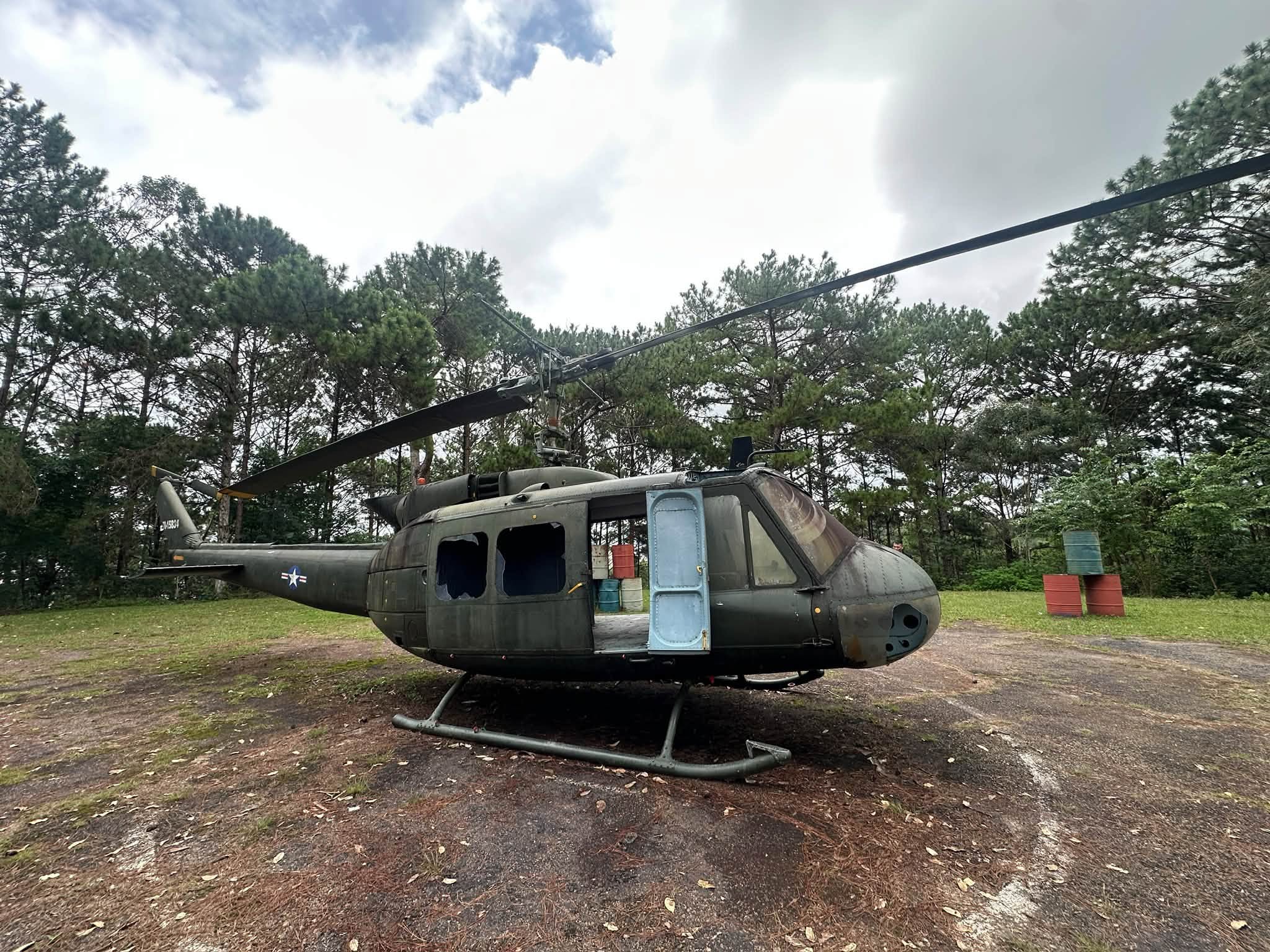
After 1954, during the period of the First Republic, Dinh 1 was used as a private retreat for the family of President Ngo Dinh Diem. During this period, additional security and defensive facilities were introduced, including an underground tunnel system and a helicopter landing area.
After 1975, the property was used for various official purposes. Around 2014, Dinh 1 underwent major restoration aimed at preserving its architectural and historical values. It was subsequently opened to visitors under the commercial name King Palace.
French Architecture Amid the Pine Forests
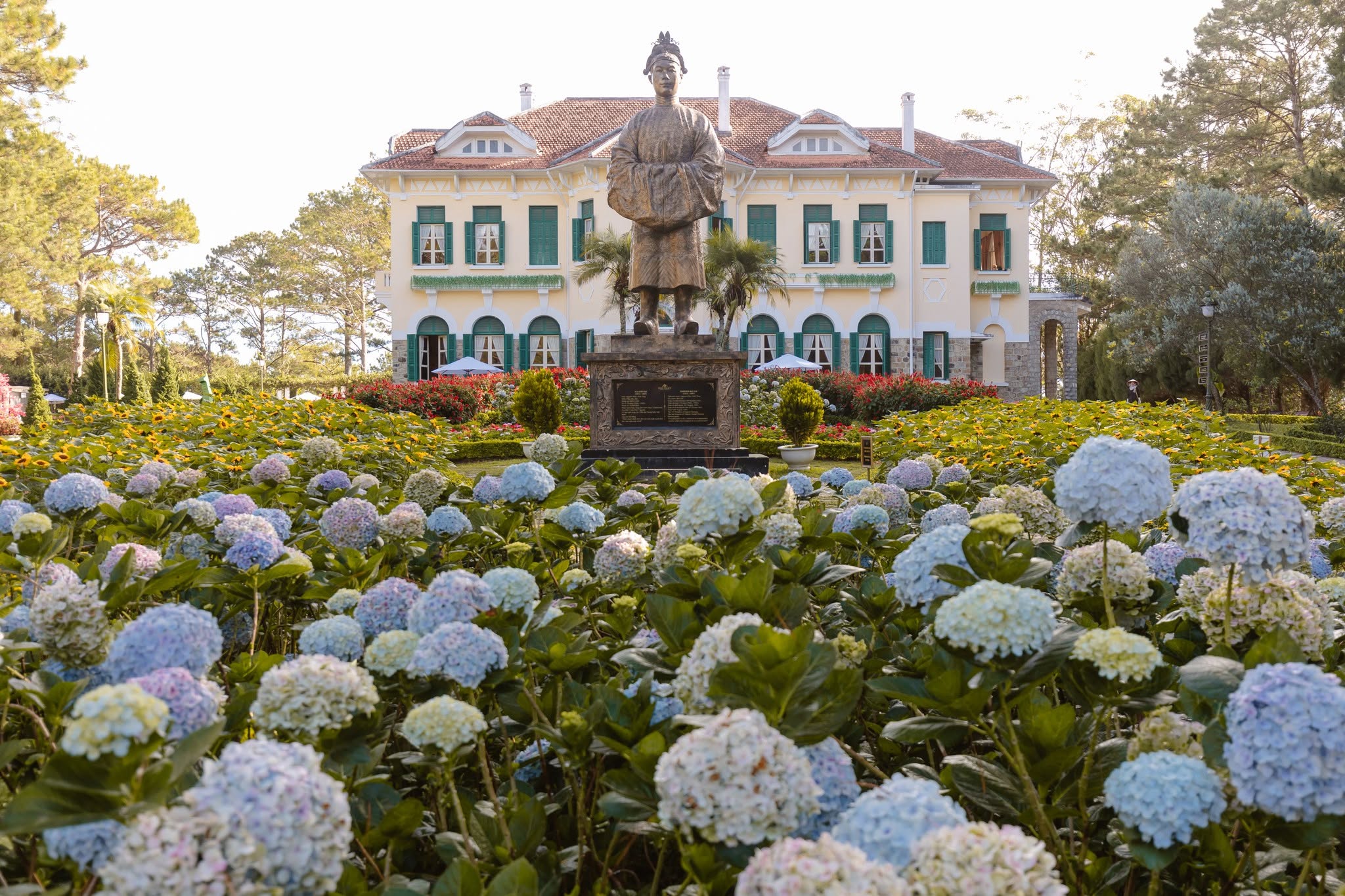
The main residence is a two-story building reflecting French Neoclassical architectural influences. Its yellow and blue exterior, pitched tiled roof and large windows give the building a distinctive appearance.
The wide windows allow natural light into the rooms while promoting ventilation. Set against the surrounding pine forest, the residence creates a balance between formal European architecture and the natural landscape of Da Lat.
One of the most recognizable features along the approach is the avenue of white-barked trees. A stone-paved path more than 100 m long leads from the entrance toward the main residence, shaded by rows of tall, straight-trunked trees. According to the supplied material, these trees were planted by the original French owner.
The surrounding grounds include seasonal flower gardens, European-style fountains, vintage horse-drawn carriages and pathways winding beneath mature pine trees.
Together, the residence, gardens and forest create a setting characteristic of Da Lat’s historic French-era retreat architecture.
The Interior of Dinh 1
The interior is arranged into several areas that help visitors understand the building’s functions and changing role throughout different historical periods.
The ground floor includes the main reception hall, ceremonial room, government meeting room and a display area featuring royal costumes.
This was also the part of the residence associated with official receptions and political activities during the period when Dinh 1 served as Bao Dai’s workplace.
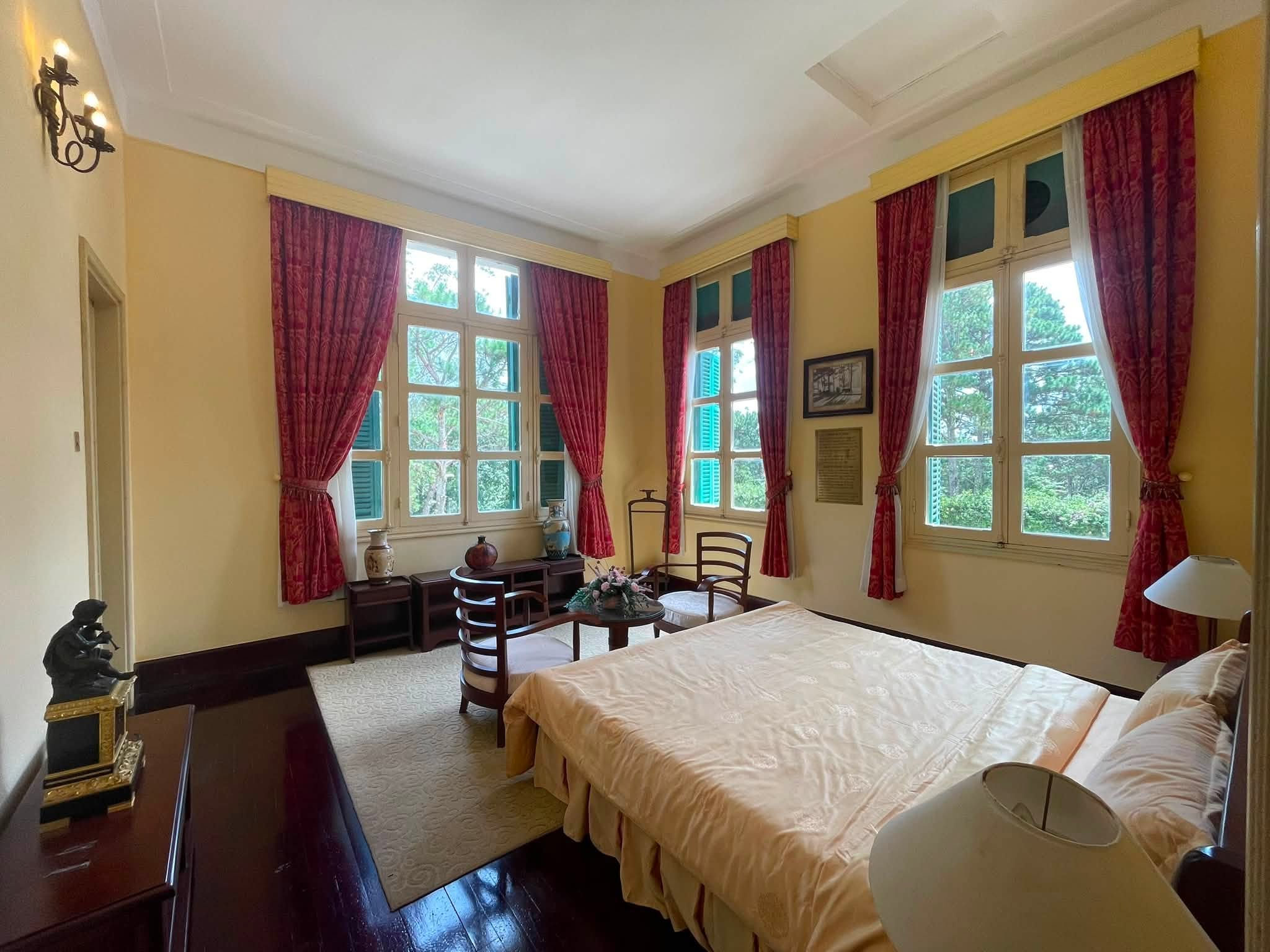
The second floor includes Bao Dai’s office, a wax figure display and bedrooms associated with Bao Dai, Queen Nam Phuong and Queen Mother Tu Cung.
Several period furnishings are displayed throughout the residence, including a piano, vintage radio, French-style fireplace and antique furniture.
The current presentation combines historical objects, period interiors and the original architectural setting, allowing visitors to gain a sense of both the residential and official functions once associated with Dinh 1.
The Secret Tunnels and Military Traces
One of the most intriguing features associated with Dinh 1 is its underground tunnel system.
According to the supplied source material, a secret tunnel was discovered during the construction of the residence. The source states that the tunnel was kept concealed and later expanded and reinforced for security and emergency evacuation purposes.
The tunnel system is described as extending for nearly 4 km, connecting with Dinh 2 and branching toward several villas along Tran Hung Dao Street. The source also attributes its origins to the period before the Japanese overthrow of French colonial authorities, when underground routes were reportedly intended for military purposes.
During later periods, parts of the system were reinforced as a defensive and escape network. One section is described as being concealed behind a bookshelf in a bedroom, leading toward the helicopter landing area and connecting with the underground network beneath the hill.
These features give Dinh 1 a significance that extends beyond its identity as a historic residence, linking the site to the security and military history of Da Lat during the 20th century.
The Helicopter Landing Area and Royal Gardens
Behind the main residence is a former helicopter landing area. A Bell UH-1 military helicopter is currently displayed here as a historical artifact associated with the wartime period before 1975.
The estate covers more than 18 hectares, allowing the main building to sit within a relatively expansive landscape. Visitors can explore flower gardens, fountains, vintage carriages and pathways beneath the pine canopy.
The grounds create a transition between the formal architecture of the residence and the natural environment of the highlands. Inside the building, visitors encounter rooms and objects associated with its historical occupants. Outside, the atmosphere shifts to the cool, green landscape characteristic of Da Lat.
Visiting Dinh 1
Today, Dinh 1 is presented as a destination for history, architecture and cultural sightseeing. Visitors can explore the residence, learn about the different historical periods associated with the property, view restored rooms and walk through the surrounding grounds.
Experiences at the site may also include photography in royal-style costumes, exploration of the garden areas and relaxing within the pine-covered estate.
According to the supplied information, Dinh 1 is open approximately 07:00 to 17:30 daily.
Its location relatively close to central Da Lat also makes it convenient to combine with other historic and architectural attractions around the city.
Dinh 1, A Historic Layer of Da Lat
Standing among the pine forests on a highland hill, Dinh 1 preserves several layers of Da Lat’s 20th-century history. From a French holiday villa, the property became associated with Chief of State Bao Dai and later with different political, security and military periods.
Today, the residence, gardens, tree-lined approach, underground tunnels and helicopter landing area form a multi-layered historical landscape.
Dinh 1, Da Lat is therefore more than an old villa surrounded by pine trees. It offers visitors an opportunity to explore a chapter of the city’s history through architecture, preserved spaces and surviving traces of the past, making it a distinctive stop for travelers who want to experience Da Lat beyond its familiar landscapes of flowers, lakes and cafés.