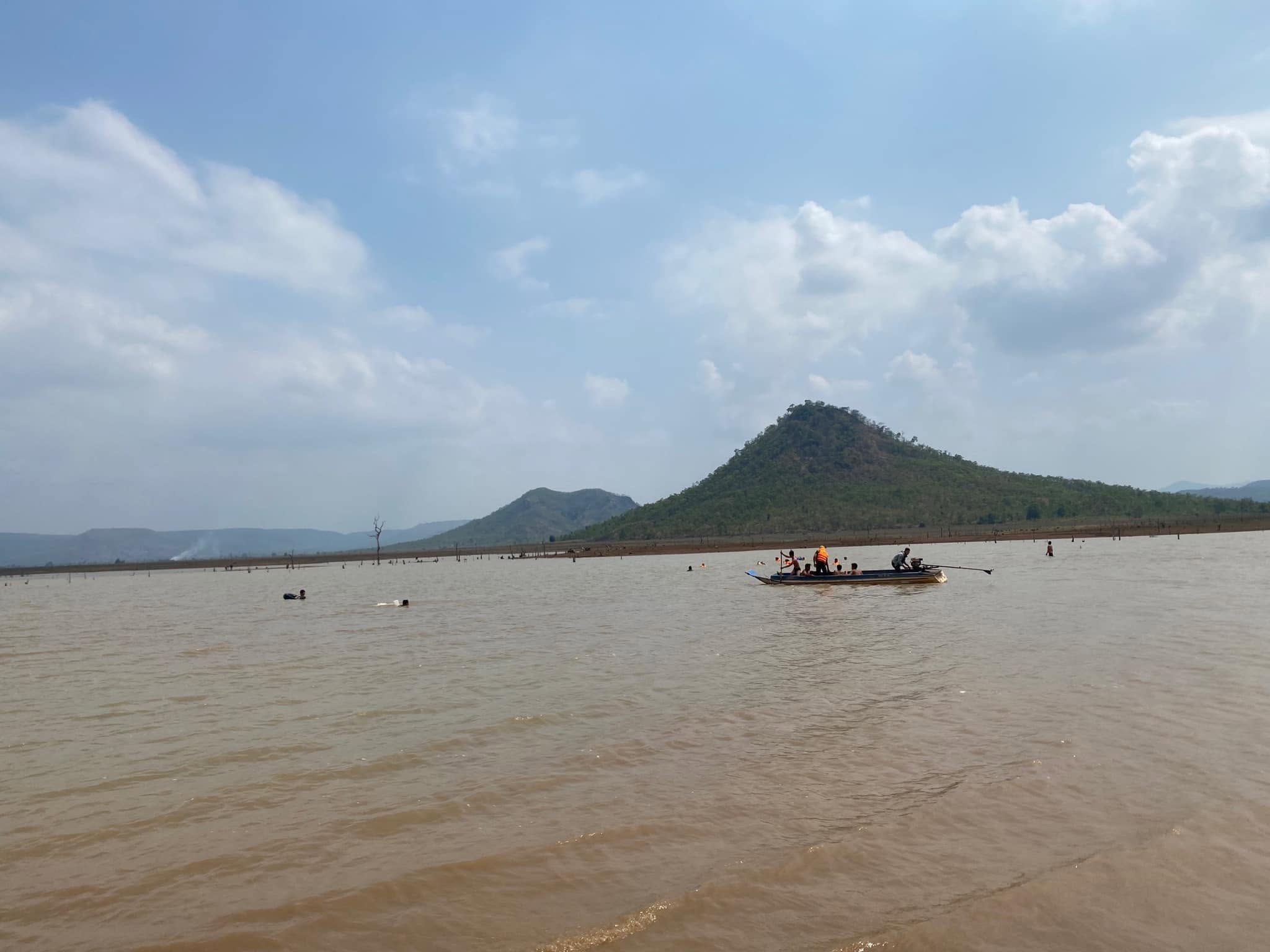
Located in Chư A Thai Commune, Gia Lai Province, Ayun Ha Lake is an important reservoir that has contributed to transforming the landscape and livelihoods of communities in eastern Gia Lai. Its large expanse of water not only provides resources for agriculture and fisheries but also creates opportunities for sightseeing, boating and water-based recreational activities.
The story of Ayun Ha is closely connected with the transformation of a once dry and difficult landscape. Before the irrigation project was completed, many areas around the region faced water shortages and difficult farming conditions. The arrival of the reservoir brought a new source of water, opening the way for agricultural production and changes in local livelihoods.
A Reservoir That Changed the Landscape
The Ayun Ha irrigation project began in 1994 and was inaugurated in 2002. The reservoir covers approximately 37 km² and holds about 253 million m³ of water.
Its water supports irrigation for more than 13,500 hectares of agricultural land in Phú Thiện, Ia Pa and Ayun Pa. Beyond irrigation, the reservoir also contributes to fisheries, electricity generation and industrial production.
The transformation is particularly visible in the surrounding agricultural areas. Land that once struggled with drought and difficult cultivation conditions has gained access to a more reliable water source, allowing farmers to develop more stable production models.
Water and the Transformation of Rural Livelihoods
The impact of Ayun Ha can be seen through the experiences of local farmers.
Hà Kim Thành, for example, shifted from cultivating cassava on two hectares of land to growing mulberry and raising silkworms, while also installing a rooftop solar power system. Other farmers have expanded rice and crop production thanks to improved access to irrigation water.
On a two-hectare rice field, farmer Nguyễn Văn Việt harvested approximately 35 tonnes of paddy from the Winter-Spring crop in 2024–2025, according to the source. Elsewhere, farmer Phạm Văn Huế combines rice cultivation and cassava with approximately 600 cashew trees.
These examples reflect a broader transformation in agricultural production. Water from Ayun Ha has become an important foundation for farmers seeking to diversify crops and improve the productivity of their land.
A Source of Water for Agriculture and Fisheries
The reservoir has significant aquatic resources, contributing to fisheries in the Ayun Ha and Pleiku areas. Its broad water surface also creates conditions for recreational activities such as boating, sightseeing and picnicking.
The presence of the reservoir has therefore given the region a new landscape. Water, agricultural fields and surrounding highland terrain form a setting that can support both productive activities and tourism experiences.
For visitors, Ayun Ha offers a different perspective on Gia Lai, where the highland landscape is shaped not only by forests and mountains but also by a large man-made body of water that has become closely connected with local life.
From a Dry Landscape to a Productive Region
Before the irrigation project, the area was described as barren, dry and affected by saline conditions, with local communities facing difficult economic circumstances.
The development of the Ayun Ha irrigation system brought water into the region and gradually changed the conditions for settlement and production. Local accounts associate improvements in houses, roads, lighting and access to education with the transformation brought by the water project.
The reservoir thus represents more than an engineering structure. It has become part of the story of how water resources can reshape agricultural landscapes and create new opportunities for rural communities.
The Landscape Around Ayun Ha
Today, Ayun Ha is both an important water resource and a distinctive landscape in eastern Gia Lai. The wide reservoir contrasts with the surrounding agricultural land, creating an open space suitable for observing the highland scenery.
The lake also provides potential for recreational and tourism activities connected with water, agriculture and local communities. Sightseeing by boat, picnicking and exploring the surrounding countryside offer ways to experience a different side of Gia Lai beyond its better-known volcanic landscapes and forest destinations.
The value of Ayun Ha therefore lies in the combination of natural landscape, water infrastructure and community life. Its story is closely tied to the transformation of the land and the people who depend on it.
Ayun Ha Lake and the Story of Eastern Gia Lai
Over more than two decades since the irrigation project was completed, Ayun Ha has become an important part of the agricultural and economic landscape of eastern Gia Lai.
Its water supports farming, fisheries and other forms of production, while its broad surface creates opportunities for recreation and tourism. More importantly, the reservoir has become part of the everyday life of local communities, from farmers working in the fields to families living in villages connected by roads and irrigation systems.
Ayun Ha is therefore not simply a lake on the map. It is a landscape shaped by water, where an irrigation project has helped create new possibilities for agriculture and rural life in eastern Gia Lai.
Basic Information
| Item | Information |
|---|---|
| Name | Ayun Ha Lake |
| Location | Chư A Thai Commune, Gia Lai Province |
| Project | Ayun Ha irrigation project |
| Project started | 1994 |
| Inaugurated | 2002 |
| Reservoir area | Approximately 37 km² |
| Water capacity | Approximately 253 million m³ |
| Irrigated area | More than 13,500 hectares |
| Main values | Irrigation, fisheries, agriculture, water resources, recreation and tourism |
| Related areas | Phú Thiện, Ia Pa and Ayun Pa |