Hue Clam Rice (Com Hen) is one of the distinctive rustic dishes of Hue, known for its combination of cooled rice, freshwater clams, fresh herbs, seasonings, and clam broth. The ingredients are simple, yet their combination is highly characteristic. The heat of chili, the savory flavor of Hue shrimp paste, and the crisp freshness of the accompanying vegetables create a flavor that is difficult to confuse with any other dish.
According to the document Com Hen – A Hue Specialty Rich in Seasoning and Affection, the dish is closely associated with the traditional practice of making use of ingredients readily available within the household. This reflects the humble character of Hue cuisine. The document also emphasizes the role of Con Hen, an islet on the Perfume River where freshwater clams are abundant and where the traditional practices of collecting, washing, sorting, and processing clams have long been associated with the local community.
- Dish: Hue Clam Rice (Com Hen)
- Locality: Hue
- Type: Rustic dish and local culinary tradition
- Main ingredients: Cooled rice and freshwater clams
- Fresh herbs and vegetables: Young banana stem, banana blossom, sour starfruit or green mango, aromatic herbs, and bean sprouts
- Seasonings: Hue shrimp paste, chili, chili-garlic fish sauce, and salt
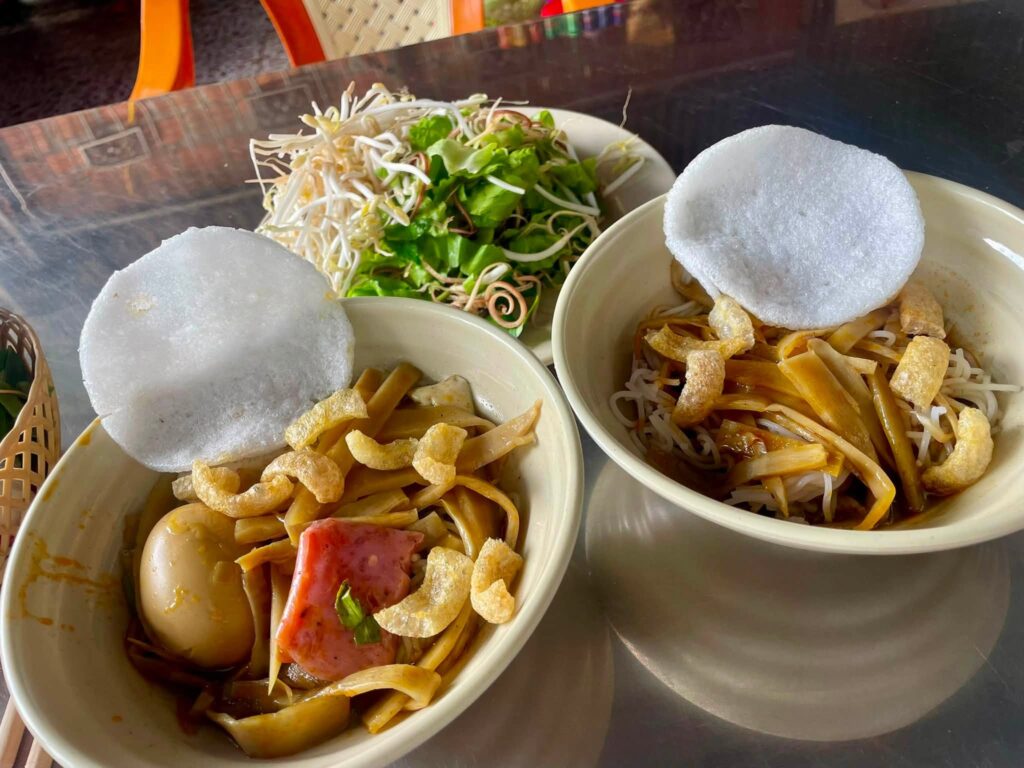
- Accompanying ingredients: Roasted peanuts, crispy pork fat, or fried pork skin
- Broth: Clam broth cooked with ginger
- Ways of serving: Dry Clam Rice or Clam Rice with broth
From Cooled Rice and Freshwater Clams to a Distinctive Hue Dish
One of the first distinctive features of Clam Rice lies in the rice itself. Unlike many rice dishes that are served hot, the rice used for Hue Clam Rice is traditionally cooled, with separate grains that are not overly sticky.
According to the source material, using cooled rice also helps preserve the crispness of the fresh vegetables served with the dish. When hot rice is used, the vegetables can become softer and lose some of their characteristic texture.
The second essential ingredient is the freshwater clam. The document identifies Con Hen on the Perfume River as a place well known for its small freshwater clams, as well as for the traditional practices of collecting, washing, sorting, and processing them.
The clam broth, which is cloudy white and naturally sweet, is carefully retained and served alongside or with the rice.
The source also records that during the reign of Emperor Thieu Tri, clams were already being sold at markets around the Hue imperial capital. By the reign of Emperor Thanh Thai, Clam Rice sold at Con Hen was reportedly presented as a tribute to the royal court during festive occasions.
What Goes into a Bowl of Hue Clam Rice?
Rice and clams are the two principal ingredients, but the distinctive character of the dish comes from the wide range of vegetables and seasonings served with them.
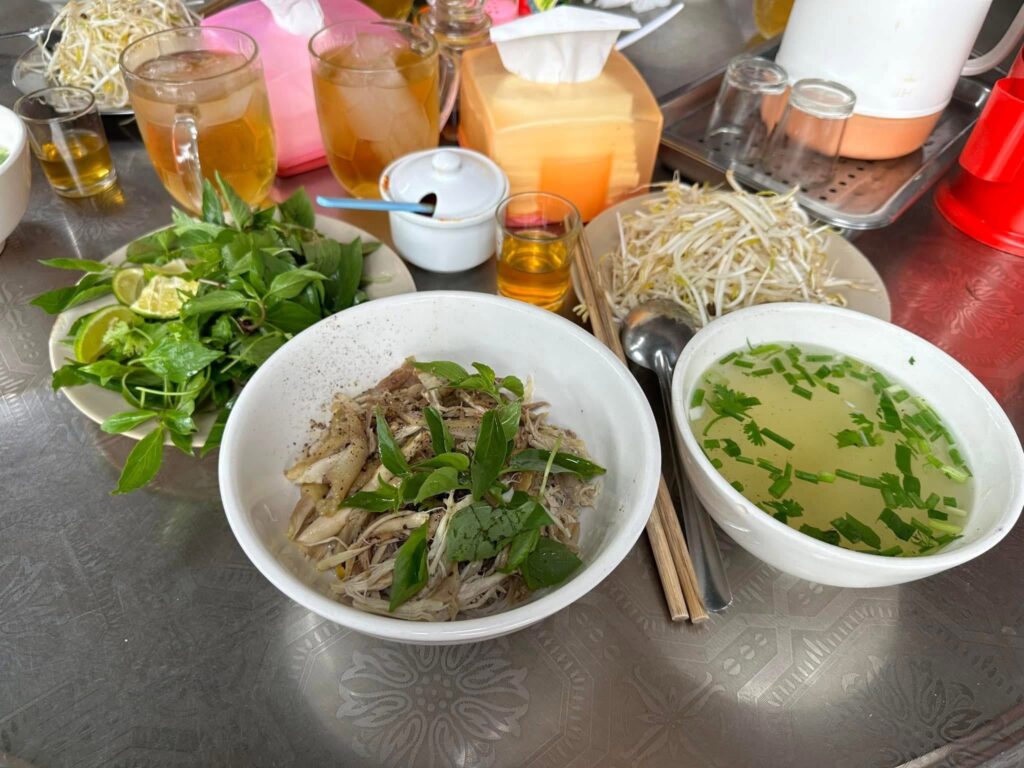
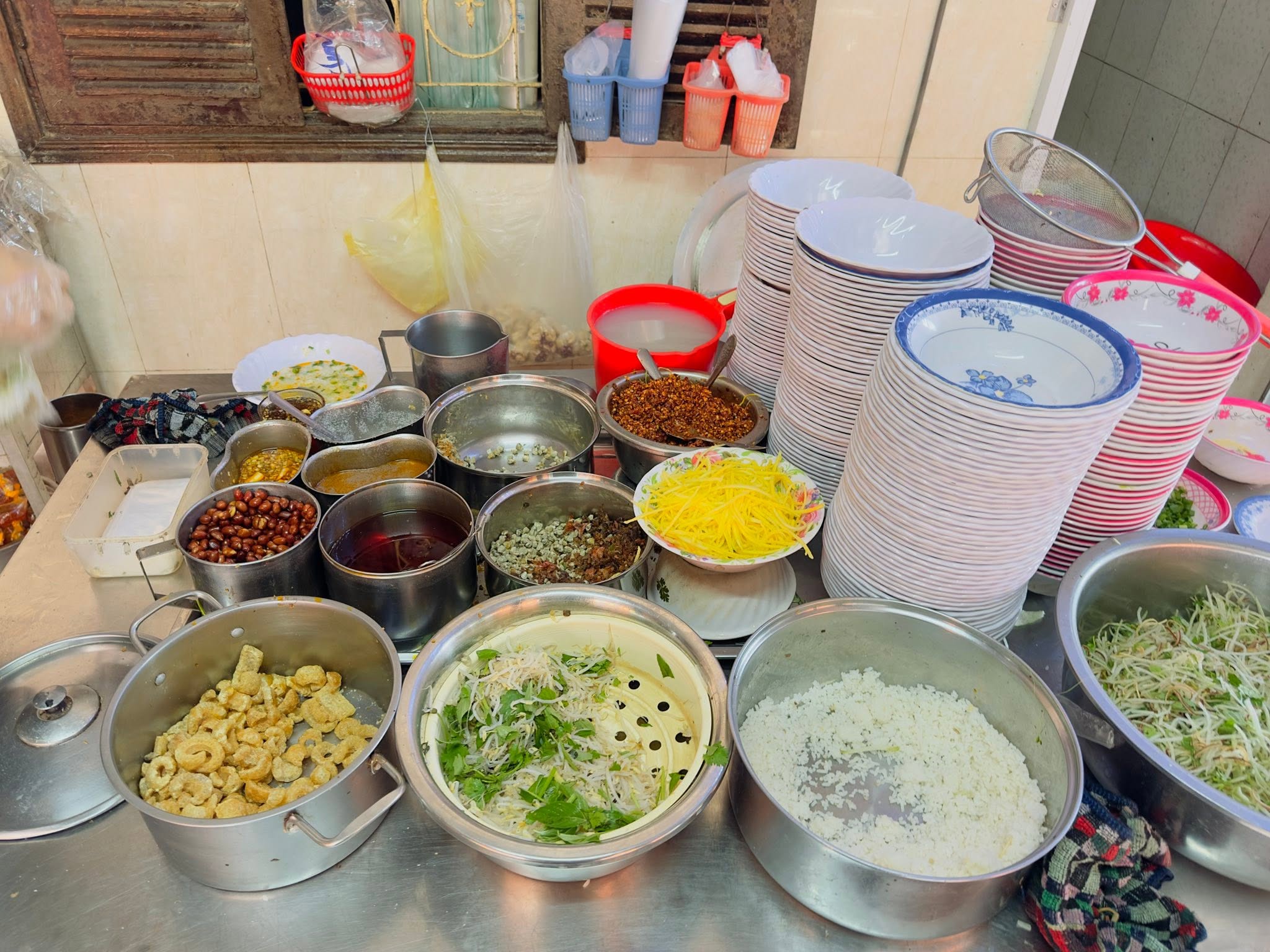
The fresh vegetable mixture commonly includes thinly sliced young banana stem or banana blossom, mon bac ha, sour starfruit, aromatic herbs, and briefly blanched bean sprouts. When sour starfruit is unavailable, green mango may be used to provide the characteristic sourness.
The seasonings give Clam Rice much of its recognizable character. These include Hue shrimp paste, chili sauce, chili powder, chili preserved in fish sauce, crispy pork fat, toasted sesame, roasted peanuts, and salt, together with other seasonings.
Among these ingredients, Hue shrimp paste plays a particularly important role in defining the flavor of the dish.
The source material also identifies the basic combination as cooled rice, freshwater clams, young banana stem, banana blossom, sour starfruit or green mango, aromatic herbs, bean sprouts, peanuts, and crispy fried pork skin.
Clam Broth and Two Ways of Enjoying the Dish
Hue Clam Rice can be enjoyed in two principal forms: dry Clam Rice and Clam Rice with broth.
For the version with broth, the retained clam broth is poured directly into the bowl of rice. With the dry version, diners first enjoy the mixed rice and accompanying ingredients, while the clam broth is served separately.
The clam broth is prepared from the liquid retained after the clams have been cleaned and cooked. Fresh ginger is added during cooking to provide fragrance. According to the traditional culinary understanding described in the source material, ginger also helps balance the cooling nature traditionally attributed to clams.
The light yet aromatic clam broth creates a distinctive contrast with the richly seasoned rice. A single meal can therefore combine the strong flavors of shrimp paste and chili with the delicate natural sweetness of the clams.
Chili and the Character of Hue Clam Rice
If one characteristic is especially memorable when talking about Hue Clam Rice, it is its chili heat.
The source describes traditional Clam Rice as potentially containing a considerable amount of chili, producing the pronounced spiciness associated with the taste preferences of Hue people.
The chili is combined with Hue shrimp paste, fish sauce, crispy pork fat, roasted peanuts, and fresh vegetables to create a flavor that is both intense and layered.
Each ingredient has its own role. The rice provides the foundation, the clams contribute natural sweetness, the vegetables provide freshness and crispness, peanuts and crispy pork fat add richness, while shrimp paste and chili create the distinctive depth of the dish.
Although the ingredients themselves are humble, their combination requires considerable attention. The person preparing the dish must add each vegetable, seasoning, and accompanying ingredient in appropriate quantities to create a balanced bowl.
Hue Clam Rice in the Local Culinary Culture
Clam Rice developed within a rustic culinary tradition in which readily available ingredients were creatively combined to create a complete meal. This simplicity helped the dish become closely connected with everyday life in Hue and form part of the culinary memories of people from the city.
Con Hen also plays an important role in the cultural story of the dish. The collection and processing of freshwater clams are associated with the local community, and the source material records a traditional clam procession held annually on the 24th day of the sixth lunar month, with a larger ceremony lasting two to three days held every three years.
Clam Rice is therefore more than a dish. Behind a bowl of rice lies a story of the Perfume River, Con Hen, the clam-processing profession, and the way Hue people transform simple local ingredients into a dish with a strong regional identity.
Enjoying Clam Rice in Hue
A traditional bowl of Hue Clam Rice does not require exotic ingredients. Its character comes from the combination of cooled rice, freshwater clams, fresh vegetables, Hue shrimp paste, chili, peanuts, crispy pork fat, and clam broth.
Visitors can try both dry Clam Rice and Clam Rice with broth to experience the difference between the two styles. Those who enjoy stronger and spicier flavors may add more chili, while anyone wishing to appreciate the delicate sweetness of the clams should not overlook the clam broth.
For Travelin, Hue Clam Rice represents the distinctive character of Central Vietnamese rustic cuisine: simple in its ingredients yet refined in its combination. From cooled rice and tiny freshwater clams to handfuls of herbs and small containers of seasonings on the table, every element comes together to create a dish deeply rooted in Hue, humble in appearance yet memorable in flavor.