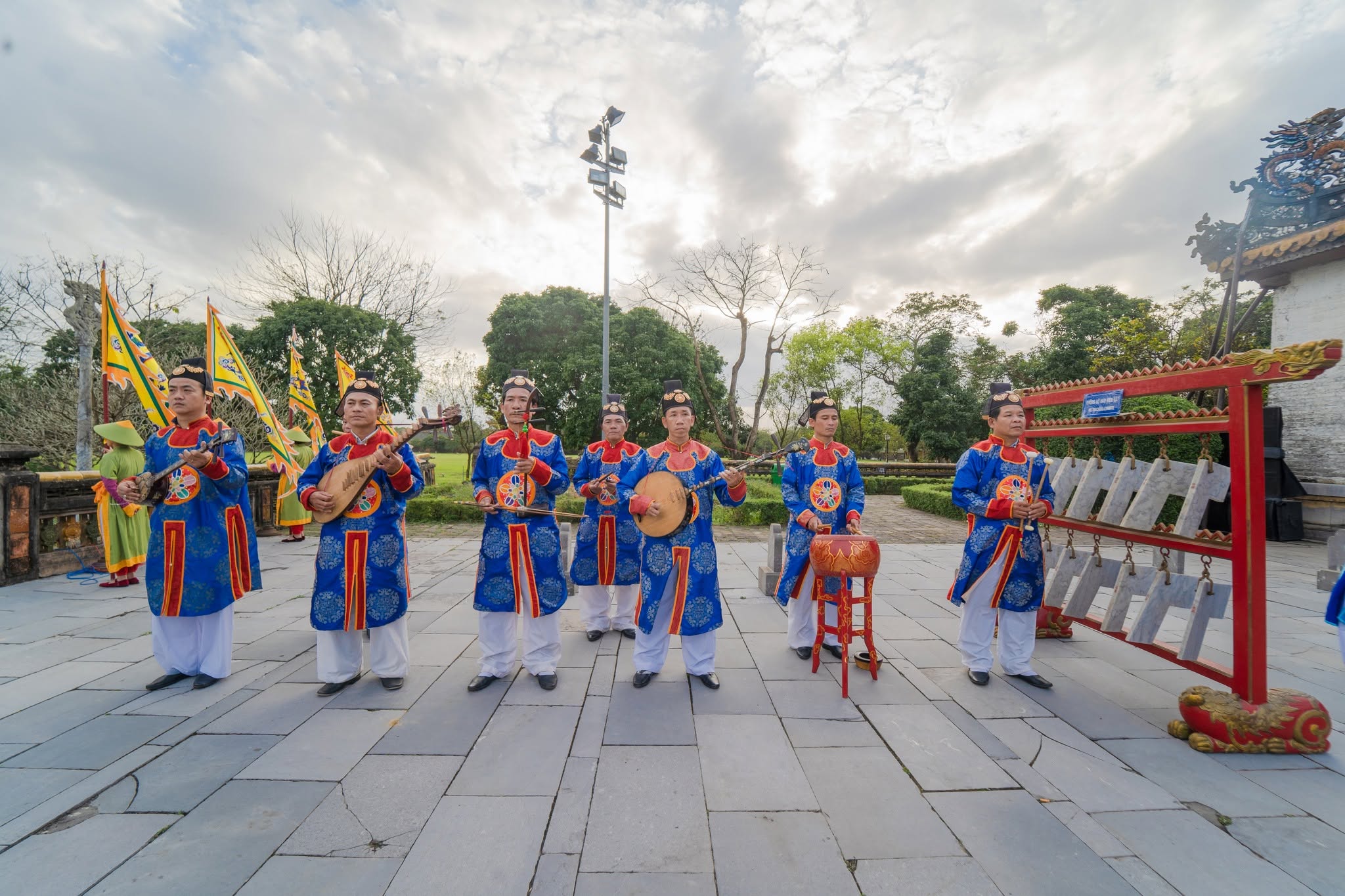
Vietnamese Court Music, known as Nhã nhạc and particularly associated with Huế Court Music under the Nguyễn Dynasty, is a distinctive form of court music that holds an important place in Vietnam’s cultural history. Meaning “elegant music,” Nhã nhạc was performed as part of court ceremonies, commemorations, religious rites, royal celebrations, funerals, coronations, and official receptions.
Nhã nhạc was proclaimed by UNESCO as a Masterpiece of the Oral and Intangible Heritage of Humanity on November 7, 2003. The recognition reflects the artistic, historical, ceremonial, and cultural values of this sophisticated musical tradition.
Origins and Historical Development
According to historical sources, Vietnamese Nhã nhạc began to emerge during the Lý Dynasty (1010-1225), took more defined form under the Trần Dynasty, developed further during the Lê period, and reached its most systematic and sophisticated development under the Nguyễn Dynasty (1802-1945).
Because the Nguyễn Dynasty established its capital in Huế, the court music of this period is commonly known as Huế Court Music.
Vietnamese monarchies attached great importance to Nhã nhạc and developed it as a symbol of royal authority and the continuity and prosperity of the dynasty.
Nhã nhạc was not simply a form of musical entertainment. It formed part of a highly regulated ceremonial and artistic system. Rules governing the size of ensembles, performance methods, musical repertoire, and ceremonial contexts were strictly defined, reflecting the aesthetic principles, philosophical ideas, and social order of the monarchic period.
Nhã nhạc in the Royal Court
Nhã nhạc was performed during important royal ceremonies, including the Nam Giao Sacrifice, Xa Tac Sacrifice, temple ceremonies, coronations, royal birthdays, funerals, and official receptions for envoys and distinguished guests.
Within the court, Nhã nhạc encompassed various forms of musical and performing arts, including ritual music, chamber music, theatrical performance, and court dance. Performances could involve large numbers of musicians and dancers wearing elaborate costumes and following carefully prescribed ceremonial conventions.
Nhã nhạc therefore served several functions. It accompanied important rituals, expressed reverence toward deities and monarchs, and conveyed traditional Vietnamese concepts concerning the cosmos, social order, and spiritual life.
Đại Nhạc and Tiểu Nhạc
The Huế court music system included two major ensemble forms: Đại Nhạc and Tiểu Nhạc.
Đại Nhạc, or Great Music, was a large-volume ceremonial ensemble dominated by drums, wind instruments, and percussion. It was used during important ceremonies such as the Nam Giao Sacrifice, temple rituals, and major court audiences. Instruments could include drums, cymbals, buffalo-horn clappers, double-headed drums, oboe-like wind instruments, and, in some cases, the two-stringed đàn nhị.
Tiểu Nhạc, or Small Music, had a more stable repertoire and a more refined and lively character. It was commonly performed at royal banquets, major celebrations, and during the Lunar New Year. Some Tiểu Nhạc pieces also included vocal parts.
Its instruments included various drums, cymbals, percussion instruments, bamboo flutes, đàn tam, đàn nhị, đàn tỳ bà, and đàn nguyệt.
Musical Instruments
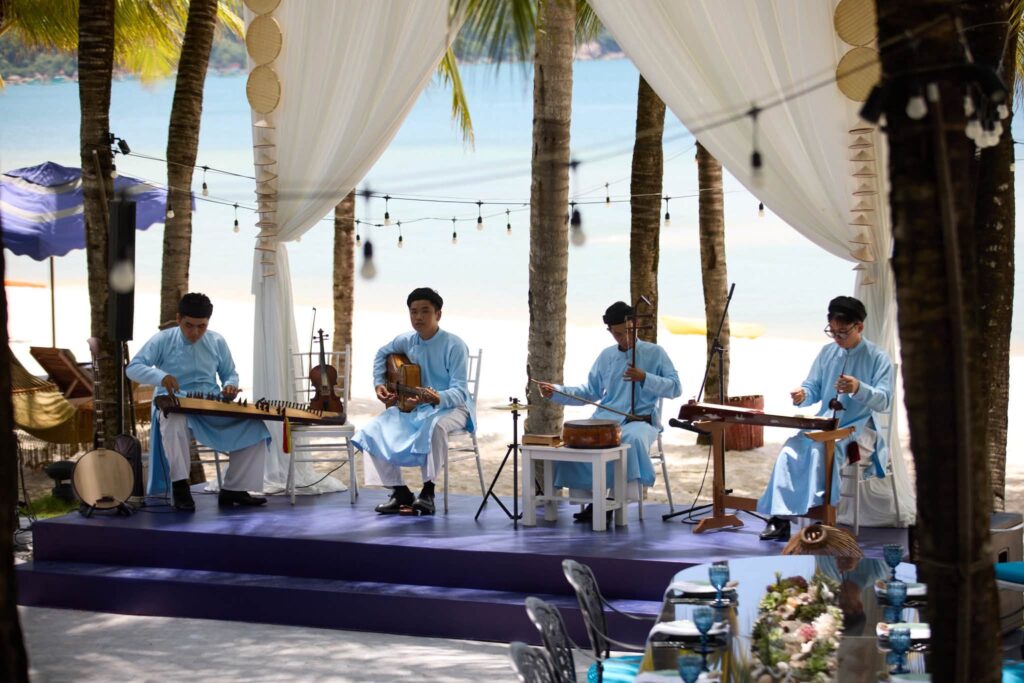
The instruments used in Nhã nhạc were carefully crafted and often more elaborately decorated than instruments used in folk music. Together, they created a rich spectrum of sounds, including metallic, earthy, clear, resonant, high, low, string, bamboo, skin, stone, and bronze timbres.
Historical records describe a Vietnamese court ensemble that included instruments such as drums, sinh tiền clappers, bamboo flutes, đàn tam, đàn nhị, đàn nguyệt, đàn tỳ bà, and sets of small bronze gongs.
In ensemble performances, string instruments such as the đàn nguyệt, đàn tam, đàn tỳ bà, and đàn nhị were combined with bamboo flutes and percussion instruments such as drums, gongs, and sênh tiền, producing a clear and refined sound with considerable expressive depth.
Nhã nhạc and Court Dance
Nhã nhạc was frequently performed together with Vietnamese court dance, creating elaborate artistic presentations with a strong ceremonial character.
As part of preservation efforts, a number of court dances have been researched, reconstructed, and staged, including Trình tường tập khánh, Nữ tướng xuất quân, Lân mẫu xuất lân nhi, Song phụng, and Long hổ hội. Other reconstructed or developed dances include Huyện Trân, Lộng Điệp, Xẩm Huế, and Phách nhịp du xuân.
The combination of music, dance, costumes, and ritual created a distinctive artistic system associated with the Huế imperial court.
Duyệt Thị Đường and Performance Spaces
Duyệt Thị Đường, the historic theater within the Imperial City of Huế, was built in 1826 during the reign of Emperor Minh Mạng. It was once a venue for artistic performances presented to the emperor, members of the royal family, court officials, and distinguished foreign guests associated with the Nguyễn court.
Today, Duyệt Thị Đường remains an important venue for introducing Nhã nhạc to the public and visitors. Reconstructed performances include Trống Thái Bình and Tam luân cửu chuyển from Đại Nhạc; Phú lục dịch and Kim tiền from Tiểu Nhạc; as well as court dances such as Vũ phiến and Lục cúng hoa đăng.
Nhã nhạc is now presented in a variety of settings, including outdoor spaces, palaces, temples, and Duyệt Thị Đường. Visitors can encounter short performances while exploring the Imperial City or attend longer programs at the theater to gain a deeper understanding of the art form.
Nhã nhạc is also performed aboard dragon boats on the Perfume River and has been incorporated into the official programs of the Huế Festival, including performances associated with the Nam Giao and Xa Tac ceremonies and other traditional events.
Artisans and the Transmission of Knowledge
One of the defining characteristics of Nhã nhạc is its traditional method of direct transmission from experienced masters to younger generations. However, this method of transmission has faced challenges as many knowledgeable court musicians have grown elderly.
In 2010, the Huế Monuments Conservation Centre invited Lữ Hữu Thi and Lữ Hữu Cử, the last surviving musicians who had participated in the Nguyễn Dynasty’s Hòa Thanh ensemble, to contribute to the reconstruction of court music traditions.
Before their deaths, the two musicians spent many years assisting Duyệt Thị Đường in reconstructing and preserving traditional court music. Lữ Hữu Thi was reported to have remembered and performed approximately 20 court ceremonial music pieces.
Their knowledge and performance skills provided valuable material for transmitting court music traditions to subsequent generations.
Preservation and Reconstruction Efforts
Following UNESCO’s recognition, efforts to preserve and promote Huế Court Music were strengthened. One significant achievement has been the transformation of Nhã nhạc from an art form historically associated primarily with the royal court into a cultural heritage accessible to a wider public.
The Huế Monuments Conservation Centre has conducted research, collected archival materials, and reconstructed numerous representative pieces. These efforts have included 10 musical chapters for the Giao Sacrifice, 9 musical chapters for temple ceremonies, 5 pieces for the Đoan Dương Festival, longevity celebrations and Lunar New Year, 40 pieces performed by Tiểu Nhạc ensembles, 14 wind-instrument pieces used in Đại Nhạc, and 10 pieces performed when the emperor was present.
Preservation efforts have also extended to costumes, musical instruments, performance practices, and documentation of representative artisans.
Several preservation projects have received international support, including assistance from UNESCO through the Japan Funds-in-Trust, together with counterpart funding from the Vietnamese Government. Activities included training researchers and archivists, recruiting and training Nhã nhạc musicians through traditional apprenticeship methods, researching and reconstructing musical repertoire, and documenting representative artisans regarded as “Living Human Treasures.”
Recovered Cultural Values
Preservation projects have helped restore a number of traditional musical pieces, including Thái Bình cổ nhạc and ca Thài pieces associated with the Nam Giao ceremony. Musical scores and repertoires have also been transcribed and documented for research, teaching, and performance.
Preservation has extended beyond music itself to include court dance, costumes, instruments, and performance styles. These efforts have helped reconstruct important elements of the artistic system that once existed within the Huế Imperial Court.
Risks and Challenges
During the 20th century, major historical changes in Vietnam, particularly the end of the monarchy and decades of war, had a serious impact on the survival of Nhã nhạc. The traditional social context and functions of court music were also disrupted.
The traditional system of apprenticeship faced further challenges as the number of artisans with extensive knowledge of court music declined.
In this context, documenting traditional knowledge, training younger generations, and creating opportunities for experienced artisans to pass on their knowledge have become important elements of preservation.
Preservation and Promotion
Researchers have emphasized the need for a systematic approach to preserving Nhã nhạc, covering musical instruments, costumes, ensembles, repertoire, and performance styles. Research, investigation, and documentation should continue through books, photographs, films, audio recordings, and other archival formats.
Particularly important is the documentation of knowledge held by surviving artisans and witnesses. Their melodies, lyrics, performance techniques, and memories of court music need to be recorded and preserved for future research and transmission.
At the same time, appropriate recognition and support for traditional artisans can encourage them to continue passing their knowledge and skills to younger generations.
A Cultural Heritage of Humanity
From a musical tradition closely associated with royal ceremonies, Nhã nhạc has become an important part of Vietnam’s cultural heritage. UNESCO’s recognition in 2003 marked an important stage in the preservation, study, and international promotion of this distinctive art form.
Nhã nhạc preserves not only musical traditions but also knowledge relating to ritual, instruments, dance, costumes, performance, and the aesthetic principles of traditional Vietnamese court culture.
Preserving and transmitting Nhã nhạc therefore means more than reconstructing old musical pieces. It contributes to safeguarding part of the cultural memory of the Huế Imperial Court and an important chapter in the performing arts heritage of Vietnam.
Quick Information
| Item | Information |
|---|---|
| Heritage name | Vietnamese Court Music: Nhã nhạc |
| Common name | Huế Court Music |
| Type | Court Music |
| Historical development | Emerging from the Lý period, developing through the Trần and Lê dynasties, and reaching its most systematic development under the Nguyễn Dynasty |
| Main cultural setting | Huế Imperial City |
| Main ensembles | Đại Nhạc and Tiểu Nhạc |
| Associated art forms | Court dance, ritual music, and court theater |
| Representative performance venue | Duyệt Thị Đường, Huế Imperial City |
| UNESCO recognition | Masterpiece of the Oral and Intangible Heritage of Humanity |
| Date of UNESCO recognition | November 7, 2003 |
| Outstanding values | Music, ritual, musical instruments, court dance, costumes, knowledge, and performing arts |
Location: Huế Imperial City, Huế City, Vietnam.