Luu Bao Village was established in the late 15th century along the Bach Yen River, a waterway closely associated with the cultural landscape of Hue. For generations, the village has preserved the traditional craft of making rice paper, allowing this humble food to remain part of the culinary life of the region.
Today, Luu Bao belongs to Kim Long Ward, Hue City. The village’s traditional craft is remembered in a local folk verse:
“Whoever goes to Luu Bao,
Carries rice paper and wet rice cakes to and fro.”
The verse evokes the image of villagers carrying baskets of freshly made cakes through the countryside, reflecting how closely the craft was once connected with everyday life and the livelihood of the local community.
A Craft Associated with the Tây Sơn March
According to local folklore, rice paper was regarded as a kind of “dry ration” prepared during the period when provisions were being gathered for the Tây Sơn army’s rapid northern campaign. This story adds another layer of folk memory to a food that has long been familiar throughout Central Vietnam.
Over time, rice paper making developed beyond household consumption and became a village craft. From simple ingredients, the people of Luu Bao have produced different varieties of rice paper suited to different ways of eating and preparing them.
Simple Tools Around the Rice Paper Stove
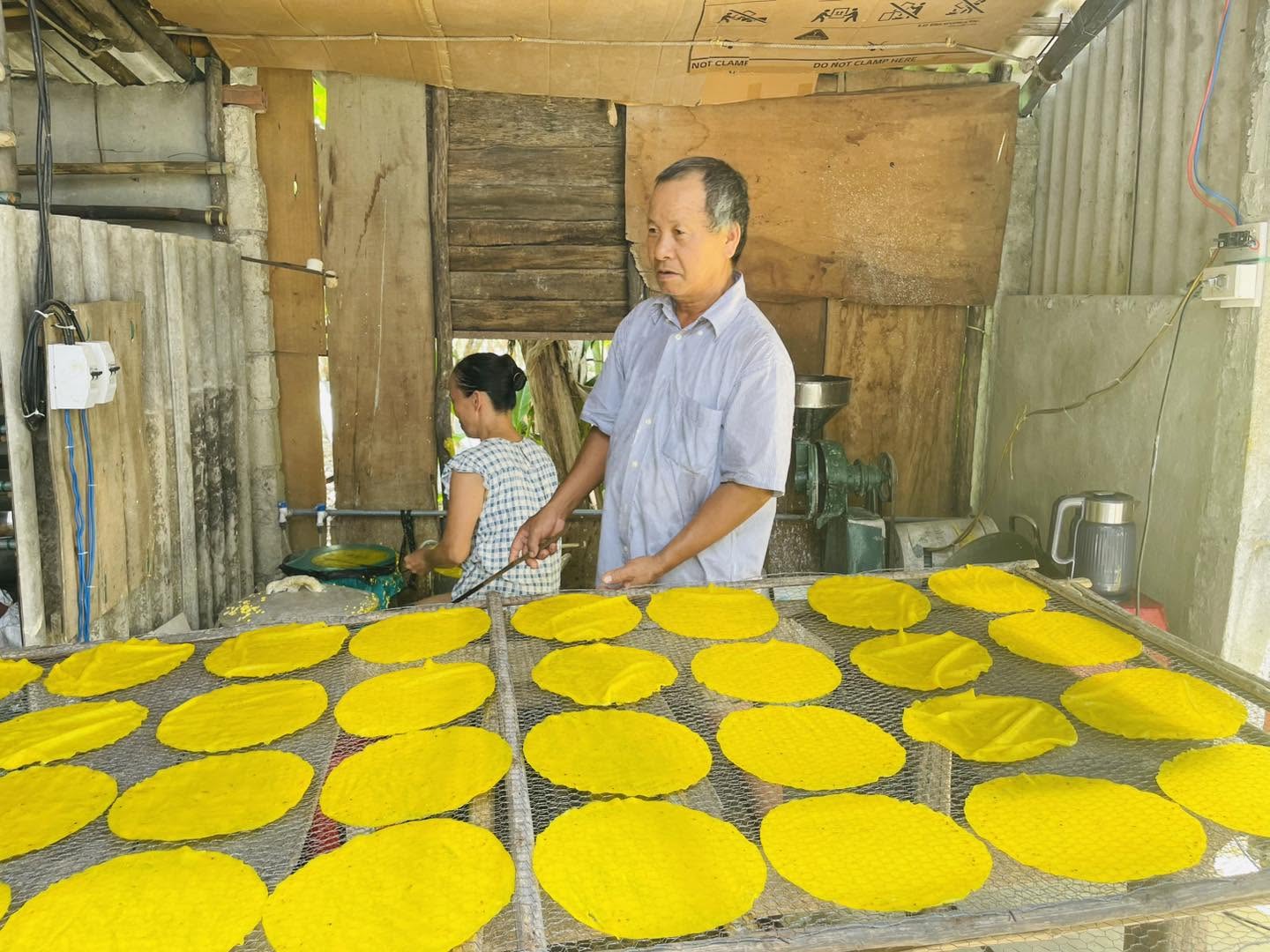
Traditional rice paper making does not require complicated equipment. The basic tools include a clay stove, a large pot covered with cloth for steaming the batter, a ladle for scooping the batter, a rolling tube for lifting the freshly steamed sheets, and woven drying trays.
Although these tools appear simple, each has a specific role in the production process. The artisan must know how to control the amount of batter, spread it evenly and remove the delicate sheet without tearing it.
The combination of traditional tools and practiced hand movements is what gives the craft its character. None of the stages is truly simple when the goal is to produce thin, round and evenly shaped rice paper.
From Rice Grains to a Round Sheet
Producing a good batch of rice paper requires a sequence of carefully coordinated steps, beginning with selecting rice, grinding it into flour, seasoning the mixture, spreading the batter and drying the finished sheets.
The amount of batter used for each sheet must be carefully measured. During steaming, the artisan spreads the batter evenly with a practiced hand to create a round sheet of the appropriate size. This technique takes considerable time to master because even a slight difference in the amount of batter or the pressure of the hand can affect the shape and thickness of the rice paper.
One of the most difficult stages is removing the sheet from the stove. At this point, the rice paper is still wet and extremely delicate. The person spreading the batter and the person removing the finished sheet must work in close coordination.
The sheet has to be lifted gently from the cloth and placed onto the drying tray without tearing or deforming it. The movement may appear simple, but producing consistently smooth and attractive rice paper requires considerable experience.
Drying the Rice Paper Is Also a Skill
After leaving the stove, the freshly steamed sheets are placed on woven trays and dried under sunlight. On rainy days, charcoal heat may be used to dry them.
Once the sheets begin to settle and become less moist, they are moved into a shaded area. If they remain under strong sunlight or charcoal heat for too long, they may shrink, lose their original shape and become brittle.
After a certain period, the rice paper naturally separates from the surface of the drying tray. At this point, it can be removed more easily without damaging the sheets.
Drying therefore requires experience as well. Artisans must know how to judge the moisture level and adjust the drying time to preserve the shape and quality of the product.
Many Varieties from a Traditional Craft
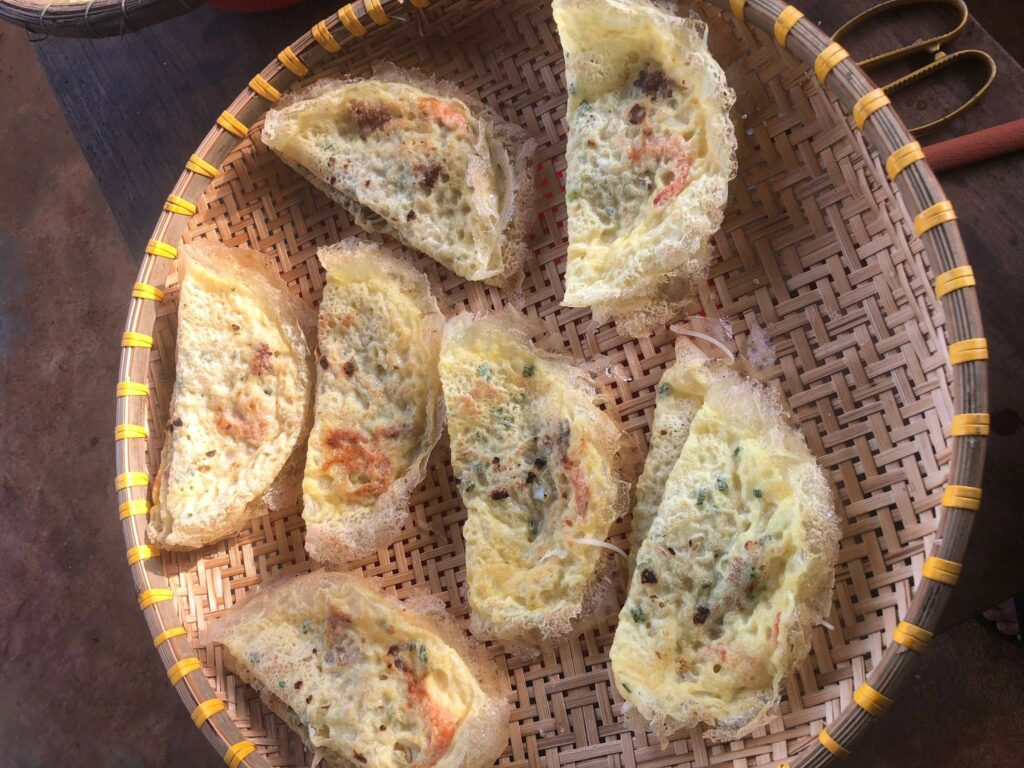
Depending on the proportions of ingredients and the preparation method, the Luu Bao craft produces several types of rice-based products, including cassava rice paper, rice rice paper, dipping cakes, grilled rice paper and coconut rice paper.
Each variety has its own way of being enjoyed. Some can be softened with water and eaten directly, while others need to be grilled before consumption.
The diversity of products demonstrates the craft’s ability to respond to different culinary needs. Yet behind these variations remain the fundamental techniques that define traditional rice paper making: preparing the batter, spreading it, removing the sheet and drying it.
Preserving the Craft Along the Bach Yen River
Through generations, rice paper making has become part of the memory of Luu Bao. The traditional stoves, drying trays and skilled hands of local artisans create a distinctive craft landscape in the village beside the Bach Yen River.
The craft produces more than a familiar food. It also preserves practical knowledge and manual skills transmitted from one generation to another. From preparing the batter and spreading the sheets to handling them after they leave the stove, each stage reflects the accumulated experience of the community.
Luu Bao rice paper making is therefore part of the culinary memory of Hue, where a simple food continues to be preserved through the patience, skill and dedication of generations of craft workers.
Luu Bao Rice Paper and Wet Rice Cake Village Recognized as a Traditional Craft Village
According to the source, Luu Bao Rice Paper and Wet Rice Cake Craft Village was recognized by the provincial People’s Committee as a Traditional Craft Village of Thua Thien Hue Province under Decision No. 717/QD-UBND dated April 14, 2014.
The source gives the location in this decision as Long Ho Ward, Hue City, while its opening section identifies present-day Luu Bao as part of Kim Long Ward, Hue City. These two location references differ, so the administrative location in the recognition decision should be checked before publication on Travelin.vn.
Basic Information
| Item | Information |
|---|---|
| Craft village | Luu Bao Rice Paper and Wet Rice Cake Craft Village |
| Village | Luu Bao |
| Current location according to the source | Kim Long Ward, Hue City |
| Village history | Established in the late 15th century |
| Cultural setting | Along the Bach Yen River |
| Products | Rice paper, wet rice cakes, cassava rice paper, rice rice paper, dipping cakes, grilled rice paper and coconut rice paper |
| Traditional tools | Clay stove, steaming pot, ladle, rolling tube and drying trays |
| Main techniques | Rice selection, grinding, batter preparation, steaming, sheet removal and drying |
| Recognition | Traditional Craft Village of Thua Thien Hue Province |
| Decision | No. 717/QD-UBND, April 14, 2014 |