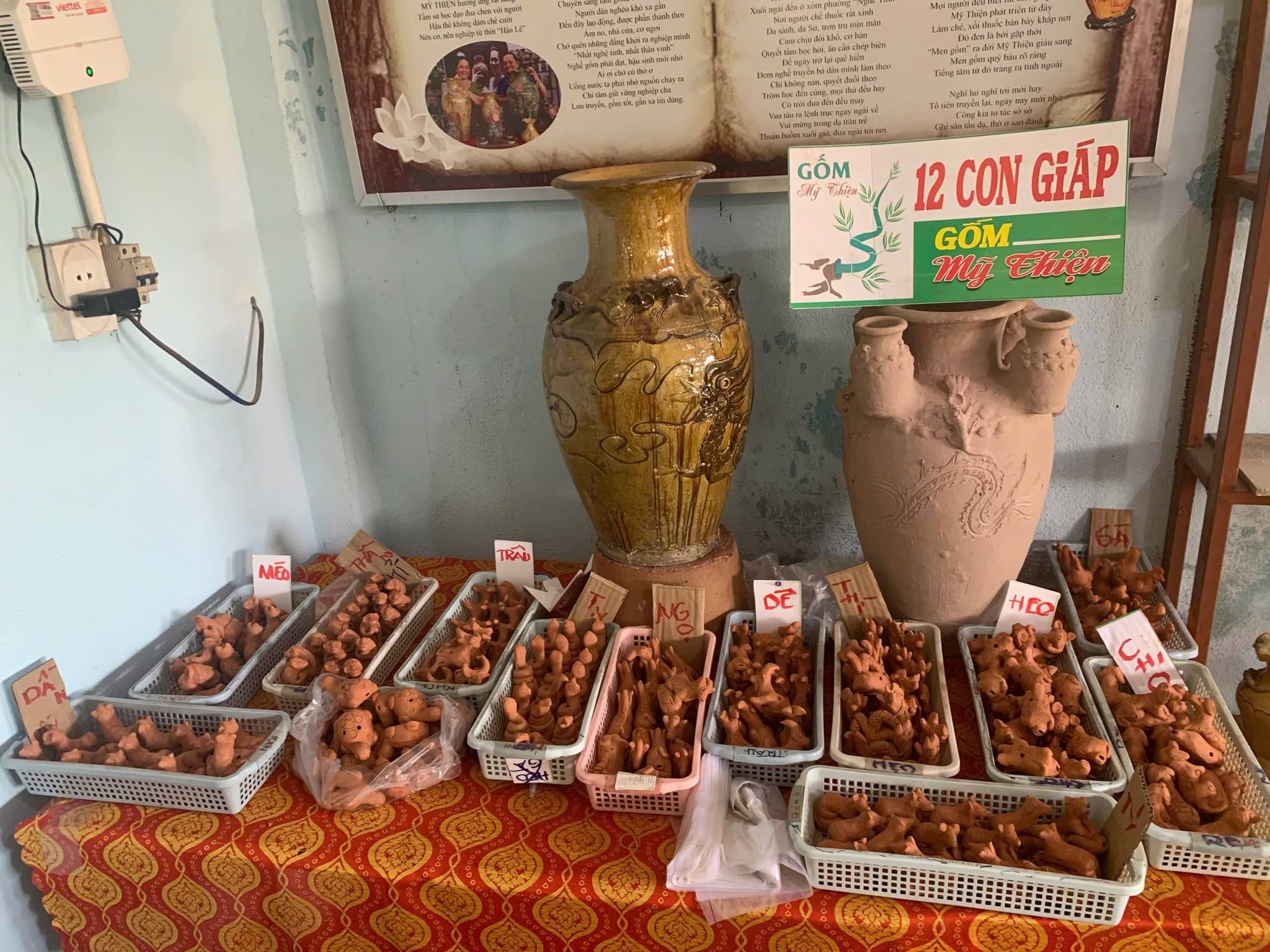
Mỹ Thiện pottery is a traditional craft closely associated with the economic, cultural, and spiritual life of the residents of Mỹ Thiện Village. The craft is currently practiced in Mỹ Thiện Hamlet, Bình Sơn Commune, Quảng Ngãi Province, formerly Châu Ổ Town, Bình Sơn District. Located along the Trà Bồng River, the village benefits from abundant clay resources and clean water, creating favorable conditions for pottery production and trade.
For generations, pottery making has been maintained within local families, with many households having three or four generations involved in the craft. Beyond producing everyday household items, Mỹ Thiện pottery preserves a distinctive body of knowledge related to clay preparation, shaping, decoration, and firing. Experienced artisans play an important role in passing these skills to younger generations, while traders and customers also contribute to sustaining and promoting the craft.
A Craft Shaped by the River and Local Resources
The location of Mỹ Thiện Village along the Trà Bồng River provides an important foundation for traditional pottery production. Local clay is carefully selected for its fine texture, plasticity, and relatively low level of impurities. Clean water is also an essential resource throughout the preparation process.
Pottery making traditionally begins with extracting clay from suitable areas along the riverbank and nearby locations. The clay is then dried, crushed, and soaked in water for several days. Artisans remove impurities before repeatedly working and kneading the material until it becomes smooth, plastic, and ready for shaping.
This stage requires considerable experience because the quality of the clay directly affects the durability, surface, and appearance of the finished product.
From Clay to Pottery
After preparation, the clay is shaped using a pottery wheel or a supporting work surface. Artisans rely primarily on their hands, together with simple wooden tools, cutting wires, and other traditional implements.
Depending on the intended product, the clay is formed into water jars, cooking pots, bowls, plates, storage crocks, vases, ceramic figures, and other household, ritual, or decorative objects. Achieving a balanced form, smooth surface, and stable structure requires careful control throughout the shaping process.
Once formed, the pottery is left to dry naturally in a well-ventilated area, protected from strong direct sunlight. This helps reduce the risk of cracking before the products enter the decoration and firing stages.
Traditional Decorative Techniques
Decoration gives Mỹ Thiện pottery much of its distinctive character. Artisans may use incised, embossed, or applied motifs on the surface of the clay. Common decorative themes include plants, birds, geometric patterns, and other familiar visual elements.
The designs are generally simple and closely connected to the traditional character of the craft. Rather than relying on elaborate ornamentation, artisans use the form and surface of the pottery to create objects that are both practical and visually distinctive.
The Firing Process and the Experience of Artisans
Firing is one of the most demanding stages of traditional pottery production. Mỹ Thiện artisans use traditional wood-fired or rice-husk kilns, arranging the products carefully so that heat can spread relatively evenly throughout the kiln.
The firing process can last for many hours or even throughout the day. Artisans must observe the flame, maintain a stable temperature, and adjust the firing according to their experience. These skills are largely acquired through direct practice and passed from experienced craftspeople to younger members of the community.
After firing, the pottery is allowed to cool before each item is inspected, classified, and selected according to quality.
Products of Mỹ Thiện Pottery
Mỹ Thiện pottery includes a wide range of traditional products, from everyday household utensils to objects made for ritual and decoration. Water jars, pickling crocks, cooking pots, bowls, plates, and other storage vessels have long formed an important part of the village’s product range.
The pottery is characterized by earthy tones such as brown, red, and natural yellow. These colors contribute to its rustic appearance while reflecting the natural qualities of the clay and the traditional firing process.
The products are valued not only for their practical use but also for their durability and their connection with the traditional material culture of the South Central Coast.
Preserving a Traditional Craft
Mỹ Thiện pottery represents more than a method of making ceramic objects. It is a form of community knowledge in which material selection, clay preparation, shaping, decoration, and firing have been accumulated and transmitted across generations.
Elder artisans are regarded as important repositories of traditional knowledge, while younger generations provide continuity for the craft. The participation of families, traders, and customers also contributes to maintaining the village’s pottery-making tradition and creating opportunities for its continued development.
From an economic perspective, the craft provides livelihoods and employment for local residents. From a cultural perspective, it preserves traditional technical knowledge and strengthens community connections. The pottery itself also has research value for the study of archaeology, history, art, and the material culture of the region.
National Intangible Cultural Heritage
The traditional pottery-making craft of Mỹ Thiện was included in the National Intangible Cultural Heritage List under Decision No. 2208/QĐ-BVHTTDL dated June 27, 2025.
The recognition reflects the cultural and technical value of a traditional craft that has been maintained by the community of Mỹ Thiện through generations. Today, the village remains a place where local knowledge of clay, craftsmanship, and traditional pottery production continues to be preserved and passed on.
Basic Information
| Information | Details |
|---|---|
| Name | Mỹ Thiện Pottery |
| Current location | Mỹ Thiện Hamlet, Bình Sơn Commune, Quảng Ngãi Province |
| Former location | Châu Ổ Town, Bình Sơn District, Quảng Ngãi Province |
| Geographical setting | Along the Trà Bồng River |
| Craft | Traditional pottery making |
| Main materials | Local clay, water, wood, rice husks |
| Products | Water jars, crocks, cooking pots, bowls, plates, vases, ceramic figures and other products |
| Traditional firing methods | Wood-fired and rice-husk kilns |
| Heritage status | National Intangible Cultural Heritage |
| Recognition | Decision No. 2208/QĐ-BVHTTDL, June 27, 2025 |