Among Hue’s many traditional foods, Nhat Le bánh chưng is a specialty closely associated with Nhat Le Street inside the Imperial City. For generations, the street has been home to numerous bánh chưng workshops, creating a distinctive culinary tradition within the historic heart of Hue.
Made from simple ingredients, Nhat Le bánh chưng brings together sticky rice, mung beans, pork, pepper, and shallots. The soft, fragrant rice surrounds a rich filling of mung beans and pork, creating a familiar yet deeply satisfying flavor.
Bánh Chưng from Nhat Le Street
The street begins to come alive early in the morning. Local distributors and retailers arrive at the bánh chưng workshops to collect freshly prepared cakes before taking them to shops and markets around Hue.
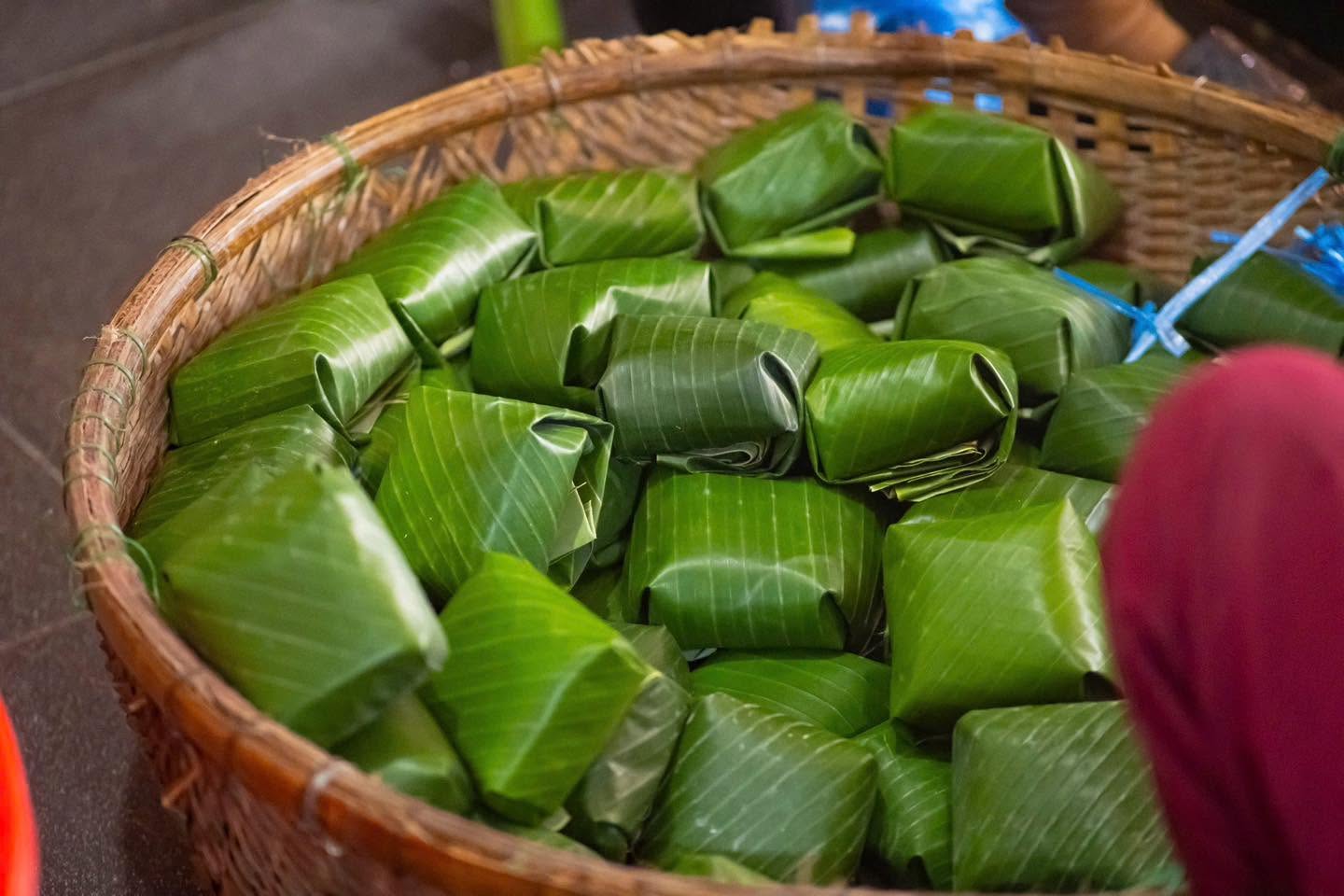
Over time, bánh chưng making has become closely connected with the daily life of Nhat Le Street. The workshops produce thousands of cakes, supplying both local households and visitors.
The cakes are made in different sizes. Smaller bánh chưng are produced regularly for everyday consumption, while larger versions are often made to order for ancestral ceremonies, weddings, family celebrations, and Lunar New Year.
Carefully Selected Ingredients
The quality of bánh chưng begins with the ingredients.
The sticky rice should be of good quality, with round and uniform grains and no mixture of ordinary rice. Mung beans are prepared into a smooth filling, while fresh pork is selected with a balance of lean meat and fat. The fat helps keep the filling moist and gives the finished cake its characteristic richness.
The mung bean and pork filling is seasoned with pepper, shallots, and other spices. Once cooked, the filling combines the nuttiness of mung beans, the richness of pork, and the gentle aroma and heat of pepper and shallots.
The wrapping also requires care. The leaves must be properly prepared and folded around the rice and filling so that the cake maintains its shape throughout the long cooking process.
Small Cakes, Careful Craftsmanship
Bánh chưng may appear simple, but making small cakes requires considerable precision.
The maker must divide the sticky rice, mung beans, and pork evenly, position the filling correctly, and carefully fold the leaves around the ingredients to create a compact, well-shaped cake.
Cooking is equally important. The cakes need to be cooked long enough for the sticky rice and filling to become fully tender without turning mushy. If the cooking process is not carefully controlled, the rice may remain undercooked or lose its characteristic texture.
This balance between ingredients, shaping, and cooking is part of what gives Nhat Le bánh chưng its distinctive quality.
Best Enjoyed After Cooling
One interesting characteristic of Nhat Le bánh chưng is that it is often enjoyed after it has cooled, when the rice and filling have settled into a firm, cohesive texture.
Once the banana leaves are removed, the sticky rice reveals its subtle green hue and fragrant aroma. The cake can then be sliced into neat pieces, revealing the mung bean and pork filling at the center.
Each bite combines the chewy fragrance of sticky rice with the nutty mung beans, rich pork, and gentle aroma of pepper and shallots.
It is a simple combination, but one that has become familiar to generations of Hue residents.
A Culinary Tradition Tied to Nhat Le Street
Nhat Le bánh chưng is more than a traditional food. It is also part of the identity of a street within Hue’s historic Imperial City.
The workshops, the people who make the cakes, and the early-morning deliveries all contribute to the everyday rhythm of Nhat Le Street. During festivals, Lunar New Year, and important family occasions, demand increases, with larger cakes often prepared by advance order.
Today, amid Hue’s celebrated culinary heritage, Nhat Le bánh chưng continues to hold its own place.
For travelers, seeking out a bánh chưng from Nhat Le Street offers more than an opportunity to taste a traditional Vietnamese rice cake. It is also a way to experience the everyday culinary culture of Hue, where traditional foods continue to live alongside modern city life.
From sticky rice and mung beans to pork and layers of leaves, each cake carries a small story about a historic street and a culinary tradition passed down through generations.