The traditional craft of making bánh tét and bánh chưng has long been associated with Phu Duong, now part of Duong No Ward, Hue City, and has become a distinctive element of the culinary culture of Hue. For local people, these cakes are more than commercial products. They carry memories of village life, agricultural work and family traditions passed down through generations.
Phu Duong bánh tét and bánh chưng have their own character, reflected in both their ingredients and preparation techniques. Each cake is the result of numerous careful steps, from selecting the glutinous rice and preparing the leaves to making the filling and wrapping the finished cake.
From Local Glutinous Rice to Traditional Cakes
To make bánh tét and bánh chưng according to the traditional method associated with Cho No in Phu Duong, careful selection of ingredients is essential. From the glutinous rice to the ingredients used for the filling, everything is carefully selected before preparation begins.
Glutinous rice is a key ingredient that determines the aroma and texture of the cakes. The rice comes from local fields cultivated by the community and eventually becomes part of the traditional cakes. Its fragrance therefore carries not only the flavor of the finished product but also a connection to the land and agricultural labor of Phu Duong.
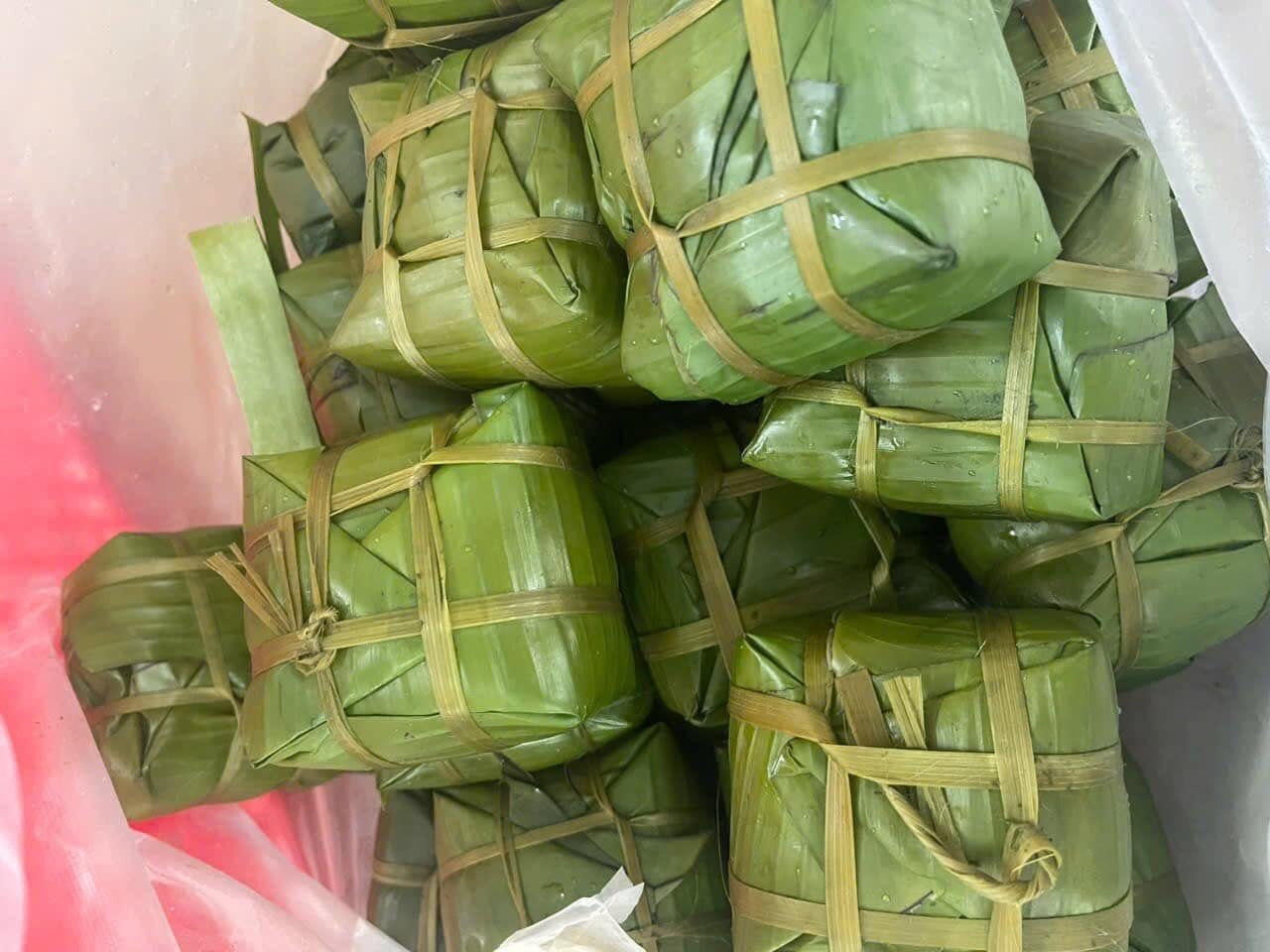
Other familiar ingredients include Sứ banana leaves, bamboo tying strips and mung beans. These simple materials, traditionally available within the village, come together to create the distinctive appearance and flavor of Cho No bánh tét and bánh chưng.
Craft Knowledge in Every Step
According to the traditional practice of the craft, every stage, from selecting the rice to preparing the filling, plays an important role. Artisans rely on experience to choose suitable ingredients, prepare the filling and wrap the cakes so that they retain their shape after cooking.
The cakes are valued not only for their flavor but also for their appearance. A finished bánh tét or bánh chưng should have a well-formed shape, securely wrapped leaves and a balanced combination of rice and filling.
This attention to detail has helped shape the quality of the products. Cake-making techniques have been passed down within families, allowing younger generations to continue practicing the craft and maintaining the familiar flavor of Phu Duong cakes.
The Taste of Phu Duong’s Countryside
One of the defining characteristics of Cho No bánh tét and bánh chưng is the fragrance of glutinous rice combined with traditional ingredients. The rice carries the flavor of fields cultivated by local farmers, while banana leaves, bamboo strips and mung beans contribute other familiar elements to the cakes.
For this reason, the products are valued not simply as food or commercial goods. Within the local community, cake making is also a way of preserving memories of agricultural life and the culinary traditions of Phu Duong.
From simple ingredients, local residents create products with a distinctive connection to their homeland. This is what makes Phu Duong bánh tét and bánh chưng part of the traditional culinary identity of Hue.
A Craft Embedded in Community Life
Cho No bánh tét, Phu Duong has reached many localities both within and outside the province. The products therefore serve customers beyond the immediate community while helping introduce the traditional flavors of Phu Duong to a wider audience.
According to the source, income from cake making is not particularly high. Nevertheless, the craft remains meaningful to the local community because it provides additional employment, especially during periods when agricultural work is less demanding.
The craft has thus developed as a small but enduring livelihood. Local people combine farming with traditional food production, allowing knowledge of cake making to continue from one generation to the next.
Preserving a Culinary Heritage of Hue
Over time, Phu Duong bánh tét and bánh chưng making has become more than a food-making occupation. The cakes are connected with village memories, local ingredients and preparation techniques preserved within the community.
Maintaining the craft helps preserve practical knowledge related to selecting ingredients, preparing fillings, wrapping cakes and completing the finished products. At the same time, it creates additional employment and contributes to the preservation of a distinctive culinary tradition of Phu Duong.
Within each cake is a connection between agricultural fields, local ingredients, the hands of the makers and family memories. Together, these elements allow the traditional craft of bánh tét and bánh chưng making to remain part of contemporary life.
Phu Duong Bánh Tét and Bánh Chưng Making Recognized as a Traditional Craft
Phu Duong bánh tét and bánh chưng making was recognized as a Traditional Craft of Thừa Thiên Huế Province under Decision No. 1916/QD-UBND dated August 10, 2022.
This recognition acknowledges the value of traditional cake making in Phu Duong and provides a basis for preserving and promoting the craft in connection with local livelihoods and the culinary heritage of Hue.
Basic Information
| Item | Information |
|---|---|
| Craft | Phu Duong Bánh Tét and Bánh Chưng Making |
| Current location | Duong No Ward, Hue City |
| Place associated with the craft | Phu Duong, Cho No |
| Main products | Bánh tét and bánh chưng |
| Main ingredients | Glutinous rice, Sứ banana leaves, bamboo tying strips and mung beans |
| Characteristics | Handmade production and transmission across generations |
| Values | Traditional cuisine, community livelihoods and village culture |
| Recognition | Traditional Craft of Thừa Thiên Huế Province |
| Decision | No. 1916/QD-UBND, August 10, 2022 |