


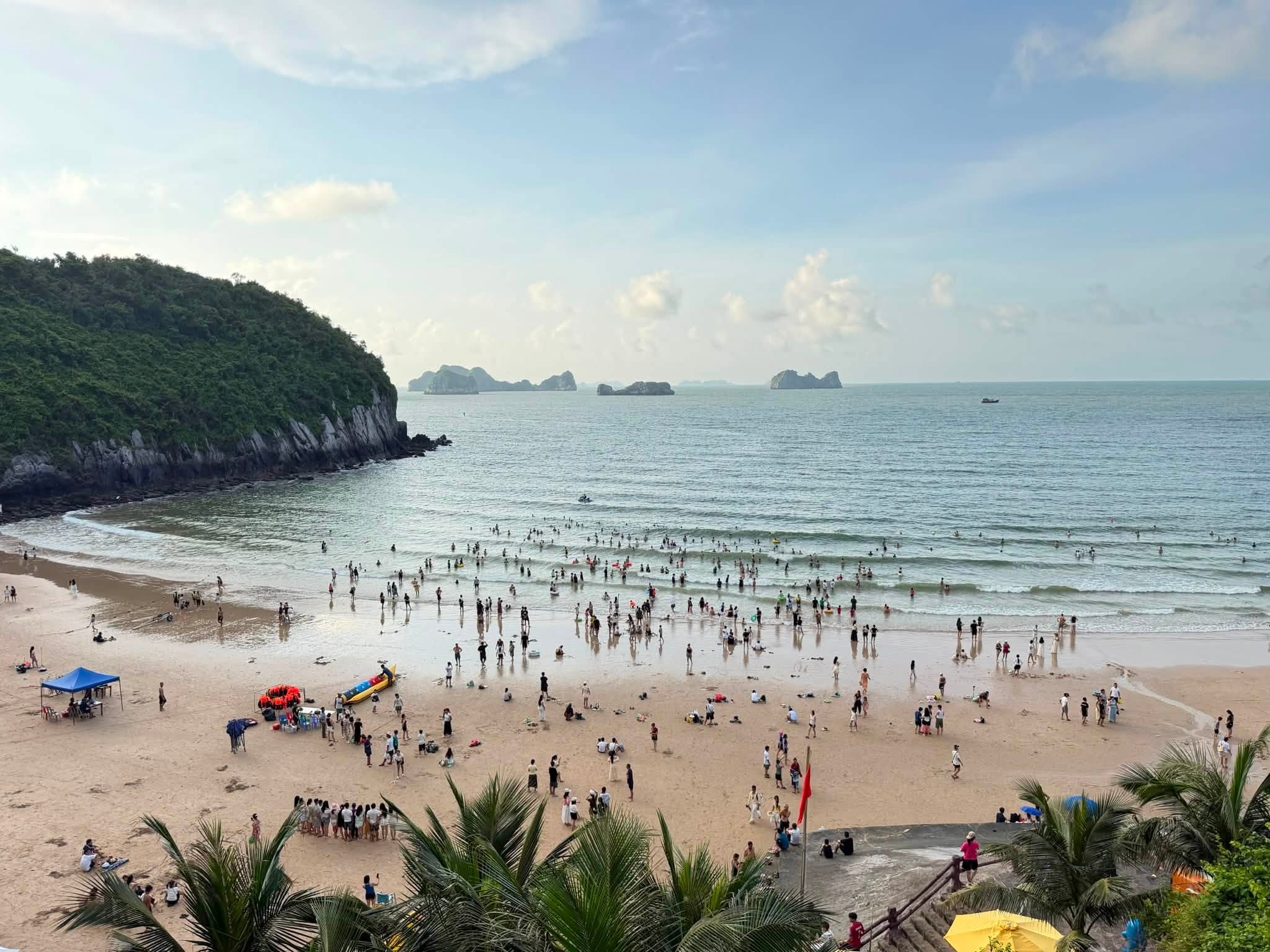
The Cat Ba Archipelago is located in Cat Hai Special District, Hai Phong, in northern Vietnam. Together with the Long Chau Archipelago, the area covers approximately 33,670 hectares, including 13,478 hectares of land and 20,192 hectares of sea. With limestone islands, tropical forests, marine ecosystems, caves, beaches and a long history of human settlement, Cat Ba is one of the most distinctive natural and cultural landscapes in northern Vietnam.
Cat Ba Archipelago and Ha Long Bay have been recognized by UNESCO as a World Natural Heritage site, highlighting the outstanding natural values of the region. The combination of forest and sea ecosystems, karst islands and diverse habitats creates a landscape where geological, ecological, archaeological and cultural values are closely connected.
Tourism has become an important part of life on the islands. Visitors can explore Lan Ha Bay by kayak, trek through primary forests, visit Viet Hai ecotourism village, discover the Military Hospital Cave and explore Trung Trang Cave. Local seafood, Cat Hai fish sauce and honey from Cat Ba National Park are also associated with the island’s identity. Tourism has created additional employment and income for local residents while contributing to improvements in roads and other infrastructure. At the same time, local authorities have increasingly emphasized green and sustainable tourism, with efforts to protect the natural environment and preserve the heritage values of the archipelago.
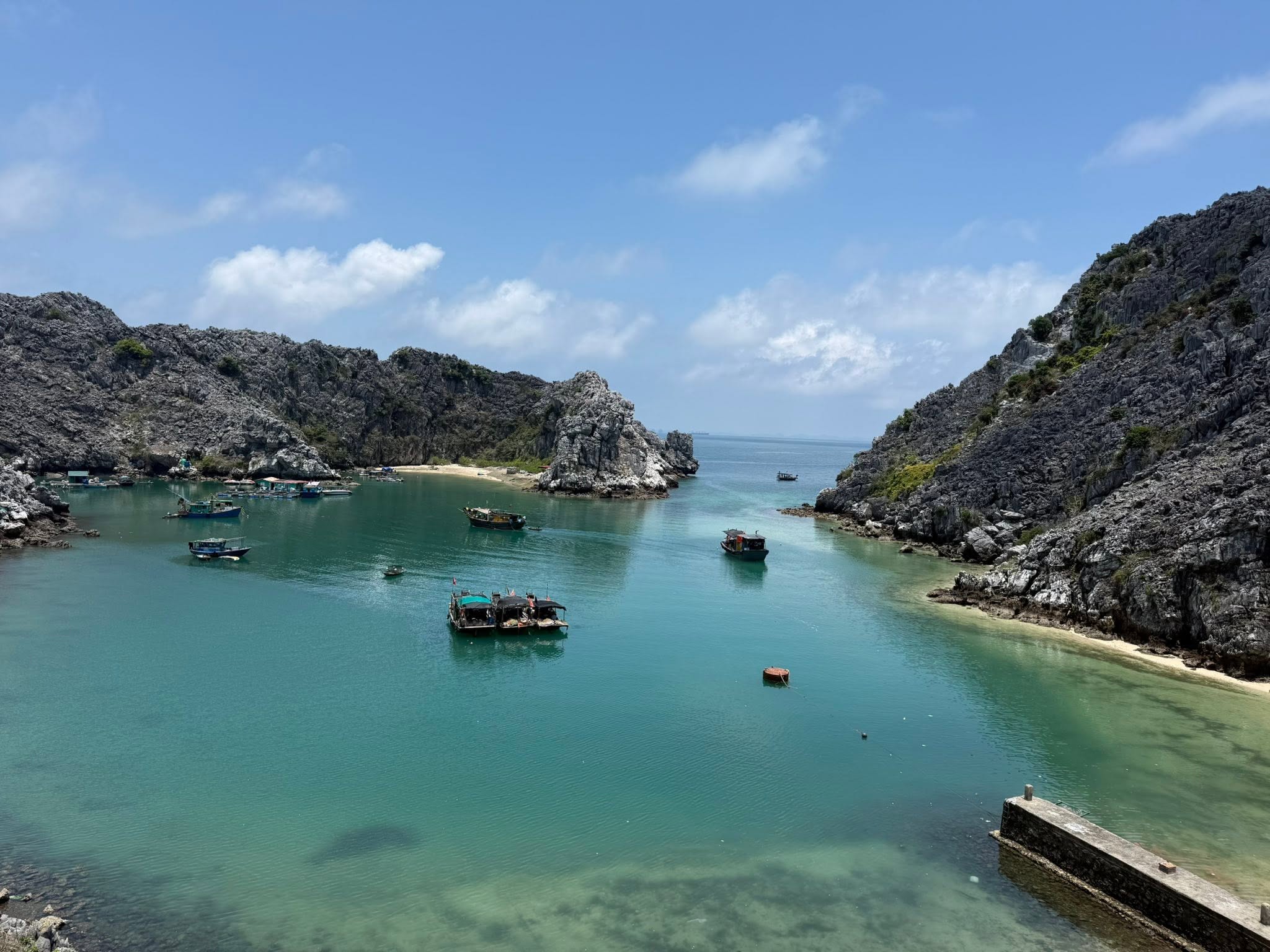
Caves, Islands and Natural Landscapes
Cat Ba has a rich terrestrial and marine ecosystem with approximately 3,860 recorded species. Among them are 130 species listed in Vietnam’s Red Data Book, 76 species considered rare by the International Union for Conservation of Nature (IUCN), and 21 endemic species. The Cat Ba white-headed langur (Trachypithecus poliocephalus) is particularly notable because Cat Ba is its only known natural habitat. The species is critically endangered and has a very limited population.
The islands contain numerous caves, forests, limestone formations and coastal landscapes. Trung Trang Cave is located in a valley covering about 300 hectares and extends for approximately 300 metres. The surrounding area contains forests dominated by kim giao trees, contributing to the distinctive landscape of central Cat Ba.
Da Hoa Cave is located in Gia Luan in northern Cat Ba. Its entrance is approximately 10 metres high and about 25 metres at its widest point. Inside the cave are stalactites and a small lake, creating a natural underground landscape shaped by long-term geological processes.
Qua Vang Cave was discovered in December 2009. Located within the core area of the Cat Ba Biosphere Reserve and Cat Ba National Park, the cave retains a relatively pristine environment. Thien Long Cave is associated with a large lake and contains passages, water-formed stalactites and other karst features. Hien Hao Cave is another relatively undisturbed cave system on the archipelago.
Cát Dứa, also known as Monkey Island, lies about 2 kilometres from Cat Ba Town. The island has a beach extending for approximately 1 kilometre and is known for a population of around 20 introduced monkeys. Ba Trai Dao consists of three limestone peaks, each rising to about 23 metres above the surrounding waters.
Satellite surveys have identified around 26 sandy beaches throughout the Cat Ba area, including Cat Co 1, Cat Co 2 and Cat Dua. These beaches, together with the limestone islands and surrounding waters of Lan Ha Bay, form an important part of the archipelago’s tourism landscape.
The combination of tropical forests, limestone cliffs, caves, beaches and marine ecosystems gives Cat Ba a highly diverse natural environment. Activities such as kayaking, forest trekking and cave exploration allow visitors to experience different parts of this landscape while also highlighting the importance of conservation.
Archaeological and Historical Heritage and the Long Chau Archipelago
Cat Ba is also an important archaeological area. The Cai Beo archaeological site covers approximately 18,000 square metres and is situated about 4 metres above sea level. The site was discovered by French archaeologist Madeleine Colani in 1938 and was subsequently excavated in 1973, 1981, 1986 and 2006. Archaeological remains indicate human occupation during the Neolithic period, providing evidence of early communities living in and adapting to the coastal environment.
The archipelago contains other historical and archaeological traces dating from different periods, including the Dong Son culture, the period of Chinese rule, the Tran and Le dynasties, the Nguyen dynasty and the struggles against French colonialism and the United States during the 20th century.
Another important historical site is associated with President Ho Chi Minh’s visit to a fishing village on 30 March 1959. A commemorative marker records this event and reflects the connection between Cat Ba’s fishing communities and Vietnam’s modern history.
The Cat Don archaeological site in Xuan Dam covers approximately 1,000 square metres and contains artifacts associated with the later Ha Long culture. Together with Cai Beo and other archaeological locations, these sites demonstrate the long history of human settlement and maritime activities in the Cat Ba region.
To the southeast of Cat Ba lies the Long Chau Archipelago, approximately 15 kilometres from Cat Ba. It consists of 22 islands, with Long Chau being the largest, covering more than 1 square kilometre. The islands are predominantly rocky and have limited freshwater resources. Local traditions have long associated the area with medicinal plants and a natural environment where snakes are commonly found.
Long Chau Lighthouse was built by the French in 1895. Known as the “Jade Eye of Long Chau”, the lighthouse is among the historic lighthouses along Vietnam’s coast, together with Hon Dau and Ke Ga. The lighthouse complex includes a generator house and a roughly 3-kilometre access route leading to the tower. The main lighthouse is a cylindrical structure built with green stone and positioned on the rocky island.
During the war against the United States, Long Chau Lighthouse played an important role in guiding supply and transport vessels through the waters of the Gulf of Tonkin. The lighthouse was subjected to repeated bombing, reportedly 248 times, but continued to serve as a navigational landmark. President Ho Chi Minh referred to Long Chau as the “Jade Eye of the Fatherland”, reflecting its importance to maritime navigation and national defense.
The Cat Ba scenic landscape was recognized as a National Special-Rank Monument under Decision No. 2383/QD-TTg dated 9 December 2013. Today, its heritage value extends beyond individual caves, islands or historical sites. Cat Ba represents a continuous relationship between mountains, forests, sea, wildlife, archaeological remains, local communities and maritime culture.
For local residents, tourism has created new opportunities for employment and more stable sources of income. For visitors, the archipelago offers a combination of natural landscapes, historical traces, archaeological heritage and island life. The long-term challenge is to maintain this balance by developing tourism while protecting the ecosystems and heritage resources that make Cat Ba distinctive.


