The Practices Related to the Vietnamese Belief in the Mother Goddesses of Three Realms are a distinctive form of Vietnamese folk belief rooted in the worship of female deities and developed into a rich system of religious, cultural and artistic practices. The belief venerates the Mother Goddesses associated with the realms of Heaven, Water and Mountains and Forests, together with historical and legendary figures who are believed to have made important contributions to the country and its people.
On 1 December 2016, during the 11th session of the UNESCO Intergovernmental Committee for the Safeguarding of the Intangible Cultural Heritage, held in Addis Ababa, Ethiopia, the heritage was officially inscribed on the Representative List of the Intangible Cultural Heritage of Humanity.
The practice is widespread across Vietnam, from the northwestern and northeastern regions and the Red River Delta to North Central Vietnam and Ho Chi Minh City. It is particularly prominent in Nam Định, where important sites associated with the worship of Mother Goddess Liễu Hạnh, including Phủ Dầy and Phủ Nấp, have become important centers of the tradition.
Origins and Development
Vietnamese Mother Goddess worship, commonly known as Đạo Mẫu, the worship of Mother Goddesses, or the worship of the Mother Goddesses of the Three or Four Realms, has deep historical and social roots.
Although these forms of worship all venerate feminine deities, the concepts of female deities, Mother Goddesses, Holy Mothers and other female divine figures are not completely identical. They differ in terms of origin, spiritual authority, status and hierarchy within the pantheon.
Vietnamese Mother Goddess worship is a long-standing indigenous belief centered on the Mother as a divine figure associated with fertility, protection and care for human beings. The image of the Mother also provides a symbolic space through which Vietnamese women have expressed aspirations for freedom from social prejudices and constraints associated with traditional Confucian society.
The tradition developed from ancient forms of female deity worship. During the feudal period, some female deities were incorporated into courtly and historical traditions and became revered as Mother Goddesses under titles such as National Mother, Royal Mother or Holy Mother. Examples include Mother Âu Cơ, National Mother Tây Thiên, the Mother of Saint Gióng, the Four Holy Mothers and the Mother of the Đinh Dynasty.
From around the 15th century onward, the worship of the Three Realms and Four Realms became increasingly established and widespread. This period also saw the development of traditions surrounding figures such as Holy Mother Liễu Hạnh, Mother of the Upper Mountains, Mother of the Waters, Mother of the Earth and Lady Đôi of the Upper Mountains, together with ritual practices influenced in part by Taoism.
Holy Mother Liễu Hạnh
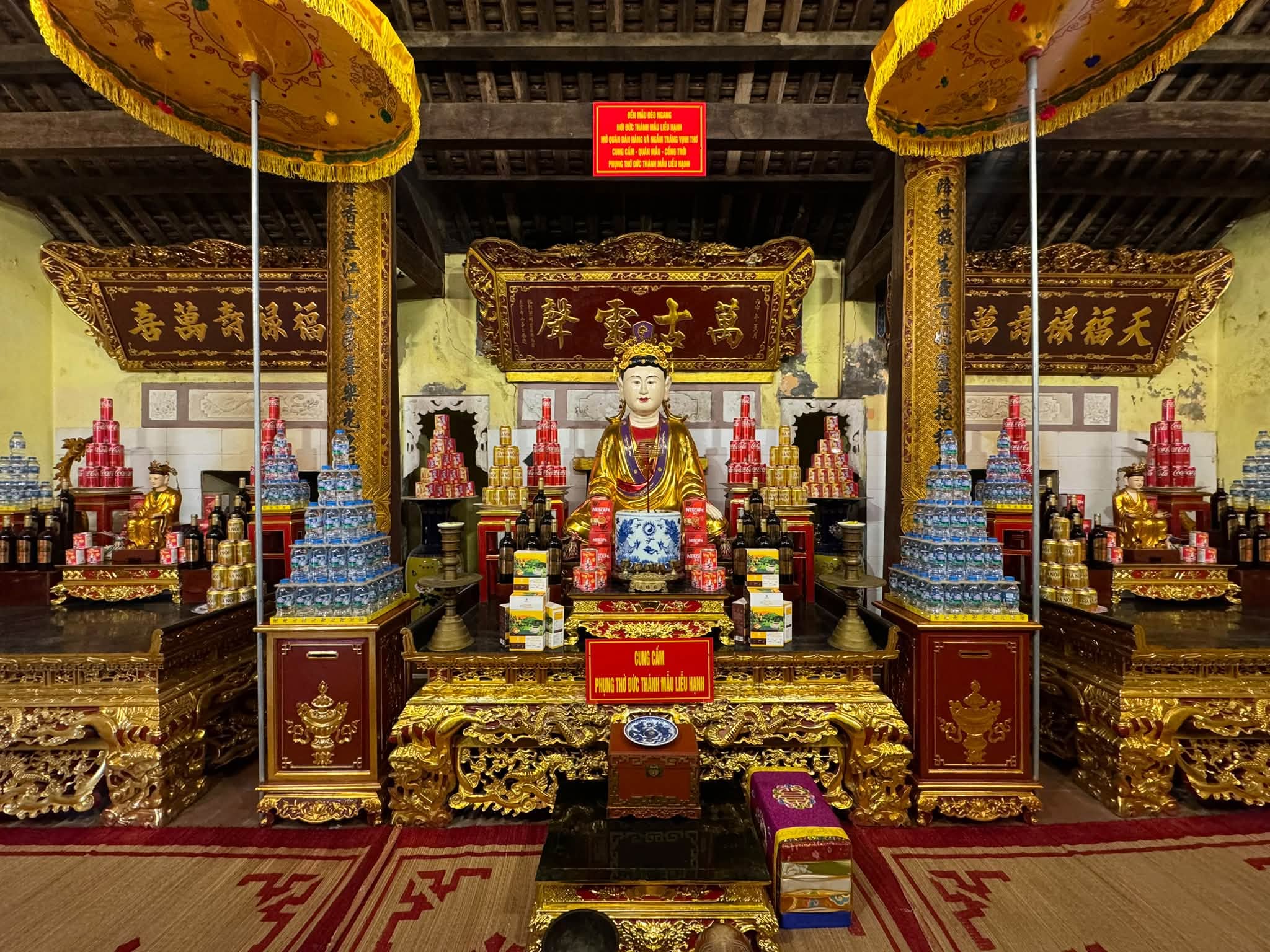
Among the most important figures in Vietnamese Mother Goddess worship is Holy Mother Liễu Hạnh.
According to traditional texts and legends, she was a celestial fairy who descended to the human world, lived as a human being and later devoted herself to Buddhism. She became revered as “Mẫu nghi thiên hạ,” or the Mother who is exemplary for the world, and is regarded as one of the immortal holy figures in Vietnamese spiritual tradition.
From the 16th century onward, the worship of the Mother Goddesses became an influential cultural and religious practice in Vietnamese society. It responded to people’s everyday aspirations for health, peace, happiness, prosperity and protection.
Communities and Spaces of Practice
The practice is found across many parts of Vietnam, including the Northwest, Northeast, Red River Delta, North Central region and Ho Chi Minh City, as well as numerous other localities.
Nam Định is considered one of the important centers of the worship of Holy Mother Liễu Hạnh. The province contains significant sites associated with her legends and worship, particularly Phủ Dầy and Phủ Nấp, together with numerous other places dedicated to the Mother Goddess.
The communities involved in the heritage include temple caretakers, ritual practitioners, spirit mediums, attendants, musicians and devotees, together with local communities sharing a belief in the sacred power and protection of the Mother Goddesses.
These practitioners often form devotional communities and participate collectively in rituals, festivals and spirit-mediumship ceremonies at temples and shrines dedicated to the Mother Goddesses.
The Phủ Dầy Festival
One of the most important cultural spaces associated with the tradition is the Phủ Dầy Festival in Kim Thái Commune, Vụ Bản District, Nam Định Province.
The festival takes place from the third to the tenth day of the third lunar month, associated with the commemoration of Holy Mother Liễu Hạnh. It includes a range of rituals and folk performances, including character formations and processions to invite the scriptures.
Through festivals and associated practices, communities express their devotion to the Mother Goddess while maintaining traditional forms of music, performance, ritual and communal participation.
The Hầu Đồng Spirit-Medium Ritual
The central ritual of the practice is Lên đồng, commonly referred to in English as a spirit-mediumship ritual or spirit-mediumship performance.
It is understood as a form of folk performance expressing the belief that divine figures descend into or manifest through the medium. Each ritual performance combines several artistic and spiritual elements, including chầu văn ceremonial singing, costumes, sacred dances and music.
Practitioners believe that through this form of performance they can communicate with the divine realm and express their wishes and aspirations. The spirit medium acts as an intermediary between human beings and the deities.
The ritual is also a highly integrated form of folk performance. Music, lyrics, costumes, movement and symbolic gestures are combined to create different manifestations associated with particular divine figures.
Forms of spirit-mediumship involving possession and communication with supernatural beings are also found in various countries around the world, including the Republic of Korea, Mongolia, Uzbekistan, Brazil and Zimbabwe.
The Pantheon and the Tradition of Honoring National Heroes
The worship of the Mother Goddesses also reflects the Vietnamese tradition of remembering one’s origins and honoring those who contributed to the country and community.
The pantheon associated with the Three Realms includes approximately 70 deities, among them historical figures who were later venerated as divine beings. These include Trần Hưng Đạo, Phạm Ngũ Lão and Nguyễn Xí.
During their lifetimes, these figures were remembered for their abilities, virtues and contributions to the establishment and protection of the country and its people. After their deaths, they became revered as sacred figures and spiritual sources of support.
Through this system of deities, the tradition preserves historical memory, expresses gratitude toward those who contributed to the nation and connects the past with contemporary community life.
Cultural Exchange Among Ethnic Communities
The Vietnamese Mother Goddess tradition is characterized by a relatively open structure that allows people from different backgrounds to participate. The practice is not restricted by age, gender or occupation.
The pantheon includes deities associated with mountainous and forest regions, where many ethnic communities such as the Mường, Tày, Nùng and Dao have traditionally lived.
Figures such as the Mother of the Upper Mountains, together with various Lords, Ladies and Female Spirits, reflect cultural interaction between the Kinh Vietnamese and ethnic minority communities.
Traditional costumes and certain xá thượng melodies in chầu văn also carry cultural characteristics associated with ethnic communities in northern Vietnam. The presence of these elements demonstrates processes of cultural exchange and the close relationships among different ethnic communities.
Cultural Values and the Role of Women
Participation in spirit-mediumship rituals and festivals is often associated with wishes for health, good fortune, happiness, peace and prosperity. These practices also provide opportunities for community members to meet, interact and maintain social relationships.
The worship of the Mother as a supreme maternal figure contributes to the recognition of the value and role of women in Vietnamese family and social life.
The Mother is associated with fertility, protection and care, providing a symbolic expression of people’s aspirations for a peaceful and secure life. The tradition also conveys values of compassion and kindness as foundations for relationships between people.
At the same time, festivals, spirit-mediumship rituals and chầu văn performances preserve important elements of Vietnamese folk culture, including costumes, music, dance and traditional performance.
Mother Goddess Worship in Northern Vietnam
Northern Vietnam is an important region for the development of Mother Goddess worship.
The tradition originated from ancient forms of female deity worship. Over time, certain female deities were incorporated into historical and royal traditions and became revered as Mother Goddesses.
From around the 15th century, the Three Realms and Four Realms systems became more clearly established. Figures such as Holy Mother Liễu Hạnh, Mother of the Upper Mountains, Mother of the Waters and Mother of the Earth became important figures within the pantheon.
The northern tradition is also particularly associated with spirit-mediumship, chầu văn music and the network of temples and shrines dedicated to the Mother Goddesses.
Mother Goddess Worship in Central Vietnam
In Central Vietnam, particularly in the south-central region, Mother Goddess worship takes a variety of forms.
Alongside the worship of the Three and Four Realms, communities also practice the worship of female deities and Mother Goddesses such as the Four Holy Mothers, the Five Elements Lady, Thiên Y A Na and Po Nagar.
In Huế, Mother Goddess worship developed through interaction with various religious and folk traditions. Huệ Nam Temple is historically associated with the worship of Po Nagar, a Cham goddess. Over time, Vietnamese communities localized and incorporated the figure of Po Nagar into Vietnamese religious traditions as Thiên Y A Na, who was honored as an important deity.
This process illustrates the cultural exchange and adaptation that took place between different communities and religious traditions throughout history.
Mother Goddess Worship in Southern Vietnam
In Southern Vietnam, the distinction between female deities and Mother Goddesses is generally less clearly defined than in northern Vietnam.
One explanation is that Southern Vietnam became a new settlement area for Vietnamese communities. As people migrated southward, they brought their existing religious traditions while also encountering and incorporating cultural influences from communities already living in the region.
This process contributed to a diverse religious landscape.
Female deities worshipped in Southern Vietnam include the Five Elements Lady, the Four Holy Mothers, the Water Dragon Lady, the Lady of the Cave, the Ancestress Lady and Lady Cố Hỷ.
Mother Goddess figures include Bà Chúa Xứ, Bà Đen, Bà Chúa Ngọc and Bà Thiên Hậu. In some localities, communities also worship female spiritual figures such as Lady Năm Châu Đốc, Lady Hai Châu Đốc, Lady Hai Hiên in Sa Đéc and Lady Sáu in Côn Đảo.
UNESCO Inscription
According to the UNESCO nomination dossier, the Practices Related to the Vietnamese Belief in the Mother Goddesses of Three Realms fulfilled criteria R.1 through R.5 for inscription on the Representative List of the Intangible Cultural Heritage of Humanity.
Criterion R.1: The heritage contributes to spiritual connections among communities practicing it. Its open nature encourages tolerance among ethnic and religious groups. The practice has been transmitted since the 16th century through participation and teaching by temple caretakers, ritual practitioners and devotees.
Criterion R.2: The different components of the heritage contribute to its continued practice and raise awareness of its importance. The tradition creates cultural connections among communities and groups through shared devotion to the Mother Goddess as a symbol of compassion and generosity. It also incorporates elements associated with Taoism, Buddhism and other religious traditions. Costumes, dance and music contribute significantly to festivals and other cultural activities.
Criterion R.3: Since the 1990s, devotees and practitioners have voluntarily contributed financial resources and other forms of support to maintain festivals and restore sites dedicated to the Mother Goddesses. Safeguarding measures have included policy support, local heritage clubs, restoration of traditional festivals, academic research, publications, exhibitions, museum presentations, formal and informal educational programs, and recognition of outstanding practitioners.
Criterion R.4: The nomination resulted from consultation and cooperation among practitioners, community representatives, researchers, government organizations and non-governmental organizations. Supporting documentation demonstrated community consent and emphasized respect for customary practices and the rights of communities to participate in the heritage.
Criterion R.5: The nomination dossier demonstrated that the heritage had been included in Vietnam’s National Intangible Cultural Heritage List in 2013. Inventory activities were carried out with the participation of local communities, village leaders, temple caretakers, ritual practitioners, spirit mediums and devotees, with information updated periodically.
A Living Heritage of Vietnamese Culture
The UNESCO inscription of the Practices Related to the Vietnamese Belief in the Mother Goddesses of Three Realms recognizes the continued efforts of communities and relevant institutions to safeguard an important part of Vietnam’s intangible cultural heritage.
The tradition extends far beyond worship itself. Festivals, spirit-mediumship rituals, chầu văn music, dance, costumes and folk performance form an interconnected cultural space in which religious belief, artistic expression, historical memory and community life are preserved.
The heritage reflects several layers of Vietnamese cultural identity, including respect for ancestors and national heroes, beliefs in protection and maternal care, cultural exchange among ethnic communities, and the continuing role of women and maternal symbolism in Vietnamese society.
Quick Information
| Item | Information |
|---|---|
| Heritage name | Practices Related to the Vietnamese Belief in the Mother Goddesses of Three Realms |
| Vietnamese name | Thực hành Tín ngưỡng Thờ Mẫu Tam phủ của người Việt |
| Heritage type | Intangible Cultural Heritage |
| UNESCO status | Representative List of the Intangible Cultural Heritage of Humanity |
| Year of inscription | 2016 |
| Date of inscription | 1 December 2016 |
| UNESCO session | 11th session of the UNESCO Intergovernmental Committee |
| Place of inscription | Addis Ababa, Ethiopia |
| Main geographical scope | Various regions of Vietnam |
| Major center | Nam Định, particularly Phủ Dầy and Phủ Nấp |
| Central ritual | Lên đồng, or spirit-mediumship ritual |
| Other practices | Festivals, chầu văn ceremonial singing, dance and folk performance |
| Pantheon | Mother Goddesses, Lords, Ladies, Female Spirits and deified historical and legendary figures |
| National inventory | Included in Vietnam’s National Intangible Cultural Heritage List in 2013 |
Location: Practiced across Vietnam, with Nam Định being one of the important centers of the worship of the Mother Goddesses.