The Tây Sơn Thượng Đạo Historical Relic Complex is an important historical heritage complex associated with the early development of the Tây Sơn movement in the late 18th century. Located in Gia Lai Province, the complex preserves a system of historical sites connected with the activities of the Tây Sơn brothers, particularly Nguyễn Nhạc, Nguyễn Huệ and Nguyễn Lữ.
Tây Sơn Thượng Đạo once served as an important base for the Tây Sơn movement, providing a strategic space for military organization, logistics and communication between the Central Highlands and the lowlands of Bình Định. Today, the complex represents a valuable historical and cultural landscape where military history, archaeology, traditional culture and the natural environment are closely interconnected.
Tây Sơn Thượng Đạo, the Cradle of the Tây Sơn Movement
In the late 18th century, Nguyễn Nhạc and his brothers established their early base in the mountainous region known as Tây Sơn Thượng Đạo. The natural landscape of mountains, valleys, rivers and forests provided favorable conditions for organizing forces, gathering supplies and maintaining communication.
The region became closely associated with the early activities of Nguyễn Nhạc, Nguyễn Huệ and Nguyễn Lữ. From this mountainous base, the Tây Sơn brothers gradually built their forces, established relationships with local communities and prepared for the expansion of the movement toward the lowlands.
The geographical position of Tây Sơn Thượng Đạo was particularly important because it connected the western highlands with the coastal plains of Bình Định. This connection created an important route for people, supplies and military forces.
A Military and Logistical Corridor Through the Highlands
Tây Sơn Thượng Đạo was not simply a single military stronghold. It was a broad strategic area consisting of interconnected locations that served different purposes, including military defense, communication, transportation, settlement, gathering supplies and organizing forces.
The mountainous terrain provided natural defensive advantages, while routes through the highlands connected the Tây Sơn base with the lowlands. The surrounding natural environment also supported the movement’s logistical activities.
The historical sites distributed across An Khê, Đak Pơ, Kbang and Kông Chro therefore form an interconnected historical landscape rather than a collection of isolated monuments.
The Base of Nguyễn Nhạc, Nguyễn Huệ and Nguyễn Lữ
Tây Sơn Thượng Đạo is particularly associated with Nguyễn Nhạc, who played a central role in establishing the early Tây Sơn base in the highlands. The region also preserves historical memories connected with Nguyễn Huệ and Nguyễn Lữ during the formative period of the movement.
The establishment and development of the Tây Sơn base were closely connected with local communities, including indigenous ethnic groups in the Central Highlands. These relationships contributed to the formation of a social and logistical foundation for the movement.
The historical value of Tây Sơn Thượng Đạo therefore extends beyond military history. It also reflects interactions between communities and the formation of a political and social network during a major period of change in Vietnamese history.
Tây Sơn Thượng Đạo in the Development of the Tây Sơn Movement
From its initial base in the highlands, the Tây Sơn movement gradually expanded toward the lowlands of Bình Định. The connection between the highlands and plains played an important role in enabling the movement to expand its military and political influence.
Tây Sơn Thượng Đạo therefore represents an important stage in the transformation of the Tây Sơn movement from a regional uprising into a major political and military force.
The historical significance of the area lies not only in individual events, but also in the geographical and organizational foundations that supported the early development of the movement.
The Tây Sơn Thượng Đạo Historical Relic Complex
When first recognized as a national historical relic in 1991, the Tây Sơn Thượng Đạo heritage system consisted of 17 sites organized into six groups.
As historical research and conservation developed, additional historical locations were identified and incorporated into the heritage system. The complex now consists of 23 sites organized into eight groups, distributed across An Khê, Đak Pơ, Kbang and Kông Chro.
Important sites include Hòn Bình, Hòn Nhạc, Hòn Tào, Gò Kho–Xóm Ké, Miếu Xà, Cây Ké phất cờ–Cây Cầy gióng trống, Gò Chợ, An Khê Lũy, An Khê Trường and An Khê Đình.
Together, these sites illustrate different aspects of the early Tây Sơn movement, including military organization, communication, settlement, community relationships and cultural traditions.
The Tây Sơn Thượng Đạo Heritage Area in An Khê
An Khê is one of the central areas of the Tây Sơn Thượng Đạo heritage landscape. The area preserves several important historical sites associated with the early Tây Sơn movement, including An Khê Lũy, An Khê Trường and An Khê Đình.
An Khê Lũy is particularly associated with the military organization and defensive strategy of the Tây Sơn movement. Its location demonstrates the importance of the mountainous terrain in the formation of the early Tây Sơn base.
The heritage area in An Khê has also become an important place for historical research, conservation, education and cultural tourism.
Layers of History and Culture
The heritage value of Tây Sơn Thượng Đạo is formed by several interconnected layers of history and culture.
The first is the historical layer associated with the Tây Sơn movement and its early military and political development. The second is the archaeological layer, which provides evidence of human settlement and material culture in the region. The third is the living cultural heritage of communities that have inhabited the Central Highlands over generations.
The interaction between Kinh communities and indigenous ethnic groups contributed to a diverse cultural environment. Traditional practices, oral traditions, community memories and material culture all form part of the distinctive heritage value of Tây Sơn Thượng Đạo.
Festivals and the Tây Sơn Cultural Space
The historical memory of Tây Sơn Thượng Đạo continues to be maintained through local festivals and commemorative activities.
One of the notable events is the Cầu Huê Festival, traditionally held on the 4th and 5th days of the first lunar month. The festival forms part of the local cultural space associated with historical memories of the Tây Sơn period.
Festivals and cultural activities provide opportunities for communities to commemorate historical figures, maintain traditional practices and transmit historical and cultural knowledge to younger generations.
The Tây Sơn Thượng Đạo Museum
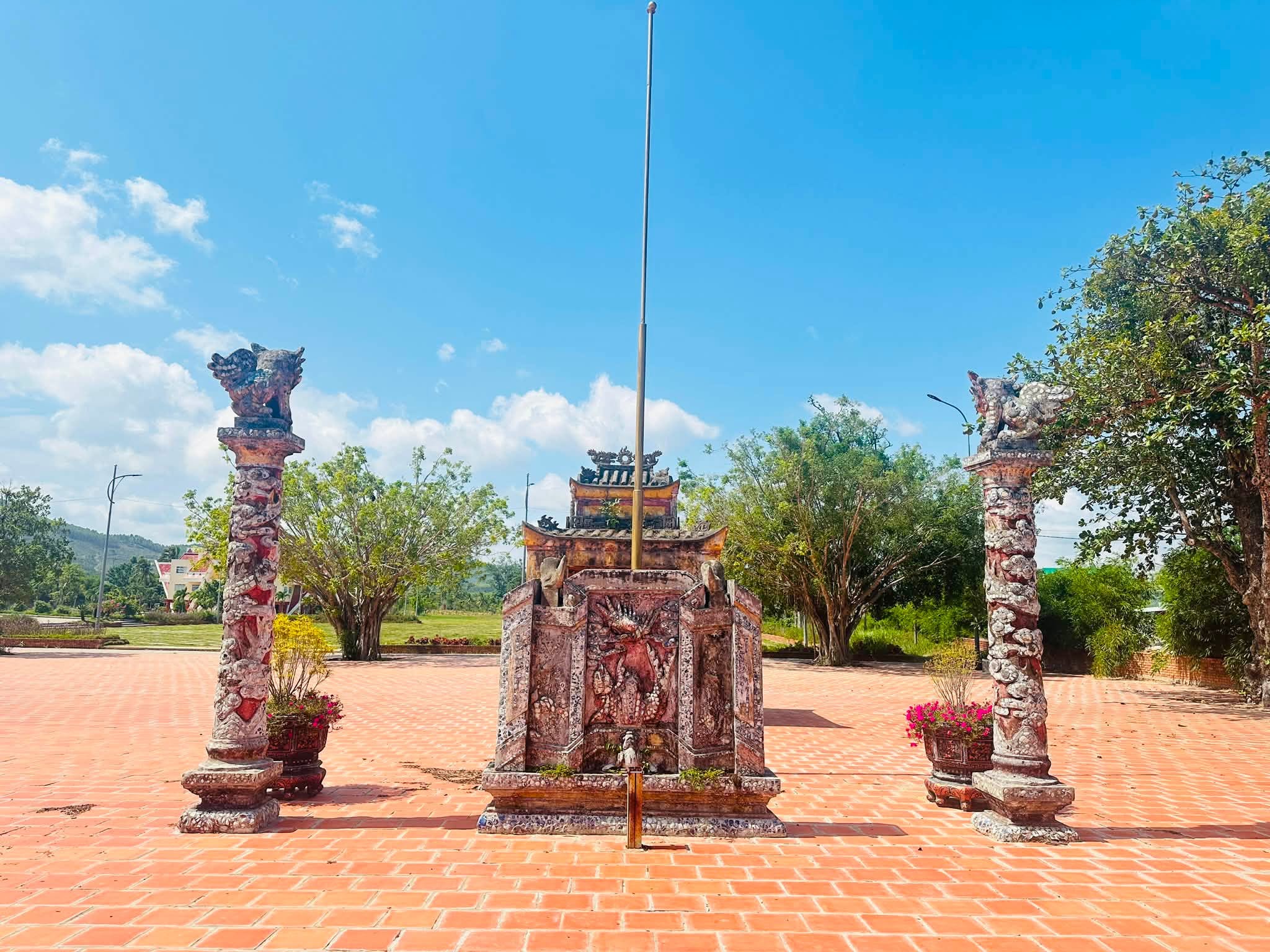
The Tây Sơn Thượng Đạo heritage area in An Khê includes a museum space introducing the history and cultural heritage of the region.
The museum area covers approximately 43 hectares and was developed with an investment of around VND 11 billion. Its collection includes approximately 140 artifacts and documentary materials, including photographs, production tools, gongs, jars and prehistoric stone tools.
The collection contributes to the understanding of the region’s long history of human settlement as well as the cultural environment in which the Tây Sơn movement developed.
Together with the surrounding historical sites, the museum provides a space for historical education, archaeological interpretation and cultural tourism.
Conservation and Heritage Development
The conservation of Tây Sơn Thượng Đạo has gradually expanded from the protection of individual monuments toward the preservation of the wider historical landscape.
Restoration and development projects have been proposed for a number of important sites, together with landscape improvements and visitor facilities. These efforts aim to protect historical remains while creating appropriate conditions for research, education and tourism.
The conservation of Tây Sơn Thượng Đạo also requires careful consideration of historical evidence. Restoration should be based on archaeological remains, historical documents and reliable local traditions rather than speculative reconstruction.
This approach is particularly important because historical traces are distributed across a large geographical area and represent different periods of history.
A Special National Relic
The Tây Sơn Thượng Đạo Historical Relic Complex was recognized as a national historical relic in 1991 and subsequently recognized as a Special National Relic in 2022 under Decision No. 93/QĐ-TTg dated January 18, 2022.
The recognition reflects the historical importance of the complex and its role in understanding the origins and early development of the Tây Sơn movement.
Unlike a single architectural monument, Tây Sơn Thượng Đạo represents a network of historical locations distributed across the Central Highlands. Its value lies in the connections between the sites, their surrounding landscapes and the communities that preserve their historical memories.
A Heritage Destination for Exploring Tây Sơn History
Today, Tây Sơn Thượng Đạo offers visitors an opportunity to explore the early history of the Tây Sơn movement through historical monuments, archaeological remains, traditional culture and the landscapes of the Central Highlands.
A journey through the complex can connect locations associated with Nguyễn Nhạc, Nguyễn Huệ and Nguyễn Lữ with historic communities, cultural spaces and natural landmarks.
For visitors interested in Vietnamese history and heritage, Tây Sơn Thượng Đạo provides an opportunity to understand the early foundations of the Tây Sơn movement in its original highland environment. The complex reveals not only the historical figures and military activities associated with the movement, but also the landscape, communities and strategic conditions that shaped its development.
Quick Information
| Item | Information |
|---|---|
| Name | Tây Sơn Thượng Đạo Historical Relic Complex |
| Type | Historical relic complex |
| Location | Gia Lai Province, Vietnam |
| Main areas | An Khê, Đak Pơ, Kbang and Kông Chro |
| Historical period | Late 18th century |
| Historical figures | Nguyễn Nhạc, Nguyễn Huệ and Nguyễn Lữ |
| Historical role | Early base and strategic corridor of the Tây Sơn movement |
| National recognition | 1991 |
| Special National Relic recognition | 2022 |
| Recognition decision | Decision No. 93/QĐ-TTg, January 18, 2022 |
| Original system | 17 sites in 6 groups |
| Current system | 23 sites in 8 groups |
| Notable sites | Hòn Bình, Hòn Nhạc, Hòn Tào, Gò Kho–Xóm Ké, Miếu Xà, Cây Ké phất cờ–Cây Cầy gióng trống, Gò Chợ, An Khê Lũy, An Khê Trường and An Khê Đình |
| Museum area | Approximately 43 hectares |
| Museum collection | Approximately 140 artifacts and documentary materials |
| Cultural values | History, archaeology, traditional culture and highland landscape |
| Notable festival | Cầu Huê Festival, held on the 4th and 5th days of the first lunar month |
Location: Tây Sơn Thượng Đạo Historical Relic Complex, Gia Lai Province, Vietnam.