The Central Highlands of Vietnam is a land of vast forests, legendary epics and diverse cultural traditions. Among its most distinctive cultural treasures is the Gong Cultural Space of the Central Highlands, a heritage deeply connected with the spiritual life of ethnic communities such as the Ê Đê, Bahnar, Xơ Đăng, Jrai, M’nông, K’Ho and many others.
The gong cultural space once extended across the former provinces of Kon Tum, Gia Lai, Đắk Lắk, Đắk Nông and Lâm Đồng. Following the administrative rearrangement and merger implemented on July 1, 2025, the heritage space is now located within the provinces of Quảng Ngãi, Gia Lai, Đắk Lắk and Lâm Đồng. It is not merely a space for musical performances, but also encompasses traditional customs, beliefs, festivals, architecture, living environments and community relationships that together form a distinctive cultural whole of the Central Highlands.
Values and Characteristics of Central Highlands Gongs
The exact origins of gongs in the Central Highlands remain unclear. Some researchers believe that these instruments date back to ancient times and may be associated with the Đông Sơn civilization, which existed approximately 3,500 to 4,000 years ago and was known for such representative instruments as bronze drums and gongs.
According to the traditional beliefs of Central Highlands communities, gongs are not simply musical instruments but also a means of communication between humans and the supernatural world. Each gong is believed to house a deity. The older the gong, the greater the power of the spirit residing within it. Gongs therefore carry both sacred significance and symbolize wealth, authority, prosperity, social status and the safety of families and clans.
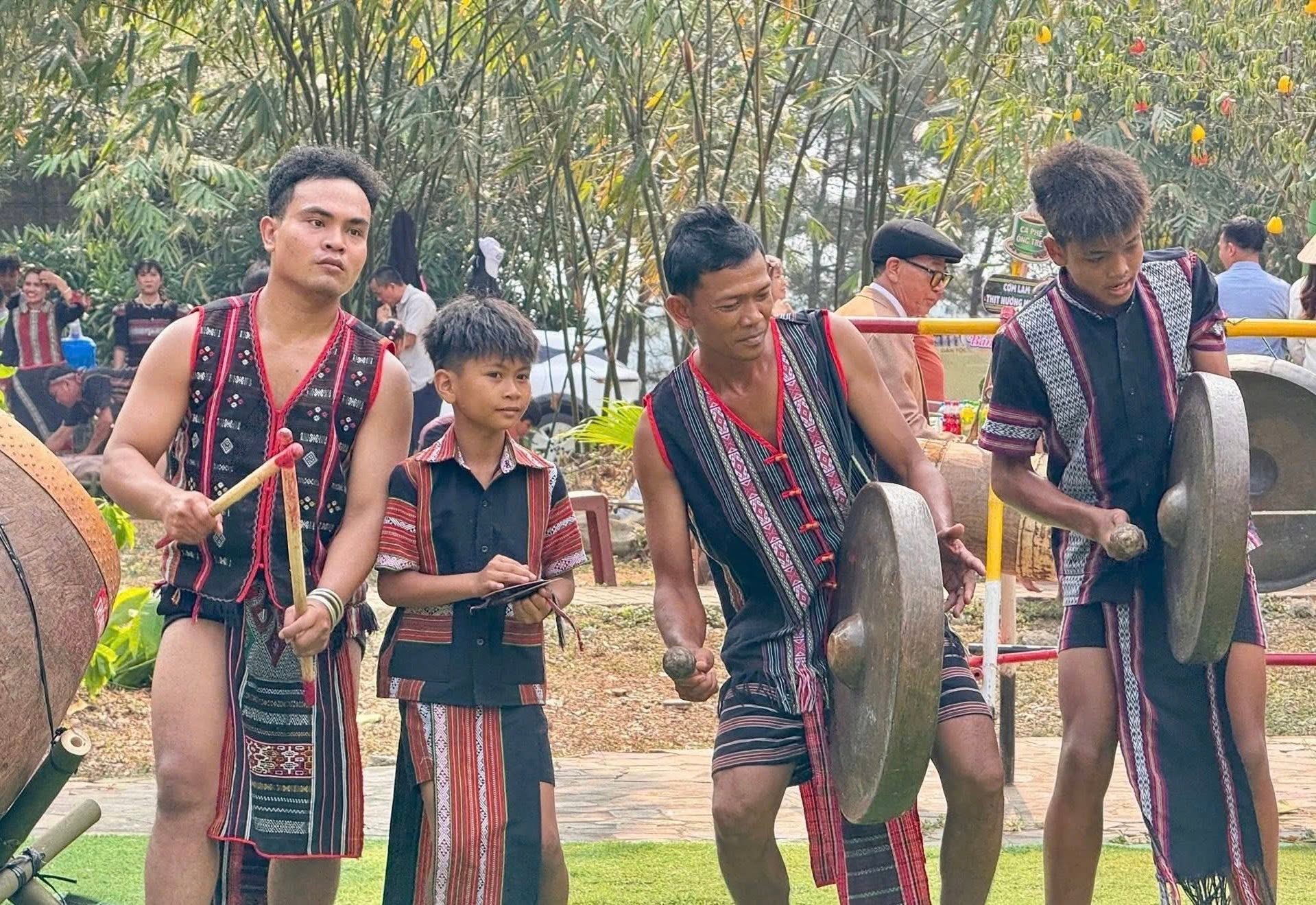
Gongs are generally made from copper alloys, sometimes mixed with gold, silver or black copper. A cồng is a gong with a central boss, while a chiêng has no boss. They come in various sizes, commonly measuring between 20 and 50 or 60 centimeters in diameter, while larger instruments can reach 90 to 120 centimeters. Gongs may be played individually or arranged into sets of between 2 and 12 or 13 instruments. In some communities, sets may contain as many as 18 to 20 gongs. Within a gong set, the “mother gong” or principal gong usually plays the most important role.
Depending on the ethnic group, gongs are played with beaters or struck directly by hand. Some communities also use the left hand to dampen the sound or create different tonal effects on a single gong. Differences in tuning techniques, performance methods and musical repertoires have created distinctive styles associated with each ethnic group.
The sound of the gongs may be powerful and solemn, deep and contemplative, or soft and resonant as it travels through the mountains and forests, blending with the sounds of streams, wind and community life. Over time, gongs have become a cultural symbol of the Central Highlands, evoking hunting grounds, agricultural fields, village life and traditional festivals held around sacred fires and jars of rice wine.
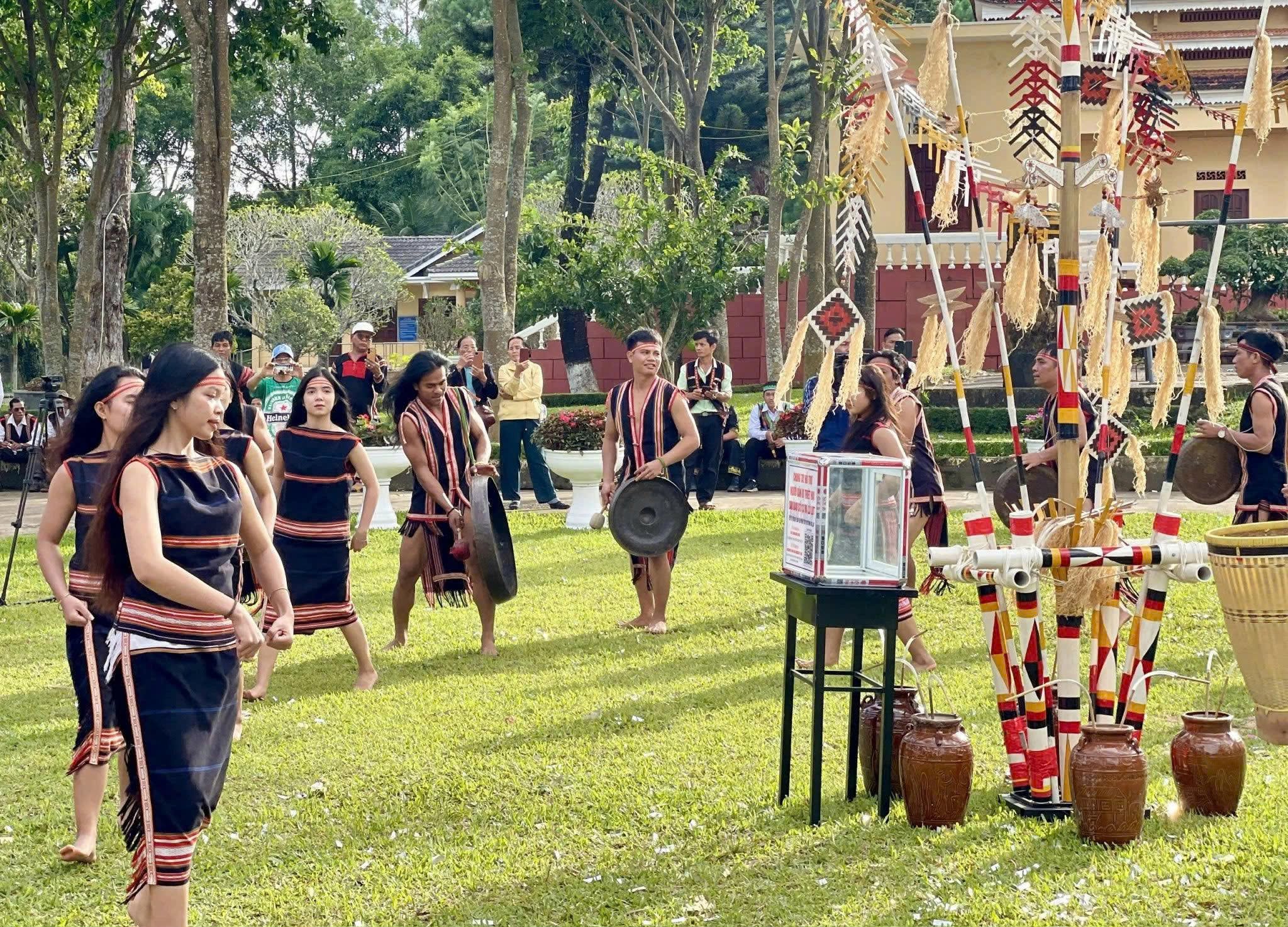
Gongs appear throughout almost every important stage of human life. When a child is born, gong sounds welcome the new family member. As people grow up, gongs accompany agricultural activities, coming-of-age ceremonies, courtship gatherings, welcoming ceremonies, housewarming celebrations, weddings, funerals and numerous other community rituals. During festivals, circles of people performing xoang dances around a sacred fire, beside jars of rice wine and resonating gongs, create a cultural space that is both sacred and intimate, mysterious and deeply rooted in everyday life.
One of the most prominent characteristics of Central Highlands gong culture is its strong sense of community and shared emotion. Performance spaces are generally open to everyone, regardless of gender. Among some ethnic groups, women are also permitted to play gongs, reflecting the important role of women and the influence of matrilineal traditions in the cultural structure of the Central Highlands.
According to artisan K’Bon, a member of the K’Ho ethnic group, the “folk stage” of gong culture is the forest, the festival grounds and the village space. It is where ordinary people express the voice of their community to supernatural forces beside jars of rice wine, around sacred fires, amid the sounds of gongs blending with mountain winds and clouds. Artisan Touneh Ma Bio of the Chu Ru people also emphasized that the beauty of gongs lies not only in their physical form, but also in the hand and body movements of the performers and the xoang dances of the community.
The Gong Cultural Space of the Central Highlands is therefore not simply a form of music. It represents a connection between people and nature, between the visible and invisible worlds, between the past, present and future, and between the culture of individual ethnic groups and the shared cultural heritage of humanity.
On November 25, 2005, UNESCO officially recognized the Gong Cultural Space of the Central Highlands as a Masterpiece of the Oral and Intangible Heritage of Humanity. In 2008, the title was changed to Representative List of the Intangible Cultural Heritage of Humanity. In 2012, the heritage was included in Vietnam’s National List of Intangible Cultural Heritage.
Preservation and Promotion of Heritage Values
Since its UNESCO inscription, the provinces of the Central Highlands have implemented numerous programs, projects and activities to preserve, restore and promote the values of the Gong Cultural Space. Many gong-training classes have been organized for young people, with elderly artisans directly providing instruction. Gong practice and traditional music have also been introduced into certain ethnic boarding schools, arts institutions and specialized training facilities.
Alongside transmission activities, local authorities have worked to restore traditional festivals, provide musical instruments, revive traditional costumes, organize regular performances, establish community gong clubs and conduct research into gong scales, musical modes, tuning techniques and performance traditions of different ethnic groups.
In Gia Lai, gong preservation has been integrated into local socioeconomic development programs and initiatives aimed at safeguarding the cultural identity of Bahnar and Jrai communities. According to inventory surveys, Gia Lai preserved 5,655 sets of gongs in 2008. Surveys conducted in 2020 and 2021 recorded 4,756 sets, making Gia Lai the locality holding the largest number of gongs among the former Central Highlands provinces.
Numerous traditional festivals and rituals involving gongs have been restored, including new rice celebrations, water-drop worship ceremonies, communal house and rong-house ceremonies, new-house celebrations, weddings and post-funeral rituals. These activities help revive the traditional environment in which gong culture is practiced while creating opportunities for visitors to explore local culture through community-based tourism in villages such as Phung, Kep and Đê Ktu.
Gia Lai has also organized gong performances for cultural events, including the programs “Weekend Gongs: Enjoyment and Experience” and “The Cultural Colors of Gia Lai: Preservation and Development,” as well as gong-tuning classes and programs providing instruments and traditional costumes to disadvantaged villages.
In 2009, the International Gong Festival was held in Gia Lai, attracting participation from many domestic and international organizations. In 2018, the Central Highlands Gong Festival was organized in the province. In 2023, the Gia Lai Gong Cultural Festival continued to generate widespread interest, helping promote the musical, cultural and community values of the Central Highlands ethnic groups.
The spaces in which gongs are practiced have also changed considerably. In the past, gong performers were mainly middle-aged or elderly men. Today, many women’s gong groups and youth gong groups have been established. Some young artisans have acquired skills in gong tuning and transmission and now participate in cultural exchanges both within and beyond the province. Gongs are no longer confined to village communities but have become an important element of cultural events, festivals, tourism programs and international exchanges in countries such as South Korea, Japan, Laos and Cambodia.
Challenges in Heritage Preservation
Despite these positive achievements, the Gong Cultural Space of the Central Highlands faces a number of challenges. Changes in the natural environment, urbanization, administrative boundary adjustments, cultural exchange and rapid socioeconomic and technological development have significantly affected the space in which the heritage exists.
Forests, villages, rong houses, stilt houses, water wharves and tomb houses, all of which are closely associated with gong culture, are gradually shrinking or changing. As forests decline, many sacred spaces and forest-related rituals are no longer maintained. Village boundaries are also becoming less defined, while interaction among different ethnic communities is increasing. As a result, some traditional customs and performance environments are at risk of disappearing.
Economic difficulties have also forced some families to sell their gongs to cover expenses or invest in production. In addition, the increasingly common practice of modifying and retuning gong sets to suit modern melodies, if not carried out carefully, may alter traditional sound qualities and repertoires. Influences from popular culture, social media and performances that lack cultural accuracy may also distort the original characteristics of gong traditions.
Directions for Sustainable Preservation
To preserve and promote the Gong Cultural Space of the Central Highlands sustainably, it is necessary to continue inventorying, identifying and updating information on the number of gongs, artisans, gong tuners, teachers and community performance groups practicing this heritage.
Preservation must be linked to the maintenance of the living environment of gong culture, including forests, villages, rong houses, stilt houses, water wharves and traditional festivals. The restoration of rituals, cultural activities and festivals should be based on the inheritance of authentic traditional values and avoid excessive staging or commercialization.
Practical support policies are also needed for artisans, especially those who contribute to gong tuning, transmission and the restoration of traditional rituals. Recognition through the titles of Meritorious Artisan and People’s Artisan, together with livelihood assistance, healthcare support, opportunities for practice and transmission, will be essential to maintaining the community’s cultural bearers.
The community must remain at the center of the preservation process. Heritage can only be sustained when local people feel proud of it, benefit from it and have livelihoods connected to the safeguarding of traditional culture. Community-based tourism should therefore be developed in harmony with preservation, ensuring direct benefits for residents while protecting the sacred and authentic nature of the heritage.
National programs on preserving the traditional culture of ethnic minority communities in association with tourism development, the project for preserving and promoting the Gong Cultural Space in Gia Lai for the 2026–2030 period, scientific conferences, research activities, digitization and heritage promotion will provide additional resources for preservation in the coming years.
Conclusion
Twenty years after its recognition by UNESCO, the Gong Cultural Space of the Central Highlands has achieved many significant results. The loss and dispersal of gongs have been gradually brought under control, numerous traditional rituals and festivals have been restored, transmission activities have expanded, young artisans have become increasingly involved, and gong music has reached cultural exchange programs in Vietnam and abroad.
The Gong Cultural Space of the Central Highlands is a precious cultural asset that reflects the worldview, philosophy of life and creative spirit of the ethnic communities living in the region. Preserving this heritage means more than protecting gongs or traditional musical repertoires. It also means safeguarding the living environment, cultural spaces, customs, beliefs and community bonds that have sustained the heritage across generations.
Heritage Information
- Heritage name: Gong Cultural Space of the Central Highlands
- Type: Folk performing arts
- Location: Đắk Lắk Province, Gia Lai Province and Lâm Đồng Province
- Recognition document: Decision No. 5079/QD-BVHTTDL dated December 27, 2012