Address: Phung Hoang Mountain, near Tuyen Lam Lake, Da Lat, Lam Dong Province, Vietnam.
Located on Phung Hoang Mountain overlooking Tuyen Lam Lake, about 5 kilometers from Da Lat city center, Truc Lam Da Lat Zen Monastery is one of the major centers for meditation practice and study within the Truc Lam Yen Tu Zen tradition. It is also one of Da Lat’s most prominent spiritual and cultural attractions.
The monastery was founded by Most Venerable Thich Thanh Tu, Vice Patriarch of the Council of the Sangha and Patriarch of the Vietnamese Truc Lam Zen School. He played an important role in reviving the Truc Lam Zen tradition founded by King-Monk Tran Nhan Tong (1258-1308) in the late 13th century, after the tradition had gradually faded from view.
Covering approximately 24.5 hectares, the monastery is set among pine forests, mountains, and water. The complex consists of the Outer Monastery, the Abbot’s Hermitage, the Monks’ Inner Monastery, and the Nuns’ Inner Monastery. The Outer Monastery is open to Buddhist followers and visitors, while the Inner Monastery is reserved for meditation and religious practice.
From a Phoenix Dream to Phung Hoang Mountain
According to monastic historical accounts, in 1987, while staying in Da Lat for rest and recuperation, Most Venerable Thich Thanh Tu dreamed that he was holding the neck of a large phoenix as it flew upward into the sky.
After awakening, he developed the wish to find a quiet place in Da Lat where monks and nuns could practice meditation. During his search for a suitable location, architect Tran Duc Loc introduced him to the summit of Phung Hoang Mountain, overlooking Tuyen Lam Lake.
The mountain’s natural setting, surrounded by forests and overlooking the lake, was considered suitable for establishing a meditation center. After receiving approval from the relevant authorities, the foundation-laying ceremony and construction began on April 8, 1993.
The overall concept of the monastery was sketched by Most Venerable Thich Thanh Tu. The architectural components were developed by architects Vu Xuan Hung and Tran Duc Loc according to his ideas, while engineer Tin was responsible for construction. Some source materials also mention the participation of architect Ngo Viet Thu in the design of the complex.
The basic construction was completed and the monastery was organized into four principal areas: the Outer Monastery, the Abbot’s Hermitage, the Monks’ Inner Monastery, and the Nuns’ Inner Monastery.
The monastery was inaugurated in 1994. The source materials provide two different dates for the inauguration, February 8 and March 19, 1994.
After its establishment, the monks and nuns began following the monastery’s regulations and developed a disciplined practice centered on “Phan Quan Tu Ky”, meaning turning inward to examine oneself, together with the spirit of Luc Hoa, or harmonious coexistence.
In 1999, the monastery underwent further renovation and added several facilities, including a monks’ guesthouse, drum tower, library, exhibition building, and other supporting structures.
Architecture and a Space for Meditation
Truc Lam Da Lat Zen Monastery is organized into two principal areas, the Outer Monastery and the Inner Monastery.
The Outer Monastery includes the Main Hall, Consultation Hall, Guesthouse, Exhibition Building, and Flower Garden. This is the area open to Buddhist followers and visitors for worship and sightseeing.
The Inner Monastery includes the Meditation Hall, Monks’ Hall, Dining Hall, Kitchen, Meditation Retreats, and other supporting facilities. The Monks’ and Nuns’ Inner Monasteries are reserved for religious practice, and visitors are not permitted to enter in order to preserve the quiet environment required for intensive meditation.
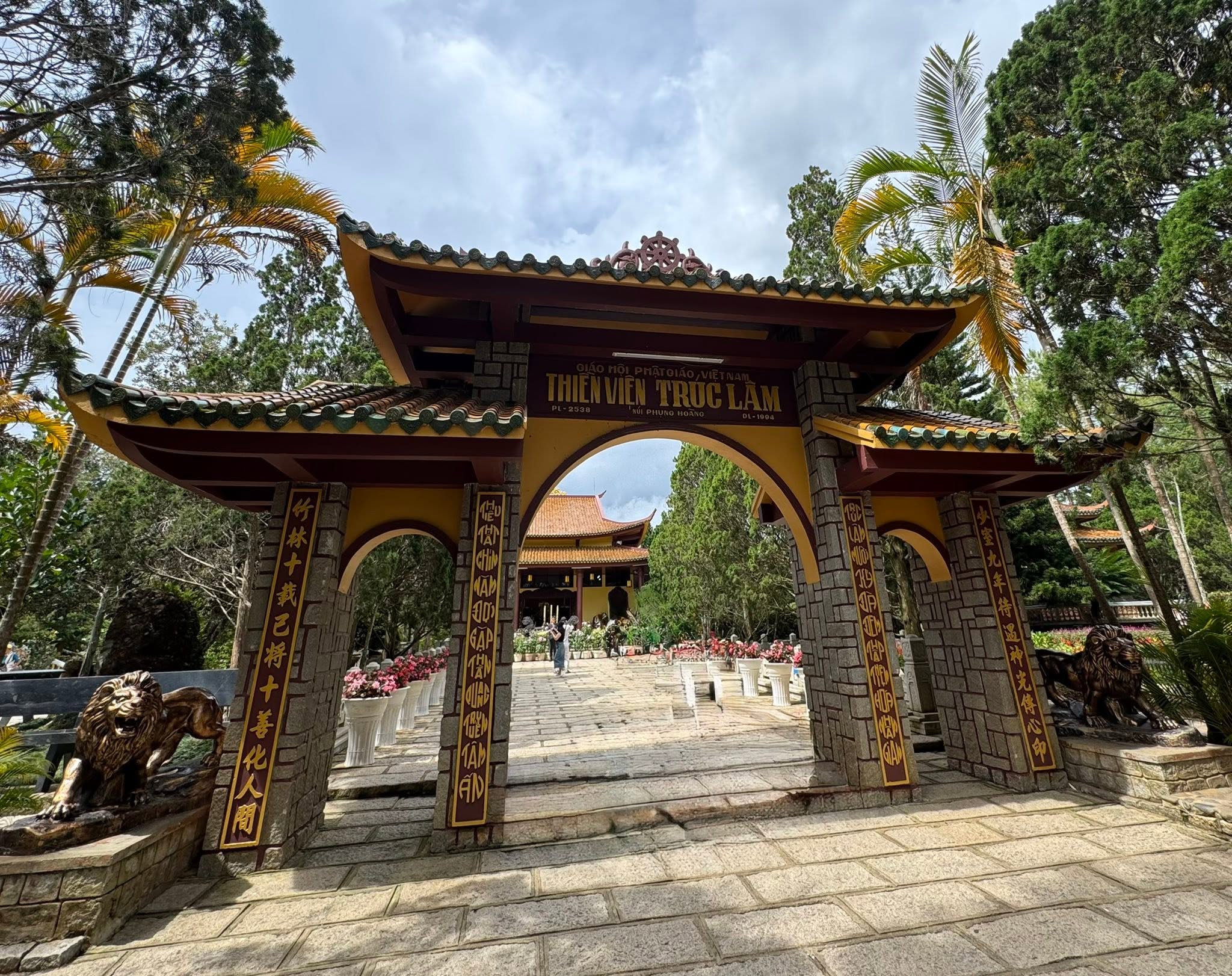
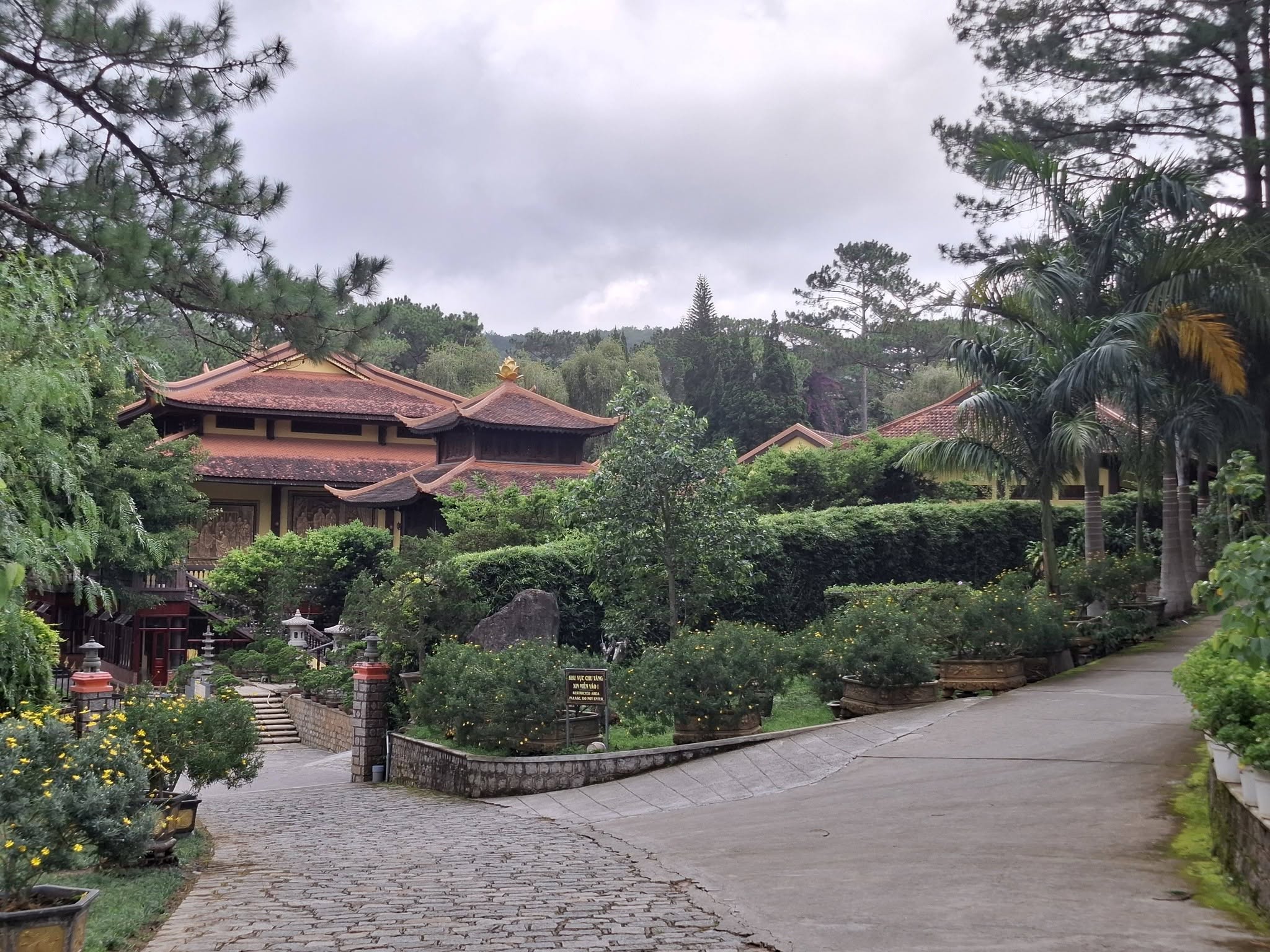
The complex follows a traditional East Asian architectural style, featuring curved tiled roofs, large wooden columns, and natural stone walls. Rather than using bright and elaborate colors, the buildings maintain restrained tones that create a calm and contemplative atmosphere.
The architecture is closely integrated with the natural surroundings. Pine forests, gardens, water, and mountain landscapes form an essential part of the overall composition.
The Main Hall and the Spirit of Truc Lam Zen
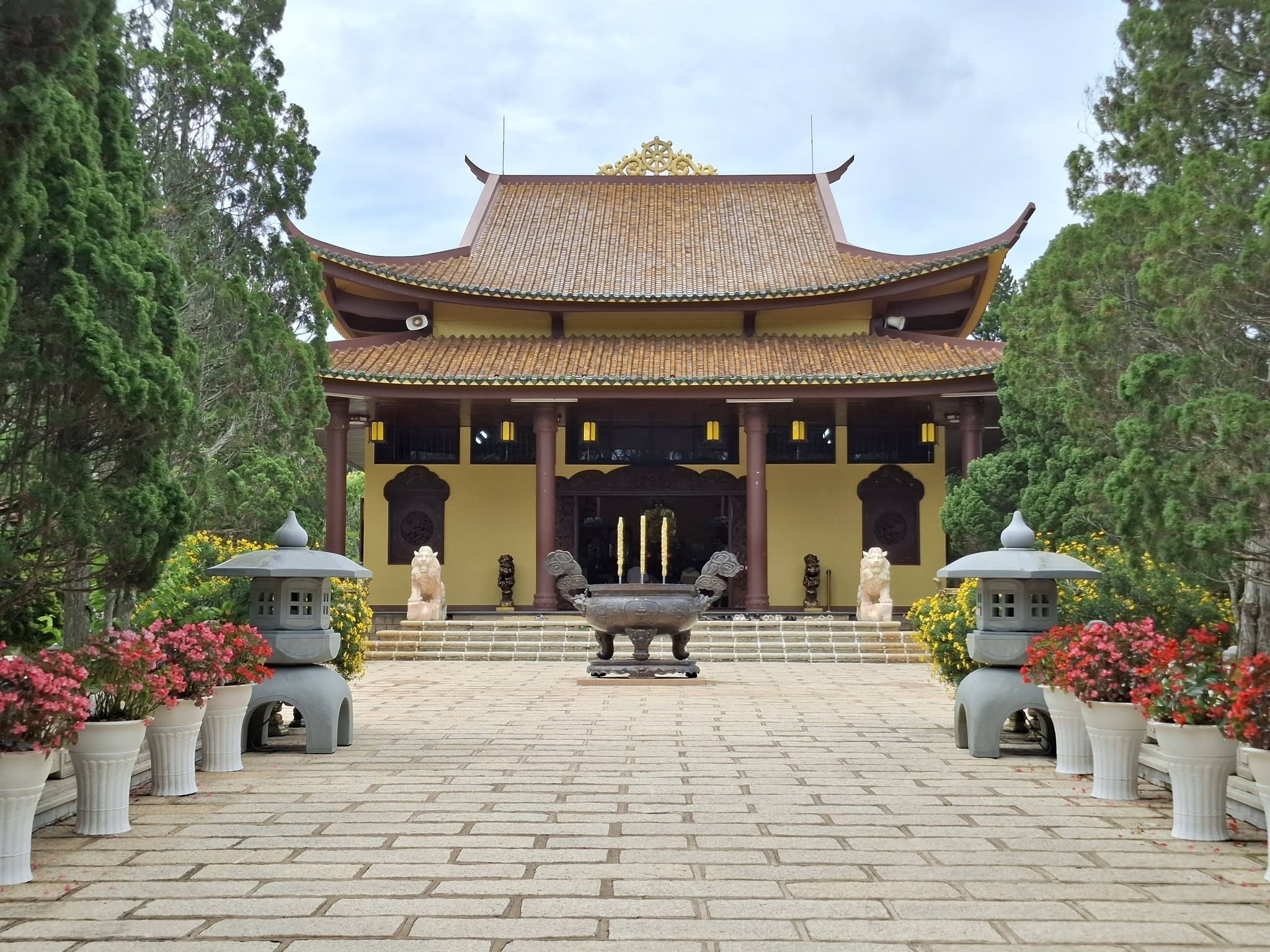
The Main Hall is one of the most prominent structures in the monastery. Source materials describe its area as approximately 160 to 192 square meters, with a curved roof inspired by traditional architecture.
At the center of the Main Hall is a statue of Shakyamuni Buddha, approximately 2 meters high. The Buddha is depicted holding a lotus flower in his right hand, recalling the Zen Buddhist story known as “Nianhua Weixiao”, or the Buddha’s flower sermon.
On the right side of the Buddha is Manjushri Bodhisattva, while Samantabhadra Bodhisattva stands on the left.
Above the main altar is a large horizontal plaque bearing the four characters “Truc Lam Thien Vien”. The walls on either side feature wooden reliefs depicting the Eight Great Events in the Life of the Buddha.
The relatively simple arrangement of the Main Hall reflects the contemplative character of the Truc Lam tradition, with emphasis placed on the image of Shakyamuni Buddha rather than an abundance of statues and decorations.
The Bell Tower, Flower Garden, and Tinh Tam Lake
To the right of the Main Hall stands the Bell Tower, which houses a large bronze bell weighing approximately 1.1 tons. Cast in 1993, the bell is engraved with verses encouraging reflection, inner peace, and liberation.
The Outer Monastery also features an Artistic Flower Garden, where a variety of flowers suited to Da Lat’s temperate climate are cultivated. Some varieties have been propagated and cared for by the monks and nuns, including hydrangeas, snow hibiscus, Australian myrtle, wild Himalayan cherry, and various forest orchids.
At the lower part of the hill is Tinh Tam Lake, an artificial pond where ornamental fish and released turtles are kept. The lake is surrounded by weeping willows and green bamboo, creating a peaceful corner within the mountain landscape.
A staircase of 140 stone steps leads from the lake area toward the Tam Quan Gate. The path winds beneath the pine trees and forms one of the distinctive landscape features of the monastery.
Between Phung Hoang Mountain and Tuyen Lam Lake
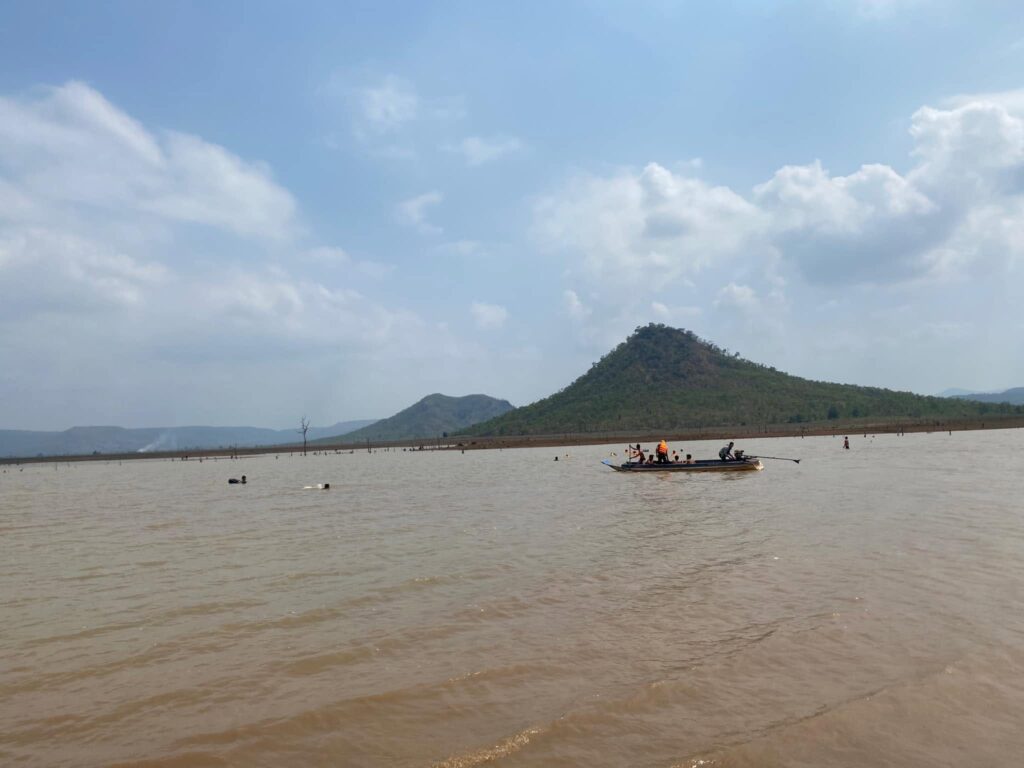
The monastery’s location is one of its defining attractions. From Phung Hoang Mountain, the landscape opens toward Tuyen Lam Lake, with forested hills stretching into the distance.
The combination of architecture, water, and pine forest creates an atmosphere that is both solemn and closely connected with nature. Visitors can combine a visit to the monastery with sightseeing around Tuyen Lam Lake and the surrounding southern area of Da Lat.
The monastery is also part of the popular Robin Hill cable car – Truc Lam Zen Monastery sightseeing route.
However, Truc Lam Da Lat remains first and foremost an active Zen monastery, rather than simply a tourist attraction. Visitors are expected to maintain a quiet and respectful manner, dress appropriately, and observe restrictions in areas reserved for religious practice, particularly the Monks’ and Nuns’ Inner Monasteries.
Truc Lam Da Lat in the Journey Through Da Lat
From an idea inspired by a dream of a phoenix, Truc Lam Da Lat Zen Monastery has developed into an important center for the practice and study of the Truc Lam Yen Tu Zen tradition.
The monastery carries religious and cultural significance while also forming an architectural landscape closely integrated with the mountains, pine forests, and Tuyen Lam Lake. Its curved tiled roofs, Main Hall, Bell Tower, flower gardens, Tinh Tam Lake, bamboo groves, and 140-step stone staircase create a distinctive highland setting.
For travelers, Truc Lam Da Lat offers several experiences within a single visit: spiritual contemplation, learning about the Truc Lam Zen tradition, architectural exploration, views of Tuyen Lam Lake, and an opportunity to experience Da Lat’s pine-covered landscape.
Above all, the monastery should be approached with calmness and respect. Beyond its beauty as a famous attraction, it remains a functioning place of religious practice, where the principle of “Phan Quan Tu Ky”, turning inward to examine oneself, remains an important part of monastic life.