
When traveling to Vietnam, understanding the local currency is essential for making payments, managing expenses, and avoiding common mistakes. The Vietnamese dong (VND) is the country’s official currency and is used for everyday transactions throughout Vietnam.
With multiple denominations, different banknote materials, and prices often displayed in large numbers, Vietnamese currency can initially seem confusing to international visitors. Some banknotes also have similar colors, making it easy for first-time travelers to mistake one denomination for another.
This Vietnamese Currency Guide from Travelin.vn – Travel in Vietnam explains how to identify Vietnamese banknotes, understand prices, exchange foreign currency, use ATMs, and make payments safely during your trip.
1. What Is the Official Currency of Vietnam?
Vietnam’s official currency is the Vietnamese dong, abbreviated as VND.
The currency is issued by the State Bank of Vietnam, the country’s central bank.
Basic information:
- Currency name: Vietnamese Dong.
- International currency code: VND.
- Currency symbol: ₫ or đ.
- Issuing authority: State Bank of Vietnam.
- Country: Vietnam.
Prices in Vietnam are generally displayed in Vietnamese dong.
For example:
- 10,000 VND: Ten thousand dong.
- 50,000 VND: Fifty thousand dong.
- 100,000 VND: One hundred thousand dong.
- 500,000 VND: Five hundred thousand dong.
In everyday transactions, Vietnamese people frequently use the letter “k” to represent one thousand dong.
For example, 50k means 50,000 VND.
Visitors should pay attention to these shortened price formats, particularly at restaurants, cafés, and local markets.
2. Vietnamese Currency Denominations
Vietnam uses several banknote denominations made from polymer and traditional cotton paper.
Although coins were issued in the past, banknotes are the primary form of physical currency used in everyday transactions.
Vietnamese Polymer Banknotes
Polymer banknotes are more durable and water-resistant than traditional cotton banknotes. They also contain security features designed to prevent counterfeiting.
The commonly used polymer denominations are:
| Denomination | Main Color |
|---|---|
| 10,000 VND | Yellowish brown |
| 20,000 VND | Blue |
| 50,000 VND | Pink and purple |
| 100,000 VND | Green |
| 200,000 VND | Reddish brown |
| 500,000 VND | Blue and purple |
The front of these banknotes features a portrait of President Ho Chi Minh.
The reverse side displays important Vietnamese landmarks, historical sites, or images representing the country’s culture and economy.
Vietnamese Cotton Banknotes
Vietnam also uses traditional cotton-paper banknotes in smaller denominations:
- 1,000 VND.
- 2,000 VND.
- 5,000 VND.
These banknotes are commonly used for small purchases, especially at traditional markets, neighborhood shops, and local businesses.
They are generally smaller and less valuable than most polymer banknotes.
Does Vietnam Have Coins?
Vietnam previously issued coins in denominations of 200, 500, 1,000, 2,000, and 5,000 VND.
However, coins are now rarely encountered in everyday transactions.
International visitors generally do not need to carry coins when traveling around Vietnam.
3. How to Identify Vietnamese Banknotes
Vietnamese banknotes can be identified by their printed denominations, colors, sizes, and images on the reverse side.
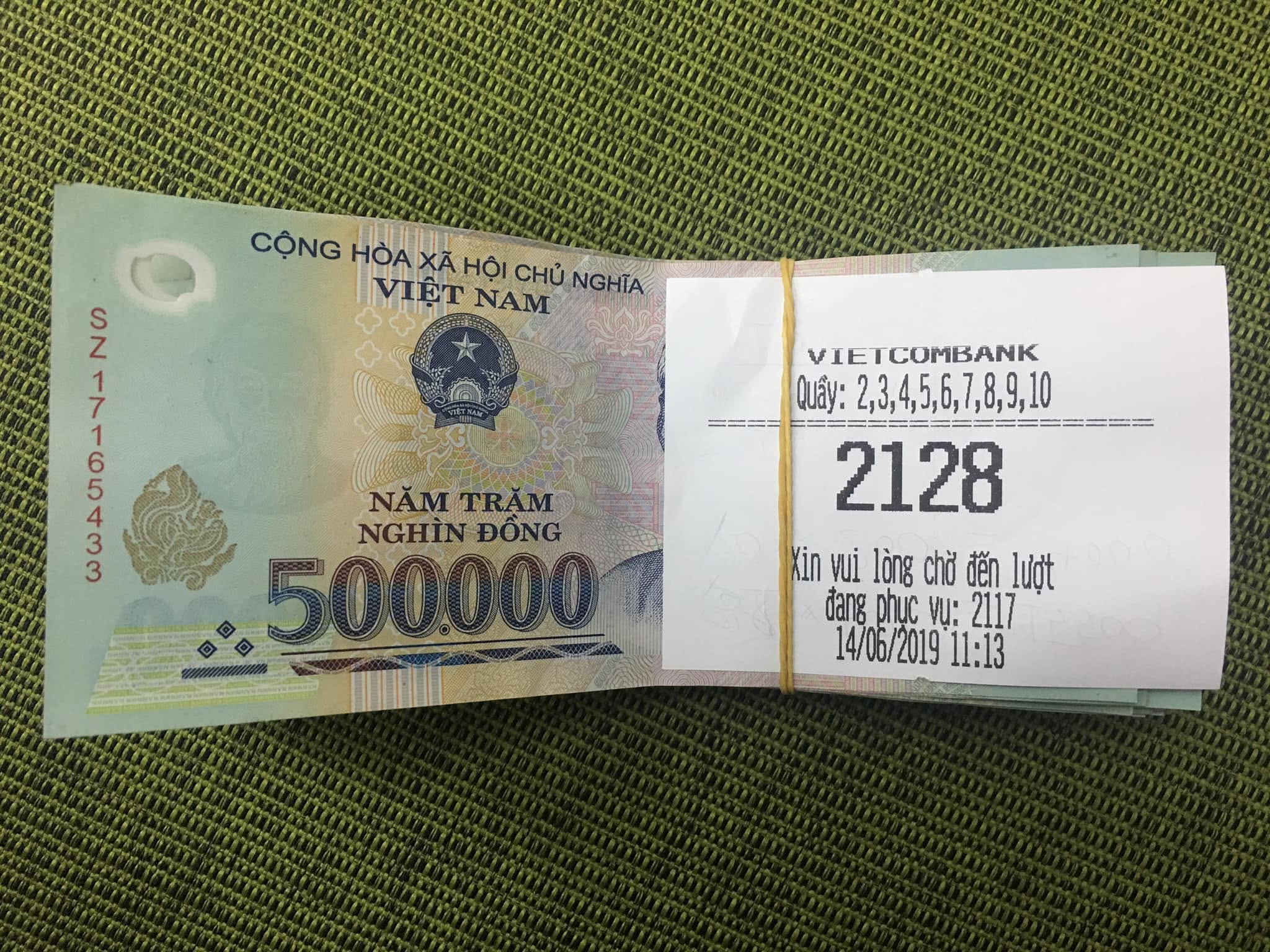
500,000 VND Banknote
The 500,000 VND note is the highest-denomination banknote commonly circulating in Vietnam.
- Material: Polymer.
- Main color: Blue and purple.
- Reverse image: President Ho Chi Minh’s childhood home in Sen Village, Nghe An Province.
Travelers should be particularly careful when using this banknote for small purchases.
200,000 VND Banknote
- Material: Polymer.
- Main color: Reddish brown.
- Reverse image: Ha Long Bay.
This denomination is often used for relatively large purchases and payments.
100,000 VND Banknote
- Material: Polymer.
- Main color: Green.
- Reverse image: The Temple of Literature in Hanoi.
The 100,000 VND note is widely used for dining, shopping, transportation, and other everyday expenses.
50,000 VND Banknote
- Material: Polymer.
- Main color: Pink and purple.
- Reverse image: Nghenh Luong Pavilion and Phu Van Lau in Hue.
This denomination is convenient for many everyday transactions.
20,000 VND Banknote
- Material: Polymer.
- Main color: Blue.
- Reverse image: The Japanese Covered Bridge, commonly known as Chua Cau, in Hoi An.
Because of its blue coloring, this note can sometimes be confused with the 500,000 VND banknote.
10,000 VND Banknote
- Material: Polymer.
- Main color: Yellowish brown.
- Reverse image: Vietnam’s offshore oil and gas industry.
This denomination is commonly used for smaller purchases.
4. Vietnamese Banknotes That Are Easy to Confuse
One of the most common mistakes international visitors make is confusing banknotes with similar colors.
20,000 VND vs. 500,000 VND
Both banknotes have blue tones, but their values are significantly different.
A 500,000 VND banknote is worth 25 times as much as a 20,000 VND banknote.
Always check the printed denomination rather than relying on color alone.
10,000 VND vs. 200,000 VND
These banknotes both feature brownish tones, although their sizes and designs are different.
Travelers should read the printed numbers carefully, particularly in low-light conditions.
Tips to Avoid Currency Mistakes
- Organize banknotes by denomination in your wallet.
- Check the amount before handing money to a seller.
- Count your change after each transaction.
- Avoid rushing when paying.
- Use smaller banknotes for inexpensive purchases.
5. Understanding Prices in Vietnam
Prices in Vietnam may initially appear unusually high because the Vietnamese dong has a relatively small unit value compared with currencies such as the US dollar, euro, or British pound.
For example, a meal priced at 50,000 VND does not necessarily mean it is expensive. Its actual cost should be understood using the current exchange rate.
Vietnamese people frequently shorten prices in everyday conversations.
| Displayed Price | Actual Amount |
|---|---|
| 10k | 10,000 VND |
| 25k | 25,000 VND |
| 50k | 50,000 VND |
| 100k | 100,000 VND |
| 250k | 250,000 VND |
| 1 million | 1,000,000 VND |
At tourist destinations, prices may be displayed in Vietnamese, English, or both languages.
Visitors should confirm the total price if it is unclear whether taxes, service charges, or additional fees are included.
6. Where to Exchange Foreign Currency in Vietnam
International travelers can exchange foreign currency for Vietnamese dong at authorized financial institutions and licensed currency exchange locations.
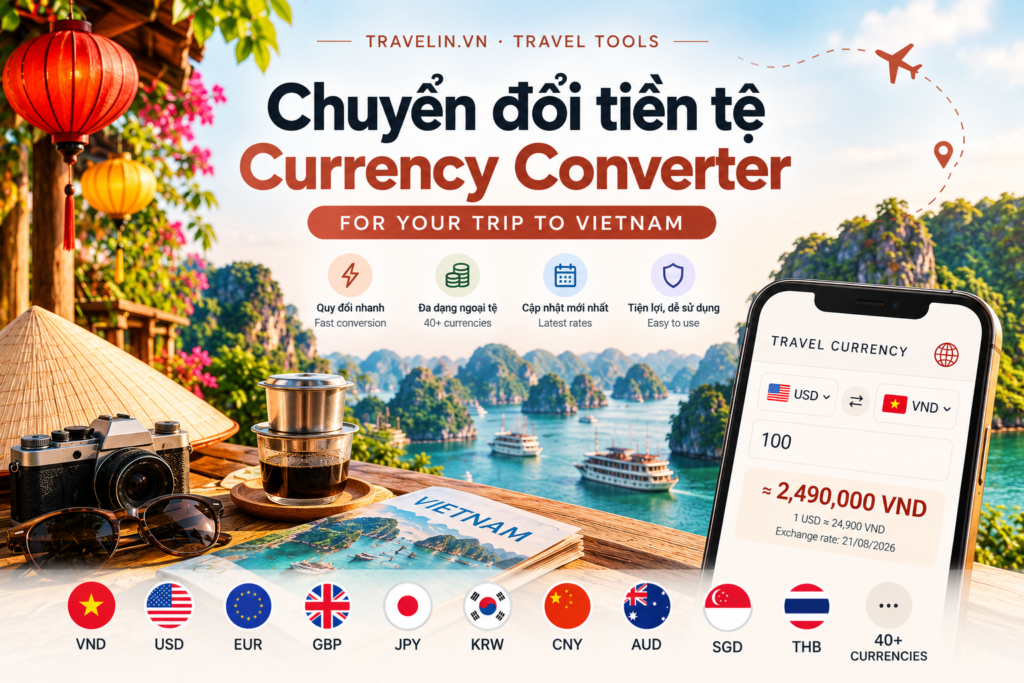
Read more: Vietnam Currency Converter
Banks
Banks are among the most reliable places to exchange foreign currency.
Travelers may be required to present a passport or other valid identification when exchanging money.
Exchange rates vary between banks and may change throughout the day.
Airport Currency Exchange Counters
Some international airports in Vietnam have currency exchange counters.
These are convenient for travelers who need Vietnamese dong immediately after arrival.
However, visitors should check the exchange rate and any applicable fees before completing a transaction.
Licensed Currency Exchange Agents
Authorized currency exchange agents may also provide foreign currency exchange services.
Avoid exchanging money with individuals or businesses that cannot demonstrate that they are legally authorized to provide the service.
7. Can You Pay with US Dollars in Vietnam?
As a general rule, transactions, payments, and price quotations within Vietnam must be conducted in Vietnamese dong, except where Vietnamese law specifically permits the use of foreign currency.
Therefore, international travelers should not assume that US dollars, euros, or other foreign currencies can be used directly at restaurants, hotels, shops, or local markets.
The most practical approach is to exchange some foreign currency for VND or use an international payment card at establishments that accept it.
8. Using Credit and Debit Cards in Vietnam
Cashless payments are increasingly common throughout Vietnam.
Many hotels, restaurants, supermarkets, shopping centers, and tourism businesses accept international payment cards.
Commonly supported card networks include:
- Visa.
- Mastercard.
- JCB and other international networks, depending on the merchant.
However, smaller businesses, street food stalls, traditional markets, and rural establishments may prefer cash.
Travelers should check foreign transaction fees, currency conversion charges, and exchange rates applied by their card issuer.
9. Withdrawing Vietnamese Dong from ATMs
International visitors can withdraw Vietnamese dong from ATMs that support their card networks.
ATMs are widely available in major cities, airports, shopping centers, and popular tourist destinations.
ATM Safety Tips
- Check that the ATM supports your card network.
- Review withdrawal fees before confirming.
- Check the withdrawal limit.
- Cover the keypad when entering your PIN.
- Avoid accepting assistance from strangers.
- Keep transaction receipts when necessary.
Some ATMs may offer to convert the withdrawal amount into your home currency.
This service is commonly known as Dynamic Currency Conversion (DCC).
Before accepting it, compare the displayed exchange rate and fees with those offered by your card issuer. Paying or withdrawing in VND may provide a better rate, although the final cost depends on your bank.
10. QR Code Payments in Vietnam
QR code payments are widely used at cafés, restaurants, retail stores, and many other businesses throughout Vietnam.
Customers can often pay by scanning a QR code using a compatible banking or payment application.
However, not every foreign banking app or digital wallet supports Vietnamese domestic QR payment systems.
Availability depends on the payment provider, banking network, and cross-border payment arrangements.
International travelers should verify compatibility before relying on QR payments and always keep an alternative payment method available.
11. How Much Cash Should You Carry in Vietnam?
The amount of cash you need depends on your travel itinerary, length of stay, and spending habits.
For visitors staying in major cities, a combination of cash and international payment cards is usually convenient.
Cash is particularly useful for:
- Buying street food.
- Shopping at traditional markets.
- Paying for certain local transportation services.
- Purchasing items from small shops.
- Visiting rural or remote destinations.
- Paying at establishments without card facilities.
It is generally unnecessary to carry your entire travel budget in cash.
Travelers carrying large amounts of currency should also check Vietnam’s customs declaration requirements.
12. Cash Declaration Rules When Entering or Leaving Vietnam
Travelers entering or leaving Vietnam must declare cash to customs authorities when carrying amounts exceeding certain thresholds.
Under the applicable declaration rules, the thresholds include:
- More than USD 5,000, or the equivalent amount in another foreign currency.
- More than VND 15,000,000.
These thresholds apply to cash carried by an individual when entering or leaving Vietnam.
Exceeding a declaration threshold does not automatically mean that carrying the money is prohibited. Depending on the circumstances, additional documentation may be required.
Travelers should check the latest regulations issued by the State Bank of Vietnam and Vietnamese customs authorities before departure.
13. How to Identify Genuine Vietnamese Banknotes
Vietnamese polymer banknotes contain several security features intended to help prevent counterfeiting.
Depending on the denomination, these may include:
- Watermarks visible when held against the light.
- Transparent windows on polymer notes.
- Raised printing on selected areas.
- Color-changing security features.
- Clear printing and detailed patterns.
Travelers should obtain cash from reliable sources such as banks, ATMs, and authorized currency exchange providers.
If a banknote appears suspicious, do not attempt to pass it to another person. Contact a bank or the relevant authorities for assistance.
14. Practical Tips for Using Vietnamese Currency
A few simple habits can make everyday payments easier during your trip.
Carry small denominations: Smaller banknotes are useful for local markets, street food, and inexpensive purchases.
Check your change: Count your change, especially when paying with 200,000 VND or 500,000 VND notes.
Protect your banknotes: Avoid tearing, damaging, or exposing polymer notes to excessive heat.
Exchange money legally: Use banks and authorized currency exchange providers.
Monitor exchange rates: Use a currency converter to estimate expenses in your home currency.
Keep a backup payment method: Carry a combination of cash and cards whenever possible.
Avoid displaying large amounts of cash: Keep money secure, particularly in crowded tourist areas.
15. Frequently Asked Questions About Vietnamese Currency
What is the currency symbol of Vietnam?
The Vietnamese dong uses the symbol ₫ or đ and the international currency code VND.
What is the highest Vietnamese banknote denomination?
The highest-denomination banknote commonly in circulation is 500,000 VND.
Can tourists pay with US dollars in Vietnam?
As a general rule, payments in Vietnam must be made in VND, except in cases where foreign currency transactions are legally permitted.
Are Visa and Mastercard accepted in Vietnam?
Yes. Many hotels, restaurants, supermarkets, and shopping centers accept international cards. However, carrying cash is recommended for smaller purchases.
Does Vietnam use coins?
Vietnam previously issued coins, but they are now rarely used in everyday transactions.
Can I exchange Vietnamese dong back into foreign currency?
Foreign currency purchases using VND are subject to Vietnamese foreign exchange regulations, transaction conditions, and documentation requirements.
Travelers should contact an authorized bank or financial institution for assistance.
Should I exchange all my money before arriving in Vietnam?
Not necessarily. Travelers can exchange a small amount for immediate expenses and obtain additional Vietnamese dong from authorized exchange providers or ATMs during their stay.
Is it better to use cash or cards in Vietnam?
A combination of cash and cards is generally the most practical option. Cards are convenient for larger payments, while cash remains useful for local businesses and small purchases.
Conclusion
Understanding Vietnamese currency is an important part of preparing for a trip to Vietnam.
Knowing how to recognize banknotes, exchange foreign currency, use ATMs, and pay with international cards can help visitors manage their travel budgets and avoid unnecessary mistakes.
Although Vietnamese prices may initially appear confusing because of the large numbers involved, using the Vietnamese dong becomes straightforward once travelers become familiar with the main denominations.
Travelin.vn – Travel in Vietnam provides practical travel information, destination guides, and useful tools to help international visitors explore Vietnam with greater convenience and confidence.
Disclaimer: This article is intended for general informational purposes only. Foreign exchange regulations, customs declaration requirements, payment services, and exchange rates may change. Travelers should verify current information with the State Bank of Vietnam, Vietnamese customs authorities, and authorized financial institutions before making transactions.
Vietnam Currency Converter
Convert currencies and check exchange rates when planning your trip to Vietnam.
Search for a currency
Enter a currency code, country, or currency name to filter the list, then select a currency.
Exchange rates are provided for reference only. Actual rates at banks, exchange counters, and payment providers may differ due to transaction fees and exchange-rate margins.