

When traveling to Vietnam, exchanging foreign currency for Vietnamese dong (VND) is an important part of preparing for your trip. Although international credit cards and digital payments are becoming increasingly common, cash remains widely used at traditional markets, street food stalls, small shops, and many local attractions.
So, where is the best place to exchange money in Vietnam safely, legally, and at a reasonable exchange rate? International visitors can exchange foreign currency at banks, authorized currency exchange counters at airports, and licensed foreign exchange agents.
Each option has its own advantages, fees, and practical considerations.
This guide from Travelin.vn – Travel in Vietnam explains where to exchange money, how to compare exchange rates, withdraw Vietnamese dong from ATMs, and avoid common currency exchange mistakes.
1. Understanding the Vietnamese Dong (VND)
The official currency of Vietnam is the Vietnamese dong, abbreviated as VND and represented by the symbol ₫ or đ.
Common Vietnamese banknote denominations include:
- 1,000 VND
- 2,000 VND
- 5,000 VND
- 10,000 VND
- 20,000 VND
- 50,000 VND
- 100,000 VND
- 200,000 VND
- 500,000 VND
Banknotes from 10,000 to 500,000 VND are made from polymer, while smaller denominations such as 1,000, 2,000, and 5,000 VND are printed on traditional cotton paper.
Before making payments, visitors should become familiar with the colors and values of Vietnamese banknotes.
Pay particular attention to the 20,000 VND and 500,000 VND notes, as their similar blue coloring can sometimes cause confusion.
2. Exchanging Money at Banks in Vietnam
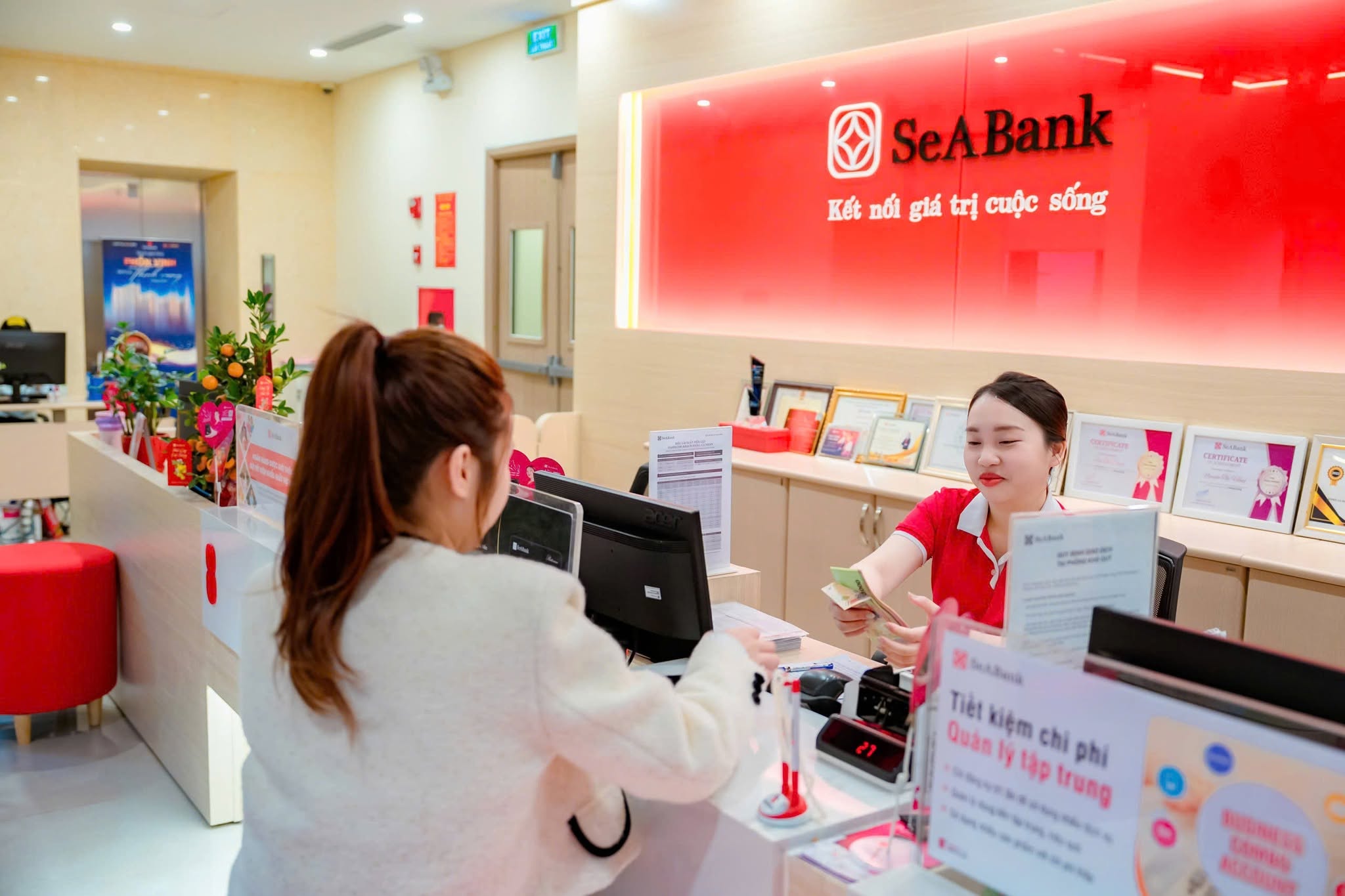
Banks are among the safest and most reliable places to exchange foreign currency for Vietnamese dong.
Several commercial banks in Vietnam provide authorized foreign exchange services, including:
- Vietcombank
- BIDV
- VietinBank
- Agribank
- SeABank
- Other commercial banks authorized to conduct foreign exchange transactions
However, not every bank branch accepts all types of foreign currency cash.
Advantages of Exchanging Money at Banks
- Transactions are conducted through licensed financial institutions.
- Exchange rates are publicly displayed.
- Transaction records or receipts are available.
- Banks are generally suitable for exchanging relatively large amounts.
Important Considerations
Travelers may be required to present their passports or other valid identification documents.
Most bank branches operate during regular business hours and may be closed on weekends and public holidays.
Before visiting a branch, it is advisable to confirm which foreign currencies are accepted, the operating hours, and any required documentation.
3. Exchanging Money at Vietnam’s International Airports
For first-time visitors, exchanging money at the airport is a convenient way to obtain Vietnamese dong immediately after arriving in Vietnam.
Major international airports such as Noi Bai International Airport in Hanoi, Tan Son Nhat International Airport in Ho Chi Minh City, and Da Nang International Airport may have authorized currency exchange counters or banking services.
Advantages
Airport currency exchange services are convenient for obtaining cash to cover immediate expenses, including:
- Transportation from the airport to your hotel.
- Meals and drinks.
- SIM cards or essential travel supplies.
- Small purchases during your first day.
Disadvantages
Airport exchange rates may be less competitive than those offered by some banks or other authorized exchange providers.
Operating hours, accepted currencies, and available services can also vary between counters.
Travel tip: Consider exchanging a small amount at the airport for immediate expenses, then visiting a bank or licensed currency exchange agent if you need additional cash.
4. Licensed Currency Exchange Agents in Vietnam
In addition to banks, Vietnam has licensed foreign currency exchange agents operating under applicable regulations.
These businesses may be located in city centers, commercial areas, and destinations frequently visited by international travelers.
However, not every shop advertising currency exchange services is legally authorized to conduct foreign exchange transactions.
Before exchanging money, travelers should:
- Verify the business’s identity and authorization.
- Confirm that the location is permitted to exchange foreign currency.
- Ask for the applicable exchange rate.
- Check whether any service fees apply.
- Count the money received before leaving.
Avoid exchanging money with strangers, unauthorized street vendors, or businesses that cannot provide clear information about their services.
5. Can You Exchange Money at Hotels in Vietnam?
Some hotels, particularly larger properties serving international guests, may provide foreign currency exchange services where legally authorized or help guests locate licensed exchange providers.
The main advantage is convenience, especially when travelers need cash without leaving their accommodation.
However, not every hotel is permitted to exchange foreign currency.
Before using such a service, check whether the hotel is authorized to conduct the transaction, which currencies are accepted, and what exchange rate will apply.
Travelers should not assume that currency exchange is available at every hotel in Vietnam.
6. Withdrawing Vietnamese Dong from ATMs
Instead of bringing large amounts of foreign currency in cash, international visitors can withdraw Vietnamese dong directly from ATMs using compatible international payment cards.
ATMs are widely available in major cities, airports, shopping centers, and popular tourist destinations.
Many machines support international card networks such as Visa, Mastercard, and other payment systems.
Advantages of Using ATMs
- No need to carry large amounts of foreign currency.
- Cash can be withdrawn when needed.
- Convenient access in urban areas and major tourist destinations.
ATM Fees to Consider
Depending on the bank and card, travelers may be charged:
- ATM operator withdrawal fees.
- International transaction fees.
- Currency conversion fees.
- Additional charges imposed by their card issuer.
Some ATMs offer to convert the withdrawal amount into the cardholder’s home currency.
This service is known as Dynamic Currency Conversion (DCC).
Travelers should carefully review the exchange rate before accepting this option. In many cases, choosing to complete the transaction in VND may provide a better rate, although the final cost depends on the card issuer.
7. Which Foreign Currencies Can You Exchange in Vietnam?
The US dollar (USD) is one of the most commonly exchanged foreign currencies in Vietnam.
Many banks also handle other major currencies, including:
- USD: US Dollar
- EUR: Euro
- GBP: British Pound
- AUD: Australian Dollar
- CAD: Canadian Dollar
- JPY: Japanese Yen
- SGD: Singapore Dollar
- KRW: South Korean Won
- CNY: Chinese Yuan
The availability of foreign currency exchange services depends on the bank, branch, and type of transaction.
International travelers do not necessarily need to convert their home currency into US dollars before arriving in Vietnam.
Exchanging money through an intermediate currency may result in additional conversion costs.
It is generally better to compare exchange rates and fees before deciding.
8. How to Check Exchange Rates in Vietnam
Exchange rates between the Vietnamese dong and foreign currencies change over time and may vary between financial institutions.
Travelers can check exchange rates through:
- Official bank websites.
- Mobile banking applications.
- Online currency converters.
- Exchange rate boards displayed at authorized exchange counters.
Understanding Buying and Selling Rates
When a traveler exchanges US dollars for Vietnamese dong, the bank is buying USD from the traveler.
Therefore, the relevant rate is the bank’s USD buying rate.
If the traveler is exchanging physical banknotes, the applicable rate is generally the cash buying rate rather than the bank transfer buying rate.
Conversely, when an eligible customer purchases US dollars using Vietnamese dong, the bank’s selling rate applies.
Example Currency Conversion
Suppose a bank offers the following hypothetical cash buying rate:
1 USD = 26,000 VND.
If you exchange 100 USD:
100 × 26,000 = 2,600,000 VND.
You would receive 2,600,000 VND at that assumed rate, before any separately applicable fees.
This example is for illustration only and does not represent a live exchange rate.
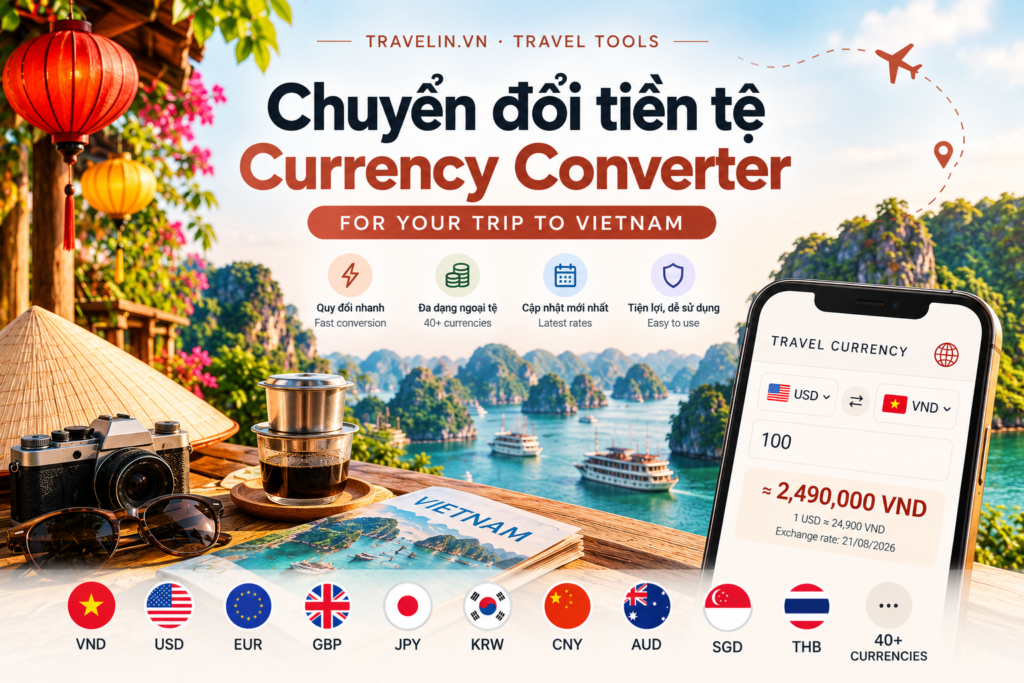
Travel tip: Use the currency converter on Travelin.vn to estimate the value of Vietnamese dong against USD, EUR, GBP, AUD, and other currencies. Actual exchange rates offered by banks or exchange providers may differ from reference rates.
9. Can You Pay with US Dollars in Vietnam?
Under Vietnam’s foreign exchange regulations, pricing, payments, and transactions within the country must generally be conducted in Vietnamese dong, except in circumstances specifically permitted by law.
Therefore, travelers should not assume that hotels, restaurants, shops, or transportation providers will accept direct payments in US dollars, euros, or other foreign currencies.
The Vietnamese dong is the appropriate currency for most domestic transactions.
International payment cards are another convenient option at businesses that accept them.
10. How Much Money Should You Exchange for a Trip to Vietnam?
The amount of money you need depends on your length of stay, destinations, travel style, and preferred payment methods.
Travelers who use international cards for hotels and major expenses may only need cash for meals, local transportation, shopping, and smaller purchases.
Suggested Cash Budget
| Length of Stay | Suggested Cash Amount |
|---|---|
| 1 day | 500,000–1,000,000 VND |
| 3 days | 1,500,000–3,000,000 VND |
| 5 days | 2,500,000–5,000,000 VND |
| 7 days | 3,500,000–7,000,000 VND |
These figures are general estimates for everyday spending and do not include flights, hotels, organized tours, or other prepaid services.
Actual expenses vary significantly depending on the destination and travel preferences.
Travelers do not need to carry their entire travel budget in cash.
11. Cash Declaration Rules When Entering or Leaving Vietnam
Under Vietnam’s cash declaration regulations, travelers entering or leaving the country must declare cash when carrying amounts exceeding either of the following thresholds:
- More than USD 5,000 or the equivalent in another foreign currency.
- More than VND 15,000,000.
These are customs declaration thresholds, not absolute limits on the amount of money a traveler may carry in every circumstance.
Depending on the situation, additional supporting documentation may be required.
Visitors should verify current requirements with the State Bank of Vietnam and Vietnamese customs authorities before traveling.
12. Common Currency Exchange Mistakes in Vietnam
Not Checking Exchange Rates Before Exchanging Money
Exchange rates can vary between banks and authorized providers.
Comparing rates before completing a transaction may help travelers avoid unnecessary costs.
Using Unauthorized Currency Exchange Services
Unlicensed transactions may expose travelers to counterfeit banknotes, incorrect amounts, or legal problems.
Failing to Count Money After an Exchange
Always count the amount received at the counter and compare it with the transaction details before leaving.
Confusing Vietnamese Banknote Denominations
Some Vietnamese banknotes have similar colors.
Always check the printed value, particularly when handling 20,000 VND and 500,000 VND notes.
Exchanging Too Much Cash
Converting a large amount at the beginning of a trip may leave travelers carrying unnecessary cash or facing difficulties when converting leftover VND back into foreign currency.
Ignoring ATM Withdrawal Fees
ATM fees and international transaction charges can increase the actual cost of withdrawing money.
Review the total charges before confirming a withdrawal.
13. Practical Tips for Exchanging Money Safely in Vietnam
To exchange foreign currency safely and conveniently, follow these recommendations:
- Use banks and licensed currency exchange agents.
- Check the cash buying rate before exchanging foreign banknotes.
- Ask about any additional service fees.
- Carry your passport or valid identification when required.
- Count the money immediately after the transaction.
- Keep exchange receipts for your records.
- Organize Vietnamese banknotes by denomination.
- Avoid carrying large amounts of cash while sightseeing.
- Combine cash with international payment cards.
- Monitor exchange rates using reliable financial sources.
14. Frequently Asked Questions About Currency Exchange in Vietnam
Where can I exchange US dollars for Vietnamese dong?
You can exchange USD for VND at authorized banks and licensed currency exchange agents. Currency exchange services may also be available at major international airports.
Is exchanging money at the airport more expensive?
Airport exchange rates may be less competitive than those offered elsewhere, but this is not always the case. Compare rates and fees before exchanging money.
Can foreigners exchange money at Vietnamese banks?
Yes. Foreign visitors can exchange currency at authorized banks, subject to applicable regulations, identification requirements, and transaction procedures.
Can I withdraw Vietnamese dong using Visa or Mastercard?
Yes, at ATMs that support the relevant international card network. Withdrawal fees and limits depend on the ATM operator and your card issuer.
Can I exchange money at a gold shop in Vietnam?
Only if the business is legally authorized to provide the relevant foreign currency exchange service. Not all gold shops are permitted to exchange foreign currency.
Can I exchange leftover Vietnamese dong back into US dollars?
Buying foreign currency with VND is subject to Vietnam’s foreign exchange regulations, transaction purposes, and documentation requirements.
Contact an authorized bank for information about eligibility and the required procedures.
Should I exchange my entire travel budget into Vietnamese dong?
Not necessarily. Many travelers find it more convenient to combine cash with international cards and exchange additional money when needed.
Is it better to exchange money before arriving in Vietnam?
It depends on the rates available in your home country.
Some travelers prefer to arrive with a small amount of VND for immediate expenses, while others exchange money after arrival at authorized providers.
Compare the total cost, including fees, before deciding.
Conclusion
Exchanging foreign currency is an important part of preparing for a trip to Vietnam.
Choosing a legally authorized exchange provider, checking exchange rates, and using suitable payment methods can help international visitors manage their travel expenses and avoid unnecessary risks.
For first-time visitors, banks and licensed currency exchange agents are reliable options to consider. Airport exchange counters and ATMs can also be convenient when cash is needed immediately after arrival or during a journey.
By combining Vietnamese dong with international payment cards and planning currency exchanges carefully, travelers can enjoy a smoother and more convenient experience throughout Vietnam.
Travelin.vn – Travel in Vietnam provides practical travel information, destination guides, and useful tools to help international visitors prepare for their journeys and explore destinations across Vietnam.
Disclaimer: This article is provided for general informational purposes only and does not constitute legal or financial advice. Exchange rates, foreign currency transaction requirements, and customs regulations may change. Travelers should verify current information with authorized banks, the State Bank of Vietnam, and Vietnamese customs authorities before making transactions.