Binh Dinh is widely known as a land of literature and martial arts, where traditional martial arts have become an important part of the region’s cultural heritage. More than a system of combat techniques, Binh Dinh martial arts reflect the history, cultural identity, community spirit, and traditional values of the people of central Vietnam.
Binh Dinh traditional martial arts were formed and developed through a long process of cultural exchange, adaptation, creativity, and transmission among local communities. Over time, different martial traditions were absorbed and transformed, creating a distinctive style closely associated with the land and people of Binh Dinh.
The martial arts tradition experienced significant development during the Tây Sơn period in the 18th century, a historical era closely connected with the military and cultural history of the region. However, its formation should be understood as a continuous historical process rather than being attributed exclusively to a single period or individual.
Distinctive Characteristics
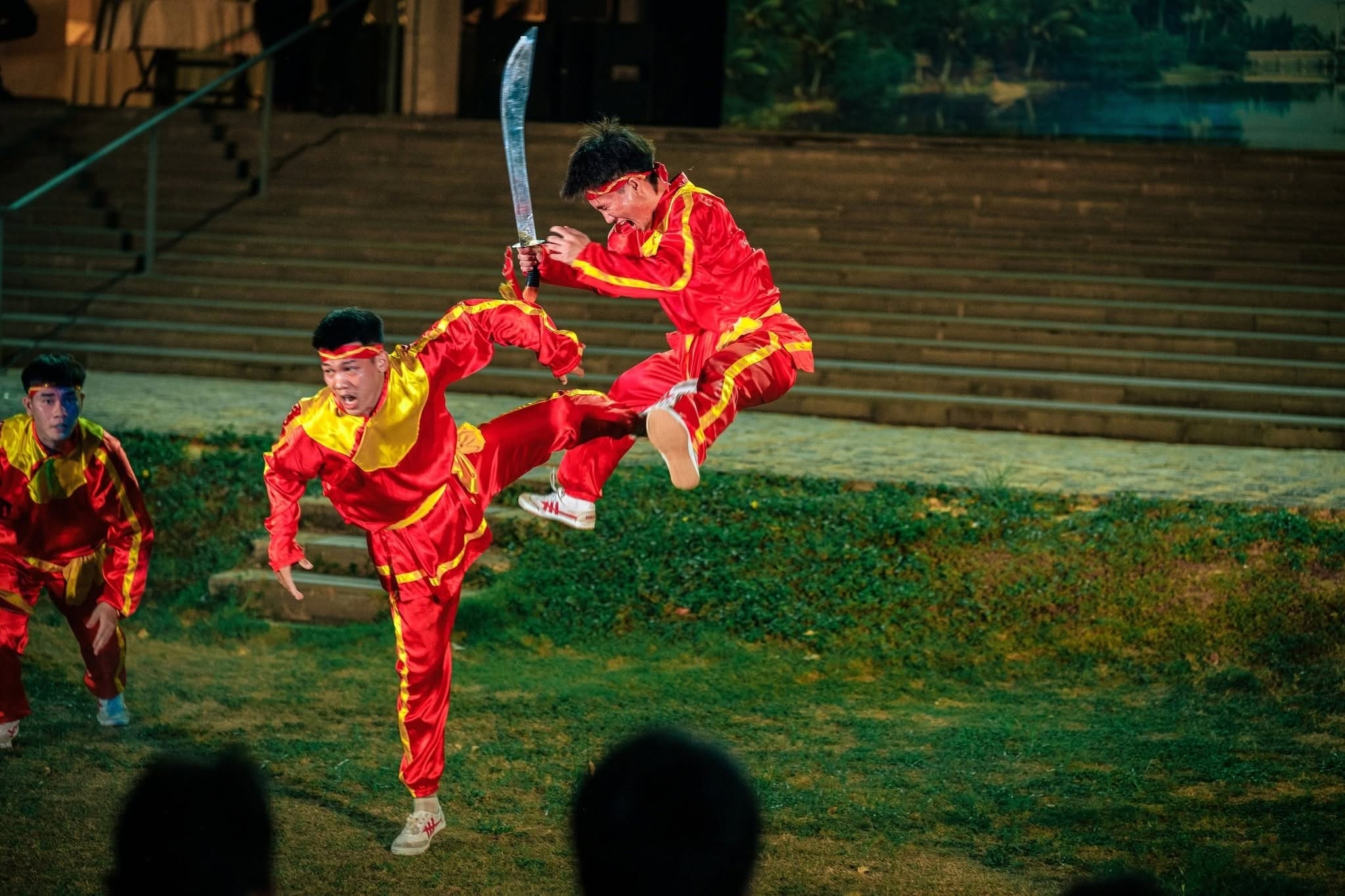
Binh Dinh traditional martial arts include a comprehensive system of physical training, combat techniques, weapons practice, performance, and martial ethics. Practitioners are trained in both empty-hand techniques and the use of traditional weapons such as staffs, sticks, swords, sabres, spears, and other forms of weaponry.
The techniques emphasize the coordination of strength and flexibility, attack and defense, speed and precision, as well as the harmony between physical movement and mental discipline. Several well-known forms and routines are associated with the tradition, including Ngọc Trản, Hùng Kê Quyền, traditional staff routines, and various weapons performances.
The art is also characterized by its strong connection with traditional philosophies, particularly the principles of yin and yang, the Five Elements, and the Eight Trigrams. These concepts are reflected not only in the techniques and movements but also in the way practitioners understand balance, timing, discipline, and the relationship between the individual and the surrounding world.
Martial Ethics and Cultural Values
Binh Dinh martial arts place great importance on the cultivation of both physical strength and personal character. Practitioners are encouraged to develop courage, discipline, perseverance, self-control, respect, honesty, responsibility, and a sense of justice.
Traditional martial arts are not intended to promote violence. Instead, they emphasize self-improvement, the protection of others, respect for opponents, and the responsible use of martial knowledge. The practice of martial arts is therefore regarded as a process of training the body, strengthening the will, refining the mind, and cultivating moral character.
Martial Arts in Community Festivals and Cultural Spaces
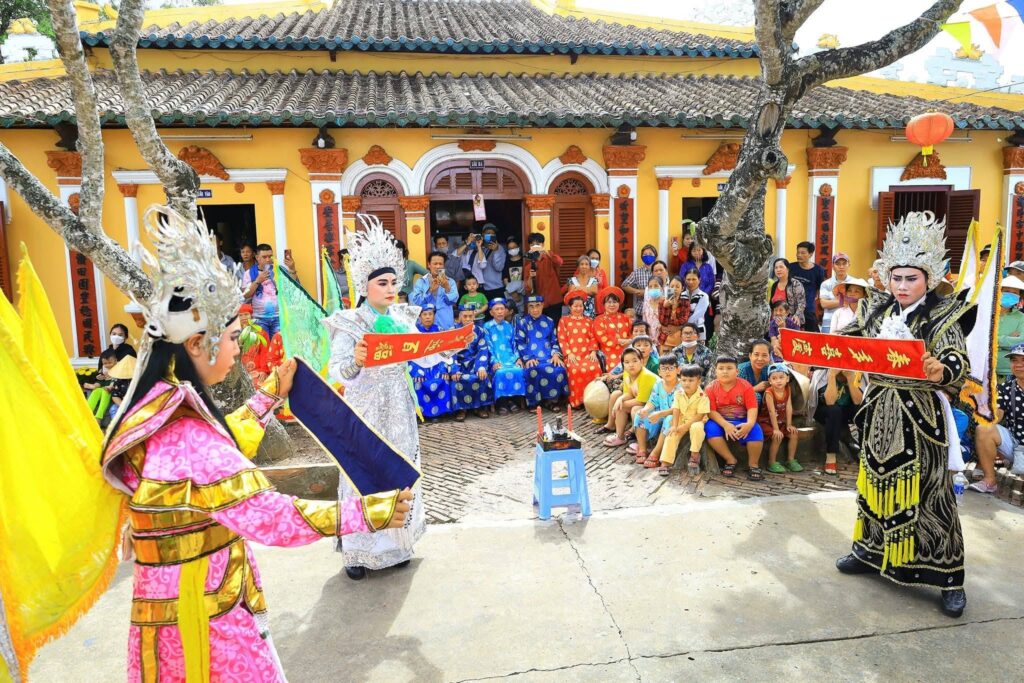
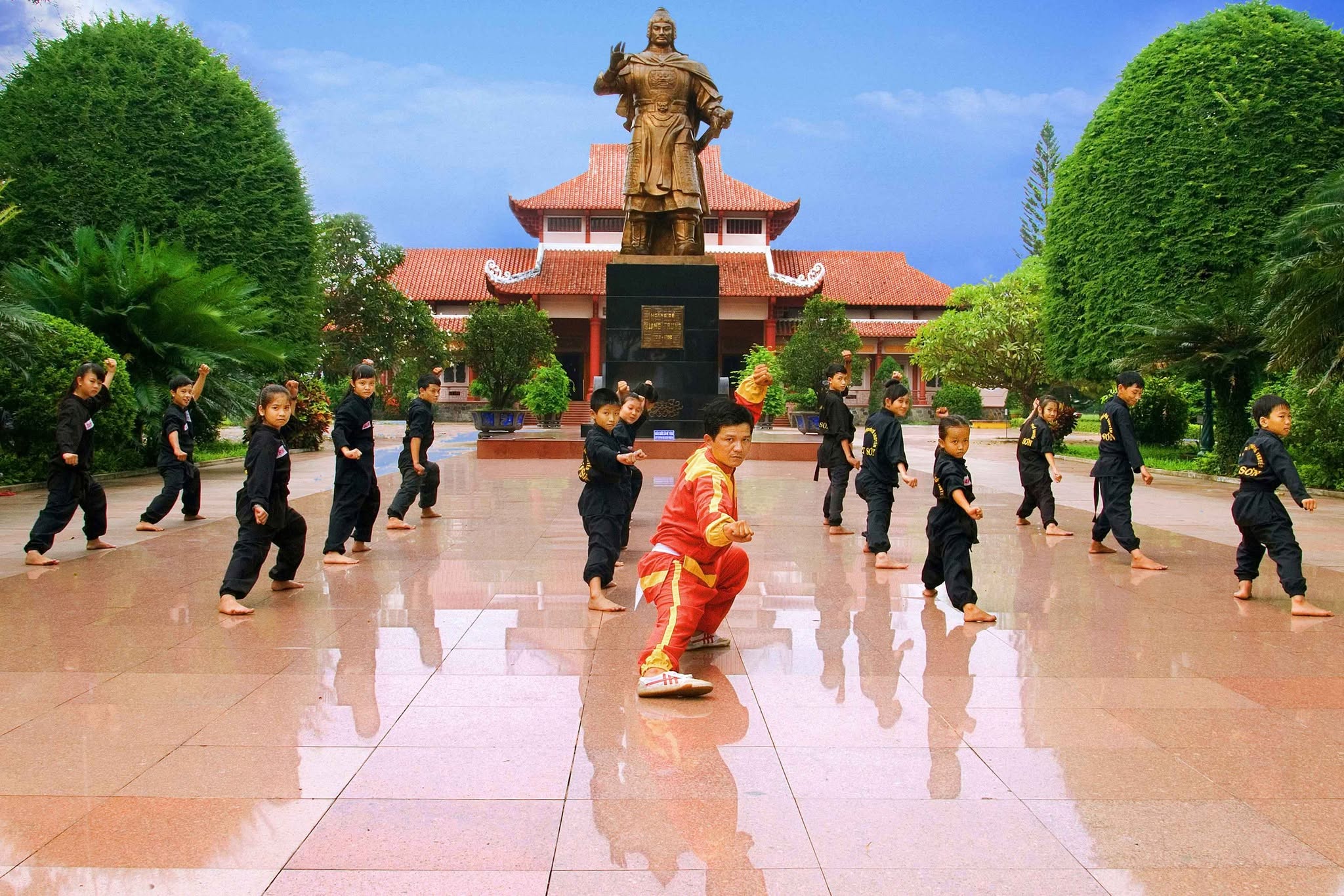
Binh Dinh martial arts are practiced and performed in many traditional cultural spaces, including martial arts schools, clubs, family lineages, village communities, and local festivals. They are particularly associated with the Tây Sơn Festival, the Đổ Giàn Festival in An Thái, and cultural activities at the Quang Trung Museum.
One of the most distinctive artistic elements accompanying martial arts performances is the Tây Sơn battle drum. The powerful rhythm of the drums creates a solemn and energetic atmosphere, enhancing the visual impact of the movements while recalling the historical martial spirit of the region.
Martial arts performances at festivals are not merely demonstrations of physical techniques. They also serve as a means of preserving historical memories, strengthening community bonds, educating younger generations, and expressing local cultural pride.
Transmission and Preservation
The tradition of Binh Dinh martial arts has been passed down through generations by means of martial arts schools, clubs, families, village communities, and cultural events. Several areas are particularly recognized for their long-standing martial traditions, including An Vinh, Thuận Truyền, Phú Thiện, An Thái, Phương Danh, An Hòa, Kỳ Sơn, and Đại Lễ.
Today, martial arts training continues to attract practitioners of different ages. Traditional masters and instructors play an important role in preserving technical systems, teaching martial ethics, maintaining traditional routines, and transmitting knowledge to younger generations.
The preservation of Binh Dinh traditional martial arts involves not only maintaining combat techniques but also protecting the cultural environment in which the tradition is practiced. This includes traditional festivals, performance spaces, teaching methods, oral transmission, community participation, and the values associated with martial ethics.
Heritage Significance
Binh Dinh traditional martial arts represent a combination of folk performing arts, traditional sports, folk knowledge, physical training techniques, weapons practice, festival culture, and community heritage.
The tradition reflects the historical experiences and cultural creativity of the people of Binh Dinh. It also demonstrates how martial arts can function as a means of education, artistic expression, community connection, and the preservation of local identity.
Continued documentation, research, community-based teaching, educational activities, and cultural promotion are important measures to ensure that this heritage remains a living tradition. At the same time, preservation efforts should respect the original characteristics, traditional context, and diversity of the martial arts lineages that exist within Binh Dinh.
Heritage Information
- Name of heritage: Binh Dinh Traditional Martial Arts
- Type of heritage: Folk performing arts
- Location: Binh Dinh, now part of Gia Lai Province
- Typical activities: Empty-hand martial arts performances, traditional staff and weapon routines, Tây Sơn battle drums, and martial arts instruction at schools, clubs, and festivals
- Outstanding values: Historical, cultural, artistic, sporting, folk knowledge, and martial ethics values