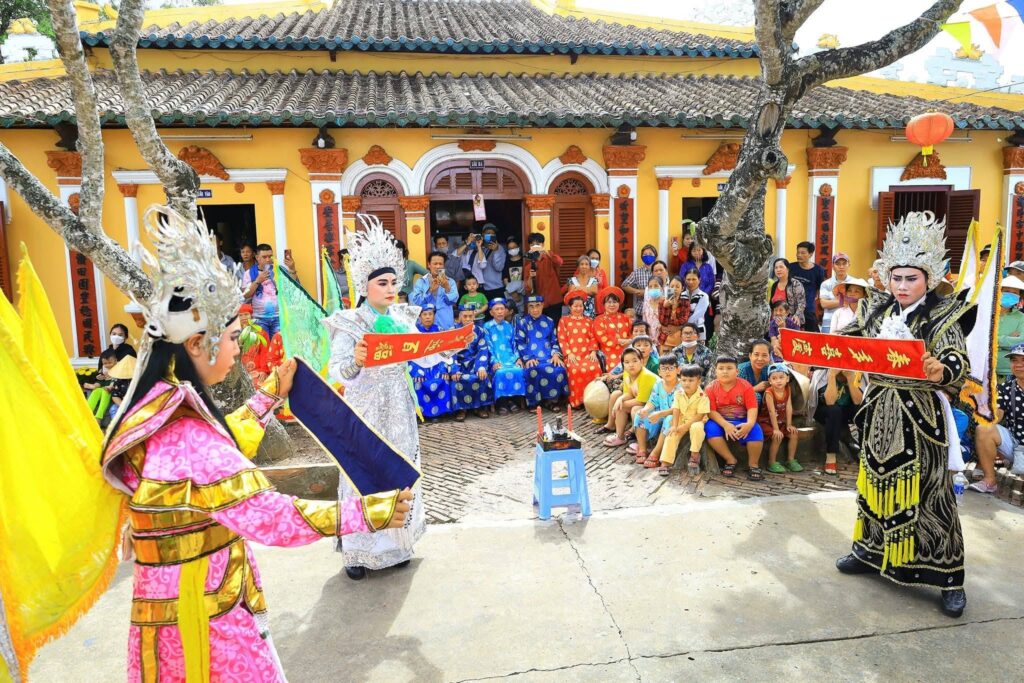
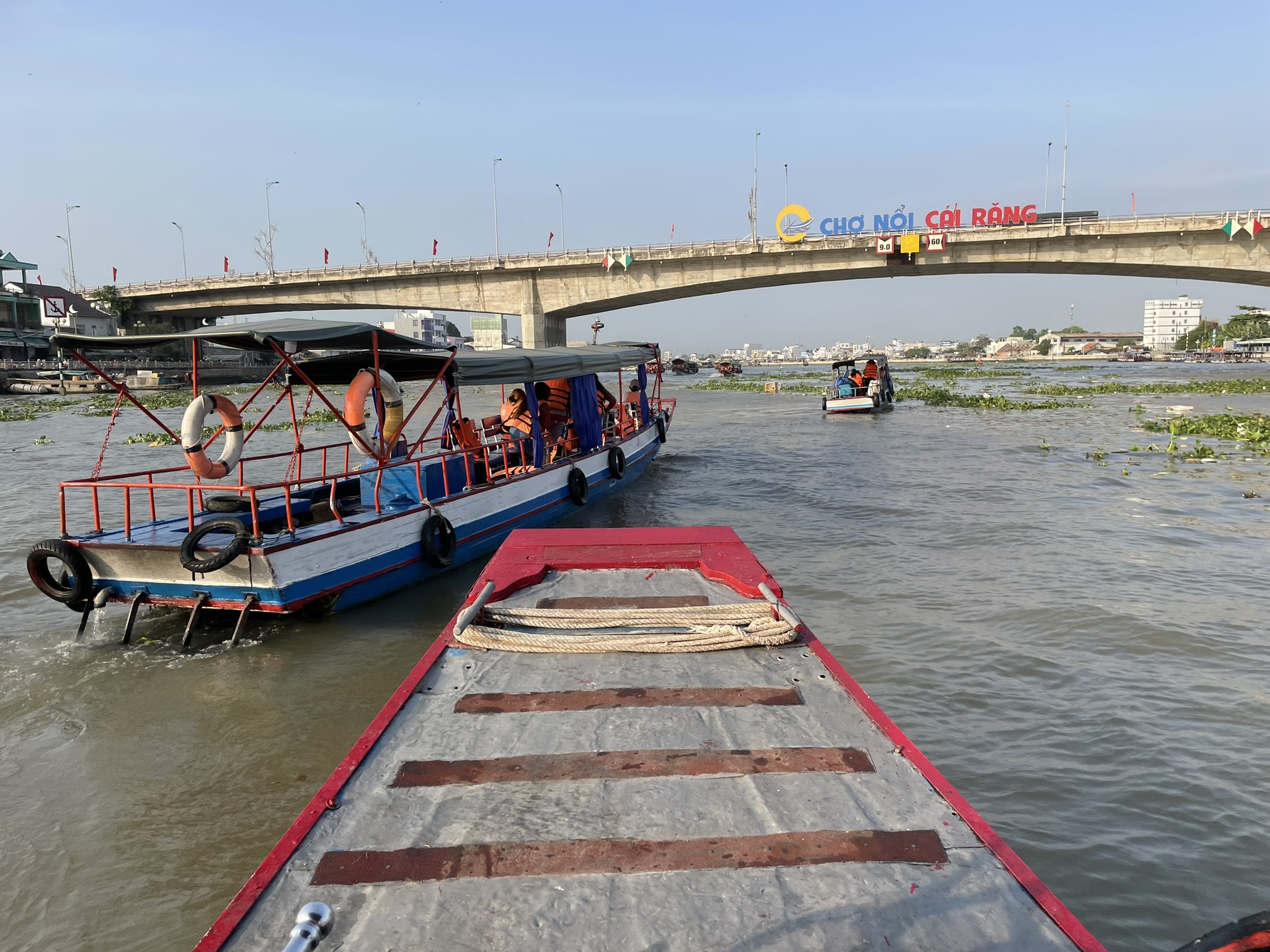
Cai Rang Floating Market Culture is a distinctive element of Can Tho’s intangible cultural heritage, reflecting the daily life, trading customs, folk beliefs, and traditional knowledge of communities living in the Mekong Delta. More than a place where agricultural products are bought and sold on the river, Cai Rang Floating Market is a unique cultural space where ways of living and adapting to the waterways have been passed down through generations.
On March 10, 2016, the Ministry of Culture, Sports and Tourism issued Decision No. 829/QD-BVHTTDL, officially including Cai Rang Floating Market Culture in the National Intangible Cultural Heritage List under the category of Social Customs and Beliefs.
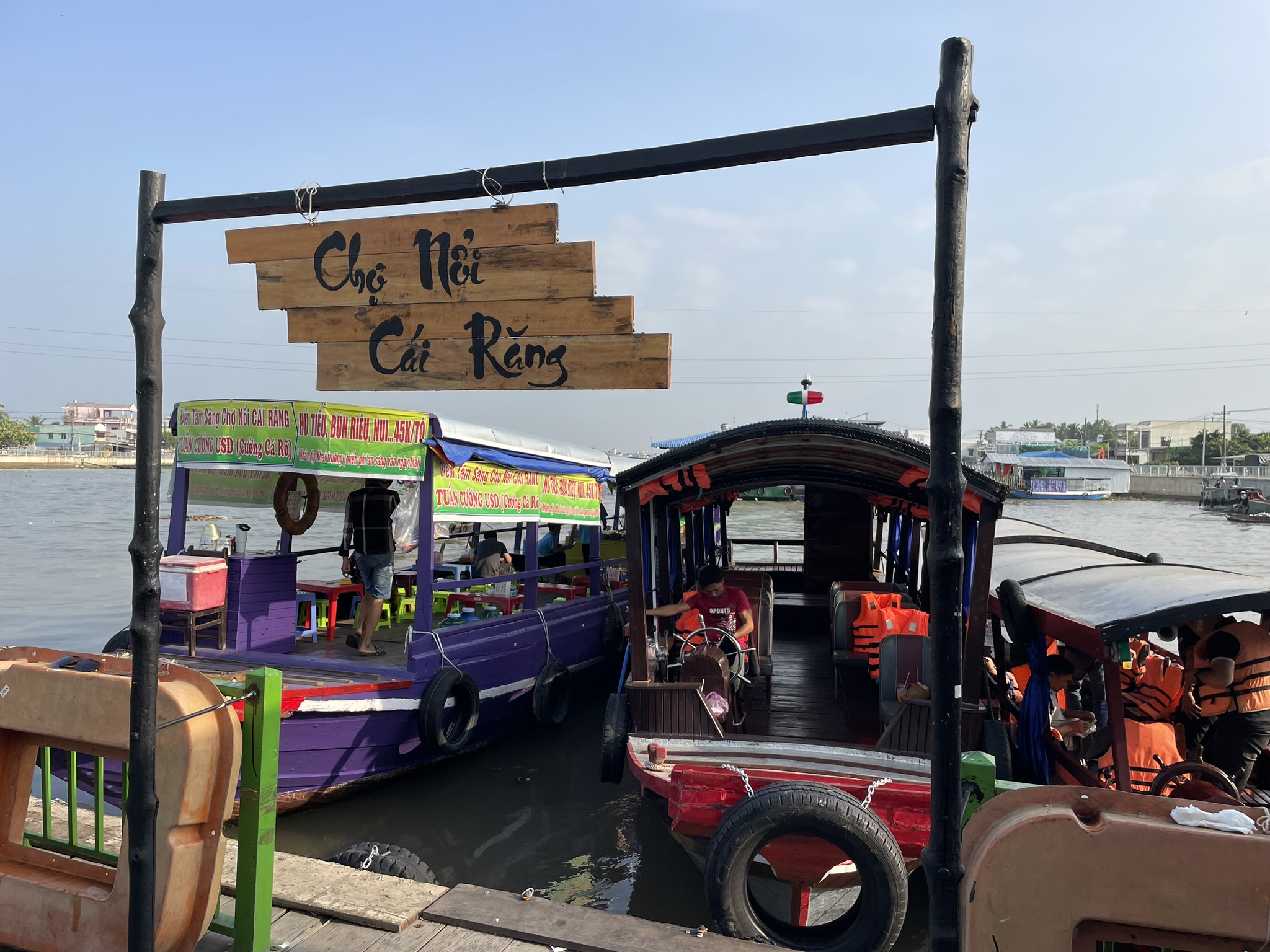
Cai Rang Floating Market on the Can Tho River
Cai Rang Floating Market is located on the Can Tho River, a branch of the Hau River, in the Cai Rang area of Can Tho City. It is approximately 6 kilometers from the city center.
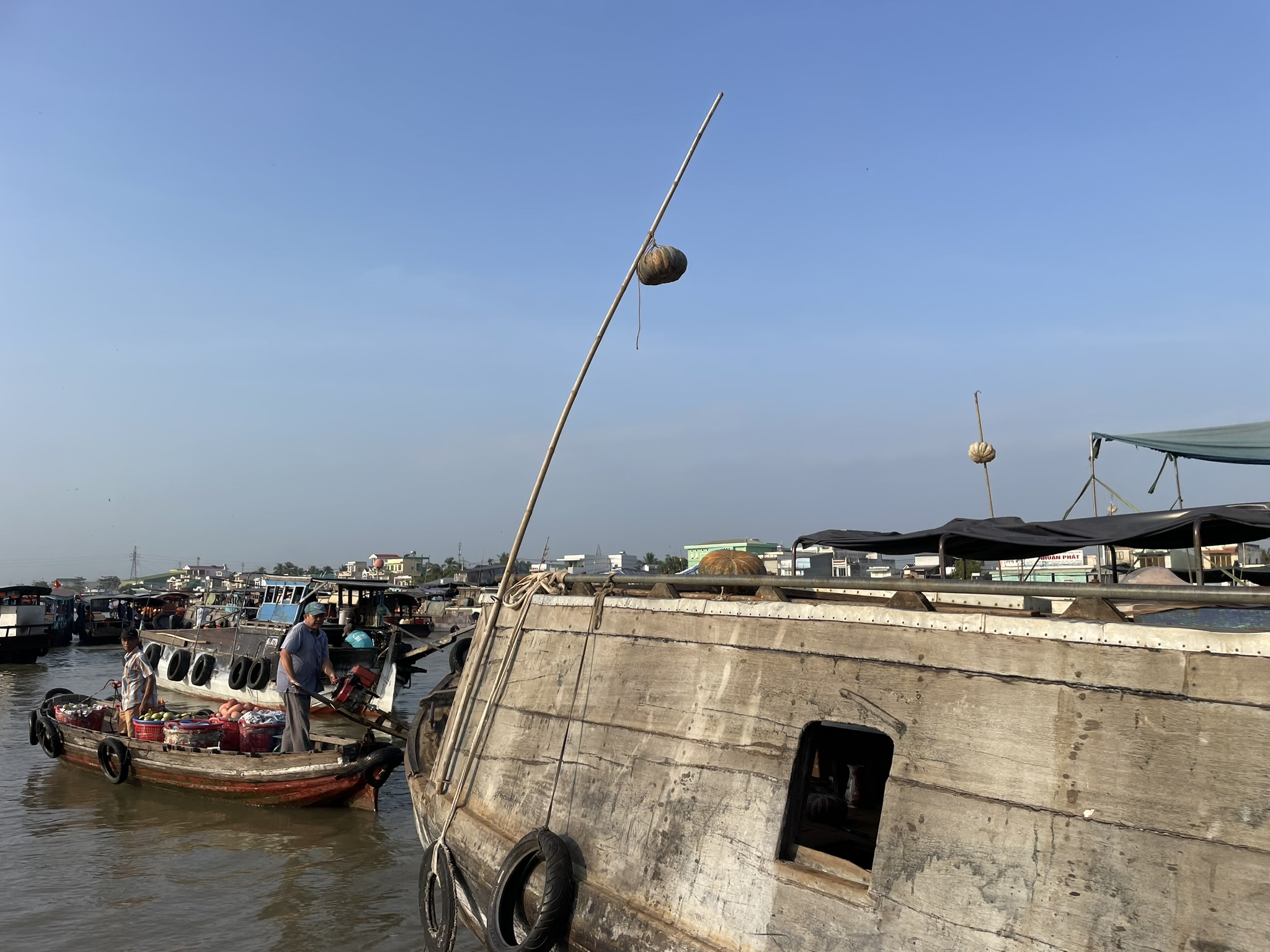
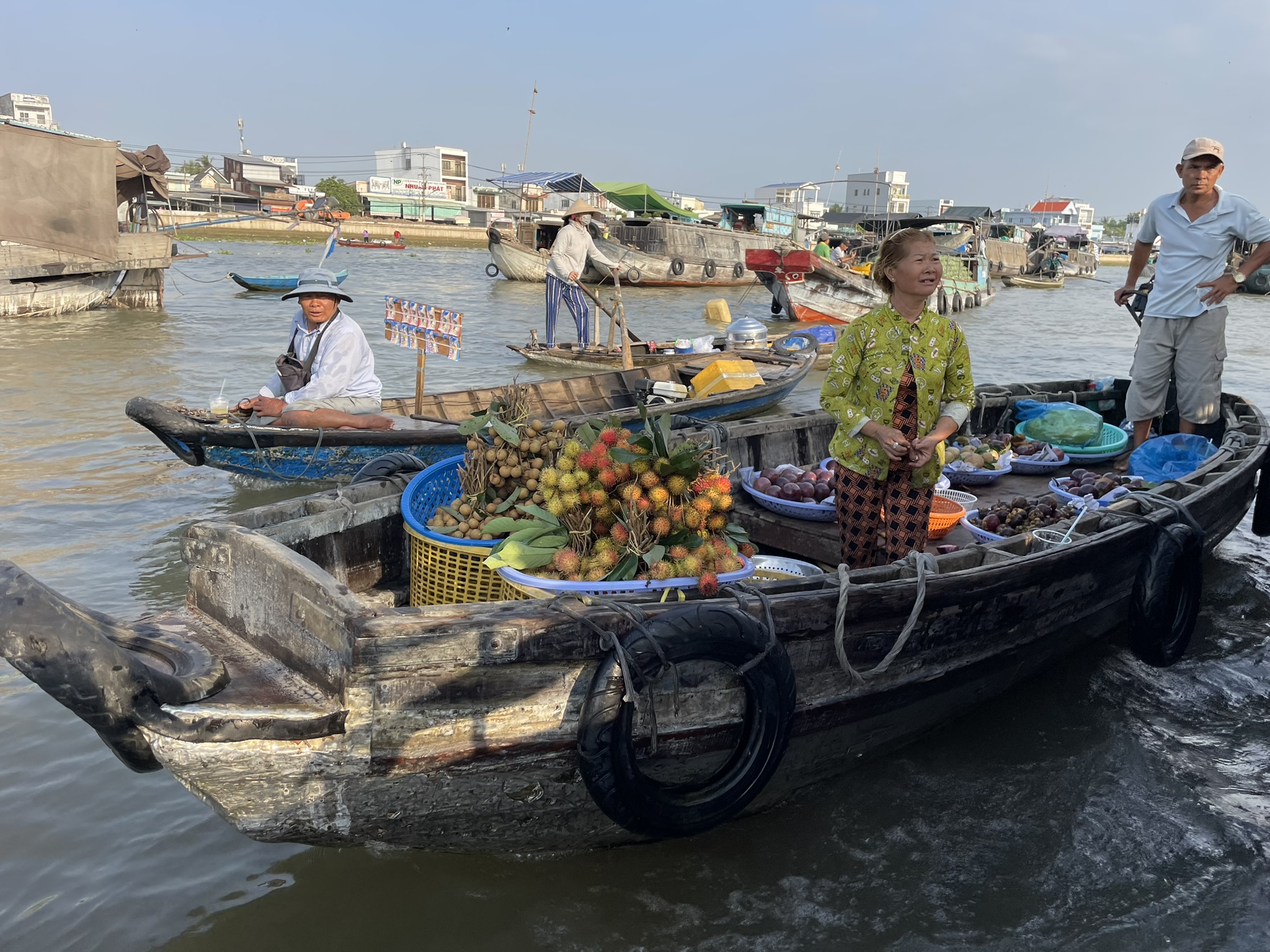
Unlike conventional markets on land, trading here takes place primarily on boats and sampans. Sellers and buyers navigate the river to exchange goods, with fresh agricultural products, fruits, and vegetables from Can Tho’s orchards and neighboring provinces forming the main commodities.
With a history spanning more than a century, Cai Rang Floating Market developed from the commercial needs of communities living along the waterways. It became an important gathering and distribution point for agricultural products as well as a trading space for local residents and merchants from surrounding areas.
Although road transportation has become increasingly important, the floating market continues to exist and has developed into one of Can Tho’s best-known cultural attractions. Its river-based activities provide a vivid glimpse into the economic life, customs, and social traditions of communities in Southern Vietnam.
Social Customs and Trading Practices
Cai Rang Floating Market emerged from the need to exchange and distribute goods among communities in Can Tho and other parts of the Mekong Delta. Unlike markets on land, wholesale trading of agricultural products has traditionally played an important role.
Local traders use familiar methods such as weighing, measuring, and counting, while also developing practices suited to life on the water. One example is selling by the lot, in which an entire bunch, bundle, or quantity of produce is sold as a unit rather than being individually weighed or counted.
Another distinctive practice is known as “beo hang.” Sellers place a tall bamboo pole on their boat and hang samples of the products they are selling from it. A boat displaying pineapples, for example, signals that pineapples are available for sale. This simple system allows buyers to identify products from a distance in the busy river environment.
These practices demonstrate the adaptability of Mekong Delta communities and form an important part of the market’s cultural identity.
Boats, Sampans and Life on the Water
Boats are more than transportation and trading vessels at Cai Rang Floating Market. For some families, they have also served as workplaces, homes, and spaces for everyday life.
A variety of vessels can be found on the waterways, including traditional wooden boats, larger cargo boats, small trading boats, and motorized craft of different sizes and capacities.
Large boats may remain anchored in one place to sell agricultural products, while smaller boats move between them to purchase or exchange goods. In the past, some floating structures also served as long-term homes and places of business.
On certain boats, a family’s living area is arranged toward the rear, with basic facilities organized within the limited space. For families who spent much of their lives on the river, the boat became an integrated environment for living, working, traveling, and trading.
This combination of transportation, residence, and commerce reflects the remarkable ability of Mekong Delta communities to adapt their daily lives to a dense network of rivers and canals.
Folk Beliefs of Floating Market Communities
Life on the waterways has traditionally been accompanied by a variety of folk beliefs and customs passed down through generations.
Among the practices associated with river-based communities are:
- Worship of Ba – Cau, local guardian figures traditionally associated with boats.
- Worship of Than Tai and Ong Dia, deities associated with prosperity and good fortune.
- Worship of Quan Am Nam Hai, a form of popular Buddhist devotion associated with protection and compassion.
- Ceremonies held when a new boat is built or an existing boat is repaired.
- New Year departure rituals and prayers for safety, favorable business, and a successful journey.
People who make their living on the river have also preserved beliefs concerning omens, taboos, and signs associated with water travel and trading activities. These beliefs reflect their hopes for safety and good fortune in an environment where daily life has always been closely connected with nature.
The floating market has also traditionally served as a social space. After a day of trading, people may gather to drink tea, talk, play chess, sing Don Ca Tai Tu, or exchange traditional folk songs. Such everyday interactions contribute to the distinctive cultural atmosphere of the Mekong Delta.
Traditional Knowledge and Adaptation to the Waterways
One of the important values of Cai Rang Floating Market Culture lies in the body of traditional knowledge accumulated through generations of settlement and life in the Mekong Delta.
River communities developed practical knowledge about choosing suitable places to anchor boats, particularly near river junctions, canal mouths, wider sections of waterways, and areas where different currents meet. These locations provide convenient access for transportation, trading, resting, and waiting for favorable tides.
Navigating boats also requires considerable practical knowledge. Boat operators need to understand the characteristics of individual sections of the river, including shallow and deep areas, strong currents, whirlpools, and other hazards. They also need to understand the rhythm of rising and falling tides when deciding when to depart, travel, load goods, or anchor.
This knowledge is largely acquired through experience and passed from one generation to another. It helps people reduce travel time and effort while improving safety and efficiency on the waterways.
Such traditional knowledge represents an important form of intangible heritage because it reflects how communities have adapted their livelihoods to the natural environment of the Mekong Delta.
Historical, Cultural and Economic Values
The history of Cai Rang Floating Market provides an insight into the development of communities in the Mekong Delta, from early settlement and land reclamation to the formation of markets and the expansion of river-based trade.
The market reflects changes in water transportation, agricultural production, and the distribution of goods throughout the region. At the same time, trading customs, folk beliefs, traditional knowledge, and everyday social practices have created a distinctive cultural identity associated with the river communities of Can Tho.
The floating market has also historically brought together people from different places who came to trade, work, and make a living along the waterways. This interaction created an environment in which new customs, forms of communication, and ways of organizing daily life could develop in response to local social and environmental conditions.
Today, Cai Rang Floating Market also plays an important role in tourism. Its distinctive river-based setting attracts both domestic and international visitors, helping promote the cultural identity of Can Tho and the wider Mekong Delta while creating additional economic opportunities for local communities.
Preserving Cai Rang Floating Market Culture
Cai Rang Floating Market Culture encompasses several interconnected elements of intangible heritage, including social customs, folk beliefs, traditional knowledge, trading practices, and community life.
Preserving the floating market therefore means more than simply maintaining the sale of agricultural products on the river. It also involves safeguarding traditional trading practices, boat-based activities, folk beliefs, local knowledge, and the cultural environment in which these traditions developed.
As road transportation continues to expand, the floating market faces changes in the way goods are transported and traded. Its long-term preservation needs to be connected with environmental protection, sustainable tourism, and the livelihoods of local residents.
Most importantly, the community itself remains at the heart of the heritage. The market can only remain a living cultural heritage when local people continue to participate in its activities and benefit from its development.
Cai Rang Floating Market Culture is therefore more than the story of a market on a river. It is a living expression of how Mekong Delta communities have adapted to their natural environment, organized their livelihoods, developed trading networks, and passed cultural values from one generation to the next.
Heritage Information
Heritage: Cai Rang Floating Market Culture
Type: Social Customs and Beliefs
Location: Can Tho City, Vietnam
Recognition: National Intangible Cultural Heritage
Decision: No. 829/QD-BVHTTDL, dated March 10, 2016
Recognizing authority: Ministry of Culture, Sports and Tourism
Key values: River-based trading customs, boat-based life, folk beliefs, traditional knowledge, community activities, and cultural practices associated with the waterways of the Mekong Delta
Exploring Cai Rang Floating Market by Tourist Boat
One of the most enjoyable ways to experience Cai Rang Floating Market is by boat, traveling along the river and seeing Mekong Delta life from the water.
An early-morning journey offers a particularly memorable atmosphere. The river becomes lively with boats carrying fruits and agricultural products, traders exchanging goods, and visitors moving between the vessels, while the surrounding waterways retain the peaceful rhythm of everyday life in Can Tho.
A boat trip can be combined with visits to other local attractions, allowing visitors to experience the floating market, explore traditional river-based livelihoods, and discover the distinctive landscape of the Mekong Delta.
Departure times: 5:00 a.m. | 5:30 a.m. | 6:00 a.m.
Tour price: From VND 100,000 per person
Tour guide: Available throughout the journey
Private boat charter: Available for families, groups of friends, and private parties. Prices start from VND 1,000,000 per boat, depending on the itinerary and group requirements.
Contact: 0938 948 549
Address: 118 Hai Ba Trung, Ninh Kieu Ward, Can Tho City, Vietnam
For visitors arriving early in the morning, the trip offers a chance to experience Cai Rang when trading activities are at their liveliest, while also discovering the traditional occupations and everyday culture that have shaped life along Can Tho’s waterways.