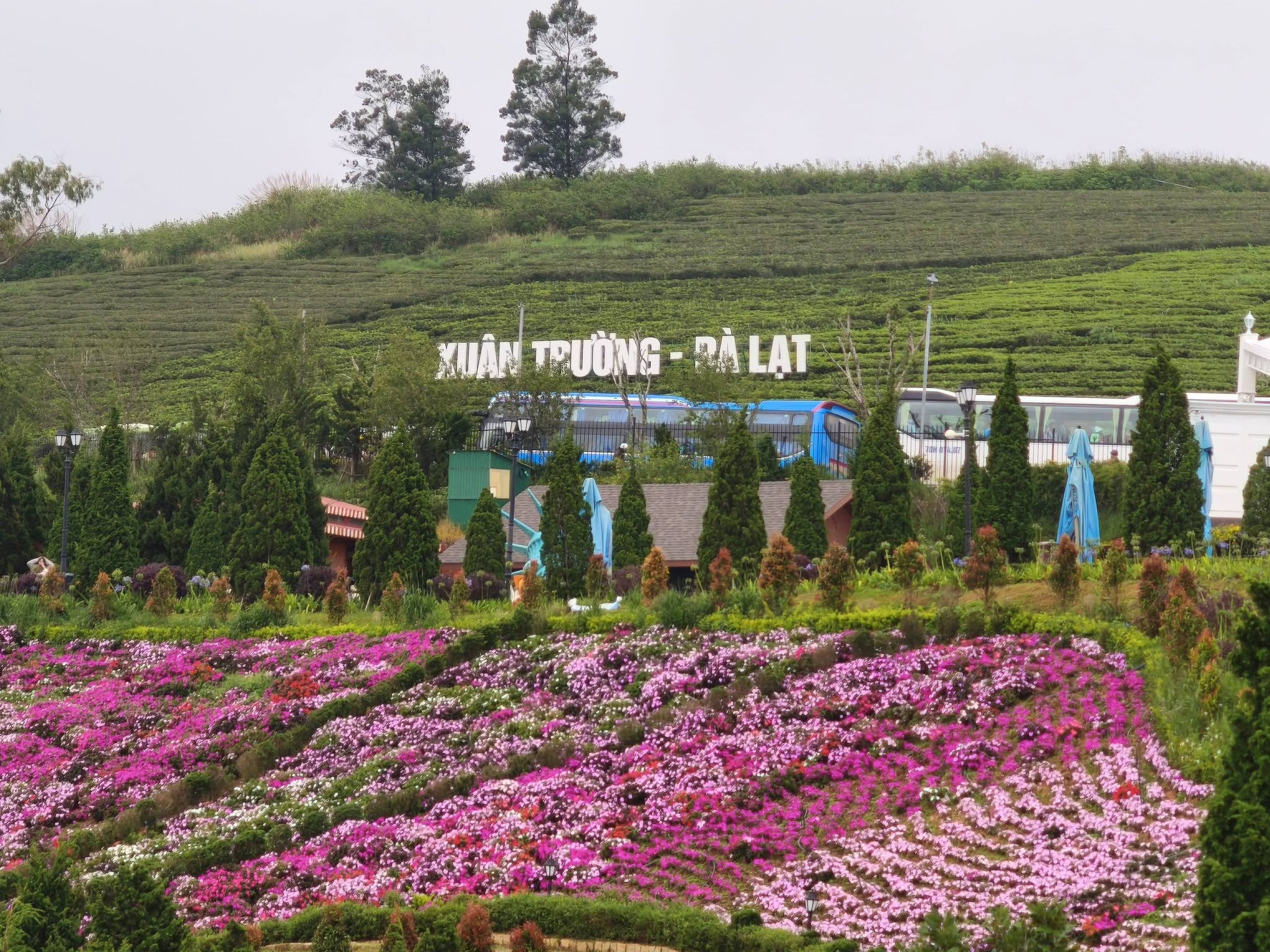
Located about 22–23 km southeast of central Da Lat, Cau Dat Tea Hill sits at an elevation of approximately 1,600–1,650 meters above sea level. Rolling hills covered with rows of tea plants stretch across the highland landscape, creating one of the most recognizable rural scenes around Da Lat.
For nearly a century, Cau Dat has been associated with tea cultivation. Today, the area is not only an important agricultural landscape but also a popular destination for travelers looking to experience nature, learn about tea production, watch the sunrise and search for clouds above the highlands.
Nearly a Century of Tea Cultivation
Cau Dat has natural conditions that are well suited to tea cultivation, including a cool climate, high elevation, suitable soil and frequent moisture.
Tea cultivation here began during the French colonial period and expanded during the early decades of the 20th century.
In 1927, the French began establishing tea plantations and processing facilities in the Cau Dat area. Over the following decades, the region developed into a major tea-growing area, becoming closely connected with the agricultural development of Da Lat and Lam Dong.
Tea gradually became an important part of the local economy and way of life. The green hills surrounding Cau Dat were shaped by generations of tea cultivation, creating the landscape that visitors see today.
After 1975, the tea plantations were reorganized under state-run agricultural management. During the economic reform period, tea production continued to evolve, with new varieties and improved cultivation and processing methods introduced.
Today, Cau Dat is widely known for combining agriculture with tourism, allowing visitors to experience a working tea-growing landscape rather than simply viewing it from a distance.
Rolling Green Tea Hills
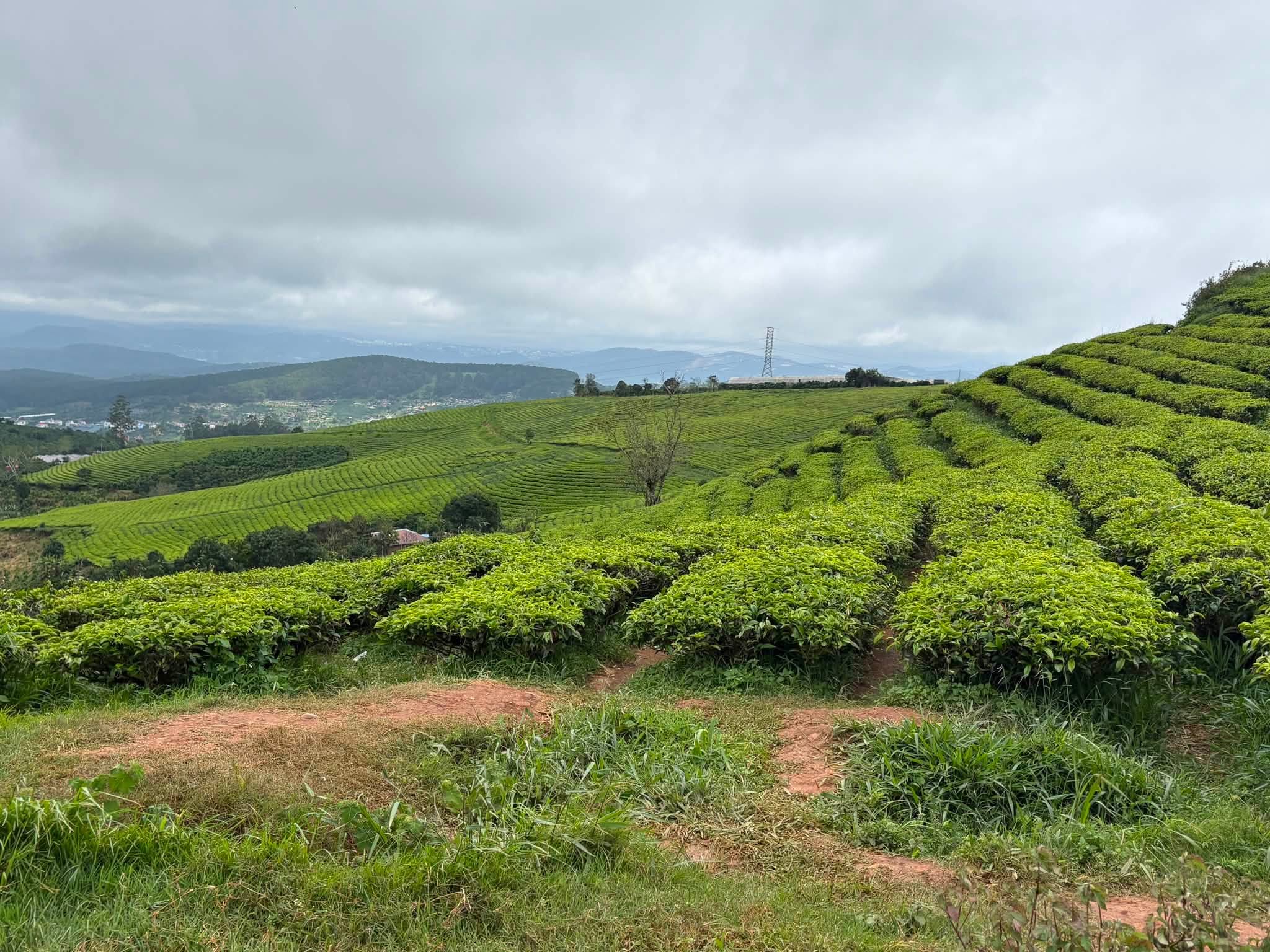
The greatest attraction of Cau Dat is its landscape.
Rows of tea plants follow the natural contours of the hills, forming soft, flowing patterns across the slopes. From higher viewpoints, the green tea fields appear to roll toward the surrounding mountains, creating a peaceful highland panorama.
Early in the morning, mist often settles over the hills. As the first sunlight breaks through, the young tea leaves gradually emerge from the haze, creating a quiet and atmospheric scene.
At certain times of the year, the green tea fields are complemented by the bright yellow blossoms of wild sunflowers, adding another layer of color to the landscape.
This combination of rolling hills, tea plantations, mist and mountain air has made Cau Dat one of the most photographed rural destinations around Da Lat.
Cloud Hunting and Sunrise
One of the most popular experiences at Cau Dat is cloud hunting in the early morning.
Because of its elevation and surrounding valleys, the area can develop layers of low clouds and mist when weather conditions are favorable. From elevated viewpoints, visitors may see clouds drifting across the valleys below.
The period from around 5:30 to 8:00 AM is generally the best time to look for this experience, particularly on cold mornings with suitable humidity and weather conditions.
Sunrise is another highlight. As the sun rises above the surrounding hills, the first rays of light pass through the mist and illuminate the tea fields, constantly changing the colors and atmosphere of the landscape.
For travelers who prefer a later visit, the period from approximately 4:00 to 5:30 PM offers a different experience. The afternoon light becomes warmer, casting long shadows across the hills and creating beautiful conditions for photography.
Clouds and mist, however, depend entirely on the weather, so there is no guarantee of seeing a sea of clouds on every visit.
Discovering the Story Behind Vietnamese Tea
Cau Dat is also a place where visitors can learn more about the history of tea cultivation in Da Lat.
Tea-related exhibition spaces and heritage areas introduce visitors to the traditional processes of growing, harvesting and processing tea. Historical equipment, tools and photographs help illustrate how tea production developed in the region over the decades.
Depending on the program, visitors may also have opportunities to learn about tea cultivation, observe the harvesting process and experience tea tasting.
Enjoying a cup of hot tea while surrounded by green hills and cool highland air offers a simple but memorable way to experience Cau Dat.
More Than Just Tea Hills
A visit to Cau Dat today can include more than walking among the tea plantations.
The surrounding area features cafés and viewpoints overlooking the hills, photography spots, cloud-hunting locations and other agricultural attractions.
One of the most striking elements of the landscape is the presence of large wind turbines in the surrounding highlands. Their tall white structures rise above the tea fields, creating an unusual contrast between traditional agriculture and modern renewable energy infrastructure.
The combination of green tea plantations, mountain scenery and wind turbines gives Cau Dat a distinctive visual character.
Visitors can also combine a trip to the tea hills with a journey through the southeastern outskirts of Da Lat, where farms, gardens and quiet mountain roads offer a glimpse of the city’s agricultural side.
A Destination for Agricultural Tourism
What makes Cau Dat different from many other attractions in Da Lat is its strong connection between agriculture and tourism.
Visitors come not only to take photographs but also to understand an agricultural tradition that has been part of the region for nearly a century.
From the tea plants growing across the hills to harvesting, processing and tasting, the experience connects the landscape with the people and work behind the final product.
This approach also gives additional value to the tea-growing region, allowing traditional agricultural activities to coexist with Da Lat’s growing demand for experiential and sustainable tourism.
When Is the Best Time to Visit Cau Dat Tea Hill?
Cau Dat can be visited throughout the day, but early morning is the most popular time.
From around 5:30 to 8:30 AM, visitors may combine cloud hunting, sunrise viewing and a walk through the tea landscape while the air is still cool and fresh.
The period from approximately 4:00 to 5:30 PM is better suited to travelers who want to enjoy the softer afternoon light and watch the tea hills change color toward sunset.
The colder months can offer better opportunities for mist and clouds, although conditions vary from day to day.
Travel Tips for Visiting Cau Dat
The journey from central Da Lat to Cau Dat takes visitors along a scenic route through the city’s southeastern outskirts, passing hills, gardens, farms and highland agricultural areas.
If you want to hunt for clouds or catch the sunrise, leaving Da Lat early is essential. Temperatures at Cau Dat can be considerably colder than in the city, particularly during the colder months, so a warm jacket is recommended.
When visiting working agricultural areas, travelers should follow designated paths and avoid entering tea rows or disturbing farming activities.
Some cafés, cloud-viewing areas and experiential attractions may charge separate fees or operate according to their own schedules. It is advisable to check current information before visiting.
Basic Information
Location: Cau Dat area, Xuan Truong – Da Lat Ward, Lam Dong Province, Vietnam.
Distance: Approximately 22–23 km from central Da Lat.
Elevation: Approximately 1,600–1,650 meters above sea level.
Main experiences: Exploring tea plantations, learning about tea production, tea and coffee tasting, cloud hunting, sunrise viewing, photography and discovering the agricultural landscape of the Da Lat highlands.
Cau Dat Tea Hill does not rely on grand architecture or elaborate attractions. Its appeal lies in simpler things: endless rows of tea, cool mountain air, morning mist and winding roads through the hills.
For travelers exploring Da Lat, a morning at Cau Dat offers a different side of the city: a greener Da Lat shaped by nearly a century of tea cultivation, highland agriculture and a slower rhythm of life close to nature.