Khmer Five-Tone Music in Soc Trang Province is a traditional ensemble-based musical art form with strong ritual and religious characteristics, closely associated with Theravada Buddhism and the religious and community life of Khmer people in pagodas, villages, and hamlets throughout Southern Vietnam. Beyond accompanying Buddhist ceremonies and funeral rituals, this musical tradition reflects the worldview, spiritual beliefs, aesthetic values, community relationships, and cultural identity of the Khmer people.
| Heritage Information | Details |
|---|---|
| Name of heritage | Khmer Five-Tone Music |
| Decision No. | 4602/QD-BVHTTDL dated December 20, 2019 |
| Type | Folk performing arts |
| Location | Soc Trang Province |
Recognizing its outstanding historical, artistic, cultural, and spiritual values, Khmer Five-Tone Music in Soc Trang Province was included in the National Intangible Cultural Heritage List by the Minister of Culture, Sports and Tourism under Decision No. 4602/QD-BVHTTDL dated December 20, 2019.
A Traditional Ensemble Associated with Ritual and Buddhist Life
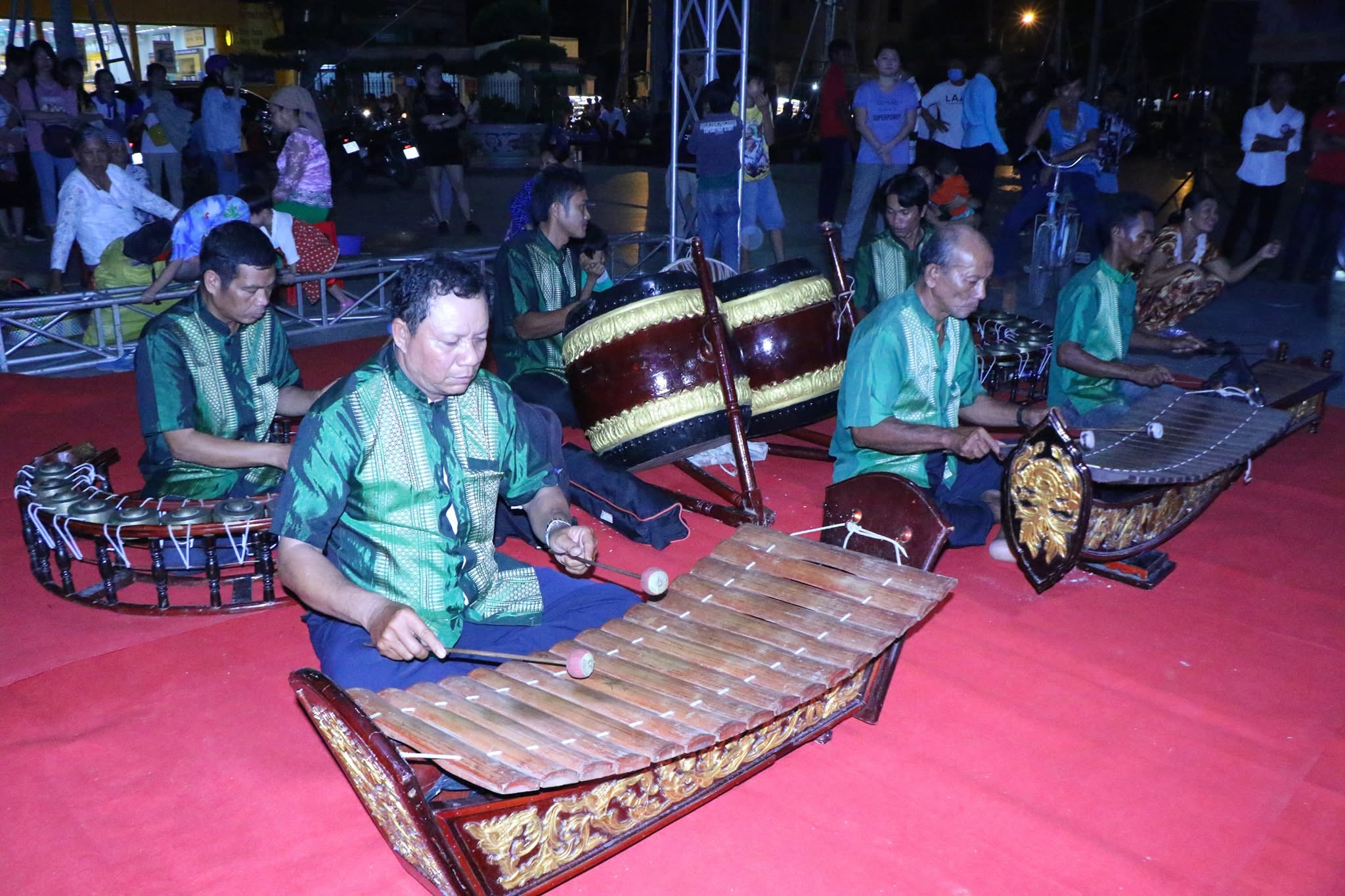
Khmer Five-Tone Music is commonly known by its Khmer name, Pinn Peat. It is a traditional ensemble primarily used in religious ceremonies, community rituals, and important cultural events among Khmer communities.
The music is closely connected with Khmer Theravada Buddhist pagodas, which serve as important centers of spiritual, educational, cultural, and community life. Traditionally, the ensemble was performed during major Buddhist ceremonies such as the Buddha’s Birthday, Buddha image consecration ceremonies, the beginning and end of the Buddhist retreat, robe-offering ceremonies, boundary consecration rituals, blessing ceremonies, prayers for the deceased, and other important religious occasions.
Outside pagodas, Five-Tone Music was also performed during funeral rituals held at Khmer households.
The name “Five-Tone Music” refers to the ensemble’s structure, which consists of five groups of instruments made from five different materials. Each material produces a distinctive timbre and contributes a particular layer to the overall sound:
- Bronze instruments
- Iron instruments
- Wooden instruments
- Wind instruments
- Leather or skin instruments
A relatively complete traditional Five-Tone ensemble usually consists of nine instruments:
- Wind instruments: Srolai Pinn Peat.
- Wooden instruments: Rôneat Ek and Rôneat Thung.
- Iron instruments: Rôneat Đek.
- Bronze instruments: Kuông Vông Tôch, Kuông Vông Thum, and Chhưng.
- Leather instruments: Samphô drum and Skô Thum drums.
The combination of these instruments creates a rich and layered sound structure in which every instrument has its own function while remaining closely connected to the others.
Cultural Exchanges within Southeast Asia
Khmer Five-Tone Music in Soc Trang shares many similarities with Five-Tone ensembles found among Khmer communities in other provinces of Southern Vietnam and with the Pinn Peat ensemble of Khmer people in Cambodia.
It also bears certain similarities to traditional ensembles in other Southeast Asian countries, such as the Sebnai of Laos, Piphat of Thailand, Saing Waing or Pat Waing of Myanmar, and Gamelan of Malaysia.
These similarities reflect centuries of cultural interaction, exchange, and mutual influence among Southeast Asian communities. Nevertheless, the Five-Tone Music practiced in Soc Trang is not simply a reproduction of musical traditions from elsewhere. Through a long process of adaptation to the cultural environment of Southern Vietnam, it has developed distinctive features suited to the lifestyle, beliefs, artistic sensibilities, and community practices of local Khmer people.
While Five-Tone Music in Cambodia may emphasize strict rules concerning ensemble organization, repertoire, and performance, the version practiced in Soc Trang is generally more flexible. It preserves traditional principles while allowing room for local adaptation and creative expression.
The Principles of Yin-Yang and the Five Elements
The organization and interaction of instruments in the Khmer Five-Tone ensemble reflect the influence of the Eastern philosophical concepts of yin and yang and the Five Elements.
The principle of yin-yang is expressed through relationships between primary and supporting instruments, large and small instruments, and low and high tones. Examples include:
- Rôneat Ek serving as the principal instrument, supported by Rôneat Thung and Rôneat Đek.
- Kuông Vông Thum, the larger gong circle, paired with Kuông Vông Tôch, the smaller one.
- The two sides of the Samphô drum producing contrasting low and high sounds.
- The two sides of the large Skô Thum drum also creating contrasting pitches.
The five groups of materials and timbres are associated with the Five Elements:
- Bronze: associated with Fire.
- Iron: associated with Metal.
- Wood: associated with Wood.
- Leather: associated with Earth.
- Wind: associated with Water.
The interaction among these materials, sounds, and musical functions creates a balanced and mutually supportive musical system, reflecting the traditional belief in harmony among different forces in nature and human life.
The Role of Each Instrument
In performance practice, Rôneat Ek is the central melodic instrument and plays the leading role in the ensemble. It performs the main melody, establishes the musical direction, and provides the foundation for other instruments to follow. It is also commonly used to begin or conclude a musical piece.
Rôneat Thung and Rôneat Đek provide harmonic support, enrich the musical texture, and create additional layers of sound. Meanwhile, Kuông Vông Tôch and Kuông Vông Thum contribute to the harmonic structure and expand the ensemble’s tonal colors.
The rhythmic foundation is mainly maintained by the Samphô drum, which provides continuity and stability throughout the performance. The Skô Thum drums emphasize strong beats, generate musical momentum, and help lead the ensemble toward climactic passages.
The Chhưng, or small cymbals, adds sharp and bright accents to important moments, enhancing the rhythmic energy and expressive quality of the music.
Although each instrument has its own construction, technique, and role, all instruments work together according to a coherent structure. Their close coordination creates a continuous, balanced, and complete soundscape suitable for ritual performance.
A Rich Repertoire of Traditional Pieces
In Soc Trang Province, approximately 21 traditional pieces remain in regular and widespread use. They include:
- One foundational piece: Sa Thô Ka.
- Five principal pieces: Krau Nây, Krau Not, Chong Not, Thông Dot, and Chơt.
- Fifteen religious ritual pieces: Preah Thum, Khlom, Sa Doi, Soi Suôn, Sorya, Lom, Kam Van, Kam Mon, Bonh Chôs, Chuôn Pô, Chao Priêm, Chao Sanh, Pô Dia Don, Si Nuôn, and Chhop.
Among them, Sa Thô Ka holds a particularly important position. It is generally used to open Five-Tone Music performances during Khmer religious ceremonies and funeral rituals. Together with the five principal pieces, it belongs to the foundational repertoire and serves as a basis for the development of other musical pieces.
Different ceremonies require different combinations of repertoire. For example:
- Buddha’s Birthday ceremony, Bonh Pisakh Bôchea: seven pieces, including one foundational piece, five principal pieces, and Preah Thum.
- Buddha image consecration ceremony, Bonh Putthea Phisek: 12 pieces, including the foundational piece, five principal pieces, and Preah Thum, Khlom, Sa Doi, Chao Priêm, Chao Sanh, and Chhop.
- Blessing and memorial ceremonies, Bonh Băng Skôl and Chhak Môha Băng Skôl: 16 pieces, combining the foundational piece, five principal pieces, and a number of religious ritual pieces.
- Funeral ceremonies: generally 12 pieces, including the foundational piece, five principal pieces, and Sorya, Preah Thum, Kam Van, Khek Mon, Khlom, and Chuôn Pô.
This repertoire reflects both the systematic nature of ritual music and the richness of Khmer religious beliefs, customs, and ceremonial practices.
Rhythm, Scales, and Oral Transmission
Khmer Five-Tone musical pieces generally have balanced, clear, and relatively symmetrical structures. Their rhythms are mainly based on 2/4 and 4/4 meters, while the 3/4 meter is rarely used.
The music may feature complex rhythmic layers and interwoven sounds, yet it still follows established rules, sequences, and performance conventions. This creates a solemn and dignified character appropriate to pagodas and religious ceremonies.
At the same time, because many pieces have traditionally been transmitted orally and through direct instrumental instruction, the music allows room for improvisation, variation, and individual interpretation. As a result, the same piece may have different versions, nuances, or performance styles depending on the musician, ensemble, locality, or specific occasion.
In terms of scales, Khmer Five-Tone ensembles use a relatively evenly structured seven-tone scale, although it differs from the European diatonic seven-tone system based on equal temperament.
Khmer ritual music employs a wide variety of scales and melodic structures. The pentatonic scale is particularly common and reflects the broader musical characteristics of Southeast Asia. Pieces such as Chơt, Chong Not, and Chuôn Pô are largely based on pentatonic structures.
Other pieces use six-tone scales, including Preah Thum, Kam Van, and Khlom, while seven-tone scales appear in pieces such as Khek Mon, Krau Noth, and Sorya. The foundational piece Sa Thô Ka combines different scales and melodic forms in a particularly flexible manner.
Traditional Performance Spaces and Transmission
Traditionally, Khmer Five-Tone Music was preserved, maintained, and practiced mainly at Khmer pagodas. The person responsible for religious ceremonies, known as the Acha Voth, was in charge of selecting musicians, organizing the ensemble, and supervising its activities.
In the past, young men would often spend a period of time studying and practicing at a pagoda, usually for at least one month. Boys around 14 or 15 years old who demonstrated musical ability might be selected to learn Five-Tone Music.
In addition to studying Buddhist teachings and learning about life and community values, they were introduced to ritual repertoire, instrumental techniques, and the conventions of religious performance.
The person who directly taught the music was known as the Kru Phlêng. Working with experienced members of the pagoda’s ensemble, the teacher instructed younger learners in traditional pieces and instrumental skills, thereby preparing the next generation of musicians.
This form of transmission connected musical education with the religious, cultural, and communal environment of the Khmer pagoda.
Mahatup Pagoda, commonly known as the Bat Pagoda, is one of the notable places associated with the preservation and transmission of Khmer traditional arts.
Today, Five-Tone Music education has expanded beyond pagodas. Boarding schools for ethnic minorities, intermediate-level schools of culture and arts, cultural centers, and other cultural institutions in Soc Trang Province have also become involved in teaching and promoting this musical tradition.
Expanding Performance Spaces in Contemporary Life
As society has changed, the performance spaces and functions of Khmer Five-Tone Music in Soc Trang have gradually expanded. In addition to pagodas, ensembles are now preserved and operated by cultural organizations, community groups, clubs, and individuals.
The music is no longer limited to Buddhist ceremonies and funerals. It is increasingly incorporated into traditional Khmer festivals and cultural activities, including:
- Chol Chnam Thmay
- Ooc Om Bok
- Sene Dolta
- Community cultural exchanges
- Traditional music and dance programs
- Dù kê theatrical performances
- Cultural events and tourism programs
This expansion allows Five-Tone Music to remain a living part of contemporary society while creating more opportunities for young people, visitors, and the wider public to experience and understand Khmer culture.
Cultural, Artistic, and Community Values
Khmer Five-Tone Music plays a vital role in the religious and communal life of Khmer people in Soc Trang Province. Its sounds are associated with sacred moments in human life, from prayers for peace, blessings, and the deceased to ceremonies accompanying the passage of a person from life to death.
The music creates a natural, gentle, yet lasting connection among community members. Through it, Khmer people maintain their relationship with their ancestors, religious traditions, customs, cultural roots, and ethnic identity.
Five-Tone Music is also an important example of cultural interaction and adaptation between Khmer communities and other Southeast Asian peoples. Although it bears the influence of regional musical traditions, the form practiced in Soc Trang has been adapted to the cultural environment of Southern Vietnam and developed a distinctive local character.
It can be regarded as a bridge between religion and everyday life, between the human world and the spiritual realm, and between the present world and traditional beliefs about the afterlife. In Buddhist and funeral rituals, the music does more than accompany ceremonies. It also conveys moral teachings, encourages compassion, and guides people toward goodness and spiritual purity.
From an artistic perspective, the Five-Tone ensemble possesses a high degree of aesthetic value, sophisticated instrumental techniques, a carefully organized sound structure, and a rich capacity for musical expression. It is one of the important elements contributing to the diversity and vitality of Khmer folk performing arts and Vietnam’s national cultural heritage.
Preservation and Promotion of the Heritage
In the context of modernization, preserving Khmer Five-Tone Music requires coordinated efforts to maintain traditional performance spaces, train younger generations, protect the repertoire, support traditional musicians, and introduce the music into contemporary cultural activities in appropriate ways.
Expanding training through schools, cultural centers, clubs, and artistic organizations can help address the shortage of younger musicians. Cultural festivals, competitions, performances, and Khmer cultural exchange programs also provide opportunities for the music to remain actively practiced rather than becoming merely an artifact preserved in museums.
Khmer Five-Tone Music in Soc Trang is not only a ritual ensemble but also a valuable body of folk knowledge concerning musical instruments, sound production, scales, rhythms, performance techniques, ceremonial structures, and community organization. Preserving this heritage therefore means protecting not only the music itself, but also the musicians, cultural spaces, traditional knowledge, and spiritual values associated with it.
With its harmonious combination of music, ritual, Eastern philosophy, performance art, and community life, Khmer Five-Tone Music in Soc Trang Province is a distinctive cultural heritage that enriches Vietnam’s multicultural identity and demonstrates the enduring vitality of Khmer culture in the Mekong Delta.