Cổ Loa is one of Vietnam’s most significant heritage complexes, with outstanding historical, architectural, artistic and archaeological values. It was the capital of the ancient Âu Lạc State under King An Dương Vương around the 3rd century BC and was also a long-standing settlement of ancient Vietnamese communities.
Cổ Loa is particularly remarkable for its layers of archaeological evidence accumulated over thousands of years. The site includes the ancient citadel, temples, communal houses, pagodas and archaeological sites that together reveal a continuous history of settlement, political development, religious practice and cultural transformation in the northern Vietnamese region.
Today, the Cổ Loa heritage complex encompasses a broad conservation area and numerous historical, architectural, artistic and archaeological sites. Among the most important are Cổ Loa Citadel, Thượng Temple, Cổ Loa Communal House, Mỵ Châu Shrine, Cổ Loa Pagoda, Mạch Tràng Pagoda and Mạch Tràng Communal House.
On September 27, 2012, the Prime Minister of Vietnam officially recognized Cổ Loa as a Special National Heritage Site under Decision No. 1419/QĐ-TTg.
From a Prehistoric Settlement to the Capital of Âu Lạc
Cổ Loa has a remarkably long history of human occupation. Archaeological evidence associated with the Sơn Vi culture, dating from approximately 20,000 to 11,000 years ago, has been discovered in the area. Later communities associated with the Phùng Nguyên, Đồng Đậu, Gò Mun and Đông Sơn cultures also lived here.
Around the 3rd century BC, after consolidating the Âu Việt and Lạc Việt communities, King An Dương Vương established the Âu Lạc State and selected Cổ Loa as its capital.
The location offered important geographical advantages. The combination of elevated terrain, natural waterways and surrounding lowlands provided favorable conditions for establishing a political and military center while also supporting a large residential community.
The decision to establish the capital at Cổ Loa reflects the considerable organizational capacity and technological development of the society of the period. The citadel was not merely a defensive structure, but also an important archaeological record of the emergence and development of early state institutions in ancient Vietnam.
Cổ Loa Citadel, an Extraordinary Ancient Defense System
Cổ Loa Citadel is the most prominent feature of the heritage complex. The ancient citadel covers nearly 46 hectares and consists of three interconnected defensive enclosures: the Inner Citadel, Middle Citadel and Outer Citadel, with a combined length of approximately 15.82 kilometers.
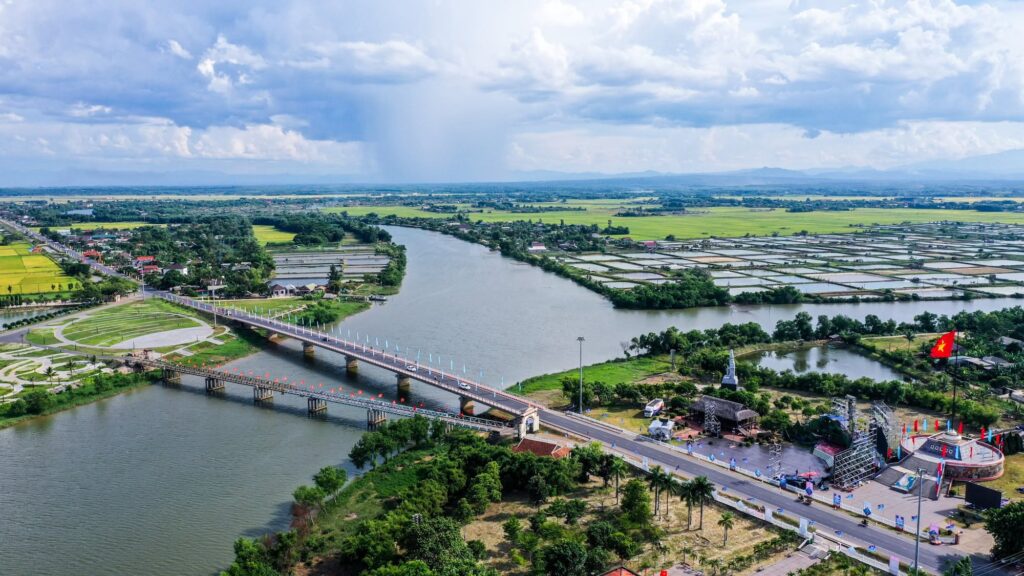
The walls were primarily constructed from compacted earth and followed the natural terrain, incorporating hills, mounds and elevated stretches of land. A system of surrounding moats was connected with the Hoàng River, creating an integrated defense network combining waterways and earthen fortifications.
Another distinctive feature is the presence of outward-projecting earthworks along sections of the walls, traditionally known as hỏa hồi. These structures contributed to the defensive design by allowing strategic control of approaches to the citadel.
The uniqueness of Cổ Loa lies partly in the way ancient builders combined natural geography with artificial fortifications. Instead of following a simple geometric plan, the walls adapted to the landscape and connected naturally elevated areas into a complex defensive system.
Archaeological excavations have revealed evidence of several phases of construction and modification. Defensive ramparts, hearths, Đông Sơn pottery, brick kilns and roof-tile kilns have been discovered, providing valuable information about construction techniques, production activities and daily life in ancient Cổ Loa.
Thượng Temple, a Sacred Site Dedicated to King An Dương Vương
Thượng Temple, also known as the Temple of King An Dương Vương, is one of the most important structures within the Cổ Loa complex. The temple occupies an area of more than 19,000 square meters and serves as a major religious site associated with the memory of the king who established Cổ Loa as the capital of Âu Lạc.
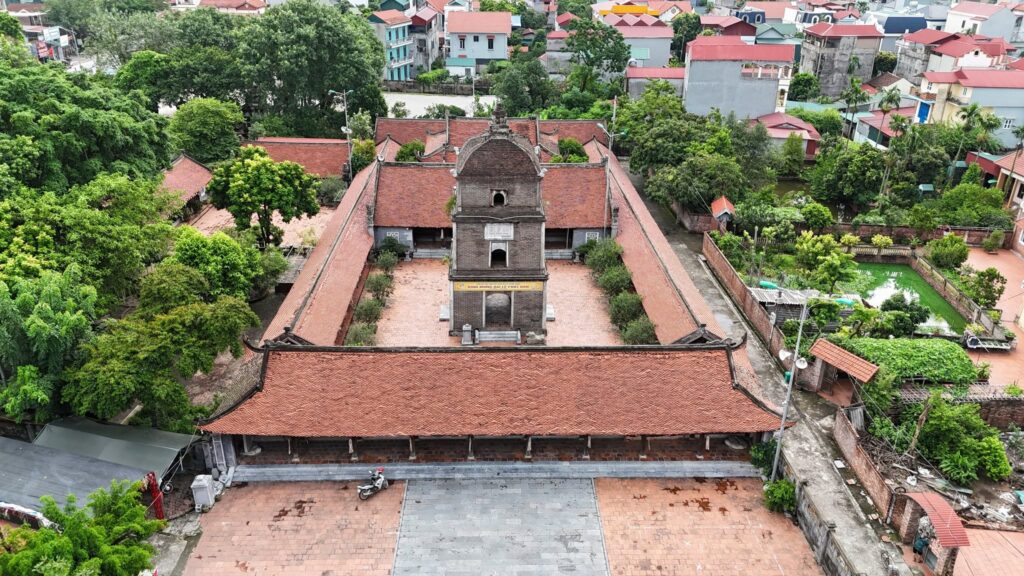
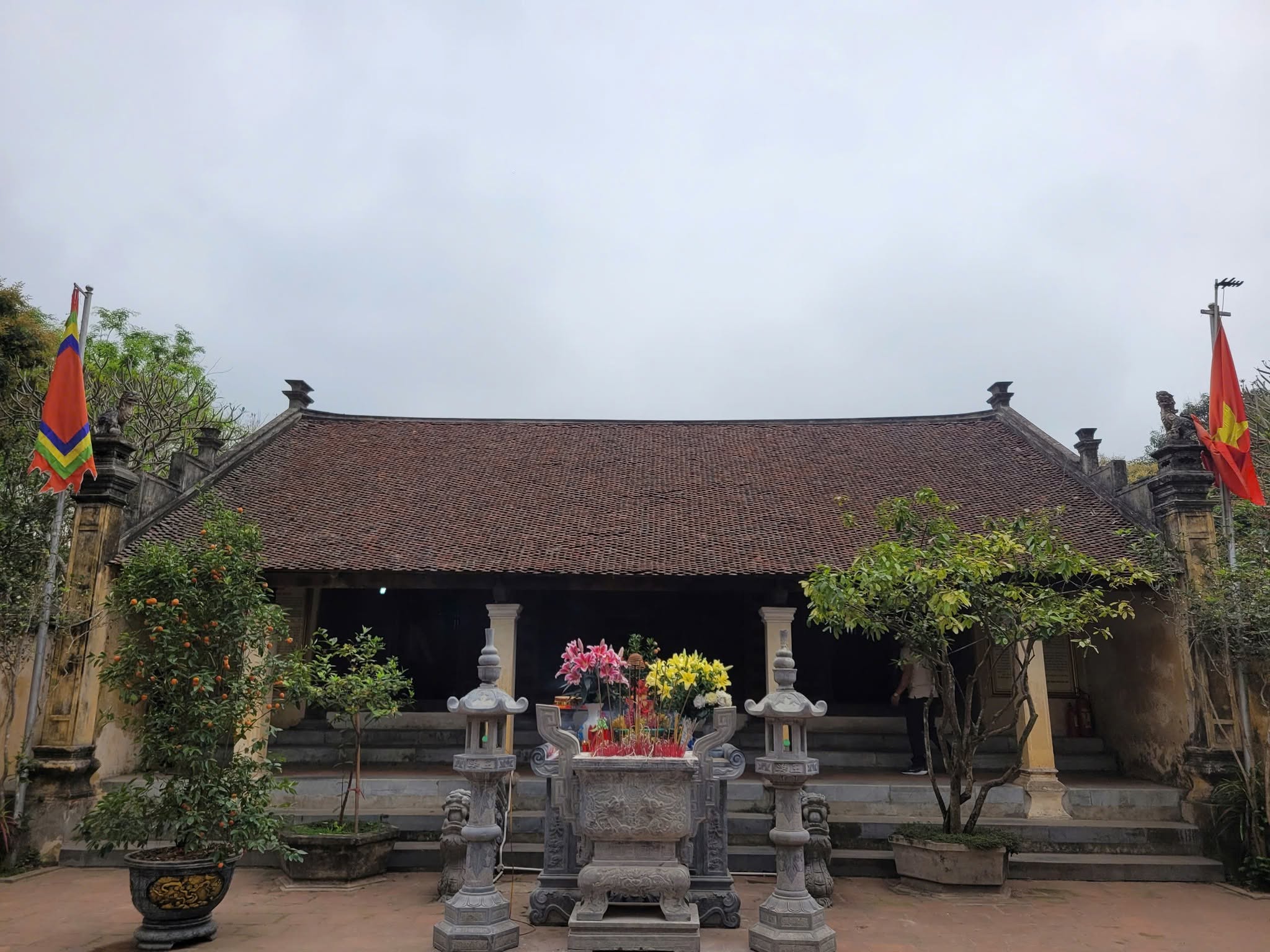
The architectural complex includes the Front Ceremonial Hall, Middle Hall and Inner Sanctuary. The Front Ceremonial Hall has three main bays and two side compartments, supported by a traditional wooden frame and covered with curved roof tiles.
The structural elements feature traditional decorative motifs, particularly dragons and clouds, reflecting the artistic vocabulary of Vietnamese religious architecture.
The Inner Sanctuary contains a bronze statue of King An Dương Vương, cast in 1897 and weighing approximately 200 kilograms. The temple also preserves stone steles and other historical artifacts.
Archaeological excavations around Thượng Temple have uncovered remains associated with facilities for casting bronze arrowheads, together with numerous related artifacts. These discoveries provide important evidence of ancient metallurgical technology and weapons production at Cổ Loa.
Cổ Loa Communal House, a Masterpiece of Traditional Architecture
Cổ Loa Communal House, also known as Ngự Triều Di Quy, is one of the most valuable architectural and artistic monuments within the complex.
The building follows a “Đinh” shaped layout, consisting of a principal communal hall and an inner sanctuary. The main hall has five bays and two side compartments, with a traditional wooden structural system and a roof covered with curved tiles.
The roof framework follows traditional giá chiêng and chồng rường construction techniques. Decorative wood carvings display characteristics of Vietnamese art from the 18th century, reflecting the craftsmanship and aesthetic sensibilities of Vietnamese artisans during the Later Lê period.
The communal house preserves important architectural details and historical objects, contributing to the understanding of traditional Vietnamese architecture and village religious culture.
Mỵ Châu Shrine and the Legend of Trọng Thủy
Mỵ Châu Shrine, also known as Bà Chúa Shrine, is closely associated with the famous Vietnamese legend of Princess Mỵ Châu, King An Dương Vương and Trọng Thủy.
The shrine occupies an area of more than 900 square meters and includes a front ceremonial hall, middle hall and inner sanctuary.
The story of Mỵ Châu has become an important part of the cultural memory of Cổ Loa. Beyond its legendary elements, the story has traditionally been interpreted through themes of love, loyalty, betrayal, national responsibility and the tragic consequences of political conflict.
The shrine therefore occupies an important place within the spiritual and cultural landscape of Cổ Loa.
Cổ Loa Pagoda, an Ancient Buddhist Space
Cổ Loa Pagoda, officially known as Bảo Sơn Pagoda, was established around the beginning of the 17th century.
The pagoda follows the traditional “nội Công, ngoại Quốc” architectural layout, consisting of the front hall, incense-burning chamber, upper sanctuary, rear sanctuary, bell tower, patriarch’s house, nuns’ quarters and guest house.
The pagoda preserves 132 historical, cultural and scientific artifacts, providing valuable evidence of the development of Buddhism, religious practices and traditional architecture in the Cổ Loa area.
The combination of Buddhist architecture, religious sculpture and historical objects makes the pagoda an important component of the broader heritage landscape.
Mạch Tràng Pagoda and Communal House
Within the Cổ Loa heritage area are also Mạch Tràng Pagoda, known as Quang Linh Pagoda, and Mạch Tràng Communal House.
Mạch Tràng Pagoda was built during the Later Lê period and faces south. Its architectural complex includes the Three Jewels Hall, front hall, upper sanctuary, Mother Goddess shrine, side galleries and corridors.
Nearby, Mạch Tràng Communal House stands on elevated ground and consists of a front ceremonial hall, main communal hall and inner sanctuary.
Together, these two monuments contribute to the rich collection of traditional religious and artistic architecture preserved within the Cổ Loa landscape.
The Exceptional Archaeological Value of Cổ Loa
One of the greatest values of Cổ Loa lies beneath and around its visible monuments. Archaeological sites distributed throughout the area reveal layers of human settlement extending across thousands of years.
Important archaeological locations include Đồng Vông, Bãi Mèn, Đình Chiền, Đình Tràng, Mả Tre, the Inner Citadel, Middle Citadel, Outer Citadel, Xuân Kiều, Xóm Nhồi, Tiên Hội, Đường Mây and Cầu Vực, together with numerous other sites.
Excavations have uncovered tens of thousands of artifacts, including stone and bronze tools, pottery, musical instruments and weapons.
Particularly significant are discoveries related to metallurgy and bronze weapon production. These artifacts provide valuable evidence of the technological development of the Đông Sơn culture and help researchers better understand the political, economic and military role of Cổ Loa during the period associated with King An Dương Vương.
Cổ Loa should therefore not be understood simply as the remains of an ancient citadel. It is also an extensive archaeological archive, where successive cultural layers preserve evidence of settlement, production, technology, social organization and cultural development.
Cổ Loa Festival
Cổ Loa remains a vibrant center of traditional community culture. Local customs preserved through generations include various forms of community association, traditional relationships between villages and ceremonial practices connected with the worship of local deities and historical figures.
The Cổ Loa Festival takes place annually during the Lunar New Year, with the main celebration held on the 6th day of the first lunar month at Thượng Temple. The festival commemorates King An Dương Vương and the establishment of Cổ Loa as the capital of Âu Lạc.
The festival combines religious ceremonies with traditional cultural activities. Processions, rituals and community performances create a distinctive atmosphere that brings together local residents and visitors at the beginning of the new year.
Traditional activities associated with the festival may include wrestling, human chess, water puppetry, crossbow shooting demonstrations, tuồng, chèo and folk singing.
The festival is an important example of how the historical memory of Cổ Loa continues to live within contemporary community life.
A Special National Heritage Site
With its exceptional historical, architectural, artistic and archaeological values, Cổ Loa was officially recognized as a Special National Heritage Site by the Prime Minister of Vietnam on September 27, 2012, under Decision No. 1419/QĐ-TTg.
The heritage complex represents far more than a single historical monument. Its ancient citadel, temples, communal houses, pagodas, shrines and archaeological sites form a multilayered cultural landscape that preserves evidence from prehistoric communities through the Đông Sơn period and the establishment of the Âu Lạc State, followed by successive historical periods.
Today, Cổ Loa is an important heritage destination in Hanoi, serving simultaneously as a center for archaeological research, historical education, traditional religious practice and cultural tourism.
The combination of the ancient multi-ring citadel, Thượng Temple, Cổ Loa Communal House, Mỵ Châu Shrine, Buddhist temples and archaeological sites creates an unusually complete picture of the historical development of northern Vietnam.
Cổ Loa therefore tells more than the story of an ancient capital. It presents a continuous archaeological and cultural narrative stretching from prehistoric settlement to the formation of an early Vietnamese state and the development of village communities and religious traditions in later centuries.
It is this remarkable intersection of archaeology, history, architecture, religion and living folk culture that gives Cổ Loa its exceptional place within Vietnam’s national heritage.
Quick Information
| Item | Information |
|---|---|
| Name | Cổ Loa Historical, Architectural and Archaeological Site |
| Common name | Cổ Loa Heritage Site, Cổ Loa Citadel |
| Type | Historical, architectural, artistic and archaeological heritage |
| Current location | Đông Anh Commune, Hanoi, Vietnam |
| Historical role | Capital of the Âu Lạc State under King An Dương Vương |
| Key historical period | Around the 3rd century BC |
| Conservation area | Approximately 860.4 hectares |
| Ancient citadel area | Nearly 46 hectares |
| Citadel structure | Inner Citadel, Middle Citadel and Outer Citadel |
| Total length of citadel walls | Approximately 15.82 km |
| Major monuments | Thượng Temple, Cổ Loa Communal House, Mỵ Châu Shrine, Cổ Loa Pagoda, Mạch Tràng Pagoda and Mạch Tràng Communal House |
| Main festival | Cổ Loa Festival, main celebration on the 6th day of the first lunar month |
| National status | Special National Heritage Site |
| Recognition | Decision No. 1419/QĐ-TTg, September 27, 2012 |
| Outstanding values | History, archaeology, traditional architecture, religious heritage and folk culture |
Location: Cổ Loa Heritage Site, Đông Anh Commune, Hanoi, Vietnam.