Among the many agricultural specialties of Vietnam’s Central Highlands, Da Lat avocados are one of the fruits most closely associated with the fertile highland landscape of Lam Dong.
Grown at elevations of more than 1,000 meters above sea level, in fertile red basalt soil and under a cool climate, avocados from Da Lat and surrounding areas are known for their thick, creamy flesh, rich flavor and relatively low fiber and water content.
Avocado, scientifically known as Persea americana, belongs to the laurel family, Lauraceae. From the first trees introduced to the highlands many decades ago, the crop gradually adapted to local conditions, spreading from family gardens to commercial farms and becoming an important agricultural product of Lam Dong.
Today, Da Lat avocados are appreciated not only as fresh fruit, but also through local specialties such as avocado smoothies and the famous Da Lat avocado ice cream.
From Introduced Trees to a Highland Specialty
Avocado originated in Central America and Mexico. In Vietnam, the crop was introduced relatively early, and the cool highlands of Lam Dong proved particularly suitable for its cultivation.
Around the 1940s, during the period when agricultural research and development were expanding in the highlands, avocado trees were introduced for trial cultivation at the Blao Agricultural and Forestry Research Station, in what is now Bao Loc, as well as in Da Lat.
At first, avocados were not primarily grown as a commercial fruit crop. Some trees were planted around residences and gardens, while others were used as shade trees in tea and coffee plantations.
Over time, the trees adapted to the highland environment and local farmers began propagating them in their own gardens. Natural seed propagation and cross-pollination over successive generations resulted in a variety of locally adapted avocado types, including the traditional buttery-fleshed avocado, known in Vietnam as bo sap.
From family gardens, avocados gradually developed into an agricultural commodity with increasing economic value.
Traditional Avocados and Popular Varieties
One of the interesting features of Da Lat and Lam Dong’s avocado industry is the coexistence of traditional local types and newer commercial varieties selected or introduced for modern cultivation.
Traditional buttery avocados, or bo sap, have long been familiar to local consumers. The fruit is generally round or short pear-shaped, with dark green skin that may develop a yellowish tone as it ripens. The flesh is yellow, smooth, creamy and rich, with a naturally sweet finish. It is commonly eaten fresh or used in smoothies and desserts.
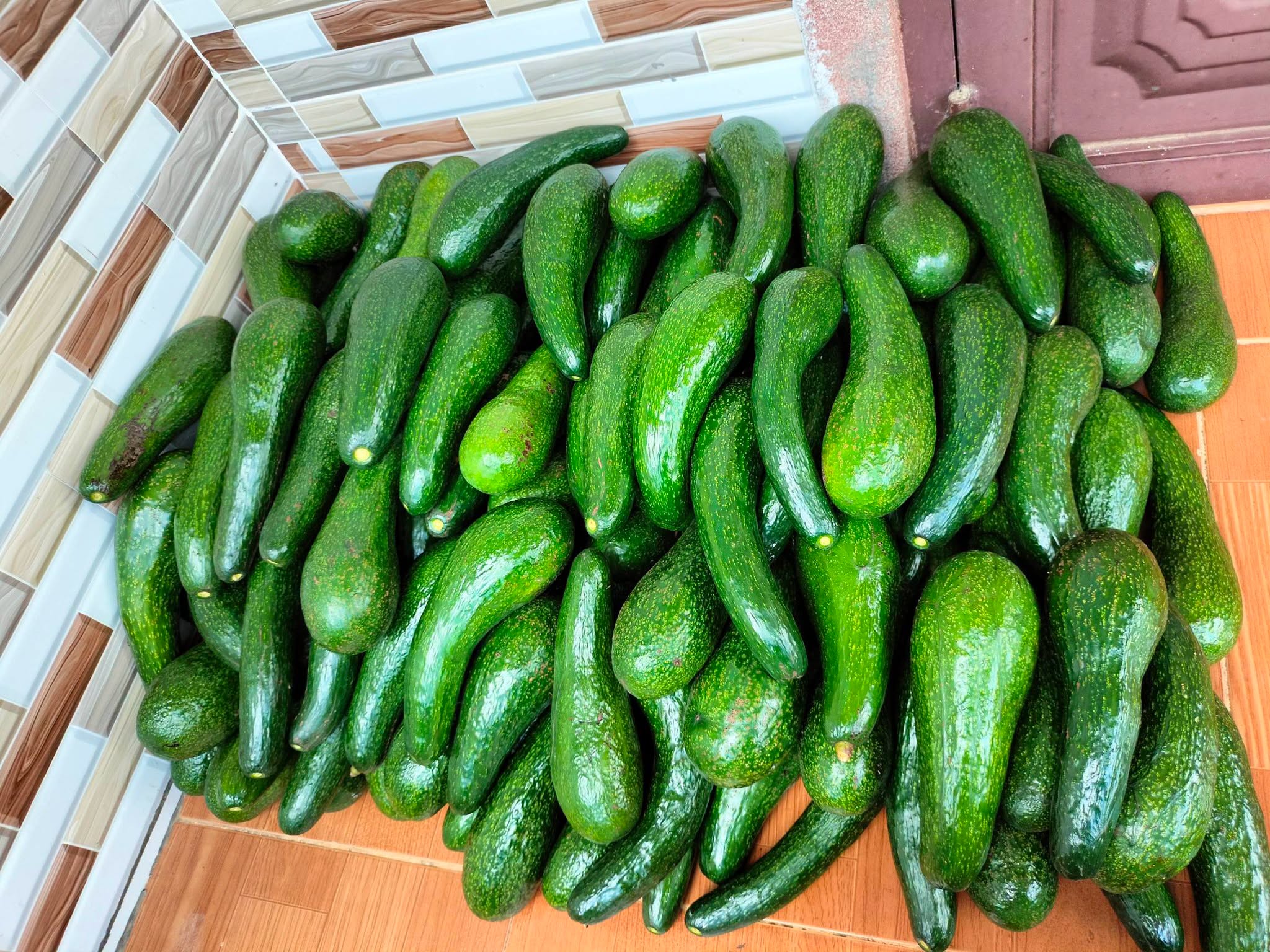
Among modern commercial varieties, 034 avocados have become particularly well known in Lam Dong. The fruit is elongated and slightly curved, with smooth green skin and a relatively small seed. When ripe, the flesh is usually deep yellow, dense and creamy, making it suitable for both fresh consumption and processing.
Booth avocados, especially Booth 7, are generally round with relatively thick skin and a later ripening period than many traditional varieties. Their later harvest season helps extend the period during which locally grown avocados are available.
Meanwhile, Hass avocados are internationally recognized. They are generally smaller and oval-shaped, with thick, rough skin that changes from green to dark purple or nearly black when ripe. The flesh is rich and creamy, with a distinctive flavor, making Hass a popular variety in international markets.
Another variety grown in the region is the Tu Quy avocado, known for its ability to produce fruit across multiple periods of the year. The diversity of varieties helps Lam Dong extend its avocado supply beyond a single harvest season.
Avocado-Growing Areas Around Da Lat
Avocados are now cultivated in many parts of Lam Dong, from the outskirts of Da Lat to agricultural districts with suitable highland conditions.
Around Da Lat, areas such as Ta Nung, Me Linh and Nam Ban, together with parts of Lam Ha, are associated with avocado cultivation. The crop is also grown in Duc Trong, Don Duong and other agricultural areas throughout the province.
One of the characteristic farming systems in Lam Dong is intercropping avocados with coffee. With their broad canopies, avocado trees can provide shade and help moderate conditions within coffee plantations below. At the same time, they provide farmers with an additional source of income rather than relying on a single crop.
Alongside traditional intercropping, more farms are developing specialized avocado orchards, using modern irrigation systems and controlled cultivation practices aimed at supplying supermarkets and other high-quality agricultural markets.
The combination of avocado trees and coffee plants also creates a distinctive highland agricultural landscape. Tall avocado trees rise above rows of coffee, forming a layered farming system that can be seen in many parts of Lam Dong.
The Avocado Season in Da Lat
The avocado season in Lam Dong varies depending on the variety, as different cultivars flower, develop and ripen at different times.
Traditional buttery avocados are generally associated with the summer season, while 034 avocados can have a longer harvesting window. Booth avocados tend to ripen later, while Hass follows its own seasonal cycle.
Thanks to this diversity of varieties, Lam Dong can supply fresh avocados during much of the year. However, May through August is generally the period when avocados are especially abundant in local markets.
For visitors arriving in Da Lat during the avocado season, this is also a good time to encounter the fruit at local markets, specialty stores, farms and food establishments.
Da Lat Avocado Ice Cream and a Local Culinary Icon
If one dessert has helped turn avocados into part of the Da Lat travel experience, it is undoubtedly Da Lat avocado ice cream.
The preparation is simple but makes full use of the fruit’s naturally creamy texture. Ripe avocado flesh is blended until smooth and combined with milk or other ingredients to create a rich avocado base. A scoop of cool ice cream is often placed on top, creating a contrast between the dense avocado and the soft, chilled ice cream.
Some versions are topped with shredded coconut, roasted peanuts or other ingredients.
The appeal of avocado ice cream begins with the quality of the fruit itself. A perfectly ripe avocado with smooth, golden flesh provides a rich base that requires very little additional flavoring.
From a simple local dessert, avocado ice cream has become one of the foods many visitors look for when exploring Da Lat’s culinary scene.
Avocados in Modern Cuisine
Beyond traditional local preparations, Lam Dong avocados are increasingly appearing in contemporary dishes.
Avocado smoothies remain one of the most popular ways to enjoy the fruit. The flesh is blended with milk, sugar or ice to create a thick and creamy drink.
Avocados can also be sliced into vegetable salads, spread over toasted bread in the style of avocado toast, or combined with a wide range of ingredients in modern cuisine.
Varieties with firm, rich flesh, such as Booth and Hass, are particularly suitable for these preparations.
Yet in Lam Dong, perhaps the simplest way to enjoy an avocado remains one of the best: cut a ripe fruit in half, scoop out the golden flesh and eat it directly. This allows the natural creaminess, richness and subtle flavor of the fruit to stand on their own.
From Fresh Fruit to Value-Added Products
Lam Dong avocados are not limited to the fresh-fruit market. They are also being used to develop a range of processed products.
Fruit that does not meet the appearance or size requirements for fresh retail can be directed toward other forms of processing. Avocado oil is one such product, with applications in both food and personal-care products.
Cold-pressed avocado oil is used in products such as soaps, hair-care products, lip balms and moisturizing creams. This provides another way to make use of agricultural produce while increasing the value of the avocado beyond fresh consumption.
Processing also gives the fruit a longer commercial life and opens additional opportunities for the region’s agricultural industry.
From Family Gardens to Commercial Agriculture
The story of Da Lat avocados is also a story of the transformation of highland agriculture.
From the first trees introduced into gardens and plantations decades ago, avocados gradually became part of family farming systems. The selection of suitable varieties, grafting techniques, propagation and modern cultivation methods have since helped transform avocado production into a more organized commercial activity.
The introduction of varieties with better yields, quality and post-harvest characteristics has also given growers greater flexibility in responding to market demand.
Today, alongside the domestic market, Lam Dong avocados are increasingly connected with modern distribution chains and export-oriented agriculture. Requirements concerning cultivation standards, traceability, packaging and product quality are becoming increasingly important throughout the supply chain.
The Creamy Flavor of the Highlands
Da Lat avocados may not have the vivid colors of the city’s flowers or the bright red appearance of its strawberries. Yet they hold a distinctive place in the agricultural and culinary identity of the highlands.
Their golden flesh, creamy texture, natural richness and subtle aroma are part of the flavor of Da Lat. So too are the avocado trees casting shade over coffee plantations, the green orchards around the city and the chilled glasses of avocado smoothies enjoyed in the cool mountain air.
From the first avocado trees introduced to the highlands to today’s modern orchards, the crop has become part of the agricultural story of Lam Dong.
For travelers, eating a ripe avocado or enjoying a glass of avocado smoothie may seem like a simple culinary experience. Behind that flavor, however, lies an entire landscape of farms, cultivation traditions and the long adaptation of an introduced fruit to the highland climate of southern Vietnam.